
Prediction markets have expanded into medical breakthroughs, raising the human stakes far higher than those in sports contests, cultural moments, or even elections and world event outcomes. Kalshi and Polymarket now allow real-money contracts on clinical trial success and Food and Drug Administration approvals of specific medications. While the platforms present these markets as tools for forecasting transparency, the practice risks corrupting the process intended to deliver solutions to the infirmed.
Joshua Pederson, a humanities professor whose son is fighting recurrent cancer, voiced the outrage many share. After chemotherapy, radiation, and entry into a novel drug treatment trial, the family learned that strangers could profit from the drug’s potential failure. Pederson called the arrangement horrific, explaining that a collapsed trial means real suffering and fewer remaining options for families in crisis. His perspective forces an ethical examination of the decision to treat patient trial outcomes as tradable events.
These platforms already handle billions in weekly volume across sports, economics, politics, crypto, and other leading events. Extending the model into drug development creates concentrated financial incentives that traditional equity markets do not. Trial investigators and physicians are warning that the contracts could encourage interference or damage the trust required for medical progress. It’s not unique that the subjects of event contracts are not fans of this phenomenon.
How Prediction Markets on Clinical Trial Outcomes Threaten Research Integrity
Clinical trials rely on strict protocols used to isolate variables and produce reliable data. Public wagering could alter the environment around those protocols. David Tsai, who oversees trials at a biotech company, launched a petition seeking a ban, arguing the markets threaten trust in biotechnology. He noted that someone with access, such as a pharmacist adjusting infusion rates or temperatures, could subtly shift results to favor a personal trading position.
Nicholas Zaorsky, a radiation oncology professor who has conducted trials, agreed that clinical research differs from other domains. Investigators and coordinators can directly influence the outcomes under wager, creating incentives that risk compromising data patients and physicians depend on.
Realistically, even safeguards on prediction market platforms leave gaps. Kalshi requires employment verification and bars trading by those with material nonpublic information. Active and ongoing surveillance aims to flag unusual activity identified around these potentially high-risk markets. Identifying every person connected to a multi-site study, however, remains difficult, and public odds themselves can shape enrollment or retention decisions. If markets signal likely failure, clinical trial patients may withdraw, and investigators may interpret results more cautiously, turning a forecasting tool into an active influencer of the outcome itself.
Platform Defenses and the Limits of the Stock Market Comparison
Kalshi has defended the markets through spokesman Jack Such, who observed that equity short sellers already profit from trial failures on a larger scale. Traders buy or sell stock in Big Pharma based on how clinical trials for major drug products proceed through the pipeline from R&D to final FDA approval. The Kalshi spokesman contended that, unlike the stock market, prediction markets uniquely reveal probabilities that are useful to researchers and investors. A white paper co-sponsored by the platform and drawing on input from Anne Wojcicki of 23andMe Research Institute claims the drug research event contracts empower patients by highlighting promising programs.
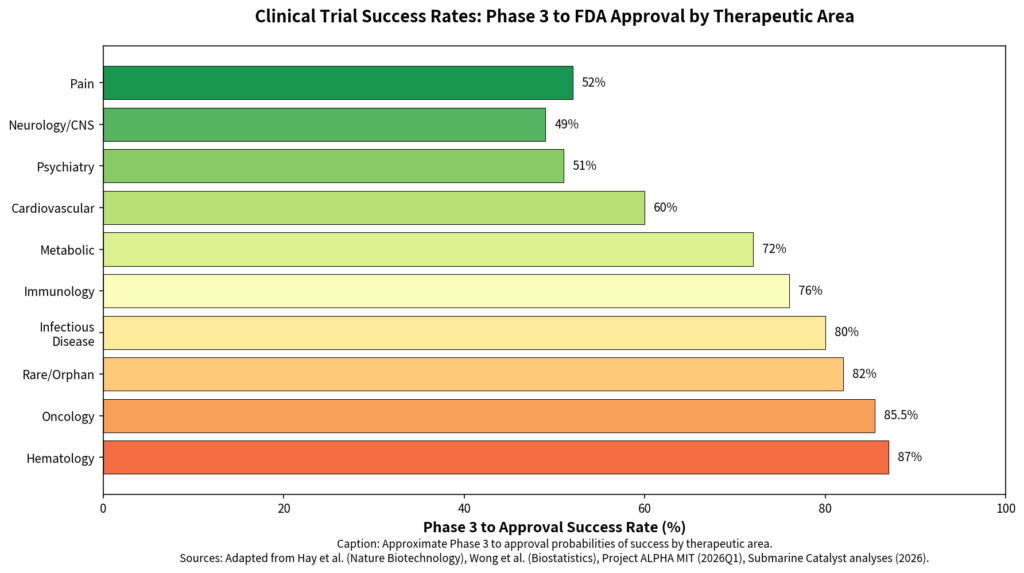
Wojcicki has described the data as a transparent resource for evaluating development options. Kalshi’s partnership with AppliedXL focuses on late-stage Phase 3 trials from larger companies and full FDA decisions, resolving contracts against public documents such as ClinicalTrials.gov endpoints. Current examples include contracts on the weight-loss medication retatrutide and certain breast cancer treatments, while Polymarket lists offerings on cancer therapies and peptide regulations.
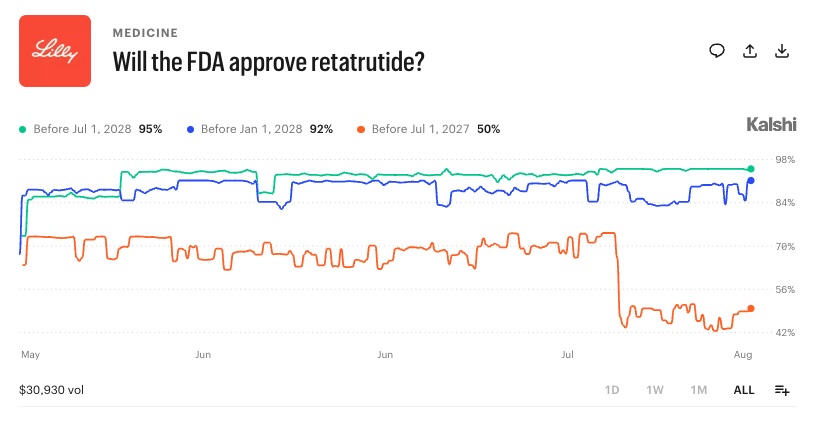
Nevertheless, the equity market comparison is imperfect. Stock prices reflect an entire company’s prospects. Prediction contracts isolate a single binary medical event, concentrating incentives more sharply. Equity trading also operates under long-established insider-trading rules, whereas prediction markets remain in a newer regulatory space with more burgeoning and untested compliance and enforcement rules. Thin early markets can be moved by large trades, and when those odds involve life-threatening conditions, the consequences extend well beyond traders’ accounts.
Patient Perspectives and the Human Cost of FDA Drug Approval Markets
Families facing serious illness already carry uncertainty and personal strain. Discovering that anonymous traders can profit from a trial’s failure intensifies the burden and raises obvious ethical concerns. Joshua Pederson stressed that platform statements on this topic often overlook the patients whose outcomes form the contracts, describing the setup as one that distances bettors from real human cost.
Similar reactions appear among people living with advanced disease. The existence of markets tied to cancer treatments can feel like reducing personal struggle to a speculative betting instrument. Trust between patients and research teams, already fragile in many communities, risks further damage if financial motives appear to hover around study conduct. These are very sensitive and humanly fragile studies, trials, and relationships.
Prediction markets fall under the Commodity Futures Trading Commission’s oversight, yet specific carve-outs or processes for medical event contracts are still evolving. Existing CFTC rules target manipulation and insider trading, but application to ongoing research remains largely untested. Tsai’s petition urges prohibition of all speculative trading or betting on critical health milestones to protect research integrity.
In practice, enforcement is challenging. Confirming that no one with interim data has traded requires monitoring across hospitals, sponsors, and contractors. Detection after the fact, which has been the case with most operator or CFTC investigations, cannot restore compromised data or the trust of those who joined under different assumptions. State-level challenges and congressional scrutiny already surround prediction markets; medical contracts add a distinct moral hazard that may demand stricter limits.
Consequently, trial sponsors and research institutions should press for standards that prioritize patient welfare. Clearer rules, such as barring contracts until enrollment closes and primary data are locked, could reduce the most acute risks while still allowing post-completion forecasting where appropriate. The optimal rules would likely require nuanced details by category and other considerations.
Preserving Trust in Biotechnology Without Compromising Medical Progress
Medical research depends on voluntary enrollment, honest reporting, and public confidence that results reflect genuine science. Wagering markets inject financial interest that can distort each of these elements. Public odds become part of the informational environment surrounding a trial and may affect recruitment rates already low in many therapeutic areas. They could affect other elements of medical R&D in terms of investments, timelines, and ultimately push trials into directions not ideal for pure societal utility (though worth noting, financial decisions obviously already play a role in all of these corporate decisions).
Researchers have long managed conflicts through disclosure and review boards. Prediction contracts now amplify those possible conflicts by offering direct, often anonymous payouts tied to specific endpoints. Cases of insider trading in biotech equities show that nonpublic trial information carries substantial value; extending similar opportunities into newer event contracts heightens temptation and motivation.
Ultimately, the balance favors restraint. Society already tolerates speculation around corporate performance. Isolating individual patient-dependent events for real-money trading perhaps crosses a line, elevating liquidity over the ethical foundations of clinical science. Protecting those foundations likely requires deliberate limits.
Alternatives exist that capture useful information without the same hazards. Controlled internal company systems and structured academic forecasts can surface probabilities without public pressure on ongoing trials. Stronger platform measures, possibly delayed listings, expanded verification, and independent ethics reviews would help if these prediction markets continue. Even robust rules, however, won’t erase the discomfort of treating life-altering medical outcomes as public instruments of speculation.
References
- Kalshi and Polymarket bets on clinical trials criticized as ‘ghastly’ – NPR
- Ban prediction markets from betting on the outcomes of life-saving clinical trials – Change.org petition
- Kalshi launches biotech prediction markets pilot program
- Kalshi Is Letting People Bet On Clinical Trials And FDA Drug Decisions – Forbes
- Kalshi to allow bets on clinical trials, FDA decisions – Reuters
- Betting on clinical trials – Sensible Medicine
- Betting on biotech: Prediction markets turn to clinical trials – Fierce Biotech
- AppliedXL and Kalshi Partner on Biopharma Prediction Markets
- Kalshi Launches Platform for Bets on Biotech Trials, Drug Approvals – Bloomberg
- Can a Betting Market Offer Hope to a Cancer Patient? – MedPage Today
- Prediction market wagering on drug approvals draws fire from researchers
- Clinical Trial Prediction Markets: Forecasting Evidence or Distorting It?
- Kalshi is expanding online betting in drug R&D – PharmaVoice
- You Can Now Bet on Clinical Trials Like Playoff Games – MedCity News
- Betting on Patient Outcomes? The Dark Side of Clinical Trial Markets – YouTube
- Biopharma’s Public Probability – AppliedXL & Kalshi report
- Drug Trial Prediction Markets Raise Fears Over Research Integrity
- Kalshi opens prediction markets to FDA drug development decisions
- Kalshi will offer sports-style betting on drug trial results
- Kalshi and Polymarket draw ‘ghastly’ criticism for clinical trial betting markets