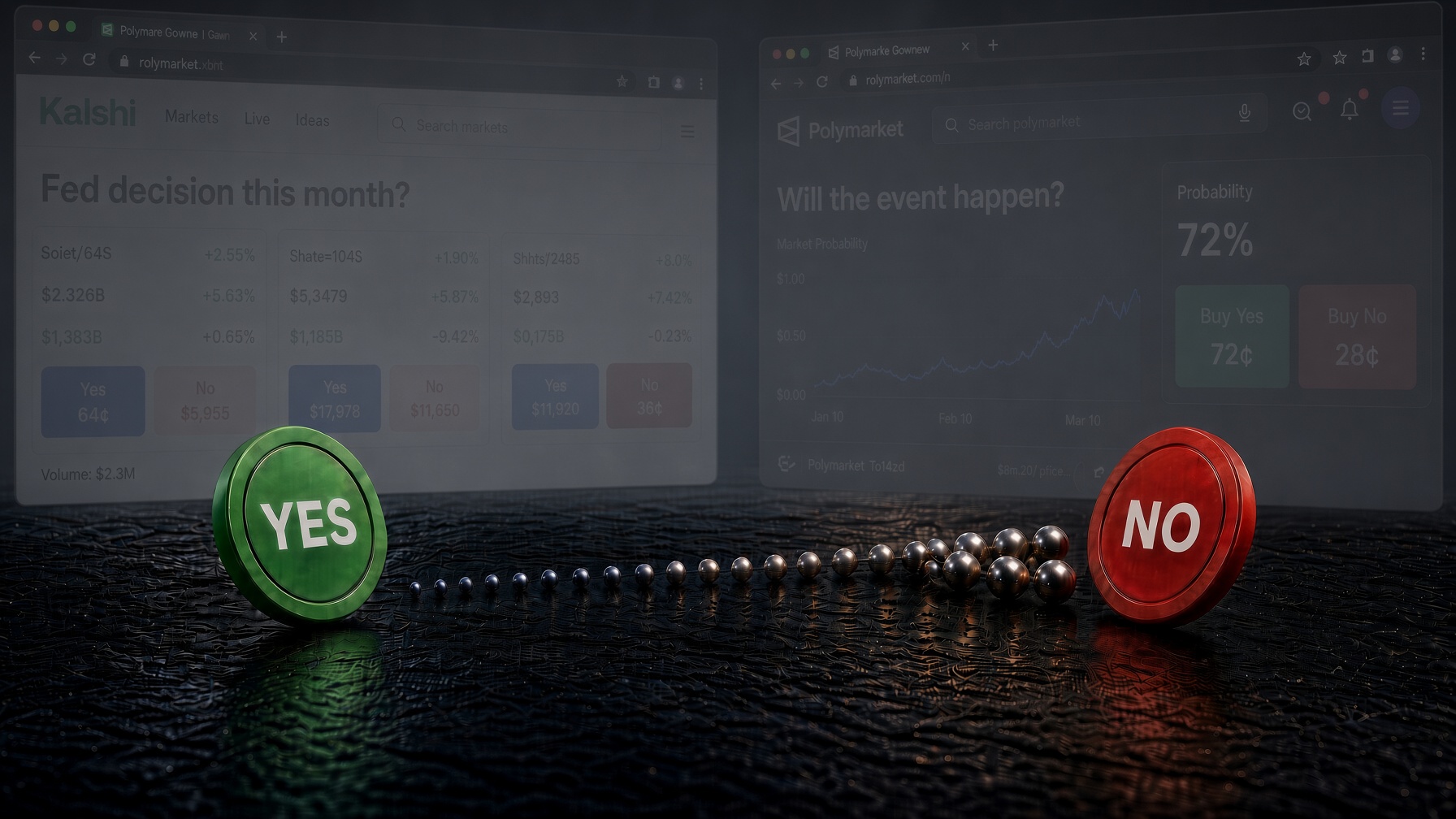
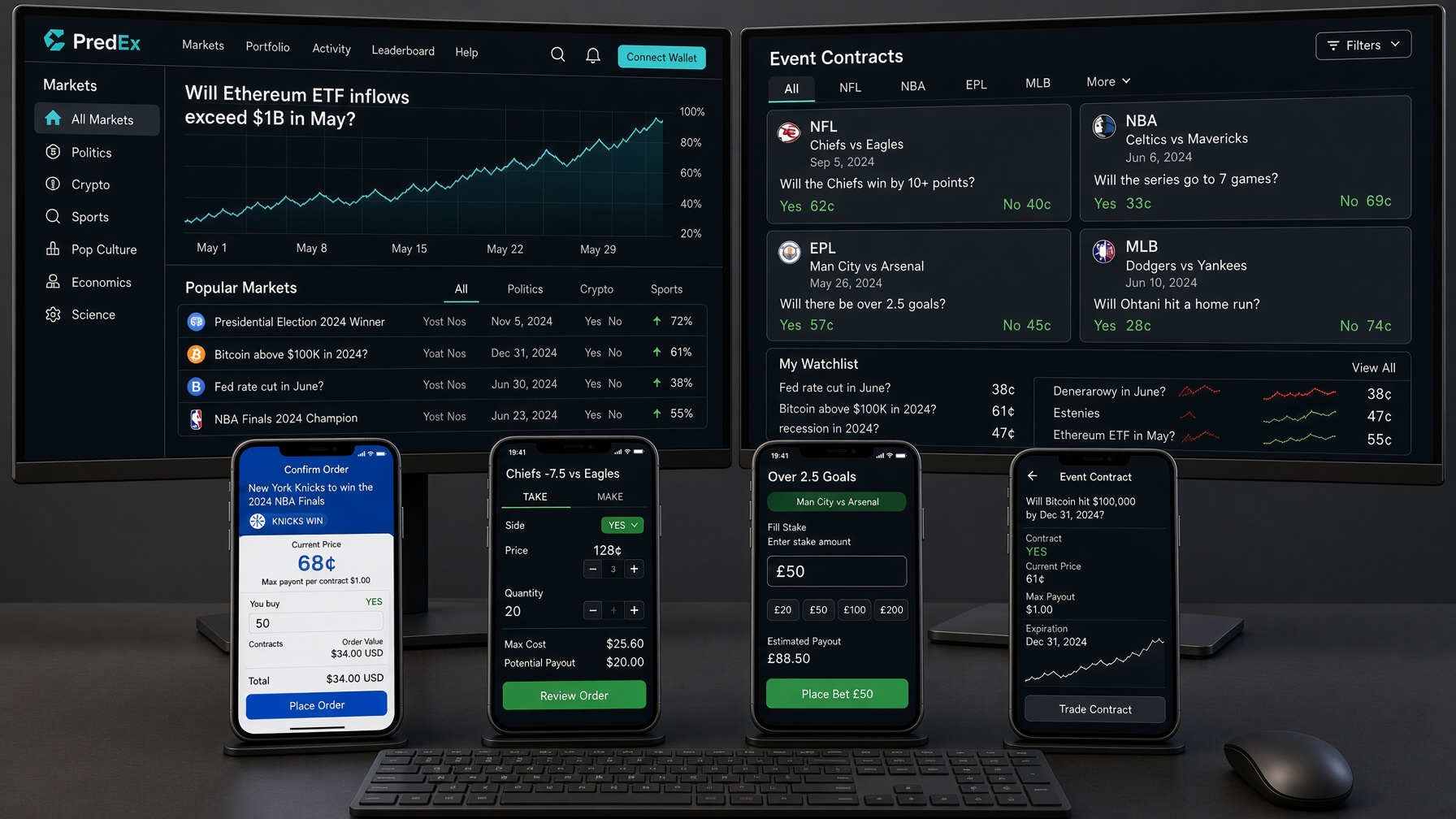
People often discuss prediction markets as a single entity. While every prediction market venue shares some basic mechanics and marketplace dynamics, they are not identical. Kalshi looks like a small futures screen. Polymarket operates two separate books. FanDuel Predicts integrates its order book behind a sportsbook app. OG.com, Novig, and ProphetX lean into sports, live prices, and game analytics: similar bodies, different faces.
This walkthrough covers the common steps needed to trade in all prediction markets, as well as what makes several leading venues unique. It covers how these venues match orders, charge fees, let you exit early, and settle results, along with the underlying processes that help you fund, enter the market, and compete as well as possible with other traders.
The Shared Math on Every Ticket
Every prediction market shares the same basic foundation. They are marketplace exchanges where traders match wits with one another, forecasting the outcome of future events in sports, crypto, politics, global events, economics, and a variety of additional categories.
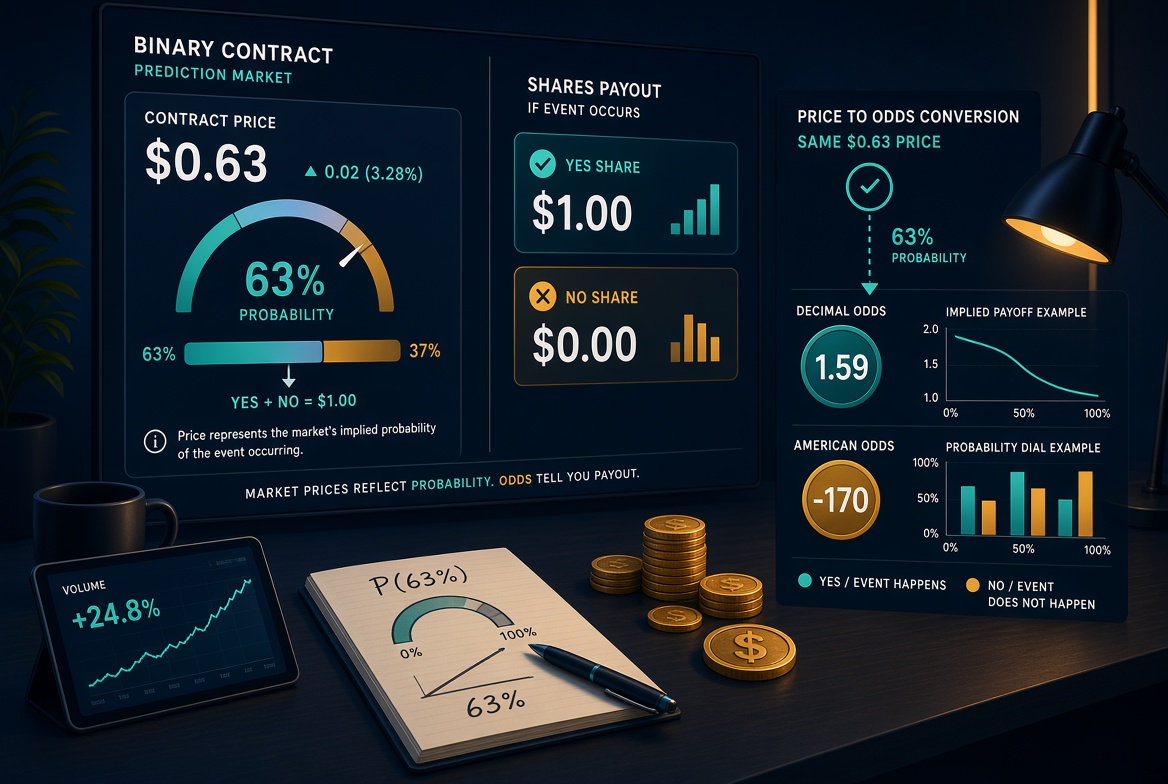
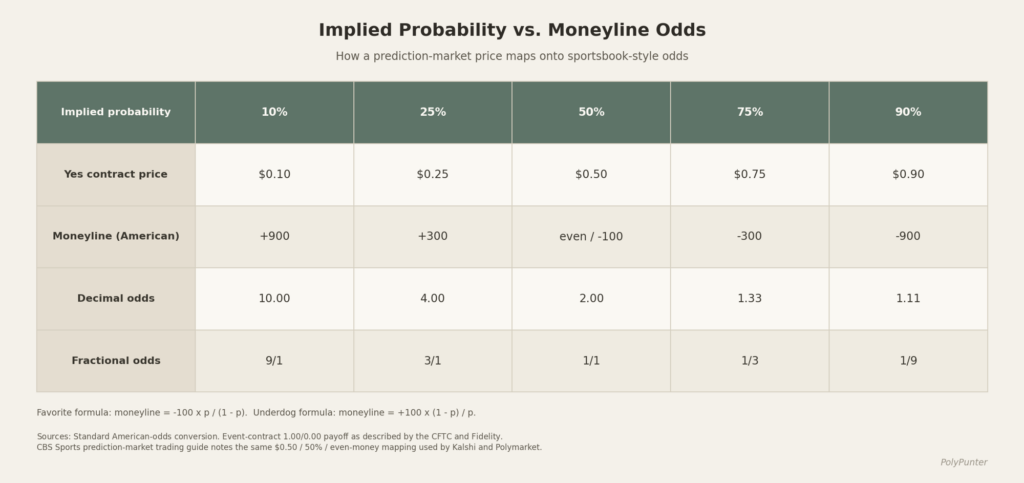
Most event contracts are binary. Buy Yes if you think the stated outcome will happen. Buy No if you think it will not. All contract prices range from $0.01 to $0.99 and read as implied probability. For example, a Yes contract in a prediction market at $0.61 means the market believes there’s a 61% chance Yes is the correct outcome. The system was designed to be as simple as possible: prices = probability.
If you’re familiar with traditional betting odds, here’s a handy translator from several prediction market prices to other standard betting odds formats:
Some markets are not binary and offer a longer list of potential answers. For instance, “Which teams will make the MLB playoffs from the American League this season?” offers every team in the American League, with implied probabilities for each. Another common example is a question such as “Will Bitcoin Reach $100,000 in Value Before…” followed by a series of potential dates, such as “By the 15th of this month”, “By the end of September”, “By the end of the year”. Obviously, these forecast questions can have more than one right answer.
Pricing and Contract Purchase Limits
In all cases, pricing on any market outcome contract remains between $0.01 and $0.99. A correctly answered contract at settlement (when the market ends, according to its rules) earns $1 per contract. An incorrect answer results in $0. As you can see from our $0.61 example, a correct contract will pay out $1, or a profit of $0.39 per contract.
You can purchase as many contracts as you wish. The only limit is your funds and contract availability. This is a marketplace. Every buyer needs a seller and vice versa.
Prediction Markets Are For Trading, Not Betting
Unlike sports bets, prediction market contracts are tradable assets in your account, so you can sell them and exit the market anytime before the event is settled and the market closes. Many prediction market traders move in and out of markets and don’t stay in until the outcome is determined. They profit from pure trading and never need to be correct in their event predictions.
If you hold contracts until settlement, you will want to know the settlement rules. Every prediction market lists settlement rules on the market page. They are written in plain language (not legalese) and state the official source for outcome decisions, how timing works, and what happens if delays or problems arise. Always read the rules. It will save you a lot of potential grief.
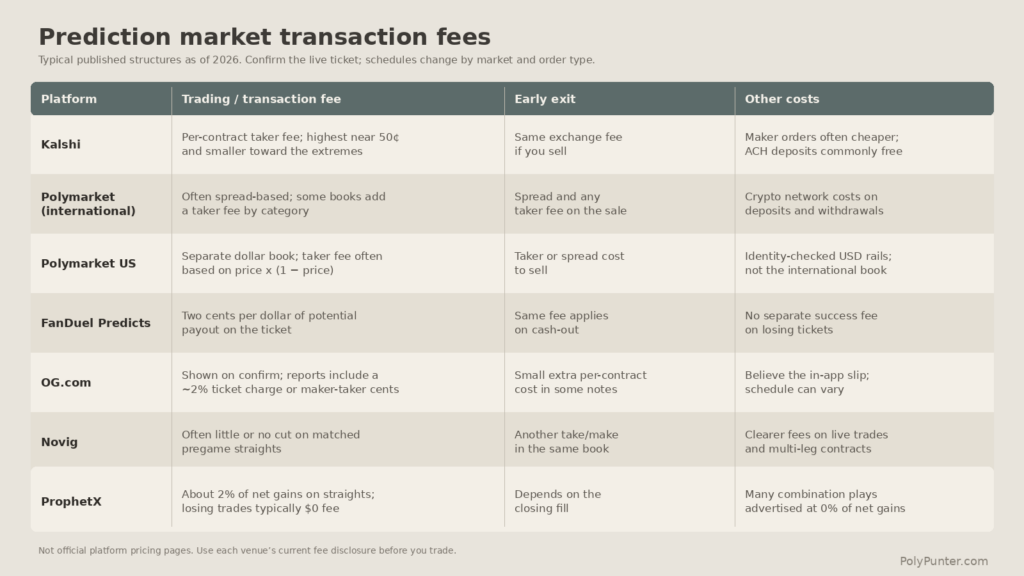
Finally, pay attention to each prediction market’s fees. Prediction market venues charge transaction or broker fees to match you with buyers and sellers. Know the fees, which, while not large, could turn what you think is a lightly profitable transaction into an even-money trade or even a loss once fees are deducted.
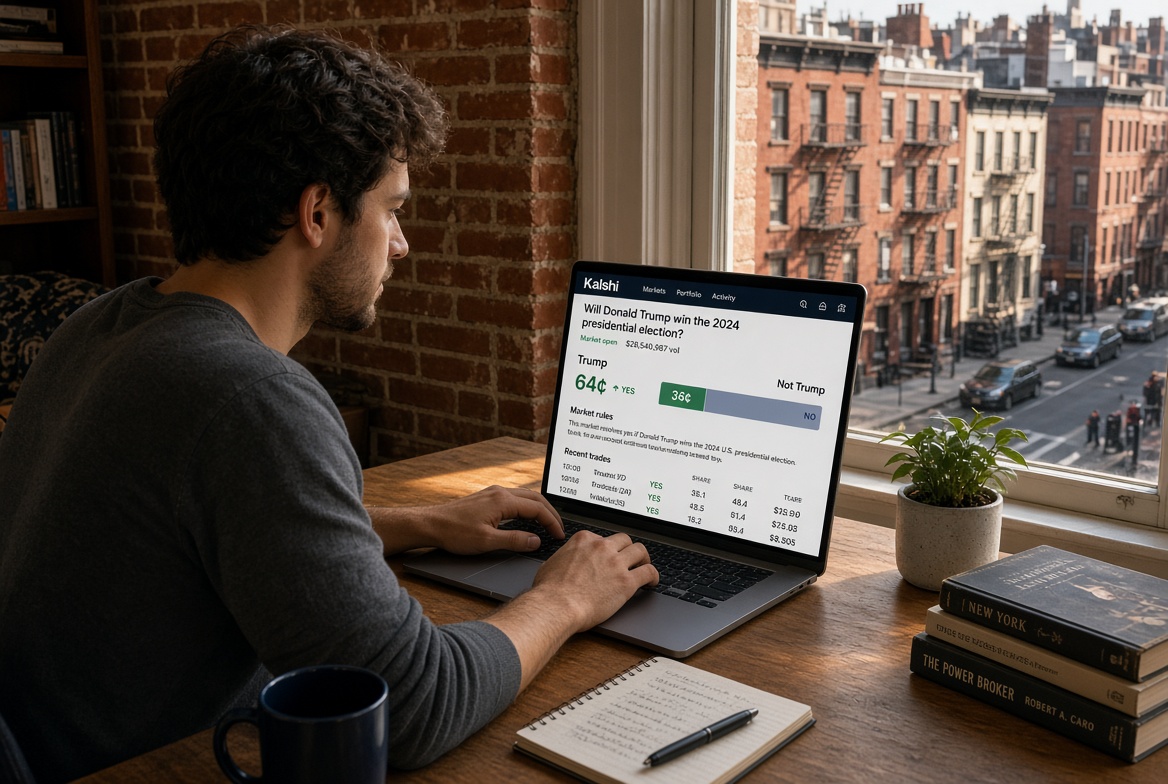
Kalshi: How to Start Trading
Kalshi is the largest and most popular prediction market platform. We’ll show the steps to trade on Kalshi, then cover other leading platforms and how they differ from Kalshi.
Verification
Kalshi and all legally regulated U.S. platforms will require personal identity verification. KYC. Know Your Customer laws require you to disclose personal information to open a trading account.
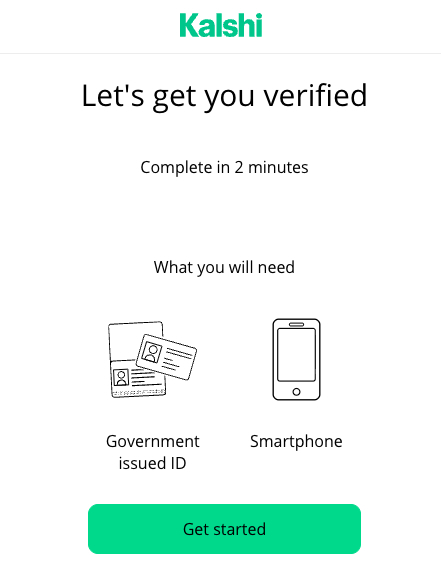
You can’t skip ID verification for any CFTC-regulated platform. Users on Kalshi are anonymous to other users. You are not so to Kalshi or government authorities, including the IRS.
Funding
You’ll need to fund your trading account. Kalshi supports multiple convenient methods, including ACH (electronic bank transfer), which usually clears in one to three business days. Debit card deposits provide instant access, although they carry small transaction fees. Crypto transfers offer another flexible route for hybrid users.
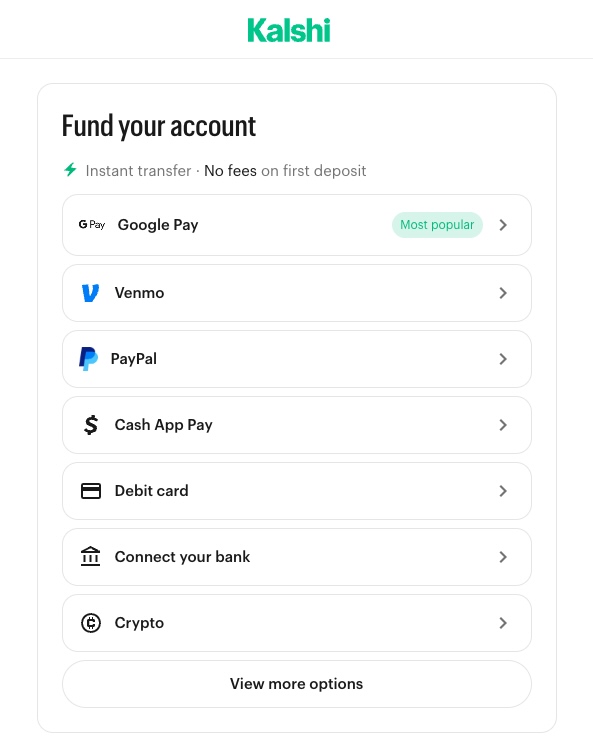
You can add as little or as much as you like to your account once it’s opened. You’ll need to keep one funding method open and attached to your account if you want to add funds and withdraw from your Kalshi account.
Finding Your First Market
Once your account is verified and funded, you can start trading. (We’d highly recommend Kalshi’s demo mode to play around for free when you first get started.)
Kalshi’s header menu offers all major market categories, plus “trending” to see the most popular and active markets. Even if you’re looking to trade in one specific category (sports, elections, crypto, entertainment, etc.), it’s never a bad idea to check out “trending” to see the most active markets.
You can also use the search bar to search for named markets (e.g., Cowboys, interest rates, Bitcoin, Anthropic IPO, midterms). From there, you can filter results by most active, highest volume, closing soon, and other helpful filters.
In general, new traders will want to get their feet wet in active, high-volume markets. It will have more buyers and sellers trading contracts, so it’s easier to get in (and out when you want), with cleaner prices and fewer opportunities for big accounts to move market prices when they enter or exit. Think of buying and selling goods on eBay versus a tiny auction site with few users.
Sample Market Page
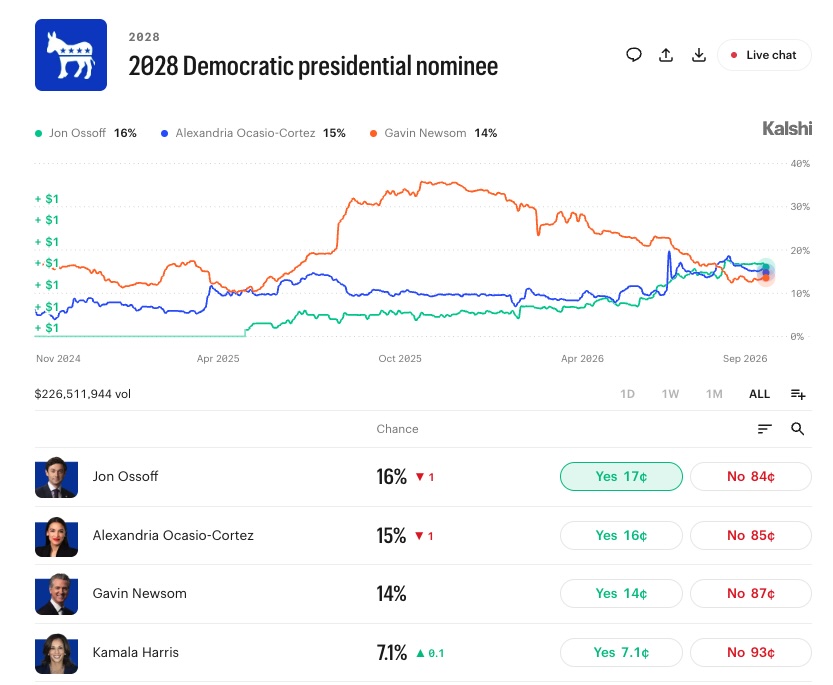
Here’s a market page for a very active Kalshi market—the 2028 Democratic Presidential Nominee. We’ve truncated this photo, but it will show all possible entrants who have any money traded on them at all. From here, you can filter and sort by graph and chart, view order and price histories and movement, and download any market data you want if you’re working in a separate spreadsheet.
When you click any Yes or No option for contracts, an order panel opens (on mobile; on web, it opens on the same page).
You can place either a Market Order or a Limit Order. A Market Order, which Kalshi calls a Quick Order, lets you simply select how many contracts you wish to buy of the one you selected. Kalshi will complete your order by finding the best, closest price to the price you selected to fulfill the order in full. The funds, plus any fees listed, will be deducted from your account balance. In a highly active market, like our example, it will be fairly easy to find a seller for your Quick Order at a price fairly close to your order price, though slightly higher. See, for example, the Yes on Ossoff probability is 16%, but the Yes actual price estimate is 17%.
Limit Orders Differ From Market Orders
A Limit Order is a bit more complicated. With a Limit Order, you state how many contracts you want to buy and the highest price you are willing to pay. Kalshi will match you when it finds sellers at the best price, but never higher than your maximum. In this case, your order may go unfulfilled or partially filled until a seller meets your price. Limit Orders are for traders who want to be incredibly precise about their maximum cost. It typically applies to traders making high-volume orders.
Once you place an order, it will show up under your account with all other contracts you hold. You can click on any of your holdings to get directly back to the market page or to sell contracts you own.
Kalshi makes it incredibly simple to trade, manage your account and holdings, and get trading and transaction histories and to chart your performance even beyond simply looking at your balance.
Polymarket International Versus Polymarket US
Polymarket is the second-biggest prediction market platform. Polymarket runs two venues under one brand. Polymarket’s global product is the original on-chain marketplace. Funding is in crypto, typically USDC on Polygon, through a connected wallet that serves as your account identification. Orders and settlement stay on that venue’s books and under its rules. Polymarket’s international on-chain marketplace is not available to U.S. customers.
Polymarket US was set up for onshore U.S. users. It is a CFTC-regulated dollar exchange built after the company acquired a licensed U.S. derivatives venue. Like Kalshi, you complete the required identity checks. Funds move through approved dollar channels, not a self-custodied international wallet. Clearing is off-chain. The order book is not shared. When you visit Polymarket, the platform will determine your location and direct you to the appropriate venue.
While the two venues will look similar on market pages and will also strongly resemble Kalshi’s look, a Yes price on an international question is not the same instrument as a similarly worded Yes on Polymarket US. Liquidity, fees, contract lists, and who can trade all differ. The international catalog is usually wider. The U.S. book is narrower as its trader base remains smaller thus far.
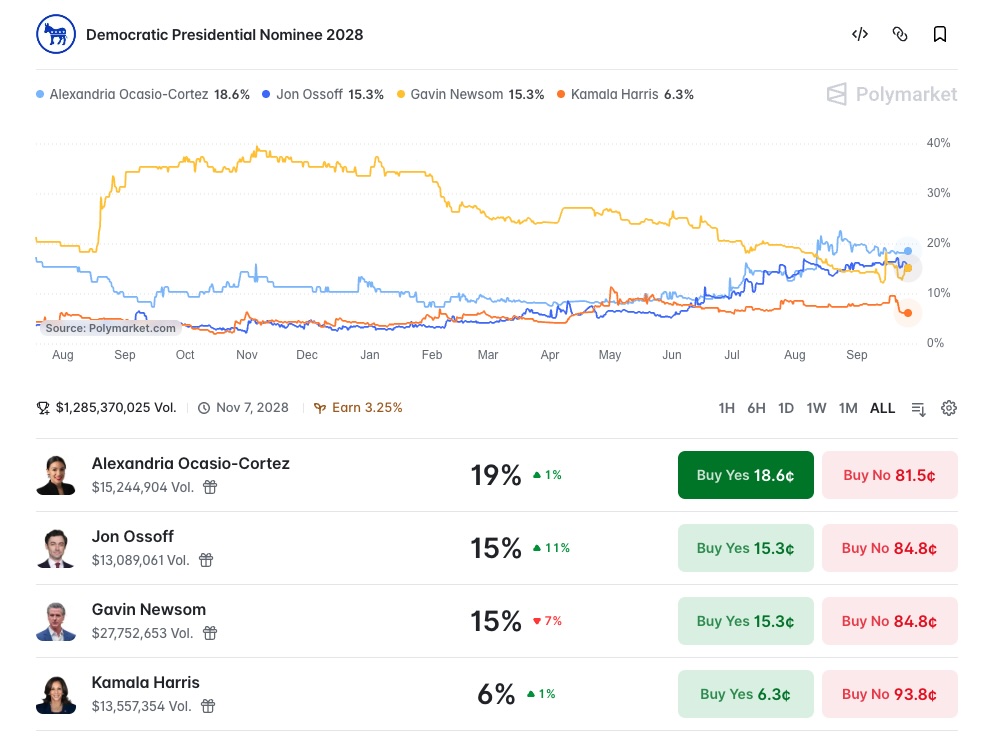
Both still look like exchange tickets: Yes or No, market or limit, hold or sell. International trading means wallet signatures and network details. U.S. trading looks closer to a brokerage checkout. Do not assume “no trading fee” without the live schedule.
FanDuel Predicts: App Checkout and a Payout Fee
FanDuel Predicts is built into the FanDuel sportsbook app. The prediction market portion will be legally available to users in most states, but it will differ from the states where FanDuel operates its legal sportsbook. The app will identify your location and show you what is allowed in your area.
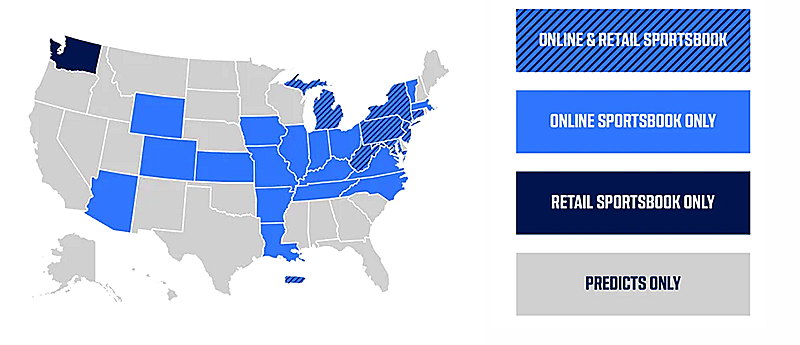
The prediction markets on FanDuel Predicts will closely mirror Kalshi and Polymarket, and the account mechanics will be very familiar to existing FanDuel sportsbook users. FanDuel’s page explains how Predicts payouts work.
How FanDuel Predicts Is Different
One noticeable difference with FanDuel Predicts is the fees. FanDuel charges two cents per dollar of potential payout at checkout and again on an early cash-out. A $100 potential payout means a $2 fee in that example. A 60-cent winner pays out a net 98 cents. Losing tickets do not charge any fees.
The app seeks the best available price to fulfill orders and may combine several pricing levels to fill your size. If the market jumps during checkout, price slippage protection will send you back to approve a new number. This differs from market orders on Kalshi and Polymarket, which, once submitted, go through at the best available price and commit you to whatever the final price is.
You can hold your FanDuel Predicts contracts to settlement or sell early when cash-out is offered. Winning settlements often land as pending payouts you can reuse almost immediately on new trades, then become withdrawable after a short processing window. Buying allocations uses deposits first, then payouts.
Finally, FanDuel Predicts sources prediction market contracts through third-party relationships; it is not the certified exchange itself, like Kalshi or Polymarket. While all trading will appear seamless on the app, do be aware you are technically purchasing contracts through other exchanges, which may or may not show on your screen, but their contract rules will apply.
OG.com: Live Markets, Limits, and Extra Tools
OG.com is Crypto.com’s standalone prediction-market product. Sign-up is identity-checked. Funding is in dollars. The flow is: browse, pick Yes or No, size the order, review fees, confirm. Official pages describe that loop for events and sports, including live in-game trading. See OG’s beginner trading guide.
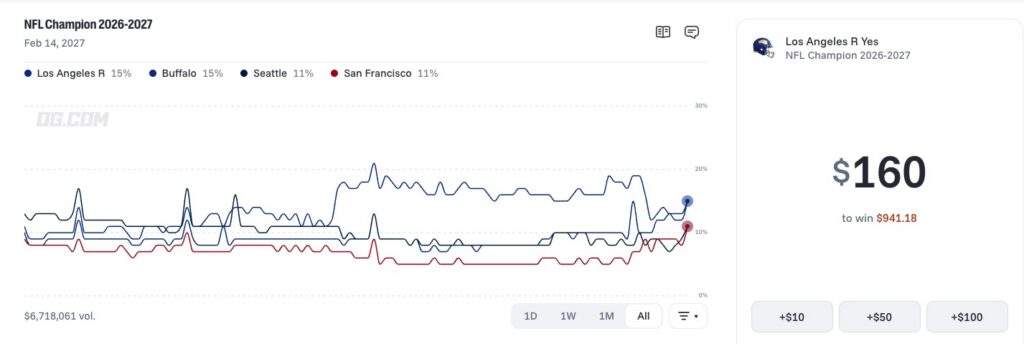
OG allows for combination contracts that package several legs into one position. They operate essentially as parlays in traditional sportsbooks.
Live trading is both a feature and a potential hazard. A pregame number can be gone by the second quarter. Unlike sports betting with locked tickets, you can sell your contracts throughout the game as the market numbers shift. If you’re not actively watching and scanning live, you are missing out on a large part of prediction market opportunities.
Fee language has two layers, so trust the ticket: some notes describe a 2% charge plus a small early-exit cost, while the derivatives path also uses a probability-weighted maker-taker schedule. All fees will be noted. Check them.
Novig: Take, Make, Sports-Only Book
Novig has made an early name for itself with its Sydney Sweeney marketing and as the “sports-only” prediction markets app. As with other prediction markets, Novig matches sports traders with each other, not with a house line. Contracts still settle at $1 or $0.
A key difference, from Novig’s FAQ, is take versus make. Take lifts the posted price. Make posts your price and waits. This difference is somewhat similar to the Market Order versus Limit Order on Kalshi and Polymarket.
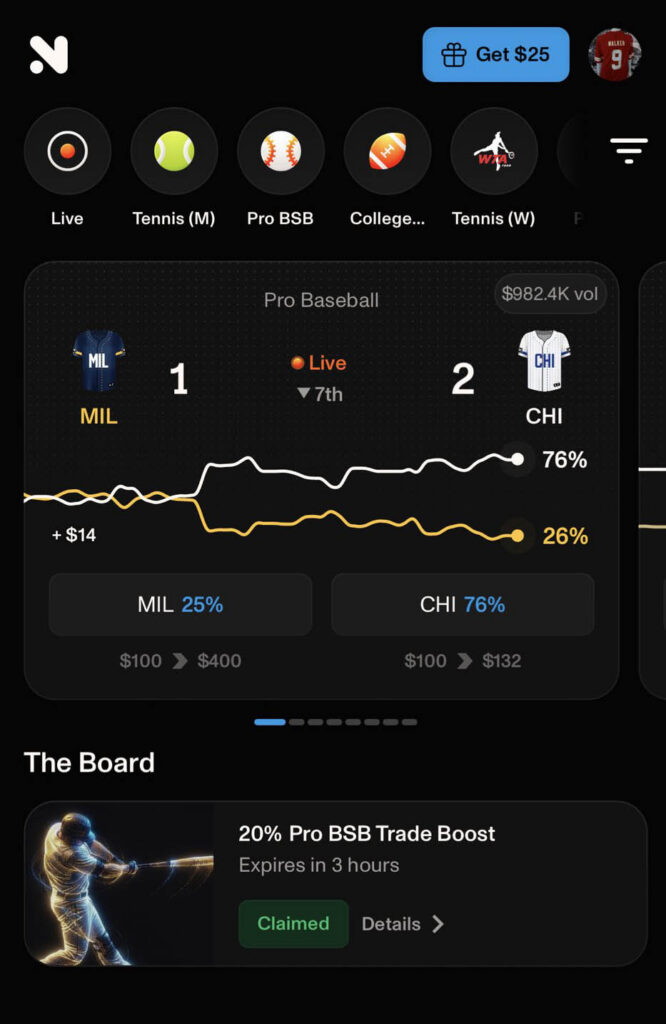
Matched pregame straights are often cheap or free of venue fees. Fees show up more on live straights and multi-leg combo contracts (parlays), using a coefficient on price, one minus price, and contract count. Props where the market is thin on traders may also see the venue encourage a matching trade for a charge. Read the slip before purchase. Transaction fees are never hidden.
You can close contracts early by trading back into the same book. Settlement follows official sports league results as posted officially by those leagues. Novig’s 2026 designated-contract-market product uses ordinary cash deposits and withdrawals.
ProphetX: Fill My Stake, Set My Odds
ProphetX is another sports-first peer-to-peer book with sportsbook-like screens and exchange matching. Its help page on market orders versus limit orders describes all the possible order buttons. “Fill My Stake” enters a stake and hits the best available odds. “Set My Odds” names a price and waits. You will notice its mechanics are very similar to a traditional sportsbook app.
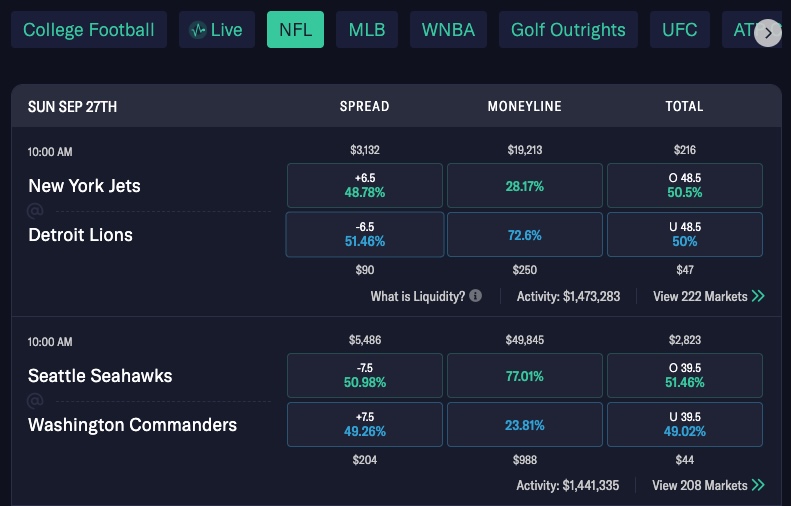
Until Set My Odds is matched, you have no position. ProphetX has stated it does not run an affiliated desk that automatically takes the other side. Keep this in mind.
Straight trades are commonly a 2% fee on net gains. Losing trades do not pay that success fee. Combination plays (parlays) are often advertised at 0% on net gains, matched through a request-for-quote style process. Confirm the live slip, including any VIP tier. All fees will be on your contract order slip before you purchase. Review them to avoid unpleasant surprises.
Makers (early position takers who supply liquidity into markets) can earn rewards for generating market depth. Traders who only Fill My Stake into thinly traded player props will see the other side of that design: partial fills and vanishing prices.
Get Started Trading
As with any market, you want to buy low and sell high. But what is “low” and “high”? To figure that out, you need a price in mind, and that price is the probability you assign to the market outcome. If your expected probability is, say, 62%, then any price below 62 cents is low, or what you believe is undervalued, and anything above 62 cents is a price you believe is overvalued or high.
Remember, the best way to profit in prediction markets isn’t to be a great forecaster; it’s to be a great trader. Profits made in trades are guaranteed. Holding contracts until events conclude is the gamble.
Find a prediction market platform available in your area. Set up an account. Verify. Fund. Find a market. Read the market settlement rules. Click a small contract order below your expected probability of outcome: a good price. Note the projected actual cost and all fees involved. Log everything in your notes to learn from wins and losses and what specifically went right or wrong.
Stay on one app for a week before opening a second. Cross-platform gaps are real. As noted in our example, even between Kalshi and Polymarket, the two big ones, prices will differ in the same market questions. Find the best price for your predicted outcome.
Prediction markets take time, focus, and skill. You can only improve the latter with experience. Do not expect your game to be strong when you first start. Learn and advance.
FAQ: Trading Prediction Markets
Do all prediction market apps fill orders the same way?
No. Kalshi and both Polymarket venues use exchange-style tickets with market and limit orders. FanDuel Predicts often combines several price levels at checkout and may ask you to approve a new number if the price jumps. Novig and ProphetX split the choice into take/fill-now versus make/set-your-price.
What is the difference between Polymarket and Polymarket US?
They are separate venues, not one book with a switch. The international product funds in crypto, usually USDC through a wallet, and keeps its own on-chain book. It is technically not available to U.S. residents. Polymarket US is the CFTC-facing dollar product. It needs identity checks, uses approved dollar funding, clears off-chain, and does not share liquidity with the international book.
How do fees differ across Kalshi, FanDuel Predicts, OG.com, Novig, and ProphetX?
Kalshi typically charges a small per-contract fee, up to about 50¢. FanDuel Predicts charges two cents per dollar of potential payout on winners and early cash-outs. OG.com shows the fee on the confirmation ticket and may use a maker-taker schedule. Novig often charges little or nothing on matched pregame straights, with clearer fees on live trades and multi-leg contracts. ProphetX commonly takes 2% of net gains on straights and advertises 0% on many combination plays. Always use the live slip to see fees before purchase.
Can I sell a contract before the event settles?
Yes, on every venue in this guide, if another trader will take the other side. Kalshi and Polymarket sell back into the order book. FanDuel Predicts calls it cash-out and applies its payout fee. Novig and ProphetX close by taking or making against the same sportsbook. Thin markets may offer no usable sellers at any given time.
What should I trade first if I am new?
Pick one venue your funding method supports. Finish verification. Deposit only cash you can lose. Choose a market whose settlement rules you can read easily, preferably on a topic you already follow. Write your own probability before you look at the price. Cap the first ticket at 2% to 3% of your balance and log the order type, price, and reason.
Are sports prediction markets the same as a sportsbook line?
No. You are trading event contracts against other traders at a price that can move. No house line is baked into both sides the way a -110 ticket works. FanDuel Predicts and OG.com still feel sportsbook app-like, but the contract still settles at $1 or $0. Novig and ProphetX make that peer-to-peer match obvious because you either take a posted price or wait for someone to hit yours. While they may look similar, market mechanics and payouts differ.
Why can two apps show different prices for the same question?
Each venue has its own book, fees, eligible traders, and contract rules. Polymarket US does not share an order book with international Polymarket. A FanDuel Predicts checkout price is not Kalshi’s last sale. Sports-only books can also lag or lead when market activity is light, and liquidity is thin. Compare implied probability after fees, then trade only where you can actually get filled.