One noticeable feature of leading prediction market platforms is their obsession with quickly patching and fixing systemic issues in their markets. They are hyper aware that market integrity is a top concern for potential new traders. They ardently work toward mitigating exploits.
Polymarket moved quickly this week to shut down a costly vulnerability in its popular short-dated crypto contracts. After researchers documented patterns of last-second price pushes that let some traders walk away with millions, the platform replaced single-price snapshots with time-weighted average pricing. The change covers five-minute, 15-minute, and four-hour up/down markets and arrives with a $1 million liquidity rewards program meant to keep volume steady during the switch.
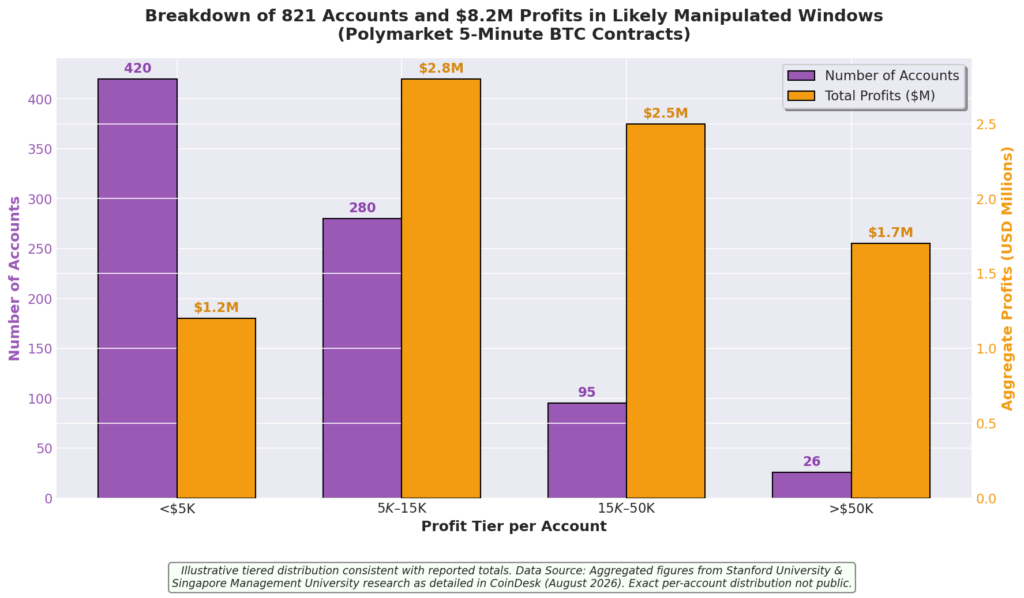
Traders closely watching the final moments of each expiring contract had seen the same sequence play out repeatedly. Large orders would hit the underlying spot market on Binance right before settlement, the price would jump or drop just enough to flip the outcome, and then it would reverse. A study examining roughly two months of five-minute bitcoin contracts identified 821 accounts that collected $8.2 million across windows classified as likely manipulated. Most losses fell on everyday traders who simply held positions into settlement, unaware of the last-second market manipulations.
How the Last-Second Price Push Worked
The mechanics of this market manipulation proved simple yet hard to stop under the old rules. A trader holding a large position on Polymarket could place aggressive orders on the spot exchange on Binance in the closing seconds. The resulting spike or dip locked in a favorable Polymarket settlement, after which the spot position could close for a small loss or even a gain. Because the prediction contract paid the full difference, the numbers favored the manipulator as long as the spot move stayed cheap. Small loss on the spot market for a big take on the prediction market.
The study’s data clearly showed the pattern. Unusually large Binance orders clustered in those final seconds, followed by rapid reversals once the market resolved. Retail traders who entered earlier absorbed the bulk of the losses while the same small group of accounts kept appearing on the winning side. The research stopped short of definitively proving intent for every trade; that would be technically difficult, yet the statistical clustering left little room for an explanation of pure coincidence.
Complaints had built for months. Traders shared screenshots and timing charts repeatedly showing the five-second window. One widely circulated analysis noted that the cost of moving the spot price for such a brief period stayed far lower than the payout available on the prediction contract.
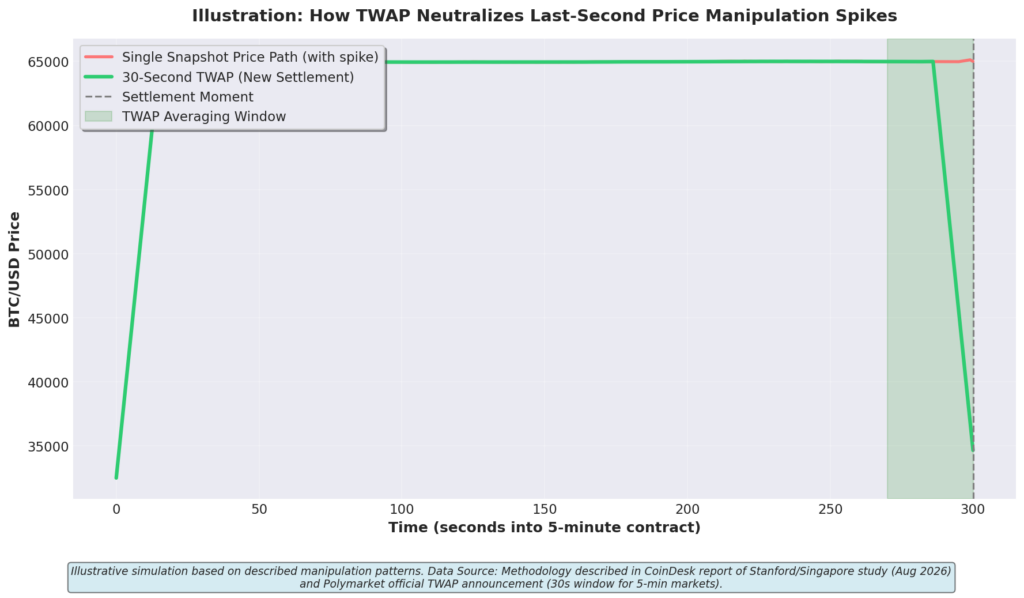
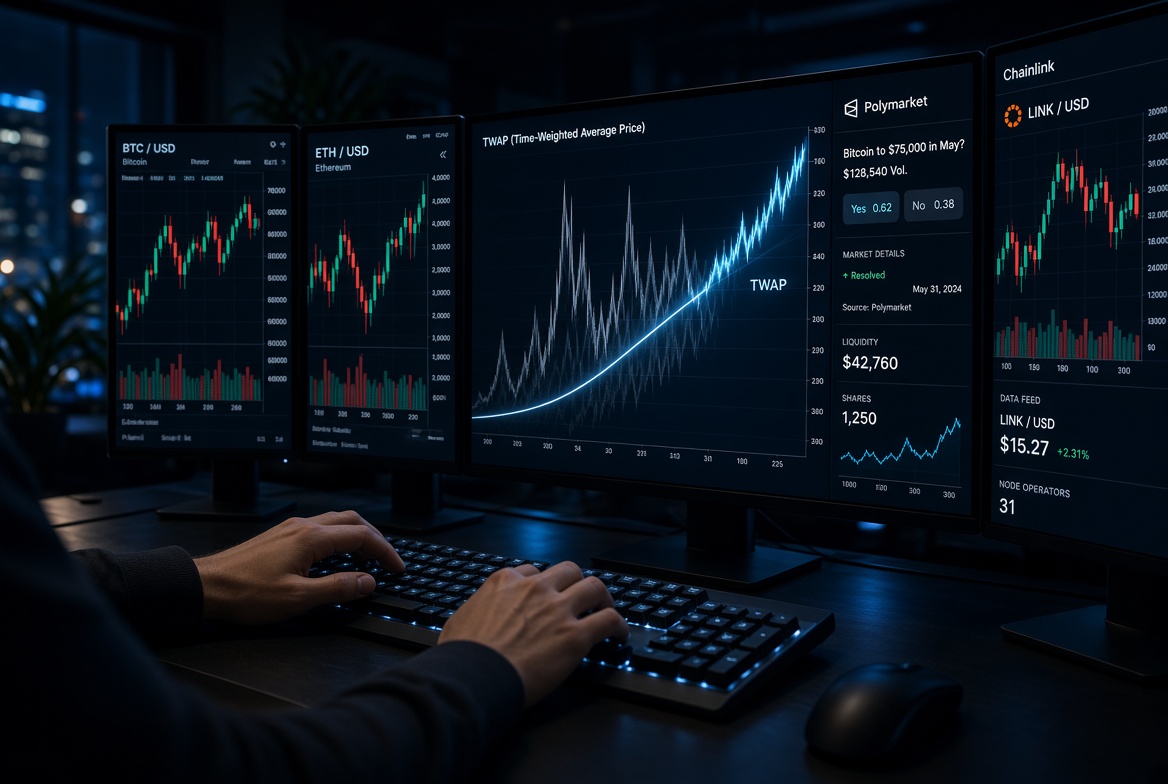
Switching to a time-weighted average price (TWAP) removes that single-point weakness. Averaging prices over a short, continuous window sharply raises the cost of sustaining a manipulated price. A trader now needs to maintain pressure on the spot market throughout the averaging period rather than on a single tick, making the approach far more expensive and less reliable. A purely economic obstacle to profiting from this exploit.
Chainlink Data Streams Power the New Rules
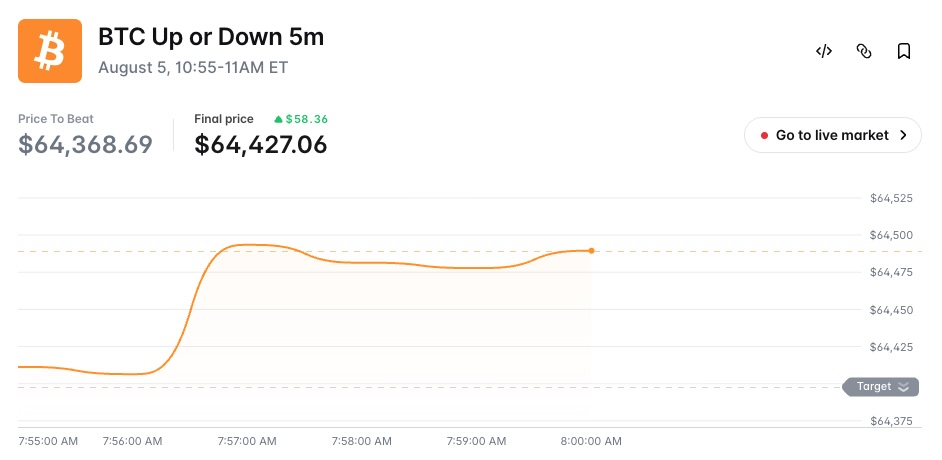
Polymarket selected Chainlink Data Streams to deliver the TWAP feeds. The network already provides high-frequency price data for major crypto pairs, and the integration lets developers pull averaged values directly. Testnet feeds launched first, with mainnet delivery timed to the August 7 rollout. Clear integration guides walk developers through both Chainlink feeds and Polymarket’s real-time data-streaming WebSocket.
The $1 million liquidity rewards program runs through the end of August across all affected markets. It aims to offset any temporary dip in volume while traders adjust to the new resolution rules. Early figures after the switch showed continued activity in bitcoin, ethereum, solana, and other major pairs, indicating the incentives helped maintain interest. In the longer term, the new market integrity measures should heighten interest in broad participation.
Kalshi had already relied on regulated price indexes and moving averages for similar contracts. Polymarket’s move to TWAP brings its short-dated crypto products closer to that standard and narrows the settlement gap between the two platforms. Traders monitoring the change reported smoother behavior on the first day, with contracts resolving closer to the broader price path rather than sharp last-second spikes, which are now heavily mitigated by TWAP.
One trader who had tracked the old vulnerability for weeks called the difference night and day, noting the five-second trick no longer delivered consistent profits. Automated systems adapted quickly thanks to the published feed identifiers, SDK examples, and testing guidance released before the cutover.
Steady Volume and Stronger Integrity Going Forward
Volume across the updated markets held firm in the hours after the switch. Bitcoin five-minute contracts continued to draw consistent flow, while longer-duration markets saw traders testing the new averaging windows. The rewards program pretty clearly encouraged market makers to stay active rather than step aside during the transition.
Many traders welcomed the platform’s decision to act once the research became public. The update also stands as a practical example for any prediction market platform listing contracts that settle against volatile, ever-changing spot prices.
The change does not eliminate all forms of market risk. Price impact and oracle latency continue to matter. Still, the specific five-second exploit that had drained millions is now substantially harder and costlier to attempt. The speed and commitment to tackling exploits have been hallmarks of successful companies in the digital age since its beginning. Polymarket, Kalshi, and other major sector companies have made a very public point of addressing any market integrity issues expeditiously.
References
- CoinDesk: How a five-second trick let traders drain millions from Polymarket
- CryptoNews: How a five-second trick let traders drain millions from Polymarket
- Crypto Economy: Polymarket drained after traders exploited brief price manipulation window
- Polymarket Traders X post announcing TWAP upgrade and $1M rewards
- Polymarket documentation: Chainlink TWAP integration guides