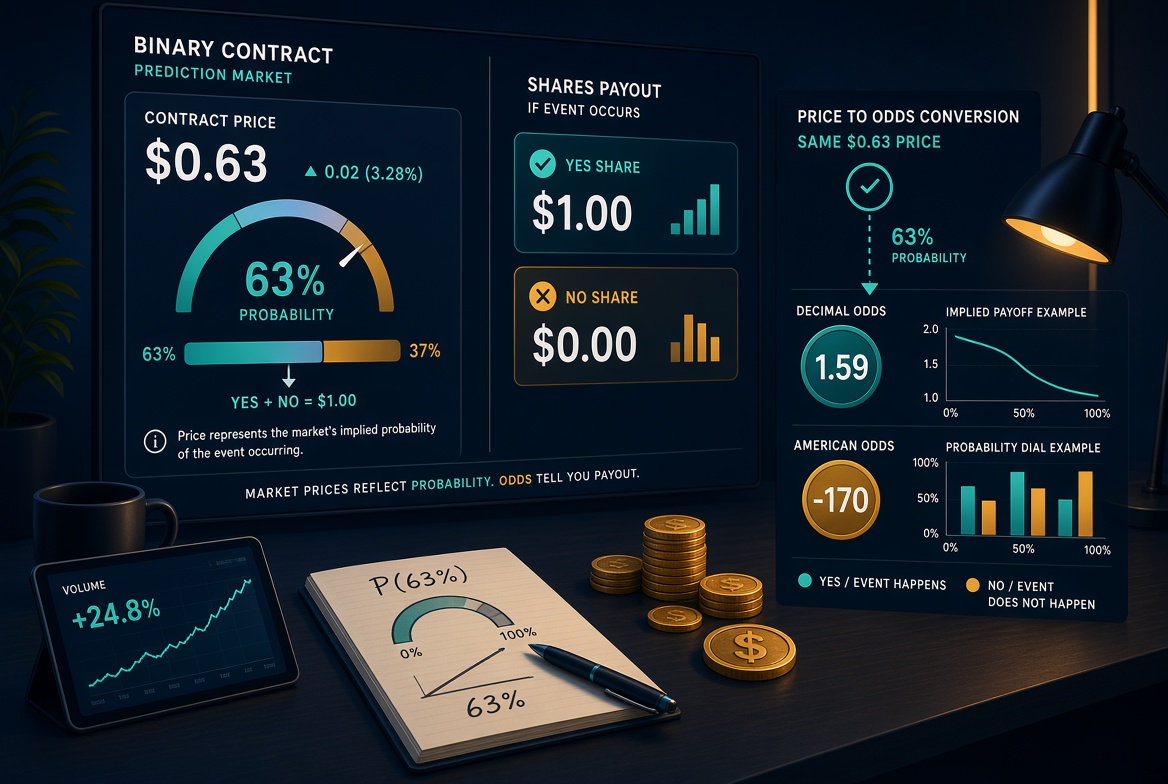
Event contracts sit at the center of prediction markets; contract pricing is almost startlingly simple. A Yes contract or a No contract on opposite sides of the same question. Each side trades between $0.01 and $0.99, representing your probability of being right, from 1% to 99%. If you are correct when the question resolves, that contract pays $1.00. If you are wrong, it pays $0.00.
That classic 100-based system has been taught to people since childhood. Dollars and cents. Percentages. Scores on tests. And it’s the whole language of a prediction market. It’s intentionally simple.
As an example, a Yes price of $0.72 is a live estimate that the event has about a 72% chance of happening. A No price of $0.28 tells the same story from the opposing side. Traders buy and sell as news and information arrive and affect market prices, and probabilities adjust continuously. Like the stock market, only this market is open 24×7.
This beginner’s guide covers how event contracts work, how to read YES/NO pricing from $0.01 to $0.99, and when it makes sense to hold through settlement or sell early.
What an Event Contract Actually Is
An event contract is a yes-or-no claim on a defined real-world outcome. The question has to be specific enough to settle cleanly. “Will the central bank cut its policy rate at the September 15 meeting?” works. A vague line about “the economy feeling better” does not. It’s like the old game of 21 Questions. Only Yes and No questions.
A Yes contract pays only if the event occurs exactly as written. A No contract pays if it does not. There is no partial credit. At market settlement, your contracts pay out $1 or $0. The wording and the resolution source decide the result. Calculating wins and losses is simple.
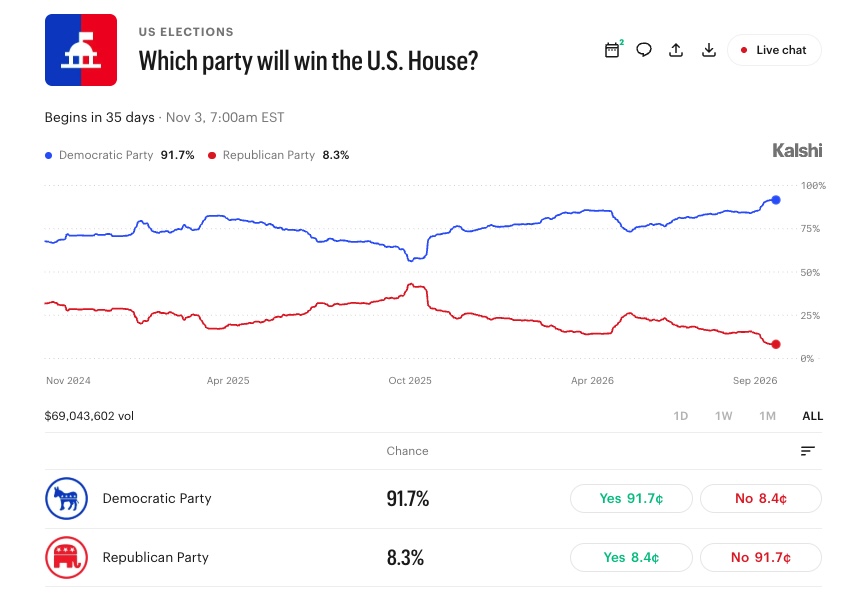
Unlike a betting slip, a prediction market contract is a tradable asset. After purchase and before the market settles, you can resell your contracts. You might do this if the market price rises and you can sell your contracts for a guaranteed profit (i.e., you bought contracts at Yes $0.42 and the price is now $0.58), or the reverse: the market is falling and you want to cut your losses. Or merely because you’ve personally changed your mind on the likelihood of the outcome you purchased.
Many traders in prediction markets never even hold their contracts to see if their forecast was correct. They are there to earn off trades, buy low, sell high, and earn on the market movements, not accurate prediction skills.
Why Prices Live Between $0.01 and $0.99
Because a contract settles at either $1.00 or $0.00, venues typically keep quotes inside $0.01 and $0.99 so the market can still trade near certainty without hitting a hard wall at zero or one. A $0.01 Yes price says traders see almost no chance. A $0.99 Yes price says they see almost no doubt.
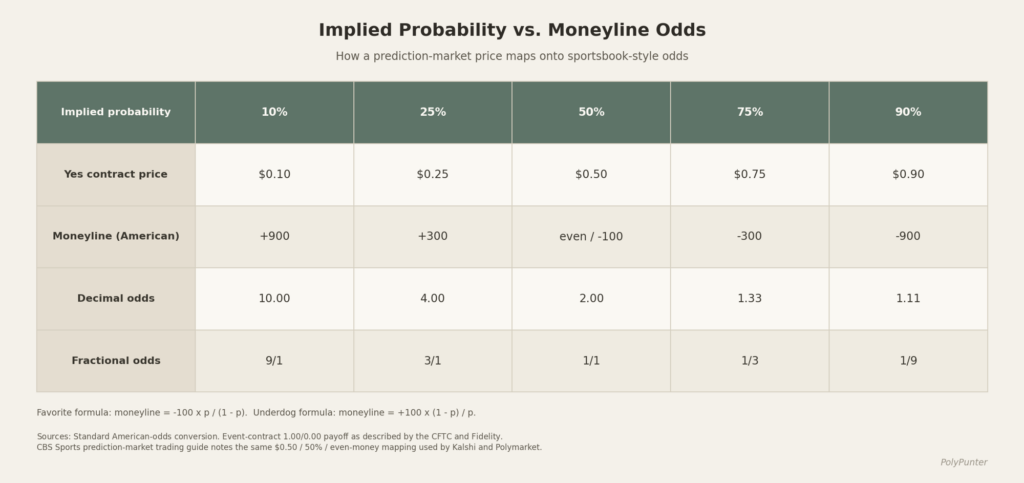
A prediction market exchange matches opposite orders rather than taking the other side as a house book. That matching is why you can read the price as a market-implied probability instead of a posted line. If you’re familiar with sports betting lines, here are some examples of how prediction market prices translate to popular betting style odds:
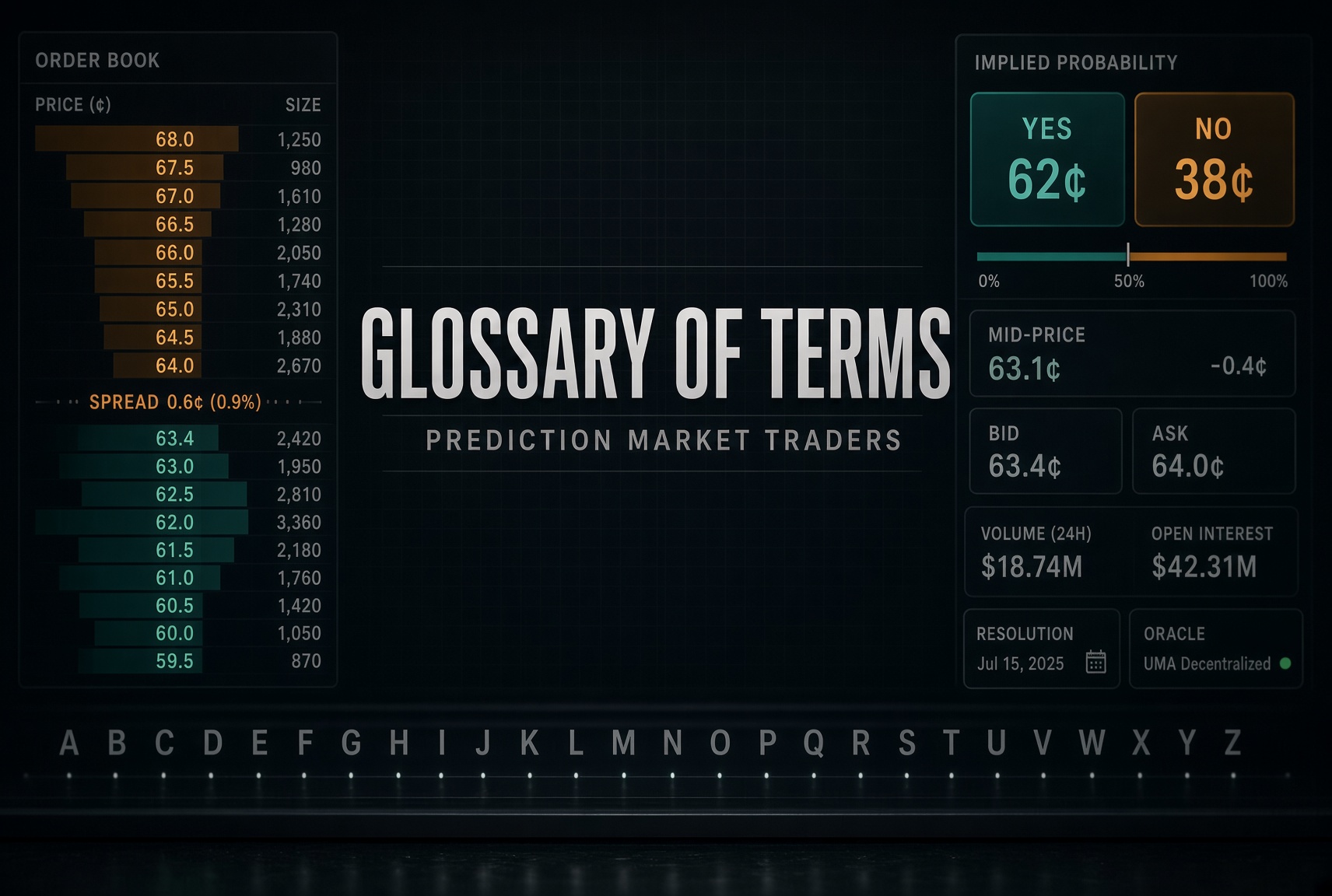
Yes and No prices don’t always add to exactly $1.00 in a live book because bids and offers sit a tick apart.
That gap is the spread. If Yes last traded at $0.51 and No last traded at $0.50, the two sides are close but not glued together. Thin markets, where fewer traders are active, show wider spreads. Busy markets usually squeeze them to about a penny.
Price discovery starts the moment a contract lists. Early contract price quotes may look jumpy because few orders sit on the book. As more traders arrive, the quote usually tightens around the crowd’s current view. New data then knocks that view around again, and it never stops until the market closes on settlement.
Prediction markets heavily favor highly involved traders and disfavor those who buy contracts and simply sit on them until settlement.
How to Read YES and NO as Implied Probability
Implied probability is a technical way to say: what are the odds this happens? In prediction markets, implied probability is always expressed in a market price between $0.01 and $0.99. The market price balances all traders’ estimates of the implied probability that the event outcome is Yes or No. It does so by having traders buy contracts they believe are too low and sell contracts they believe overestimate the probabilities. The market arrives at a price.
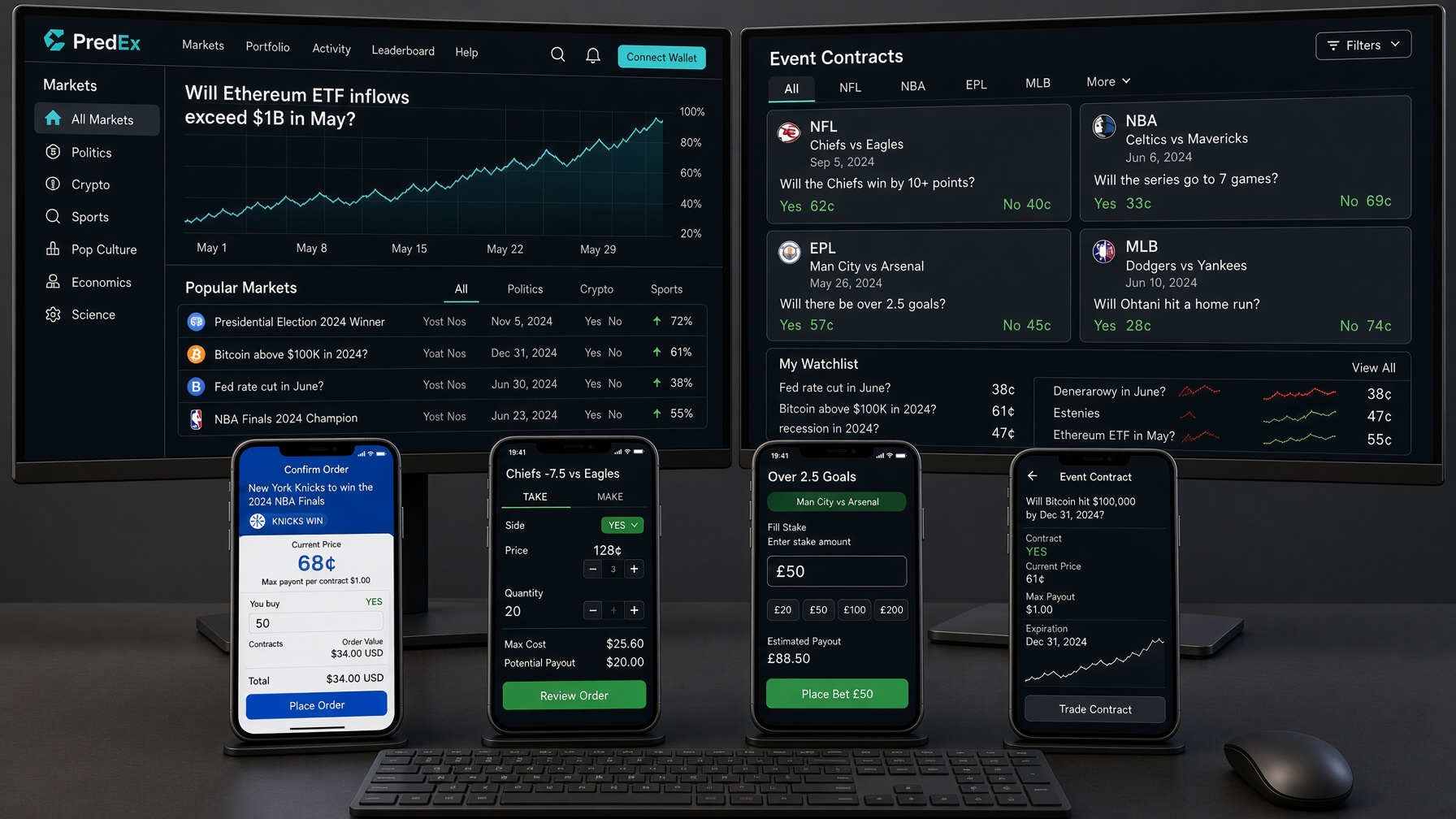
Suppose a contract asks whether a monthly jobs report will come in above a stated threshold number. Yes trades at $0.35, implying a market consensus probability of 35%. If you estimate that probability at 45%, you’d want to buy into the market at $0.35. Conversely, if you’re more bearish on the likelihood of the jobs report coming in above the threshold, you could buy No contracts at $0.65. In all cases, the correct prediction earns you $1 per contract.
You can buy as many contracts as you like, or as many as are available, so this math scales with the number of contracts you purchase. If you purchase 1,000 contracts at $0.35 for $350 and you are correct, the payout will be $1,000, or a profit of $650 (minus fees, so do check those before any trades).
Most trading occurs toward mid-level pricing. Very few trades happen when prices approach the edges, like $0.05 or $0.95; it’s like extreme favorites or extreme longshots in betting. The money to be won on extreme favorites is small, and few people are willing to risk money on what almost the entire market views as extremely unlikely.
Buying, Selling, and Getting Out Early
You do not have to hold contracts until settlement. If you bought Yes at $0.40 and the quote later sits at $0.62, you can sell and lock in the profits without waiting for the official result. Selling early on a gain turns a speculative payout into a smaller, guaranteed payout.
As market prices approach the edges, the math becomes increasingly compelling for exiting. If your $0.40 purchased contract now sits at $0.88, you’re holding only for that remaining 12 cents to be gained at settlement, but you still risk losing it all. Of course, as prices approach the edges, it becomes harder to find traders to match your offers.
Market prices are a snapshot only. They reflect traders’ current view of the odds. A speech, a data release, or an injury report can shove a quote 10 points in minutes. Holding through that swing is a choice, not a requirement.
It points out that carefully tracking your markets and updating prices is key if you’re considering exiting early. If you’re not paying close attention to shifting prices, you’re likely missing opportunities to exit at better prices. You may be better off holding until settlement to measure how accurate your original prediction was.
Settlement, Rules, and Why the Fine Print Pays
Settlement is the moment the contract becomes worth $1 or $0. Trading stops after the outcome is known under the written resolution rules. Winning holders receive the settlement value. Losing holders receive nothing but hopefully a valuable learning tool for next time.
Market rules decide close calls. Does “win” mean a projection, a certified count, or the person who takes office? Does a rate-cut contract follow the policy statement or the implementation date? As always, on PolyPunter, we repeat: read the market settlement rules. They are listed on every market page and will save you an immense amount of confusion, if not heartache. No feeling is worse in prediction market trading than thinking you won, only to find out you lost.
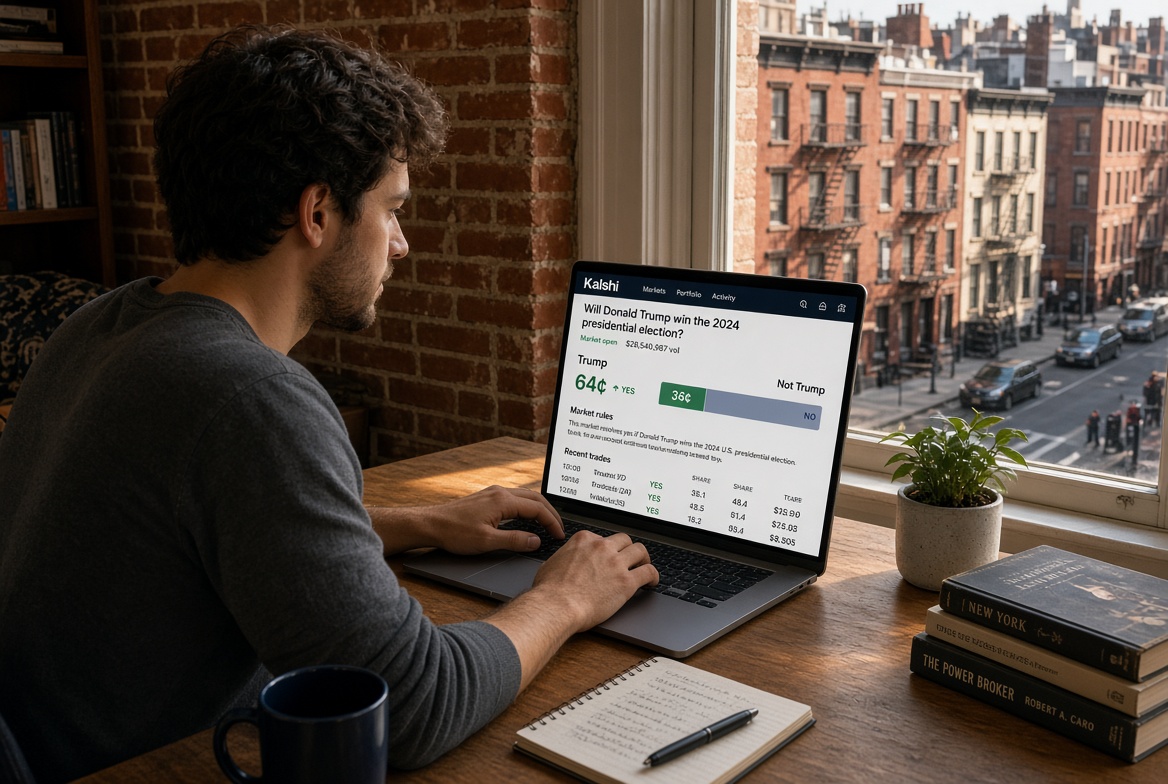
U.S.-listed event contracts of this kind fall under derivatives oversight. The Commodity Futures Trading Commission oversees designated contract markets like Polymarket and Kalshi that list them. That does not mean disputes will never arise, but it does mean these markets meet the CFTC’s requirements for design, settlement, and oversight. This is still a relatively new legal market system, and it still has growing pains as new, unanticipated situations arise.
Fees also change the true price. A two-cent fee on a $0.50 contract is a much larger bite than the same fee on a $0.90 contract. Always subtract fees and transaction costs before you decide that the market is “wrong.” Your purchase order slip will show you call fees and costs before you approve. Do factor these costs into your profit calculations, or what you thought might be a small profit on a trade could end up being a small loss.
FAQ
What is an event contract?
An event contract is a yes-or-no claim on a defined real-world outcome. A Yes contract pays $1.00 if the event happens as written. A No contract pays $1.00 if it does not. The losing side pays $0.00.
Why do YES and NO prices trade from $0.01 to $0.99?
The contract settles at either $1.00 or $0.00, so the live quote sits between those two endpoints. Venues usually keep trading between $0.01 and $0.99 so the market can still move near certainty without locking at zero or one.
How do I read a contract price as a probability?
Treat the dollar price as a percentage. A Yes quote of $0.72 implies about a 72% chance the event occurs. A No quote of $0.28 is the other side of the same view.
Do Yes and No prices always add up to $1.00?
Not always on a live book. Bids and offers sit a tick apart, so the two sides can sum to a little more or a little less than $1.00. That gap is the spread liquidity providers (market makers) earn for standing ready to trade. You can think of this as a “vig”.
What can I make or lose on one contract?
Your maximum loss is the price you pay. Buy Yes at $0.35, and you risk $0.35 to profit $0.65 before fees if Yes resolves. Buy Yes at $0.95, and you risk $0.95 to make $0.05. Cheap contracts offer a large payoff but a low implied chance to succeed. A long shot.
Do I have to hold an event contract until settlement?
No. You can sell before the outcome is official. If you bought Yes at $0.40 and the quote later sits at $0.62, you can exit and lock in that profit instead of hoping for the full $1, which is of course a risk.
What should I read before I trade?
Read and understand the exact question and the market resolution rules. The rulebook, not a media headline, decides close calls. Also subtract fees and the spread before you calculate a contract’s potential profit.
How should a new trader place a first order?
Start with a market in an area you already follow. Compare your own forecast probability with the current price quote. Trade only if those two numbers differ by more than fees. Keep size to one or two contracts until you have seen a settlement and see how all the market mechanics work.