A King County (Washington) Superior Court ruling is reshaping access to a wide array of event contracts after Judge John McHale issued an amended order requiring KalshiEX to stop offering, accepting, or facilitating certain trades. The decision targets contracts tied to sports, elections, politics, entertainment, culture, tech, science, and mentions. Traders in Washington holding open positions can still exit them, yet new activity in those categories faces immediate barriers. Attorney General Nick Brown described the move as essential to enforcing rules against unlicensed operations that risk harming consumers.
The order stems from a preliminary injunction first granted in July 2026. Court filings show McHale determined that Kalshi likely violated both the state’s Gambling Act and Consumer Protection Act by operating without proper licensing or registration. Advertising that presented the service as legal further misled consumers, according to the ruling. Kalshi has signaled disagreement and is reviewing all available legal paths forward while preparing to meet the technical requirements outlined in the ruling.
Implementation timelines leave little room for delay. An IP-address-based geofence and a residency-based geofence must go live by August 19, 2026. A more robust multi-source solution via GeoComply is due by September 2, 2026. Missing the later deadline could trigger daily penalty payments of $120,000 until full compliance is achieved, though the court retains discretion to adjust based on any submitted explanations. These steps aim to block future access while preserving records of related activity for ongoing review.
Scope of Restricted Event Contracts and Remaining Options
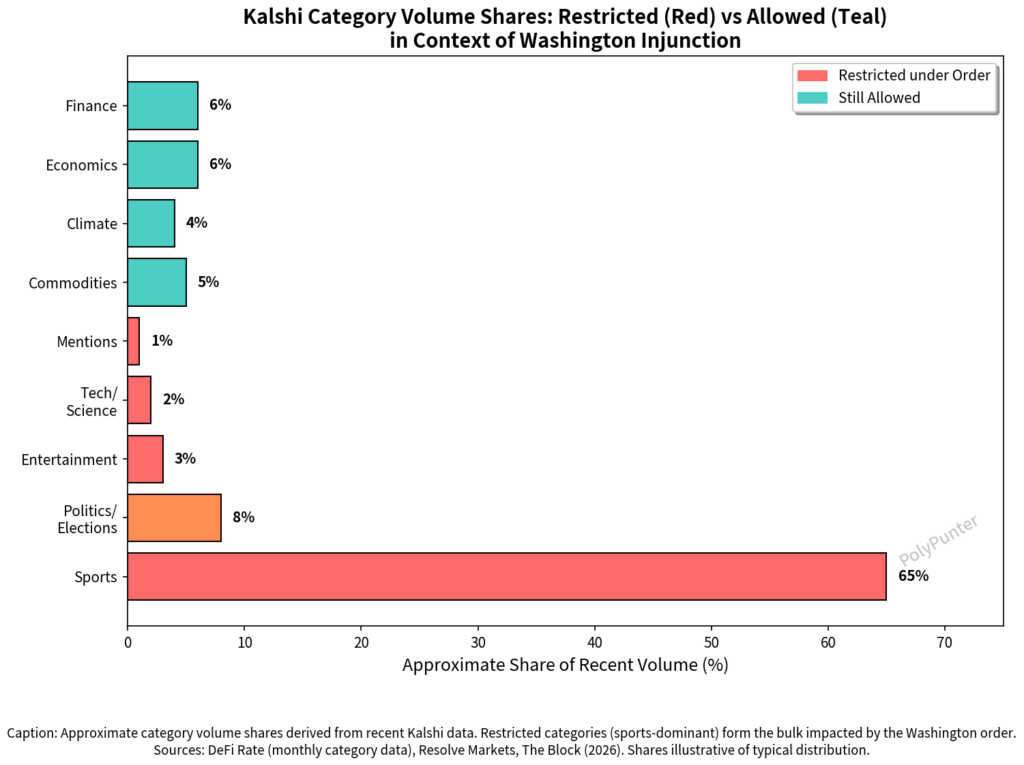
The injunction covers a substantial share of recent volume, especially sports-driven contracts that have grown sharply. Mentions markets, where traders wager on whether a public figure will utter specific words, also fall under the ban because of heightened risks of unfair advantages. Marketing and advertising for any covered contracts must also cease. McHale ruled that promoting these activities constitutes unfair or deceptive practices under consumer protection statutes.
Not every contract disappears. Those linked to commodities, climate, economics, and finance remain available. This carve-out allows continued trading in areas the court viewed as less intertwined with traditional gambling definitions. Existing positions in restricted categories can still close, giving traders a window to manage exposure without forced liquidation. The order explicitly preserves that flexibility while directing the company to prevent new contract orders from within the state of Washington that would violate the injunction.
Brown emphasized the broader pattern in his statement, noting how promotion of sports, elections, natural disasters, and related events had generated significant activity. The court found that each contract involves staking something of value on a future contingent event or a contest of chance, which aligns directly with statutory definitions of gambling. Earlier appeals to stay the injunction were denied, clearing the path for these deadlines to take effect.
Compliance monitoring will include preservation of logs, communications, geolocation data, and marketing records related to affected traders within Washington. Failure to maintain these materials could invite further court action. Meanwhile, the multi-source geofencing requirement draws on technology already used in other regulated settings, aiming for higher accuracy than simple IP checks alone, which are readily circumvented by VPNs and other IP-masking tools.
Company Response and Next Steps on Compliance
As in all its defenses to state actions, Kalshi maintains that federal oversight by the Commodity Futures Trading Commission confers exclusive jurisdiction over its designated contract market. A Kalshi spokesperson stated that the company respectfully disagrees with the decision and continues to evaluate legal options. The firm has never listed certain sensitive categories such as wildfires, citing concerns over perverse incentives, and has avoided markets involving war, death, or terrorism.
Technical teams are now racing to deploy the initial geofence while coordinating with GeoComply for the September upgrade. The order permits discussion of the solution details with relevant parties to ensure effective blocking. Daily volume data and open interest figures will likely shift as restricted categories become unavailable to Washington residents, though exact percentage impacts remain under review as systems activate.
Traders already active in the covered markets face no forced exits, yet no new trades in these categories will be allowed. Court documents further ban any advertising that could reach restricted audiences, closing off promotional channels that previously promoted easy access to sports and political outcomes.
AG Brown’s office has pledged continued enforcement to protect consumers from activities deemed illegal under state statutes. The combination of technical barriers and marketing restrictions creates layered compliance demands that Kalshi must navigate carefully to avoid escalating daily financial exposure, even as the case is likely to face appeal and a jurisdictional battle.
References
- Washington Attorney General Press Release on Kalshi Order
- Ars Technica Coverage of the Injunction
- Amended Court Order PDF
- Bloomberg Report on the Ruling
- New York Times Article on the Decision
- The Verge Summary of Restrictions
- CryptoBriefing Details on Remaining Contracts
- The Block Analysis of Geofencing Requirements
- Washington State Standard Report
- Quartz Overview of Deadlines and Penalties
- Decrypt Coverage of Company Position
- Sports Business Journal Update