
Another week, another state targets prediction market platforms with an order to stop.
Missouri Attorney General Catherine Hanaway has ordered six companies to stop selling sports event contracts unless they obtain a state sports wagering license. The September 16 letters name Polymarket, Kalshi, Crypto.com, Novig, Underdog, and Robinhood. Basically, 99% of the market. Her office says a contract that pays on a game result is still a sports wager under voter-approved gambling law, not a product that can skip the Gaming Commission. The standard line from state attorneys general.
The official announcement quotes Hanaway directly: companies cannot “repackage sports bets as ‘event contracts’ to avoid” state law. She is demanding a license from the Missouri Gaming Commission, payment of taxes and fees, and a hard ban on sports wagers by anyone under 21. Missing that bar, she says, will bring legal enforcement from her office.
Licensed sportsbooks have operated in Missouri under Amendment 2 since December 1, 2025; they already remit a 10% tax on sports betting gross receipts. Hanaway is treating the six firms as rivals that take sports volume without matching those financial duties. She told Heartland News the products look like sportsbook tickets even when the paperwork says “contract”. She now follows a growing list of state law enforcement officers issuing the same statements and bans.
What the Letters Require Within 30 Days
Each letter gives the recipient 30 days to confirm in writing that it will comply or stop sports wagering activity for people in the state. The Polymarket letter and the Kalshi letter lay out the same two options: cease the sports product, or get licensed, pay taxes and fees, and keep anyone under 21 off sports contracts. Essentially, abide by the same laws that apply to licensed sportsbooks.
The filings sent to Crypto.com, Novig, Underdog, and Robinhood follow that same template. Hanaway is not asking the firms to pull every contract they list. She is drawing the line at sports outcomes. Licensed operators in Missouri face initial and five-year renewal fees of up to $500,000, with revenue steered toward schools and the Compulsive Gaming Prevention Fund. They allow gambling, but it’s “for the children”.
According to reports, Hanaway expects to file lawsuits if the prediction marker firm responses come back vague.
She has said she hopes for a settlement and has pointed to deals other states have struck. Still, the letters are blunt: confirm compliance within 30 days, or the state will sue. Based on similar paths in other states, these are not veiled threats of litigation. They will almost certainly occur.
Age Rules, Taxes, and Why the Handle Fight Matters
Missouri Amendment 2 set the legal sports wagering age at 21. Hanaway’s office says five of the six firms either allow younger users or lack checks that keep people under 21 from placing sports bets. Novig is the outlier with a stated commitment to a 21+ user base only. Novig still received the license-or-stop demand from the Missouri Attorney General.
Problem gambling counselors tie that age gap to easy app sign-ups. They argued younger adults can reach NFL and college prices without the identity gates licensed sportsbooks use. Hanaway is using that access argument to treat event contracts as wagering.
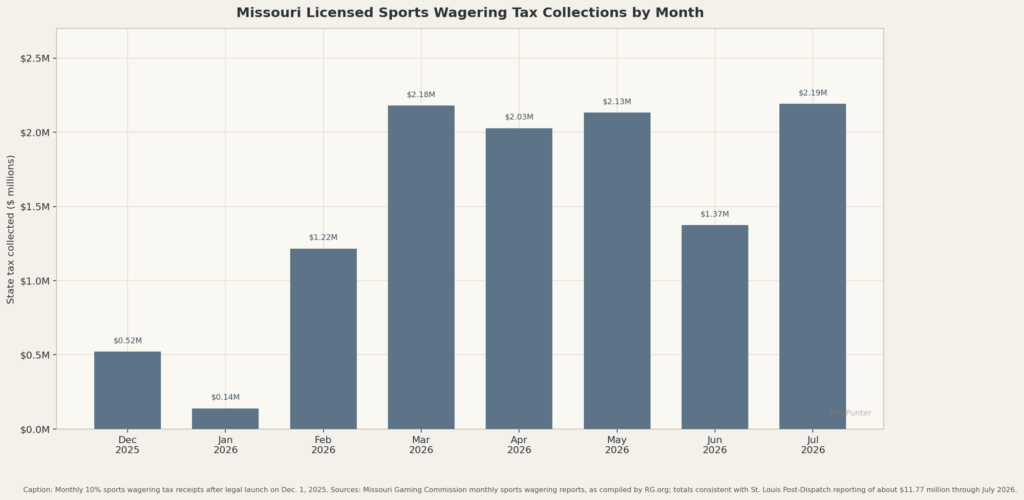
Meanwhile, the tax math is the other half of the case. Missouri residents have wagered about $2 billion since the legal sports betting launch. From December 1, 2025, through July 2026, the state collected about $11.77 million in sports betting taxes and projects more than $25 million by the end of November.
Hanaway told local media the prediction market contracts siphon money from taxed sportsbooks. Fee structures may differ, she said, but the result still fits the state definition of gambling. Therefore, the 10% gross-receipts tax is central to the state’s threat to prediction market platforms. They want their cut.
Federal Commodities Claims Collide With State Gambling Law
The companies argue that sports event contracts fall under the Commodity Futures Trading Commission. Robinhood says its event contracts are “federally regulated by the Commodity Futures Trading Commission and offered through Robinhood Derivatives, LLC, a CFTC-registered entity.” Polymarket said its U.S. venue is regulated by the CFTC, “not a patchwork of state rules.” Thus, the standard response from prediction market venues. We’ve seen these same arguments back and forth now in multiple state cases.
But Hanaway rejects that split. The release states federal courts have held that online sports wagering platforms remain subject to state gambling laws. It also says federal law does not preempt the state here, and that sports event contracts “do not qualify as ‘swaps’ governed by the federal Commodity Exchange Act.” She bases her statement on the Ninth Circuit’s recent ruling, though it currently conflicts with a recent Fourth Circuit ruling. So it’s hardly a nationally settled matter.
Until a higher court draws that line, Hanaway is acting as if the state already won. She is treating CFTC registration as irrelevant to the sports product, not as a shield. That is the legal wager inside the enforcement letters. Elected state officials have multiple constituencies to please.
What Traders May See Next
For traders, the live question is access. If firms geo-block sports contracts, football, basketball, and baseball prices disappear for accounts in Missouri. Non-sports contracts could remain, depending on how each venue reads the letters. Kalshi and Polymarket both run deep sportsbooks, especially now during the NFL season. Robinhood routes event contracts through a registered derivatives affiliate. Crypto.com, Novig, and Underdog sit closer to the sports-native crowd.
Additionally, a license would mean 21+ controls, tax filings, and Gaming Commission review that looks a lot like a sportsbook protocol. That is costly. It is also the only on-ramp Hanaway is offering right now. She has left room for later statutory changes, yet the letters say the only immediate options are compliance or exit.
Company statements so far double down on federal oversight. They are not volunteering for a state sportsbook license. That sets up a short collision: license, geo-block, or litigate. A stay would leave Monday slates untouched. A hard stop would shove sports volume back toward taxed books. The 30-day clock is short on purpose. Hanaway wants a yes or a no before the NFL calendar moves much farther.
References
- Missouri Attorney General press release
- Polymarket cease-and-desist letter (PDF)
- Kalshi cease-and-desist letter (PDF)
- Missouri Gaming Commission
- Legal Sports Report
- SBC Americas