And the legal battles between states and the federal CFTC and their purview over prediction markets continue in near-daily news.
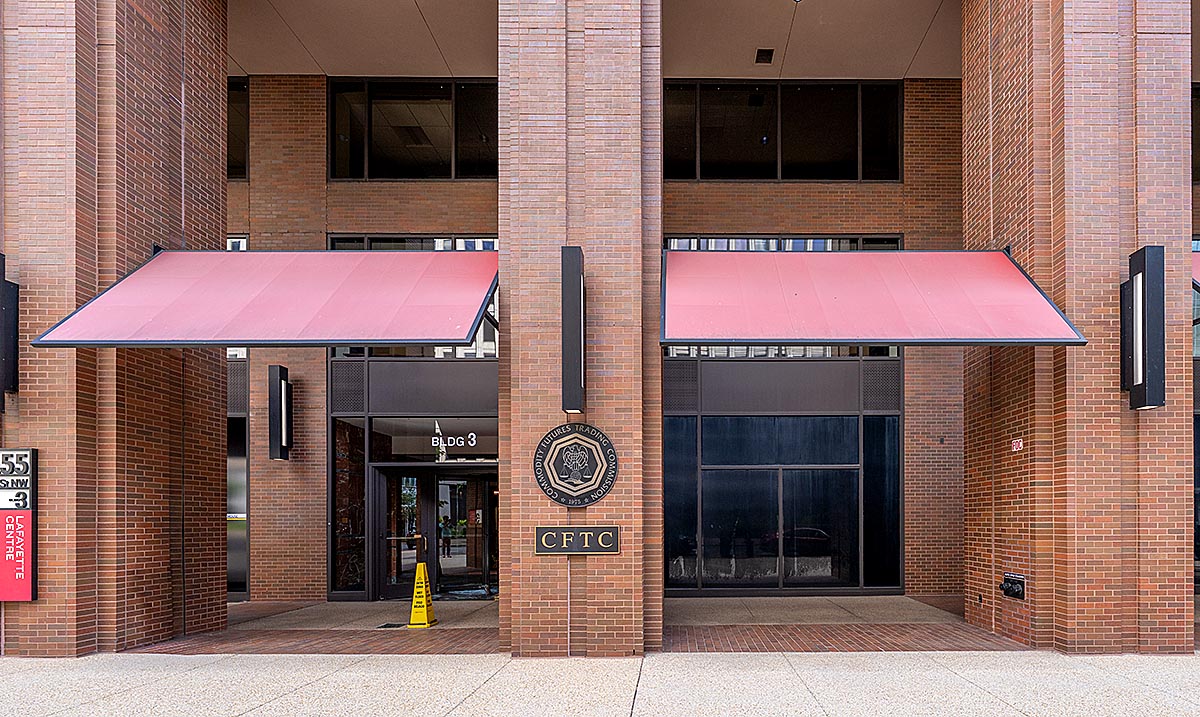
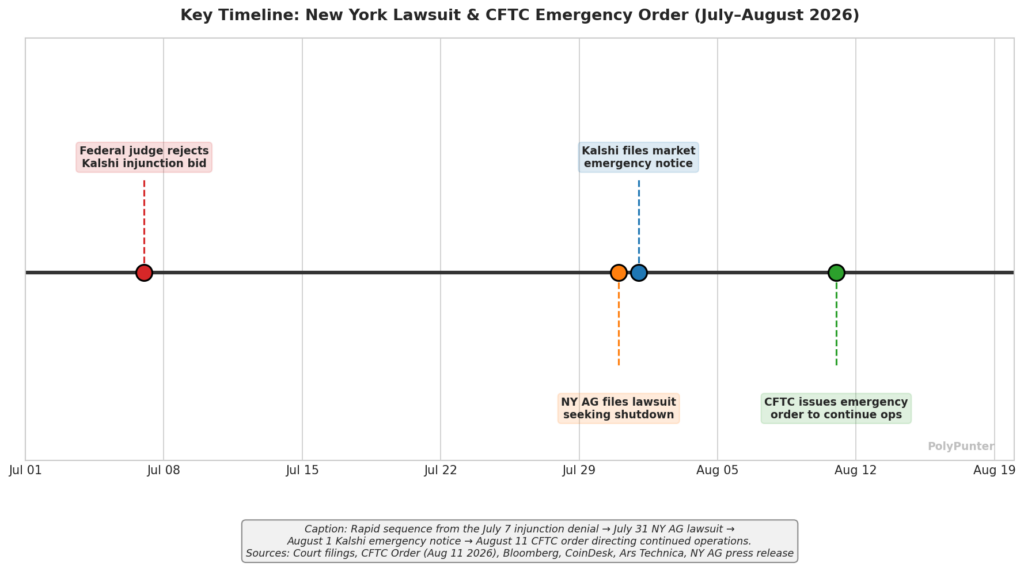
Federal regulators moved decisively this week, ordering Kalshi to keep its exchange running at full capacity even as a New York lawsuit seeks to halt activity. The Commodity Futures Trading Commission invoked emergency powers on Tuesday, citing a clear market emergency that threatened stability across regulated derivatives trading. Kalshi had requested the intervention after a July 31 filing from New York state authorities aimed to enjoin operations as an unlicensed gambling business. In response, the agency directed Kalshi to continue performing its designated contract market functions in accordance with the Commodity Exchange Act’s Core Principles and its standard practices. This is clearly in Kalshi’s best operational interests, as well as in the best interests of those with open contracts on the platform residing in New York.
This emergency authority order step underscores intensifying tension over who controls oversight of event contracts linked to sports outcomes and other real-world events. CFTC Chairman Michael Selig framed the action as essential to prevent disruption, repeating his mantra that Congress never intended derivatives exchanges to face a patchwork of state gaming rules. He added that the markets match bids and offers across state lines and rely on a national clearing process that backstops transactions for traders nationwide. As a result, any forced shutdown in one state risked cascading effects that could undermine confidence in the entire national system.
The order arrives amid numerous legal battles and broader efforts by the commission to assert exclusive jurisdiction over registered entities offering these contracts. CFTC officials described the New York state action as creating an existential threat to orderly markets, one that justified immediate federal intervention under Section 8a(9) of the Commodity Exchange Act. Kalshi, operating as a designated contract market, submitted a notice of the emergency on August 1, highlighting the potential for a temporary restraining order that could prevent it from serving traders entirely. Consequently, the commission reviewed the filing and concluded that continued operations best served market integrity.
Triggering Events Behind the Emergency Declaration
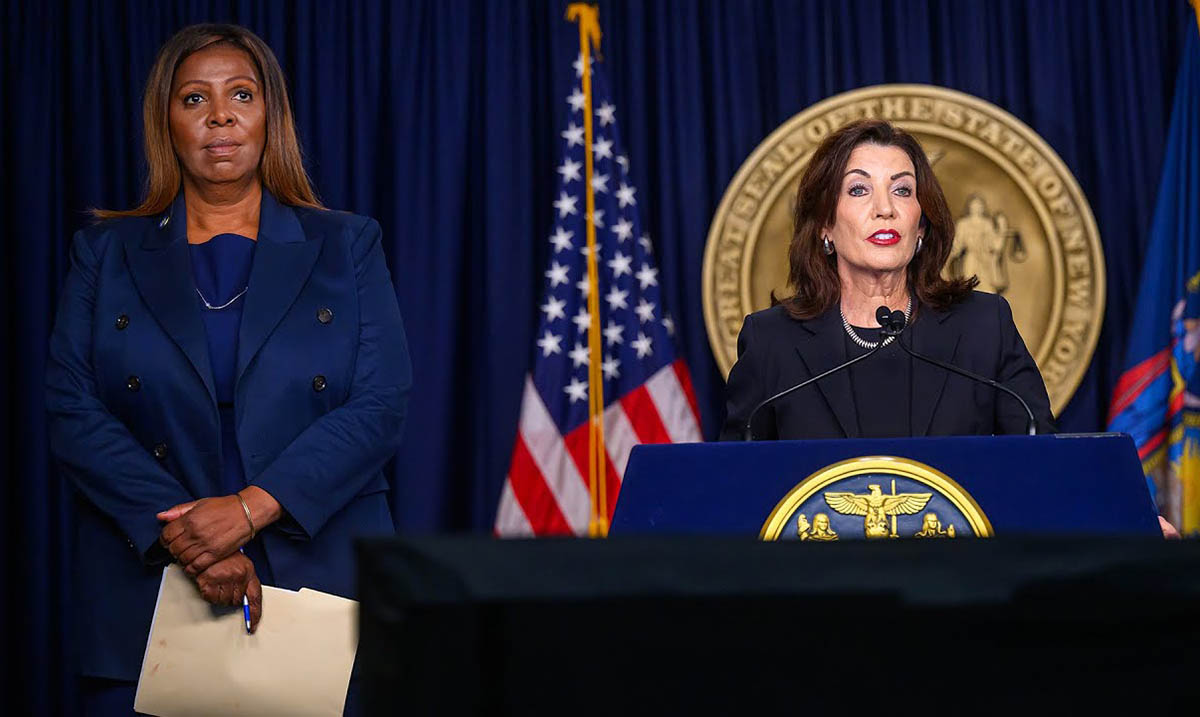
New York state authorities filed suit on July 31, accusing Kalshi of running an illegal, unlicensed operation that exposes residents, including individuals under 21, to significant risks. The complaint seeks a permanent injunction blocking the platform from offering contracts, full restitution for customers, and financial penalties in the tens of billions of dollars. Governor Kathy Hochul and Attorney General Letitia James emphasized that the firm failed to secure a license from the state gaming commission, thereby avoiding taxes that support public schools, youth sports programs, and problem gambling treatment. This is a common indictment from numerous states now against Kalshi and other prediction markets.
James described the products as gambling platforms plain and simple, arguing that the outcomes involve uncertainty outside traders’ control or hinge on chance. Meanwhile, the lawsuit followed a federal judge’s earlier rejection of Kalshi’s bid to prevent the state from enforcing its rules. That July ruling held that federal law leaves room for states to address tangential issues arising from trading on designated contract markets. Kalshi has appealed the decision to the Second Circuit while also seeking to transfer the new state case into federal court.
In parallel, the state is pushing to keep the matter in its own courts, stressing a strong interest in policing gambling. The CFTC’s emergency response treats the pending motion for a restraining order as the core disturbance. Officials noted that allowing such an order to take effect could force liquidation or cessation of operations, creating uncertainty regarding open positions and future trade matching.
Prior interventions by the federal commission provide context for the current stance. In a separate Michigan matter earlier this summer, the agency stayed an emergency rule that Kalshi had proposed in response to a state court order and directed that pending trades be fulfilled rather than canceled. Chairman Selig stressed then that states cannot compel a designated contract market to violate federal obligations or discriminate against residents of any particular jurisdiction.
Leadership Statements Emphasizing National Market Uniformity
Selig delivered pointed remarks accompanying the order, declaring that New York aims to make event-contract derivatives wither under an iron curtain of gaming laws before courts can reach final decisions. He insisted these are financial exchanges offering financial instruments that operate across borders, matching a bid from one resident with an interstate offer from another and routing the trade through a clearinghouse serving the entire country. Therefore, the CFTC must ensure order, and that is precisely what the emergency directive accomplishes.
The chairman reiterated that exclusive jurisdiction applies to registered entities that trade in contracts on sporting events, elections, and other topics. He rejected the notion of layering individual state gaming oversight onto federal derivatives rules, calling it contrary to Congressional design and untenable. As the order was issued, it required Kalshi to maintain normal practices without interruption, thereby protecting liquidity and price discovery already underway in open markets.
Supporting CFTC documents detail the commission’s reasoning that a sudden halt would constitute a major market disturbance with potential spillover into other contracts, including those referencing digital assets. Officials viewed the threat as justifying the use of statutory emergency powers to preserve resilience and predictability in execution and clearing. Kalshi’s August 1 notice had outlined how a restraining order could effectively end its ability to list and clear contracts for local traders, prompting the formal market-emergency declaration. All of this before appeals are settled in the courts.
Broader Pattern of Jurisdictional Contests Over Event Contracts
Similar disputes have surfaced in multiple jurisdictions, with the commission previously challenging state efforts to impose restrictions. One federal court blocked a total ban enacted in another state, while leaving open the possibility that certain non-swap wagers could face state limits. The current order fits this pattern of federal pushback against measures viewed as overreach into the exclusive territory of commodity derivatives.
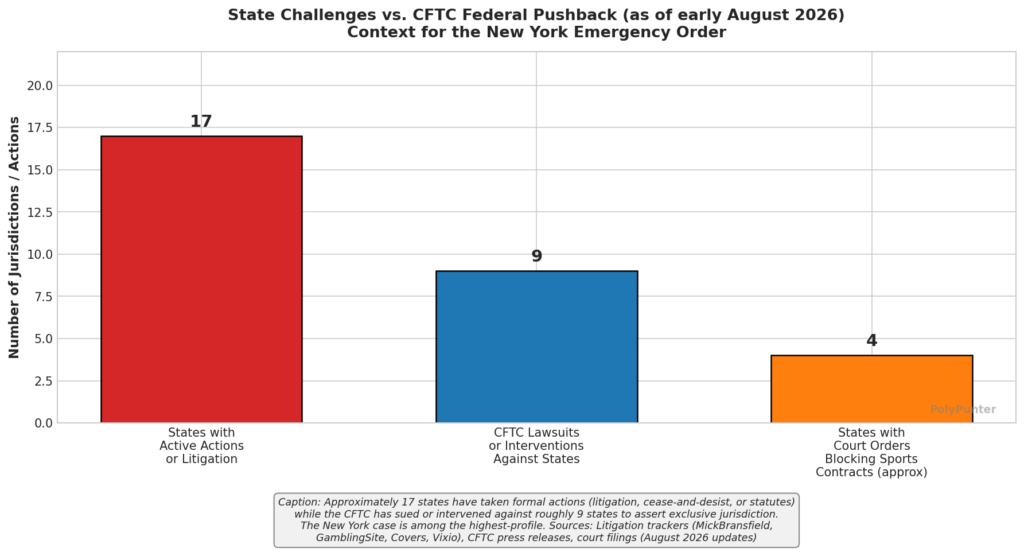
Kalshi continues advancing motions to federalize the latest case, arguing that the claims improperly seek to regulate interstate financial instruments. State filings counter that the interest in regulating gambling remains robust and that an expansive reading of federal law would upset the balance Congress established. The emergency directive keeps markets functioning without forced cancellations or liquidations that could harm open interest. Meanwhile, the patchwork of state-federal battles rage on without a clear directive from either Congress or SCOTUS on how that supremacy fight should be resolved.
References
- CFTC Orders Kalshi to Keep Operating Despite New York Suit – Bloomberg
- CFTC orders Kalshi to continue offering prediction markets in New York after state lawsuit – CoinDesk
- US tries to override New York gambling laws, orders Kalshi to keep operating – Ars Technica
- CFTC Order Directing Kalshi to Continue Exercising DCM Functions
- Governor Hochul and Attorney General James Announce New York Has Sued Kalshi – New York AG
- Judge rejects Kalshi bid to block New York gambling enforcement law – Reuters
- CFTC Stays KalshiEX Rule Change and Exercises Emergency Authority – CFTC