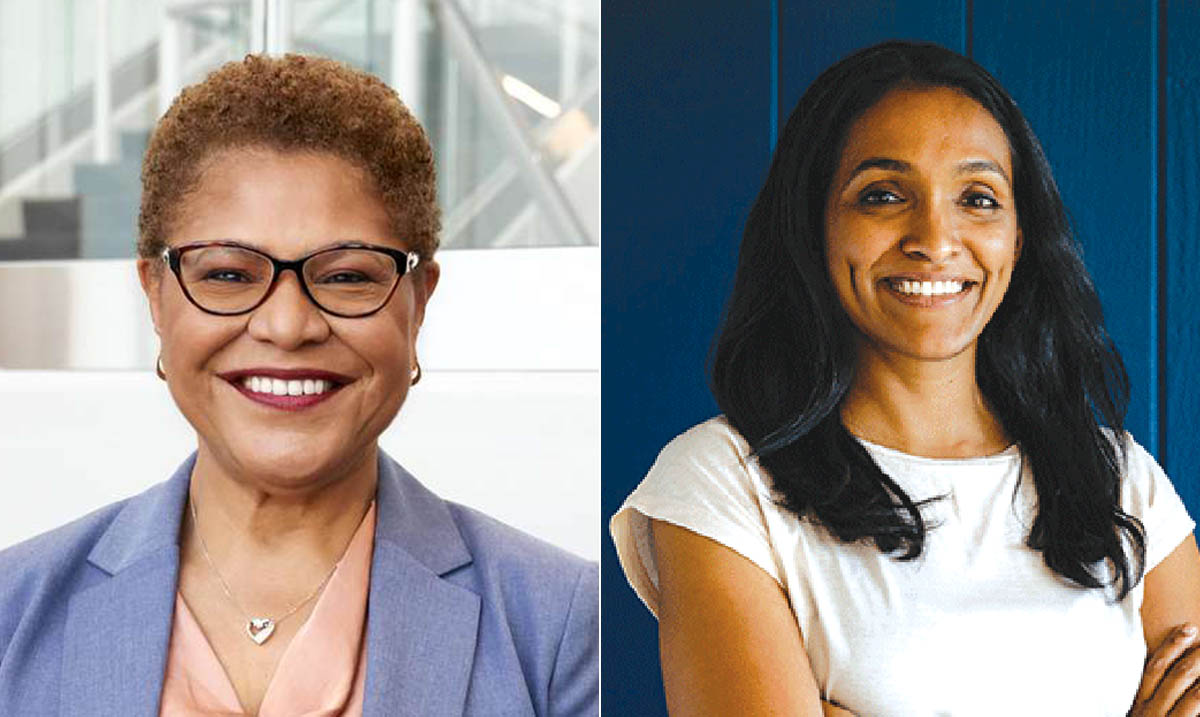
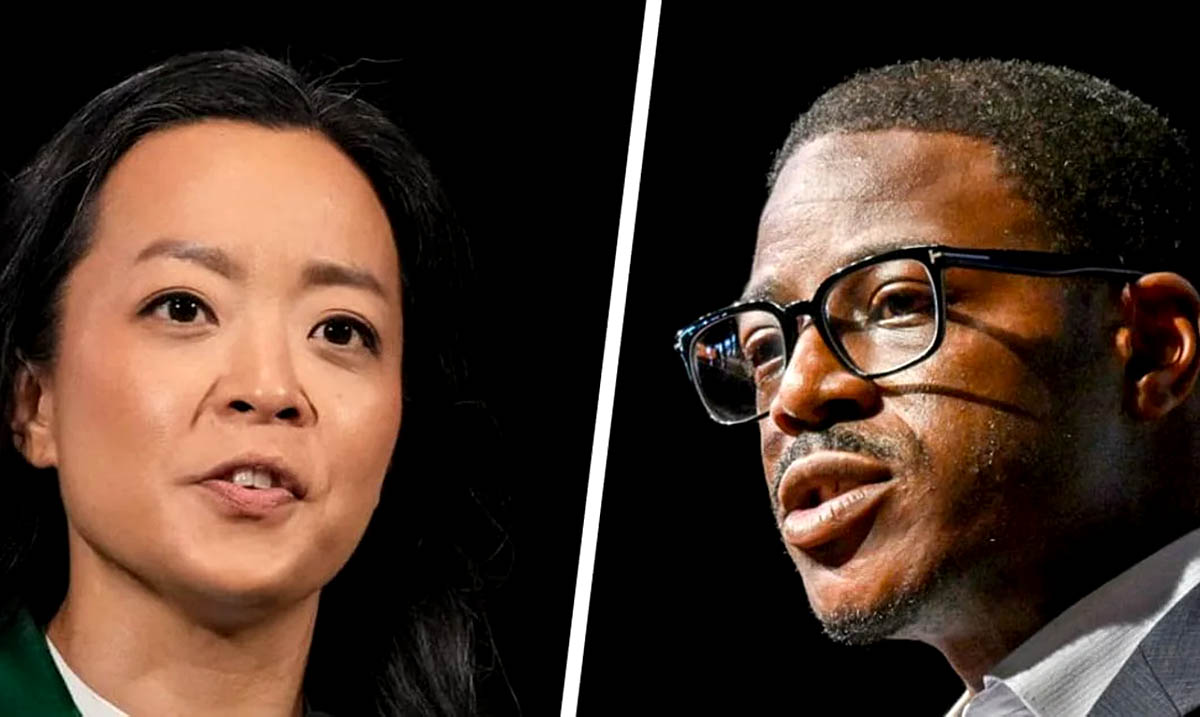
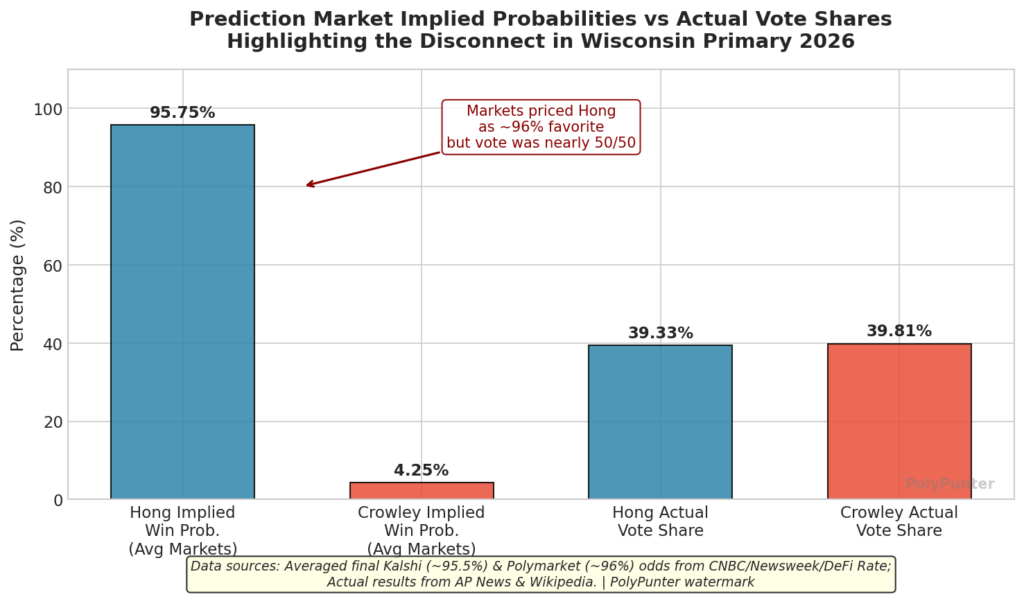
Traders woke up to a sharp reminder that high probabilities never guarantee outcomes after David Crowley narrowly defeated Francesca Hong in the Wisconsin Democratic gubernatorial primary last week. Markets on both major platforms had priced Hong’s victory near certainty heading into the August 11 vote, yet Crowley prevailed by less than half a percentage point. The result immediately sparked debate about the limits of crowd-sourced forecasting in tightly contested races. Though the argument is separate and apart from the polls, which failed equally.
Hong entered election day with roughly 95% odds on Kalshi and 96% on Polymarket, figures that mirrored late polling showing her leading by double digits. Crowley, the Milwaukee County executive who had briefly suspended his campaign before re-entering the race, finished with 39.81% of the vote, compared with Hong’s 39.33%. The final tally forced prediction market platforms to confront criticism that their contracts had overstated Hong’s dominance.
Polymarket amplified the confidence just hours before polls closed. In a post on X, the platform called Hong a “near-lock” despite her lack of endorsements from high-profile progressive figures. (They later deleted this post, not a high mark for them.) The company later deleted the message after the results became clear. Screenshots circulated widely, turning the deleted post into a flashpoint for those questioning the platforms’ public communications.
Meanwhile, Kalshi’s leadership pushed back against claims that the markets had failed. CEO Tarek Mansour posted that a 95% probability still leaves room for a one-in-20 outcome. “5% is not 0%,” co-founder Luana Lopes Lara added, emphasizing that low-probability events remain possible by design. Mansour pointed to broader calibration studies showing prediction markets perform well across hundreds of races even when individual underdogs occasionally win.
How Late Campaign Shifts Fueled the Prediction Market Missed Prediction
Several developments in the final weeks altered the race dynamics in ways that markets struggled to fully capture. Mandela Barnes withdrew in late July, citing polls that appeared to favor Hong. Crowley then relaunched his bid with an endorsement from outgoing Governor Tony Evers, positioning himself as the more electable moderate for the general election against Republican primary winner Tom Tiffany.
Public surveys reinforced the market consensus. A State Navigate poll conducted August 3-6 showed Hong at 44% among likely Democratic primary voters, with Crowley at 22%. Earlier Marquette Law School numbers had placed Hong even further ahead, with a 22-point margin. Those surveys also underestimated Crowley’s ability to consolidate support once the field narrowed.
Traders who had piled into Hong contracts on the prospect of a DSA primary victory in 2026 faced steep losses as returns flipped overnight. Volume on the Kalshi market exceeded $5 million in the final stretch, while Polymarket saw hundreds of thousands of dollars change hands.
Platform Responses and the Debate Over Forecasting Reliability
Kalshi moved quickly to frame the outcome as consistent with probability theory rather than a systemic flaw. Mansour shared a Washington Post analysis examining market performance across many primary races, arguing that occasional upsets validate rather than undermine the model. If 5% candidates never succeeded, he noted, the pricing would prove broken. It’s a bit of a circular argument: by being wrong, we proved we were right, but there are moments when a business owner simply needs to put up their best defense and smile.
Polymarket offered less public commentary after deleting its overly confident post. A spokesperson later told CNBC that internal teams flagged the language describing the race and removed it. The episode left some traders questioning how platforms communicate claims of near-certainty when real-world variables remain fluid. And perhaps worse was running from the failure, especially given the generally strong marks the forecast markets have received of late in predicting election outcomes.
Critics seized on the miss as evidence that prediction market mechanics and trader behavior can amplify polling errors rather than correct them. Both the surveys and the contracts had treated Hong’s path as secure, yet Crowley closed the gap through organizational strength that was clearly overlooked by both in terms of impact.
What the Wisconsin Result Means for Future Election Contracts
Looking ahead, the narrow Crowley win may encourage traders to demand deeper liquidity and more granular data before treating nearly confirming percentages as locks. Markets already price general-election matchups differently, with Crowley now holding stronger odds against Tiffany than Hong would have carried. That rapid adjustment demonstrates the platforms’ ability to incorporate new information once results arrive. But the information has to be incorporated to be of value. Missing key campaign notes could indicate traders seeking to profit from a perceived certainty rather than developing independent opinions through their own research and investigation.
Yet the primary itself exposed vulnerabilities in low-turnout contests, as party primaries often are, where late momentum and endorsement shifts matter disproportionately to the subset of eligible voters who bother to cast ballots in the middle of August. Especially so when all media coverage and polling is pointing to an easy victory for one candidate. Crowley’s re-entry and Evers’ backing arrived close enough to election day for many contracts to have already settled into high-confidence ranges. Traders who adjusted positions earlier captured some of the movement, but the bulk of volume remained concentrated on the favorite.
As more races unfold this cycle, the Crowley-Hong result will serve as a reference point and a constant reminder of “remember that time we were so sure…” Traders will watch whether subsequent contracts show greater caution around progressive favorites in competitive environments or simply absorb the occasional underdog win as the cost of largely accurate long-run calibration. As Mansour’s defense pointed out, a 5% chance implies a definite possibility.
References
- Prediction markets’ reputation comes back to earth after surprise result in Wisconsin
- Massive polling misses in Wisconsin, Michigan primaries
- Prediction Markets Miss Again as Crowley Upsets Hong in Wisconsin’s Democratic Governor Primary
- David Crowley wins Democratic primary for Wisconsin governor
- 2026 Wisconsin gubernatorial election
- Francesca Hong’s Chances of Beating David Crowley in Wisconsin: Final Polls
- Tarek Mansour post on Kalshi pricing and probability
- Polymarket post describing Hong as near-lock
- Why Polls Were Wrong In Socialist Francesca Hong’s Race
- Hong Heads Into Wisconsin Governor Primary as Near Prediction Markets Lock