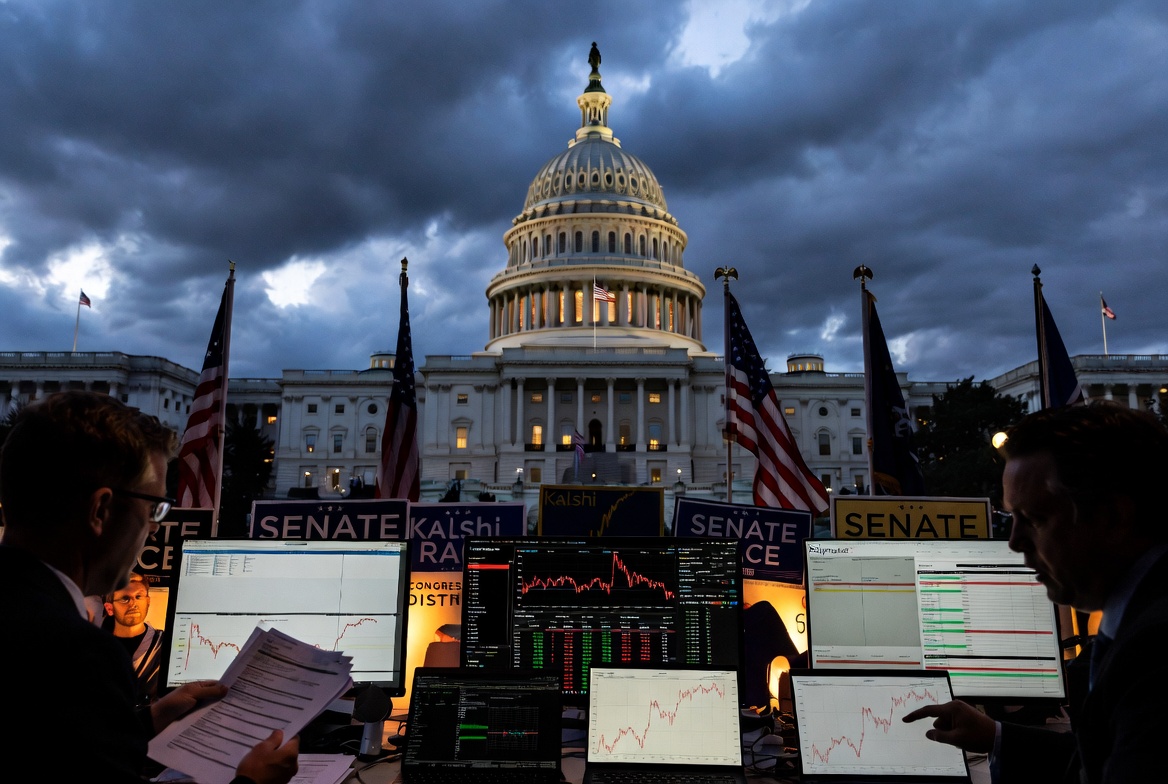
If you’ve read our article on the Kalshi incident on the night of the Los Angeles Mayoral elections, you know our concern over insider trading on political election markets. That one is simply a theory at the moment, but there have already been multiple cases of politicians betting on their own election campaigns. Those were more attention stunts than attempts at cheating, but they serve as a dress rehearsal for what can happen when opportunity meets financial motive in prediction-market event contracts.
As the 2026 midterm elections approach, prediction market platforms face mounting pressure to mitigate insider trading risks that could undermine market integrity. Thousands of high- and low-profile races at the federal and state levels create abundant opportunities for those with nonpublic information to capitalize on granular election contracts. Regulators and platforms scramble to strengthen oversight, even as trading volumes and the sheer number of participants in these markets continue to grow.
The midterm election will test platform controls in real time. Questions persist about whether enforcement can keep pace with the scale of upcoming contests.
Midterm Scale Amplifies Information Asymmetry Risks
With at least 6,590 state and federal legislative seats on the ballot in November, the election market landscape offers fertile ground for specialized contracts. Traders will wager not only on election winners but also on voter turnout margins, shares of ballots left blank, and the timing of candidate dropouts. Like prop bets in sports. They can be anything and everything. This level of specificity, and often the control of events by single actors, heightens the edge held by campaign insiders, pollsters, and donors who have access to unpublished data.
During the previous major U.S. election cycle in 2024, Polymarket hosted 1,293 related markets, generating $7.26 billion in trading volume. Even with fewer headline races in off-years like 2026, the ratio of markets to actual contests has risen sharply, reaching 17.4 per race. Such proliferation multiplies the opportunities available for misdeeds.
Key Statistics on the 2026 Election Landscape
| Category | Number of Seats/Races | Potential Impact on Markets |
|---|---|---|
| Congressional Races | ~470 | High-volume contracts on control and individual outcomes |
| State/Territorial Legislative Seats | 6,122 | Granular local betting increases insider opportunities |
| Additional Local Offices | Thousands | Expanded contracts on judges, mayors, and prosecutors |
| Total Estimated Seats Up | 6,590+ | Surge in suspicious trade potential |
Platforms Ramp Up Enforcement Efforts
Kalshi has blocked politicians and campaign staff from relevant markets while deploying public records checks and anomaly detection systems. In April, the platform suspended three congressional candidates who wagered on their own races and imposed fines. Those were all three attention-seeking stunts by these longshot candidates, but they proved the flagging system worked, as all three were caught.
Polymarket has referred nearly 100 wallets to authorities, including a high-profile case tied to a U.S. soldier who allegedly profited over $400,000 using classified details. Both platforms continue to update their rules to prohibit trading on material nonpublic information.
Of course, rules and regulations are only as effective as they can be implemented and enforced. These relatively nascent markets, especially the granularity of many event contracts, is a strong lure for those looking to turn insider information into a quick payday.
CFTC Resources Face Strain as Volumes Explode
Current enforcement staffing at the CFTC stands at around 105 positions, the lowest in at least two decades. And those numbers are from before prediction markets came onto the scene. Experienced investigators have departed, leaving gaps that could delay responses to midterm-related flags. Each suspicious lead still requires detailed human investigation.
Broader Implications for Market Trust and Democracy
When trades exploit unpublished polling or impending scandals, they risk eroding faith in both platforms and the electoral processes. Seton Hall Law professor Ilya Beylin warns of possible slow or nonexistent responses during peak election periods to potential insider trading.
Platforms have countered by expanding technological guardrails. Real-time flagging, KYC enhancements, and preemptive blocks that aim to deter bad actors while preserving fully active legitimate trading. Anonymity features and VPN workarounds still complicate real-time tracing, so most insider trading cases have been caught and enforced after the fact.
An old, cynical rule in betting is that you can tell the cheaters by who is winning. Winning is the first red flag.
Legislative Momentum Builds for Tighter Rules
Bipartisan bills in Congress target specific prohibitions, including limits on government officials trading events tied to their roles. The PREDICT Act and related proposals seek to close loopholes that allow personal profit from nonpublic knowledge. The Senate banned members and staff from these platforms earlier this year, while the House weighs similar restrictions. Congressional probes continue into insider trading in these markets.
As primary seasons advance, traders are actively pricing balance-of-power scenarios and state-level shifts. Market volumes continue to rise, exposing vulnerabilities that regulators must address swiftly.
References
- Reuters – US election betting boom to test prediction markets’ insider trading controls
- Kalshi Official Site
- Polymarket Official Site
- Rep. Barrett on Ending Insider Trading
- ABC News – Crackdown on Prediction Market Insider Trading
- Multibillion-Dollar Business of Betting on the Future
- CRS Report on Prediction Markets