Political handicapping and sports handicapping are incredibly similar, and incredibly popular among event market traders. Political races offer an extended timeline, with traders getting into markets months, if not years, before events resolve. With Polymarket gaining notoriety for its 2024 Presidential market tracking “Trump Win” far more accurately than polls, Kalshi has now jumped headlong into political forecasting markets, hoping to be the hub for the 2026 and 2028 upcoming U.S. elections.
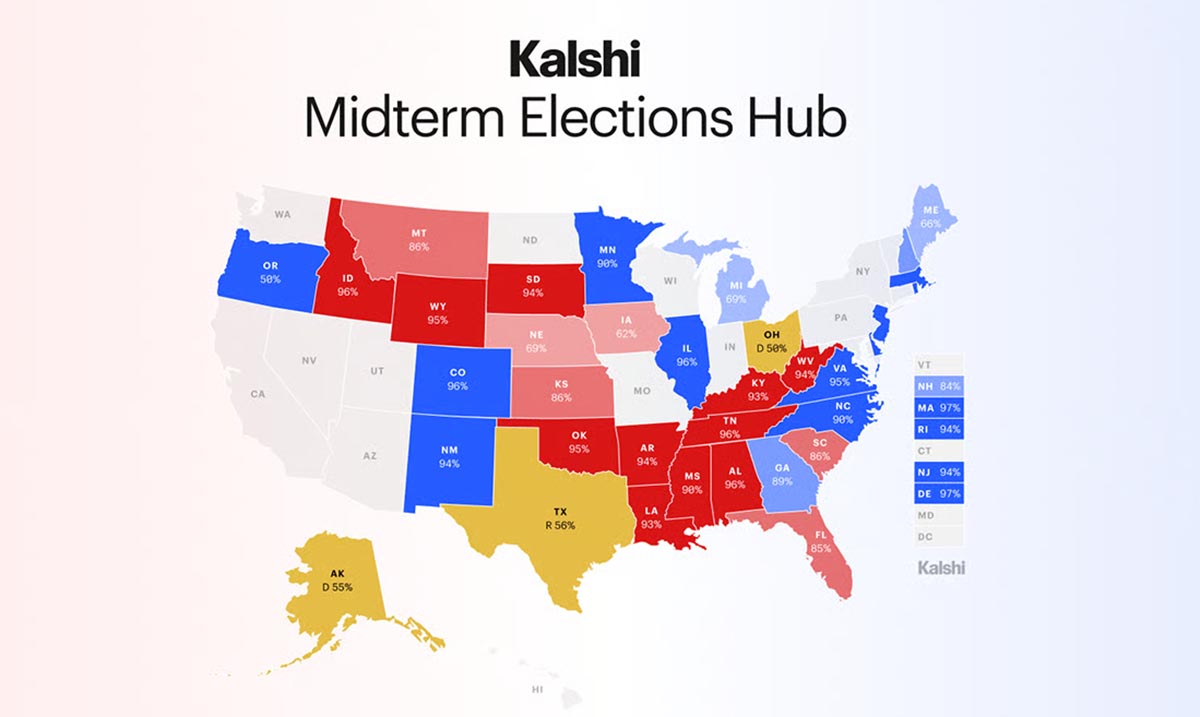
To this end, Kalshi introduced its Midterms Hub this week, with about three and a half months to go before Election Day 2026. The hub creates a single dashboard that pairs live trading odds with polling averages, fundraising reports, historical results, and curated news. The page covers every Senate, House, and gubernatorial race, refreshing prices the moment new information arrives. Traders watching the hub see probabilities shift in real time as debates end or filings post. Campaign staff and journalists are already checking the display for rapid reads on market sentiment. The launch positions the tool as a continuous forecast resource that extends well beyond the current cycle.
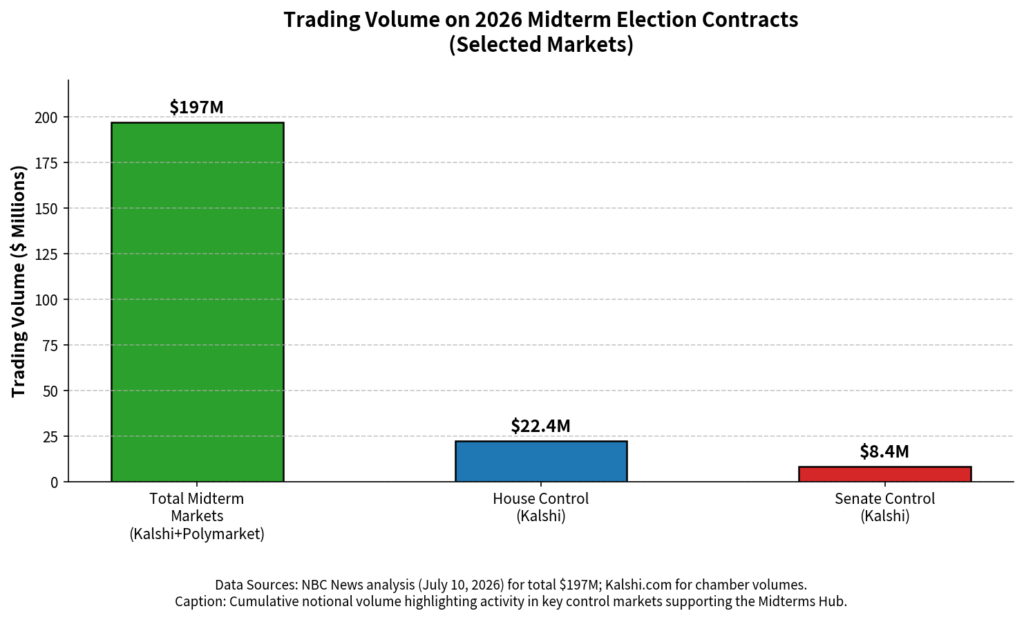
More than $30M has already traded on related 2026 election contracts since the hub appeared. Prices on key Congressional chamber-control markets have moved by double-digit percentages in the first day alone. Kalshi marked the rollout with a live demonstration attended by political strategists who watched odds adjust on the spot. The company calls the product the first election hub powered by crowd wisdom, running around the clock. Early volume signals strong interest from traders seeking a faster pulse on competitive political races.
Live Trading Odds Driving Instant Race Updates
The hub opens to a color-coded map of all races, each linked to its current market probability. Selecting any contest brings up the live price beside the latest polling average and fundraising total. A Senate seat showing 56% on the market appears next to a 45% polling figure, making the gap plain at a glance. Market prices update automatically, so a surge in volume registers within moments. This layout lets users conveniently catch momentum changes without switching between separate trackers.
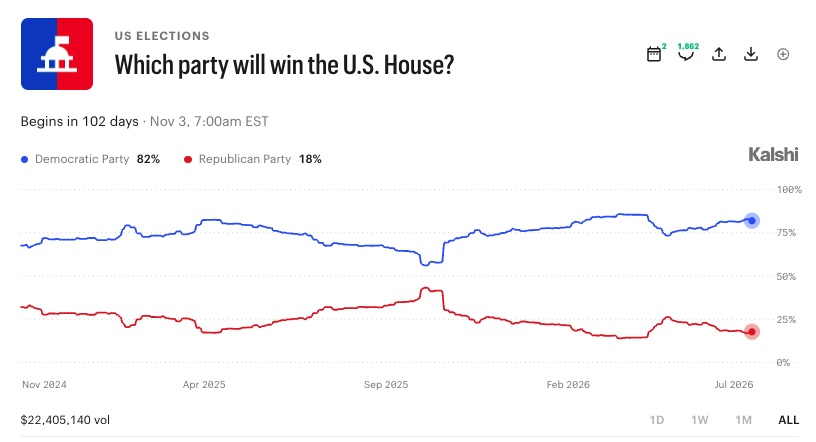
Market readings are already pulling ahead of traditional surveys in several House districts. Odds tightened after a series of candidate appearances while polling numbers held steady for days. As a result, the dashboard surfaces divergences that campaigns, their staff, and contractors can act on immediately. Journalists are embedding the live percentages in their updates, giving readers an extra layer of crowd conviction data. The constant feed turns every news break, campaign update, or anticipated announcement into a visible price signal.
When a sizable trade lands on a gubernatorial market, the probability line moves in full public view. Historical results for the same seat sit directly underneath, allowing quick comparison with prior cycles. The combination supplies context that neither markets nor polls deliver alone. Hub users report that the side-by-side design shortens their daily review time.
Campaign teams monitoring the page can test whether a strong fundraising report or a recent media appearance is translating into market confidence. This feedback loop keeps the entire display responsive and current. Kalshi plans additional race alerts and data layers once the 2026 election cycle concludes.
Polling Averages and Fundraising Totals Side by Side
Polling averages drawn from major public surveys sit next to each market price, highlighting any mismatch. In one closely watched Senate contest, the market currently prices a 48% chance for the challenger while the blended poll average rests near 45%. Viewing both figures together helps weigh short-term sentiment against longer survey trends. The design keeps the comparison visual and effortless. Fundraising totals from the Federal Election Commission refresh in the same panel as new filings land.
A candidate posting a solid quarterly haul can watch the market react within hours on the hub. Consequently, financial disclosures become immediate trading signals (and perhaps even self-fulfilling prophecies that lead to even more funding as supporters want to jump on a hot bandwagon). Political reporters are using the combined view to build fuller stories about candidate strength. Historical vote shares and turnout patterns appear just below the current metrics, giving a ready baseline. Curated headlines related to each race update automatically, preserving context without extra clicks.
The integrated layout is already shaping how outside groups discuss competitive districts. When market odds diverge from polling, the hub can become the shared reference point for exploring the reasons why. Early hub users describe the experience as both fast and information-dense. Commentators testing the dashboard themselves noted the added speed and the weight of real-money conviction. Their consensus centers on the value of seeing prices and polls in one place.
Rising Volume and Longer-Term Role of the Hub
Trading across 2026 election contracts has surpassed $30M in the days around the debut. Contracts on overall chamber control and individual swing races are drawing the heaviest activity. Several high-profile Senate seats have already swung more than 10 percentage points since the page went live. The hub makes those moves visible to a wider audience that once tracked political markets in isolation.
Kalshi, which is seeking ways to diversify volume beyond its dominant sports prediction market segment, views the Midterms Hub as the base for a lasting political markets product that will expand after November. Overnight developments that traditional outlets often miss now appear on the dashboard for audience review in the morning. Campaign staffers open the page first each day to find a reliable pulse check. The mix of speed and breadth is proving difficult to replicate elsewhere online. Political media outlets have begun citing the Kalshi hub’s numbers alongside conventional forecasts.
The Midterms Hub is altering the daily flow of election information. Traders, campaign teams, and journalists are folding the live view into their routines. The launch shows that crowd-driven probabilities can operate comfortably beside established measures and political tracking tools. With over three still remaining until Election Day, the hub has clear room to become even more central to ongoing tracking.
References
- Kalshi launches Midterms Hub for live election odds
- Kalshi launches election hub for prediction markets ahead of midterms
- Kalshi launches midterm election forecasting hub
- Kalshi debuts US midterms hub for election forecasts and polling data
- The battle for Congress gets a Wall Street-style scoreboard powered by real-money bets
- Kalshi debuts a midterm election hub that relies on real-money bets to forecast race outcomes
- Kalshi launches midterm election hub for prediction markets
- Could Kalshi’s new election hub influence midterm results?

The PolyPunter staff works tirelessly to bring you the latest and most insightful news, information, and tips on the fast-growing economic, financial, and social phenomenon that is prediction markets.