
Morgan Stanley Upgrades Robinhood as Event Contract Revenue Outruns Crypto
Morgan Stanley upgrades Robinhood to Overweight and lifts its target to $150, citing $156 million in Q2 event-contract revenue that outpaced crypto and equities.

Morgan Stanley upgrades Robinhood to Overweight and lifts its target to $150, citing $156 million in Q2 event-contract revenue that outpaced crypto and equities.

New Jersey asked the Supreme Court to decide whether CFTC-registered sports event contracts override state gambling laws after federal appeals courts split, putting Kalshi’s nationwide model in the justices’ path.

1789 Capital is leading a $1 billion Polymarket round at a $21 billion valuation, adding about $300 million as Donald Trump Jr.’s firm deepens its stake.
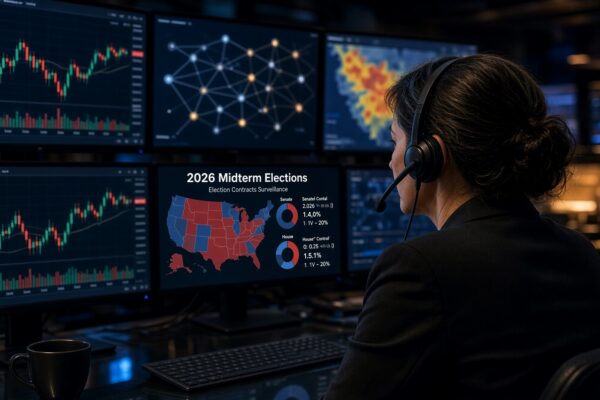
Polymarket’s new intelligence chief says midterm election surveillance is already live, citing machine learning, wallet tracking, and more than 100 law-enforcement referrals as political markets heat up.

Prediction markets work when they pay for genuine research and informed trading. Treating every information edge as misconduct blurs theft with analysis and weakens the public price signal those markets exist to produce.

High-stakes prediction market disputes over contested events are forcing platforms to adopt clearer resolution rules and more objective truth standards, turning ambiguity into sharper, more auditable criteria for establishing what actually happened.

Prediction markets now let ordinary people and businesses hedge economic swings, climate risks, and policy shifts with capital-efficient event contracts—offering precise protection once limited to large institutions and traditional derivatives.

Prediction markets can deliver superior collective intelligence, yet current excesses in war bets and insider trading threaten their promise. Smart reforms—bans, stronger rules, and liquidity supports—restore the original vision.

Prediction markets demand real money behind forecasts, holding pundits accountable where media narratives face no cost. By aggregating capital-weighted knowledge, they deliver sharper signals and democratize reliable truth-seeking for better policy decisions.

Prediction markets surface overlooked resident insights on neighborhood public safety, housing supply, and school performance, delivering continuous signals that traditional planning models miss and enabling more responsive community decisions overall.