
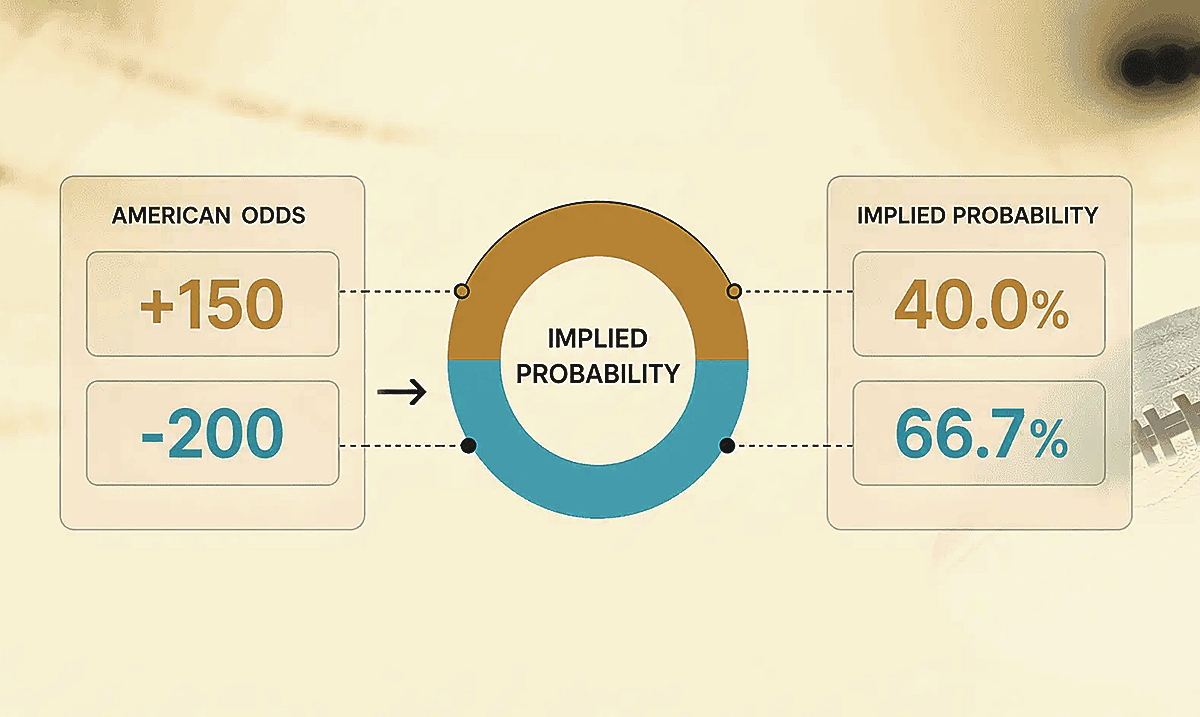
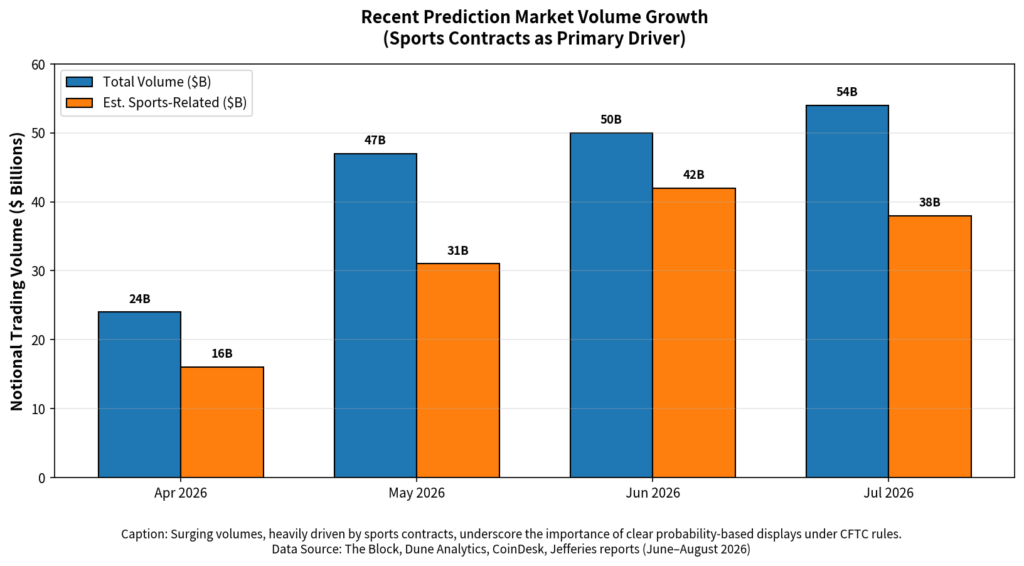
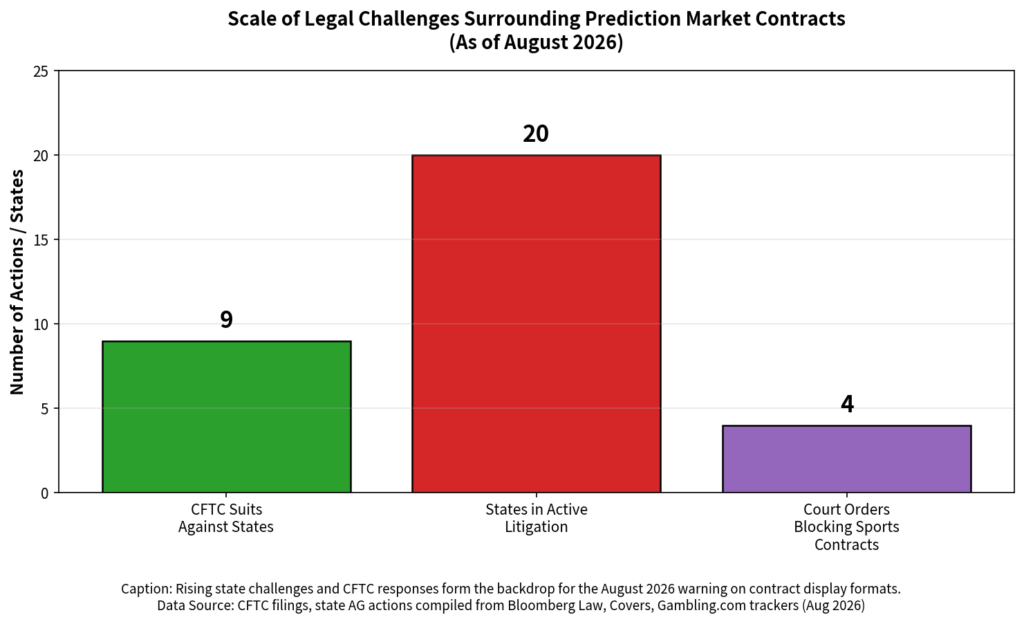
The Commodity Futures Trading Commission (CFTC) delivered a clear directive on August 7, 2026, requiring regulated entities to eliminate American-style gambling odds from event-contract marketing and displays. A letter viewed by Bloomberg reporters Nicola M. White and Lydia Beyoud instructs firms to comply fully with derivative trading laws and reject any deceptive methods when listing, soliciting, or promoting products. This guidance arrives as the commission continues to counter legal challenges from numerous states that describe the sports event contracts as unlicensed sports betting.
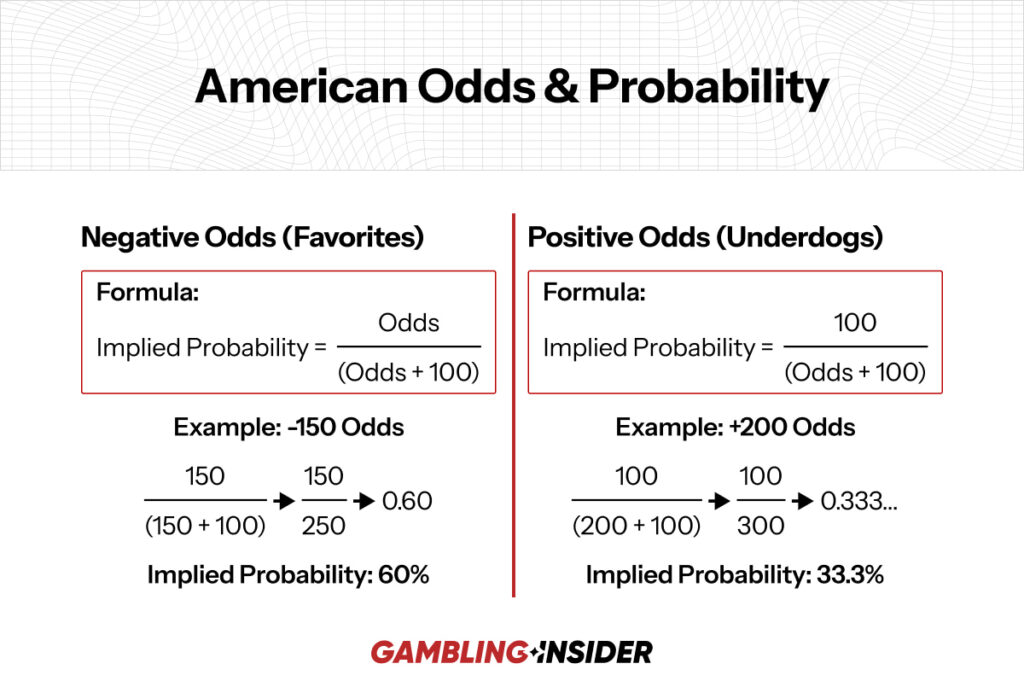
American-style odds use a plus or minus sign followed by a number to indicate the potential payout relative to a fixed stake (e.g., +170, meaning the profit on a win is 1.7 x the amount wagered). The CFTC now classifies this format as unsuitable for event contracts. Binary outcomes must instead appear as implied probabilities shown in cents on the dollar. A contract on whether rain will fall tomorrow, for instance, should display pricing that reflects percentage likelihood rather than a moneyline. Platforms that still present sports listings with +/- markers face pressure to update immediately to avoid striking similarity to sportsbooks.
The letter sharpens the distinction the agency seeks to maintain between financial instruments and recreational wagering formats. Traders encountering these contracts will soon see cleaner, probability-based presentations that more closely resemble traditional futures quotes. Early reviews after the letter’s release found that several interfaces were still displaying MLB run lines, moneylines, and totals in the familiar American-odds sportsbook style, underscoring the need for rapid adjustments by several platform operators.
Details of the CFTC Letter on Deceptive Listing and Solicitation Practices
The letter centers on three core obligations: proper listing of contracts, accurate solicitation of interest, and non-deceptive advertising. Using American-style odds violates these requirements because the format could mislead traders about the product’s nature. Regulated entities must operate under the Commodity Exchange Act, which treats event contracts as derivatives rather than casual wagers. The commission is reinforcing that boundary, even in the mere appearance of similarity, while legal challenges continue.
Bloomberg’s report, written by Nicola M. White and Lydia Beyoud, confirms that the news organization reviewed the letter directly. White later summarized the directive on social media, noting that the CFTC told firms to quit using casino-style odds while defending against the ongoing challenges. That post linked to the full article and amplified the agency’s position. The emphasis on transparent solicitation leaves little room for visual cues associated with traditional wagering apps.
Sportsbook interfaces commonly rely on the + and – convention, yet the letter draws a firm line against carrying that convention into event-contract screens. Regulated operators will need to revise both backend pricing and frontend displays. Those slower to act risk heightened scrutiny from the CFTC as the commission monitors compliance.
Pricing expressed in cents of a dollar ($0.00 to $1.00) keeps the focus on implied probability, best expressed as a percentage, and supports clearer market discovery. This presentation style helps traders evaluate relative likelihoods without converting odds. As regulated entities complete the required updates, this consistent visual contrast with sports-wagering apps will become more pronounced and consistent across platforms. Also, making it easier for the CFTC to defend these sports-event contracts in numerous ongoing court cases.
How the Ban on American Odds Affects Event Contract Marketing Strategies
Prediction market marketing teams must now overhaul promotional language and visual designs that previously leaned on sportsbook imagery, for obvious commercial reasons. Campaigns that highlight potential payouts with plus and minus signs risk being classified as deceptive under the letter. This change will reshape how new offerings appear in advertisements and in-app alerts.
The transition also alters a trader’s first encounter with contracts. When prices appear as 65¢ rather than –150, the interface signals that a financial instrument is being referenced, rather than a sports wager. This may seem like mainly semantics, but semantics are not to be disregarded in ongoing legal and legislative battles. Entities already using cents-based pricing for most products need only targeted fixes for remaining sports listings. Others must coordinate product, legal, and marketing groups to redesign solicitation materials under compressed timelines.
Reviews conducted shortly after the letter’s circulation by Bloomberg observed that certain platforms still listed sports contracts with run lines and over/unders in +/- format. That lag illustrates the practical gap between guidance and full operational change. Firms moving fastest will update data presentation and all accompanying promotional assets. A strongly worded letter, with implied threats to business operations, ought to speed that up a bit.
Traders will notice the most immediate difference in on-screen pricing. Contracts previously shown with moneyline-style odds are transitioning to values that reflect implied probability in cents. This format simplifies comparison of contracts and risk assessment without mental conversion of odds. It does reduce visual parallels to sports apps that many traders already recognize, which will have some measurable impact, though you’d suspect this will be a shorter-term structural issue as users become accustomed to prediction market conventions.
References
- CFTC Warns Prediction Markets Against American-Style Casino Odds – Bloomberg
- CFTC warns prediction markets against American-style casino odds – CDC Gaming
- CFTC: Prediction Markets Must Stop Displaying Prices as Odds – Casino.org
- Nicola M. White post summarizing the CFTC warning on X