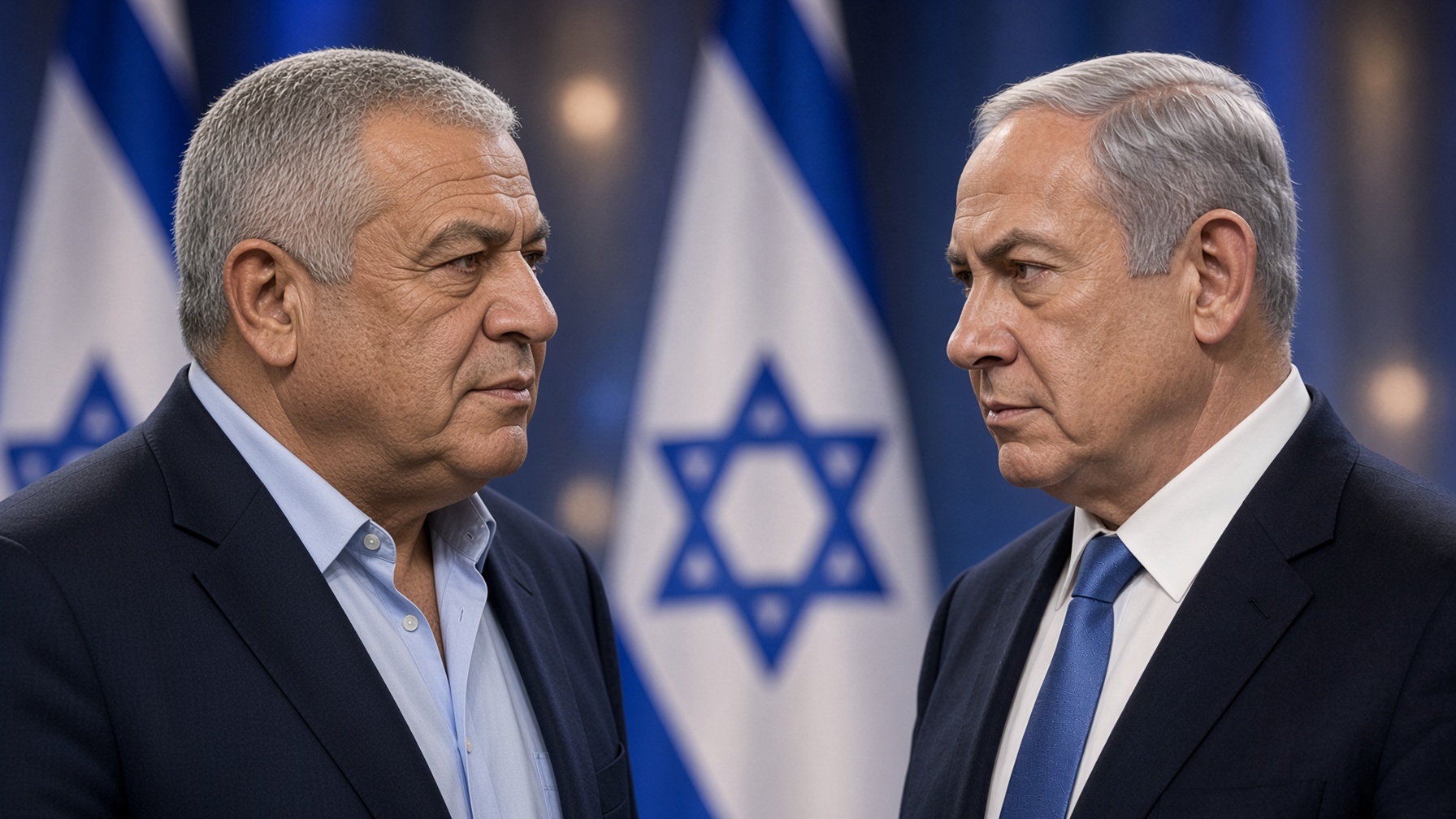
U.S. elections dominate prediction market contracts ahead of the midterms. But a full week before the midterms, Israel holds a parliamentary election that much of the world is watching for a range of reasons, including event market trading.
Gadi Eizenkot is still the name on top of the next prime minister contract, and the gap is wide enough to matter without looking settled. As of October 4, 2026, at 12:50 UTC, a live odds board priced Eizenkot at 45.4%, Benjamin Netanyahu at 36.5%, and Naftali Bennett at 13.5%. Total volume was $42.43 million, with about $283,900 traded the prior day.
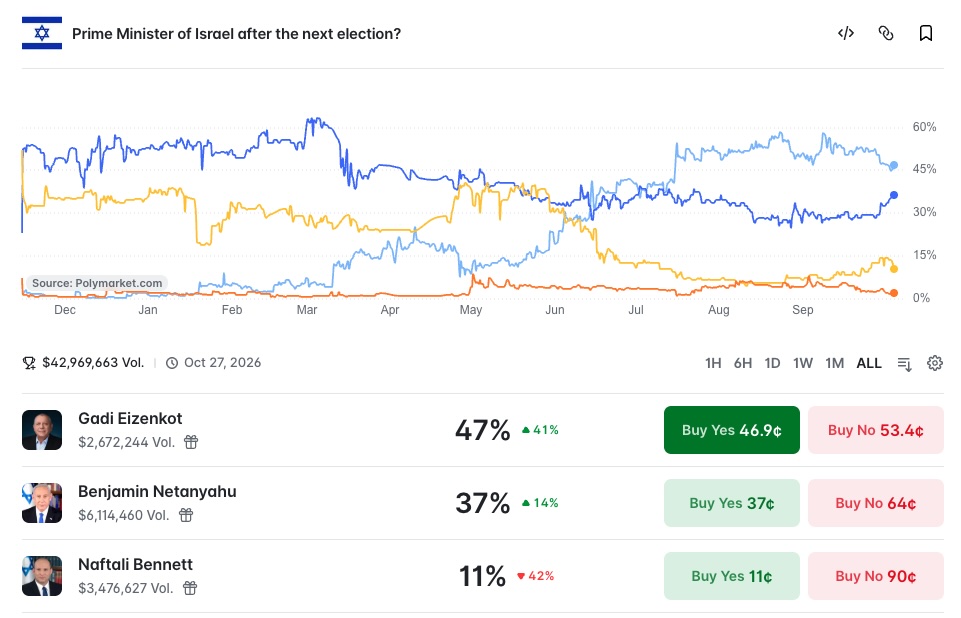
Traders are treating this as a two-person argument with a third name still big enough to spoil the math.
The contract pays the person officially appointed and sworn in after the October 27, 2026, parliamentary election, not the person who merely wins the most seats. The event page on Polymarket says an interim or caretaker prime minister does not count, and that the board resolves to “Other” if nobody qualifying is sworn in by December 31, 2027, at 11:59 p.m. ET.
Why the Gadi Eizenkot Next Prime Minister Odds Still Look Like a Two-Person Race
Eizenkot and Netanyahu together hold more than 80% of the implied chance. Bennett, at 13.5%, is the only other line with real weight. Avigdor Lieberman, Yair Lapid, Benny Gantz, and the rest of the ladder are priced as hedges, not as contenders. Traders have already narrowed the field. They have not picked a clear winner.
The day’s ticks show a tight race moving without changing shape. A lead in the mid-40s can wobble and still hold. With tens of millions already matched, a single news headline has to work hard to shove the favorite out of that lead band.
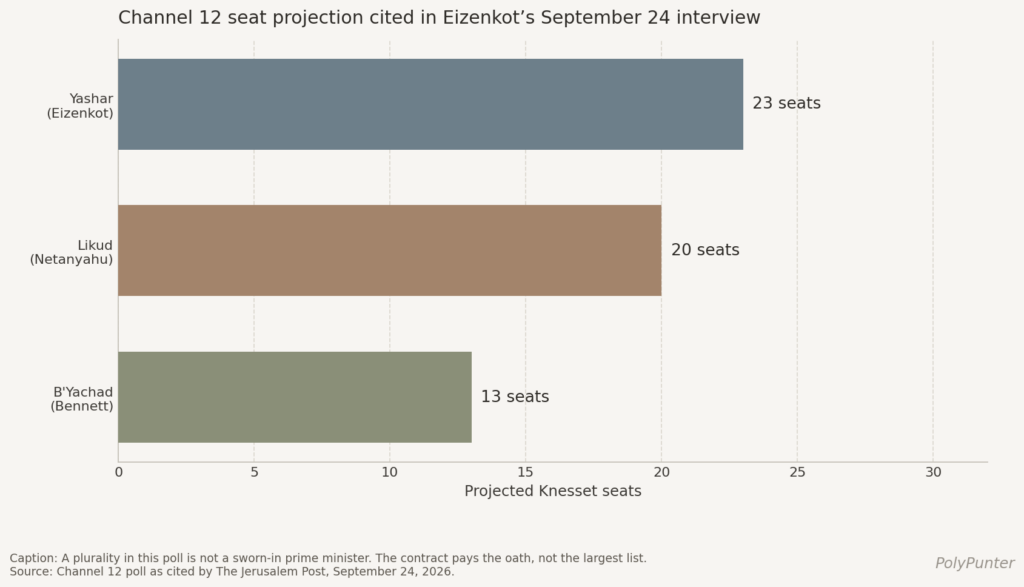
Campaign coverage lines up on seats, then splits on the premiership. In a September 24 interview with The Jerusalem Post, Eizenkot pointed to a Channel 12 poll that put his party Yashar at 23 seats, Likud at 20, and Bennett’s B’Yachad at 13. A separate most-seats contract had Yashar near 62% to finish first against about 39% for Likud. But this contract doesn’t pay for first place in seats; only the installation of one of these candidates as Prime Minister.
Yashar, formed after the breakup of National Unity, is built around a former military chief whose son and two nephews were killed in the war. Supporters hear seriousness. Rivals hear a security brand aimed at Netanyahu’s oldest advantage.
How the Sworn-In Rule Changes the Benjamin Netanyahu Contract Price
A Likud seat gain does not lift Netanyahu one-for-one. A plurality can still miss 61 mandates. A blocked Knesset can leave a caretaker in place. A rotation can put someone else first in line. The mid-30s price is not a popularity poll. It is the price of his name reaching the appointment, then the oath. The Israeli election process has several idiosyncratic rules that traders should understand.
Eizenkot has been speaking straight at that gap. In an interview, he said he is aiming for 63 to 64 seats with partners, and that even a shortfall should not leave Netanyahu running a transitional government. He ruled out a rotation and said Netanyahu “must go home after October 7 [the October 7, 2023 Hamas invasion of Southern Israel].” That pledge explains his lead.
Coalition Math Is What the October 27 Election Contract Is Really Pricing
France 24’s late-September report, in a short election-poll segment, put the opposition bloc and the Netanyahu camp in a dead heat near 52 seats each, with no deal on which opposition figure would become prime minister.
Eizenkot told the Jerusalem Post he wants the opposition bloc at 63 to 64 mandates alongside Bennett, Lieberman, and Yair Golan, and that he expects the final majority to run larger than current polls. If traders believed that path was locked, 45.4% would be a strange price. They obviously do not. The contract price discount is coalition risk, the argument over Arab-party support, and the chance that a plurality winner still cannot close.
Bennett’s 13.5% is the pressure valve. He is not the favorite, and he is not a trivial matter. A unity deal, a rotation, or a late break in the opposition could move him without Netanyahu reclaiming the top spot. Daily flow of $283,900 says traders are updating that path, but not fleeing out of it.
What Traders Are Watching Before the Sworn-In Resolution
The next three weeks turn on whether the seat lead and the oath price start to meet. Firmer polls for Yashar, plus quieter fights over who sits in the chair, would give Eizenkot’s mid-40s price room to rise. A bloc stuck near 52 seats, with the “no 61” case getting louder, would favor Netanyahu’s mid-30s price, because the rules pay only a sworn-in prime minister, not a moral winner.
The caretaker clause is the detail easy to miss. A candidate can win the night and still fail to move this contract if nobody qualifying is sworn in. That is the path built into the “Other” outcome. Traders who only watch party totals are trading a different question from the one this board settles.
Eizenkot’s October interviews are an attempt to close that loophole in advance, stating there will be no quiet absorption of Netanyahu allies. Netanyahu’s 36.5% price is the market’s way of saying that promise still has to survive coalition week. For now the board is plain: Eizenkot leads, Netanyahu is close enough to punish anyone treating the lead as finished, and Bennett is the live spoiler.
References
- Polymarket Trader, Prime Minister of Israel after the next election odds, updated October 4, 2026
- Blockchain.News, Polymarket odds: Eizenkot tops Israel PM market at 42.7% on $26.9M
- Polymarket, Who will be the next Prime Minister of Israel after the next election?
- The Jerusalem Post, Eisenkot lays out vision for Israel in first English interview
- i24NEWS, Gadi Eisenkot widens the gap against Benjamin Netanyahu on Polymarket
- The Jewish Chronicle, Gadi Eisenkot’s Yashar party in a nutshell
- JFeed, Eisenkot vows to oust Netanyahu even without 61 seats
- Polymarket News, Bibi Value
- France 24 English, Israel’s opposition bloc, Netanyahu’s coalition in dead heat
- ABC News In-depth, Could Netanyahu’s former defense chief be the man to oust him?