
FlightAware abruptly withdrew its lawsuit against Kalshi just one day after filing the complaint. The action alleged that Kalshi used its flight-tracking data and trademarks without permission to settle event contracts arising from flight cancellations. Traders following the niche “airline cancellation” markets barely registered the legal threat before it disappeared from the docket.
Court records show that FlightAware filed the complaint on August 10, seeking damages and an order barring Kalshi from further use of the data. By the next evening, FlightAware filed a notice of voluntary dismissal without prejudice, allowing the claims to return later if needed. Kalshi responded by revising the contract language almost immediately. Neither side has offered a detailed public explanation.
Corporate attorney Ariel Givner observed on X that dropping a case this quickly after seeking emergency relief often means the parties resolved the dispute privately. That possibility remains unconfirmed. Though the FlightAware lawsuit has all the hallmarks of a threat to secure rapid compliance and nothing else.
What the Complaint Alleged About Data and Trademarks
FlightAware claimed Kalshi violated a data license and terms of use that prohibited commercial applications, including event contracts. The filing stated that Kalshi listed FlightAware as the primary source of resolution data, displayed the trademark on contract pages, and linked directly to FlightAware’s site. Lawyers argued this created a false impression of official partnership. This is reminiscent of last Spring, when the NCAA ordered prediction market platforms to remove all “March Madness” names and logos from their sites, as it implied an official partnership.
FlightAware said it learned of the markets through media inquiries in mid-July, then canceled Kalshi’s API access and issued cease-and-desist letters. The contracts remained active and continued to name FlightAware until the lawsuit was filed. The complaint sought unspecified damages plus injunctive relief.
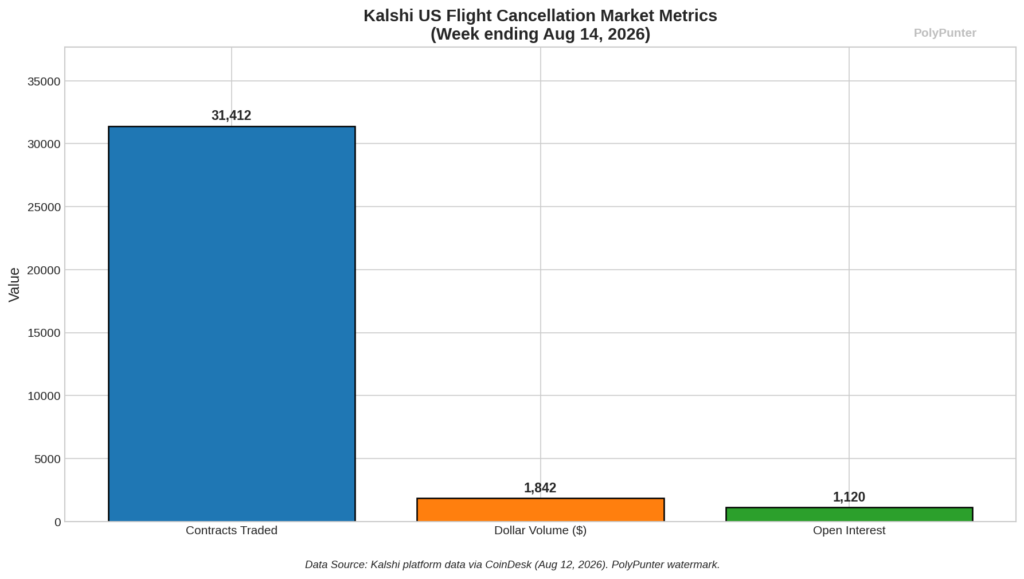
Worth noting, trading activity in the series stayed extremely limited. Platform data showed the main nationwide airline cancellation contract for the week ending August 14 drew only 31,412 contracts and roughly $1,842 in total volume, with open interest at just 1,120 contracts.
How the Language Changed, and the Case Ended
Once the complaint became public, Kalshi reacted swiftly and replaced the explicit FlightAware name with the generic phrase “Primary Source Agency.” A new disclaimer states the markets have not been endorsed by that agency or its affiliates. Links to FlightAware’s delay and cancellation pages remain, yet the text no longer suggests any official relationship.
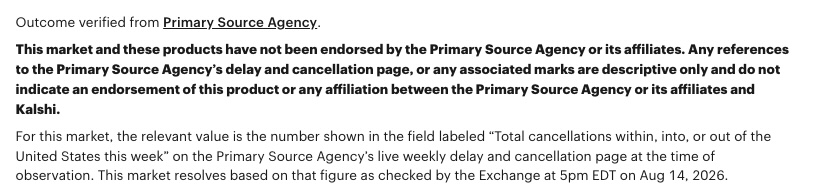
The updated contracts continued trading after the dismissal. Under Federal Rule of Civil Procedure 41(a)(1)(A)(i), FlightAware could withdraw the case unilaterally because Kalshi had not yet answered. The requested temporary restraining order never reached a hearing.
Low Interest and Practical Implications
Even before the lawsuit, the flight-cancellation series attracted little attention from traders. Volume under $2,000 accounted for a fraction of the activity seen in higher-profile event contracts. Earlier social media concerns about potential safety incentives had prompted Kalshi to temporarily pause certain contracts, after which participation remained modest.
The rapid wording change removed the most visible trademark issue while preserving the underlying settlement data. Traders still access the same resolution source; they simply no longer see the brand name displayed prominently. Make of that difference what you will. It was FlightAware’s right to make such a demand.
Court records list case 1:26-cv-06824 as closed following the notice. FlightAware retains the right to refile if circumstances change. For the moment, the immediate pressure has lifted, and the low-volume series trades without the short-lived legal cloud hanging over it.
The episode highlights the importance of precise licensing and branding rules when platforms rely on third-party data for event-contract settlement. A clear agreement and careful wording can prevent disputes that otherwise escalate quickly into public court cases
References
- Reuters: FlightAware withdraws lawsuit against Kalshi
- Reuters: FlightAware sues Kalshi over flight-cancellation markets
- CoinDesk: FlightAware drops Kalshi lawsuit
- The Block: FlightAware drops lawsuit against Kalshi
- Bloomberg Law: FlightAware Drops Kalshi Suit
- Engadget: FlightAware Dropped Its Lawsuit Against Kalshi
- CourtListener: FlightAware LLC v. Kalshi Inc. docket
- CourtListener: Notice of Voluntary Dismissal
- Ariel Givner X post on the dismissal
- The Verge: FlightAware drops its Kalshi lawsuit