Trading desks already on Talos can now route orders for Kalshi event contracts through the same system they use for other digital assets. Today the firm said prediction markets went live, letting clients trade CFTC-regulated contracts alongside spot, perpetuals, futures, options, and tokenized real-world assets. No new connection is required. One login, one set of algorithms, one risk screen, and one data feed cover the book. That’s as simple as it can get.
Anton Katz, Talos CEO and co-founder, has described the step as part of markets that never close and assets moving onto digital rails. When the partnership was outlined in July, he noted that Kalshi had put a regulated structure in place for U.S. institutions seeking exposure to event outcomes and perpetuals. Hours are stretching toward continuous trading, use cases keep expanding, and the underlying systems have to keep up.
Andy Ross, who handles institutional coverage at Kalshi, said the exchange’s regulatory status made it a natural fit as larger firms showed interest. Clients already using Talos can access the venue without standing up a separate stack. Matt DeCicco of Cantor, which advised on parts of the work, added that early arrivals will help shape how liquidity and execution develop as these contracts become a normal part of institutional portfolios. Kalshi has made an overtly concerted effort in 2026 to build seamless tools and add service partners for institutional desk trading.
How Talos Connects Institutions To Kalshi Event Contracts
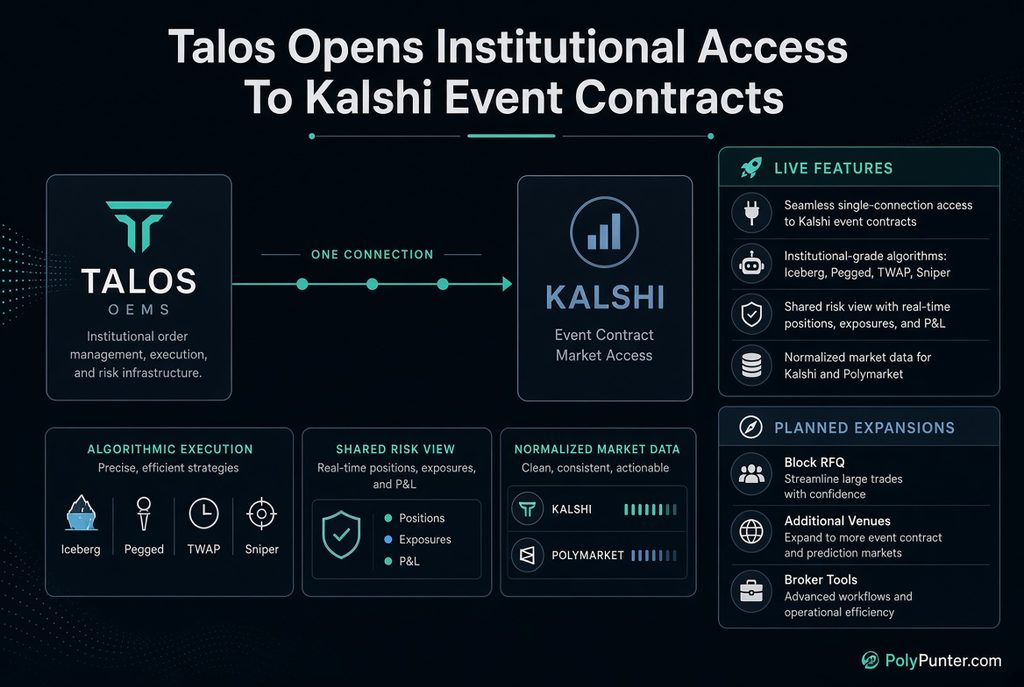
Orders for Kalshi contracts now route through the Talos order and execution management system. Market data and positions are live in the same screens desks already watch. That single connection cuts the usual overhead of adding a new venue; clearing, settlement, and risk limits stay where they already are. Access still depends on the client and the rules in each jurisdiction, so not every firm will gain full entry on day one. But it’s a big step toward integrating Kalshi markets.
The algorithms already running on spot and perpetual books now apply to event contracts. Iceberg orders (a large trade divided into smaller limit orders) hide size, Pegged orders stay with the best bid or offer, TWAP spreads a trade over time, and Sniper targets a specific price. Desks can reuse the same logic they already trust instead of writing new code for thinner books. Positions appear alongside the rest of the portfolio, so risk managers can see all assets in one place.
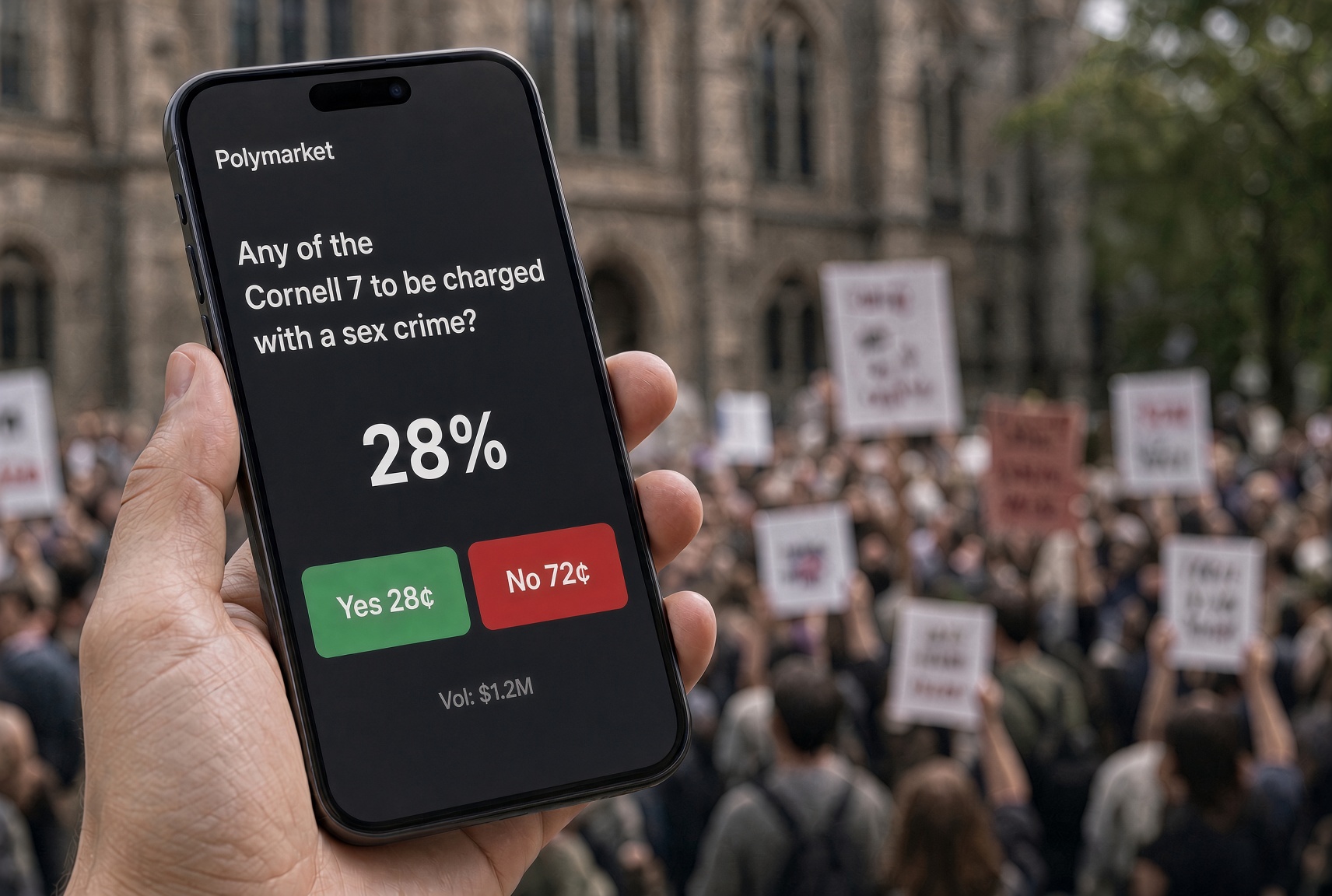
Market data for both Kalshi and Polymarket arrives in a normalized form. Events, trades, order books, open interest, and implied probabilities come through a single schema that API clients already query. Venues describe binary outcomes differently, so the normalization step saves quantitative teams from constant mapping work. Live trading currently goes only to Kalshi, while the data feed already includes Polymarket for benchmarking research and comparison.
Larger tickets still need extra tools. Talos plans a request-for-quote path that lets desks negotiate size privately on the platform and then book the trade as a block on the venue. The same RFQ (Request for Quote) setup already handles ETF create-and-redeem flows for other clients. Until it launches, larger flows either use the on-exchange algorithms or go outside Talos.
Algorithmic Tools And Risk Management For Event Contract Trading
Multi-leg orders already let desks build perpetual-to-perpetual or perpetual-to-spot spreads in one ticket. That removes the need to stitch separate trades together for basis or funding-rate ideas. Talos has said prediction-market-to-perpetual multi-leg spreads could come later, letting a desk take a view on an outcome while hedging related crypto exposure at the same time. For now, the two books sit side by side inside the shared risk view.
Event-contract positions feed into the same risk dashboard used for the rest of the digital-asset book. A portfolio manager can check net exposure, margin, and scenario impact across contracts, perpetuals, and spot holdings without exporting anything. Continuous trading desks that already run real-time limits benefit from seeing everything in one screen. The feature does not replace independent risk controls, but it removes one manual step.
Transaction-cost tools already on the platform can now measure event-contract fills the same way they measure crypto execution. Desks can track implementation shortfall and algorithm performance order by order. Talos Quantitative Execution Services ran simulations on a few Kalshi markets and found that Sniper improved results versus a simple sweep in certain cases. Those numbers are illustrative, not live results, but they give desks a rough starting point.
Planned Expansions For Broker Distribution And Block Trading
Talos plans to extend its dealer software so brokers and trading platforms can offer event contracts to their own customers, where the rules allow. The same white-label setup that already handles crypto distribution would carry the contracts, keeping compliance and reporting inside systems the broker already runs. That could open access beyond pure institutional desks, though timing depends on each market’s permissions.
The block RFQ feature will let desks negotiate size privately on Talos and then record the trade as a venue block. The workflow looks like the request-for-quote process already used for large ETF creations and redemptions. Once it is live, larger tickets should clear without walking the visible book on Kalshi. Until then, desks that need block liquidity either arrange it directly or accept the impact of the on-exchange algorithms.
More venues are still on the list of items coming. The October post groups them with the RFQ path and broker tools. Adding venues would let clients send orders across platforms from the same connection, as long as each venue meets the client’s regulatory requirements. The normalized data feed already includes Polymarket, so the research side is partly ready for that step.
Talos CEO Katz has tied these pieces to a wider move of asset classes onto digital rails. In statements and interviews he has noted that trading hours are stretching toward continuous operation and that institutions want the same tools they already use for digital assets. The live Kalshi connection, the normalized data, and the planned broker and block features are concrete steps in that direction.
References
- Talos announcement post on X, October 19, 2026
- Talos press release, July 22, 2026
- Talos prediction markets product page
- FintechTV interview summary with Anton Katz
- The Full FX coverage of the July integration
- Cointelegraph report via TradingView
- Crypto Times analysis of the integration
- The TRADE coverage
- MoneyCheck summary
- Talos company site