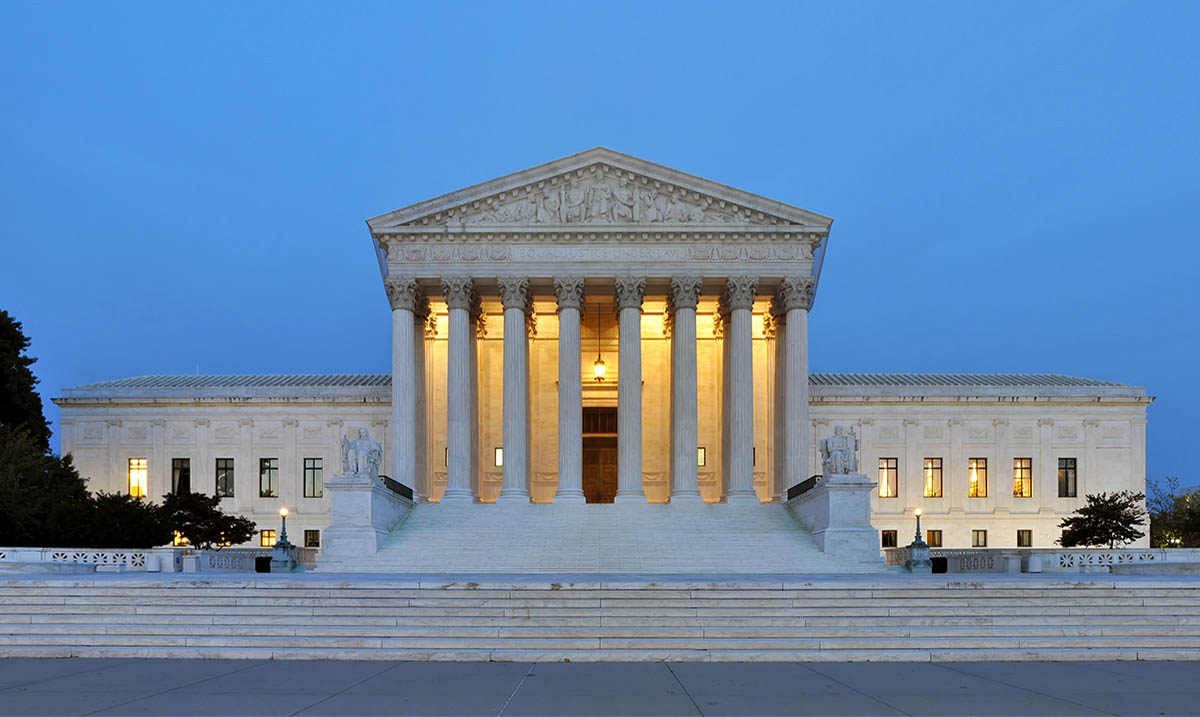
It feels inevitable that the state-federal legal battles over categorizing and regulating sports event contracts end up in the Supreme Court. Especially so now that we have different federal court circuits issuing conflicting rulings on the basics of these cases. We now move ever closer to that SCOTUS eventuality.
New Jersey asked the U.S. Supreme Court on Wednesday to take the first sports-event-contract case of its kind. Attorney General Jennifer Davenport and Division of Gaming Enforcement Interim Director Mary Jo Flaherty filed a petition for a writ of certiorari asking whether the 2010 Dodd-Frank Wall Street Reform and Consumer Protection Act stripped states of power over sports wagers that trade on markets registered with the Commodity Futures Trading Commission. KalshiEX, LLC is the respondent. The filing arrives five days after a Ninth Circuit panel reached the opposite result from that of the Third Circuit.
In a state announcement, Davenport said companies “have no right to offer their sports bets without following state law” and that Congress never explicitly or implicitly immunized a nationwide sports-wagering business when it told the CFTC to police swaps after the 2008 financial crisis. Kalshi spokesperson Dani Lever answered that the company “is an open, nationwide financial exchange” and “cannot be regulated by 50 different [state] regulators.” Those two statements from opposing sides in the matter now set the question for the highest court in the land to resolve.
The petition is less a surprise than a culmination. Sports-event contracts sit at the center of a clash over exclusive federal jurisdiction, state licensing, tax revenue, and consumer-protection rules. Consequently, Wednesday’s filing gives the Supreme Court a published circuit split and a docket already primed by earlier extension requests in Flaherty v. KalshiEX.
From a Cease-and-Desist Letter to a National Test Case
The dispute began in 2025 after the New Jersey Division of Gaming Enforcement ordered Kalshi to stop listing sports-related event contracts. Kalshi sued, claiming that those contracts are swaps traded on a CFTC-licensed designated contract market and therefore fall outside state gambling statutes. A fairly similar series of legal filings then followed that we now see happening across many states in their attempts to ban or control sports prediction markets. A federal district judge blocked enforcement in April 2025. On April 6, 2026, a divided Third Circuit panel affirmed that injunction in KalshiEX, LLC v. Flaherty.
The majority treated the contracts as swaps under the Commodity Exchange Act and held that CFTC jurisdiction preempts state gambling laws. Circuit Judge Jane Richards Roth dissented, writing that the listed products looked “virtually indistinguishable” from sportsbook menus, including game winners, spreads, totals, and player props. New Jersey is now asking the Court to reverse that 2-1 Third Circuit result.
The question presented tracks with Dodd-Frank: whether that 2010 statute preempted states from regulating sports bets that occur within their borders when ostensibly the same wagers also appear on CFTC-registered markets. A SCOTUS grant of the petition would force a direct answer as to who writes the rules for Kalshi and other U.S. venues offering the same sports inventory. Various state attorneys general say they do. Kalshi and industry peers say the CFTC does.
Davenport’s office also leans on Murphy v. NCAA, arguing that the Court has already held that if Congress declines to regulate sports wagering directly, each state remains free to act on its own. Flaherty added that Kalshi has marketed itself as “the first app for legal sports betting in all 50 States” while ignoring state gaming laws and constitutional limits on collegiate wagers.
The Ninth Circuit Split Makes Review Harder to Avoid
Certiorari is never automatic. Still, the timing is hard to ignore. On August 28, a three-judge Ninth Circuit panel held that the Commodity Exchange Act “likely does not preempt” state gaming rules as applied to Kalshi’s sports event contracts.
The panel concluded the sports contracts were not swaps because they were sports bets, then left state gaming regulators free to enforce licensing rules against Kalshi, Crypto.com’s U.S. derivatives venue, and Robinhood Derivatives. The 3-0 result created an acknowledged split with the 2-1 Third Circuit ruling in the opposing direction. That circuit split is the petition’s strongest ticket onto the SCOTUS conference calendar.
Kalshi’s spokesperson, Lever, is trying to downplay the conflict. She told the New Jersey Globe that the Ninth Circuit still agreed federal law stops states from regulating trading on a federally licensed exchange, and that the difference turned on a CFTC regulation “in the process of being rewritten.” Naturally, New Jersey rejects that reading. The petition says the Ninth Circuit “explicitly disagreed” with the Third Circuit on the core preemption question and that the disagreement will not resolve itself.
Litigation has already spread across at least 20 states, with dozens of cases pending and several state gambling laws enjoined. Forty-four states, hundreds of tribes, and licensed casinos have opposed Kalshi’s theory in related briefing. New Jersey co-led a multi-state amicus effort in the Ninth Circuit fight, and the panel cited that brief while refusing to treat a Wall Street reform statute as a “wrecking ball” to decades of gambling rules.
What a Grant Would Decide, and Why the Stakes Are Immediate
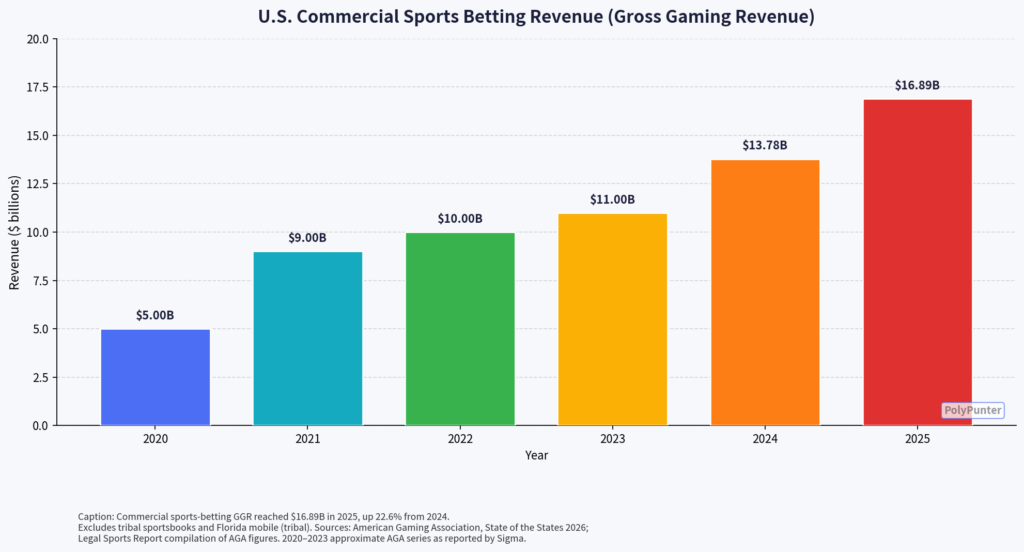
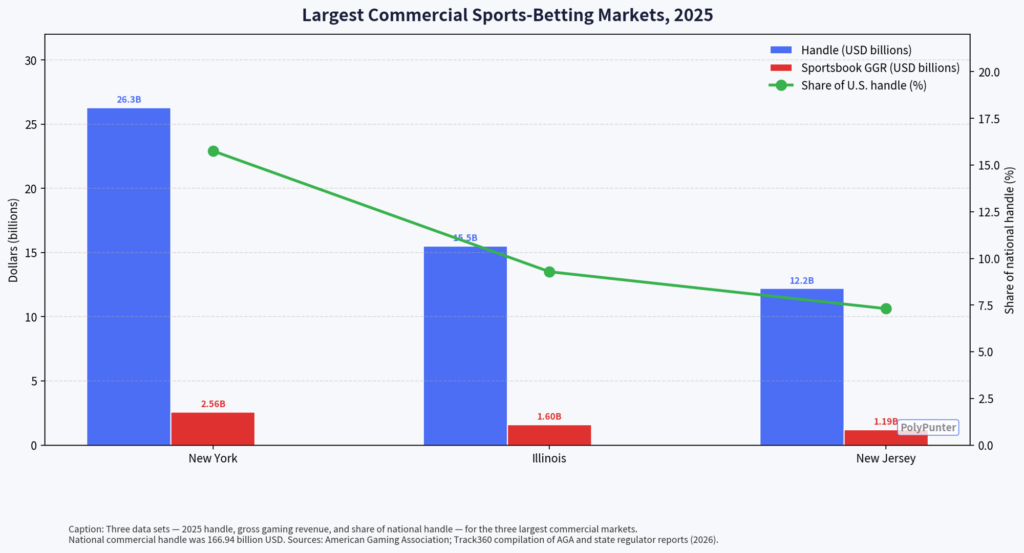
Davenport’s office says sports betting generated $16.89 billion in state revenue nationwide in 2025, excluding tribal sportsbooks, and that 95% of Kalshi’s 2025 revenue from New Jersey came from sports event contracts. They argue that if CFTC registration is sufficient to opt out entirely of state licensing, tax compliance rules, and age-control regimes, licensed sports betting operators would face a competitor with extremely unfair advantages. The petition adds a second warning: because federal law generally bars swap trading in CFTC-registered markets, labeling sports event contracts as swaps could cast legal doubt on ordinary sports wagers at casinos and tribal properties. That’s an interesting legal point.
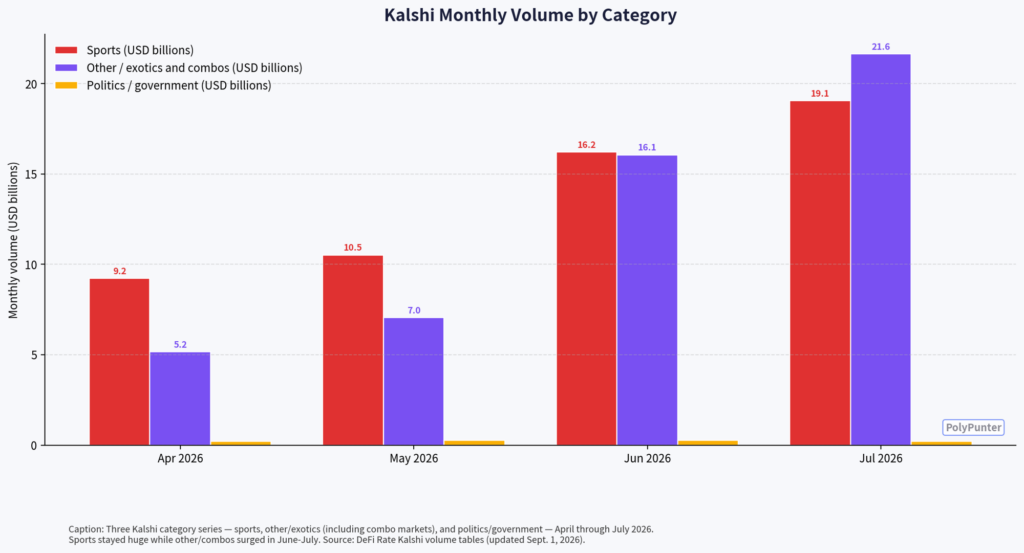
Traders are already living inside the intra-national split. In one circuit, sports-event contracts continue to be traded despite a federal injunction. In another, gaming boards can force the same products off the board. That patchwork is why listing strategy and geofencing have become legal questions as much as product questions.
If the Court grants review, it will have to decide on the Commodity Exchange Act’s swap definition, the CFTC’s exclusive-jurisdiction clause, and the presumption against preemption in an area of traditional state policing power. New Jersey seeks a holding that Congress did not displace state sports-gambling statutes by expanding federal oversight of derivatives. Kalshi wants one national rulebook for a designated contract market.
The petition argues that reading “event” and “associated with” at their broadest would let almost any sports wager become a federal swap. The Ninth Circuit used similar language, saying Kalshi’s reading lacked a limiting principle and raised major-questions concerns. The Third Circuit majority instead treated DCM registration and the Act’s text as enough to lock states out. Those two methods of reading the same statute are now sitting side by side on the Supreme Court’s desk.
A decision would reset every pending complaint and tell traders whether a sports contract is a federally exclusive instrument or a state-licensed wager merely dressed up to pass as a federal swap. Until then, the map stays broken. New Jersey has asked the only tribunal that can to pick a single answer. Of course, the Court could choose to avoid a comprehensive decision and instead rule on specific elements of the legal conflict, sending the case back to the circuit courts for additional review.
References
- Petition for Writ of Certiorari, Flaherty v. KalshiEX, LLC (Sept. 2, 2026)
- New Jersey Attorney General announcement on the certiorari petition
- Declan Harty, Politico
- Nikhilesh De, CoinDesk
- CoinDesk, Third Circuit coverage of KalshiEX v. Flaherty
- Justia, KalshiEX, LLC v. Flaherty, No. 25-1922 (3d Cir. 2026)
- CoinDesk, Ninth Circuit ruling
- Reuters, Ninth Circuit ruling
- U.S. Supreme Court docket, No. 25A1465
- Murphy v. National Collegiate Athletic Association, 584 U.S. 453 (2018)
- David Wildstein, New Jersey Globe
- Front Office Sports
- Lauren McCarthy, The New York Times
- Jon Brodkin, Ars Technica
- CNBC, Ninth Circuit coverage
- The Block, Ninth Circuit coverage
- New Jersey Monitor