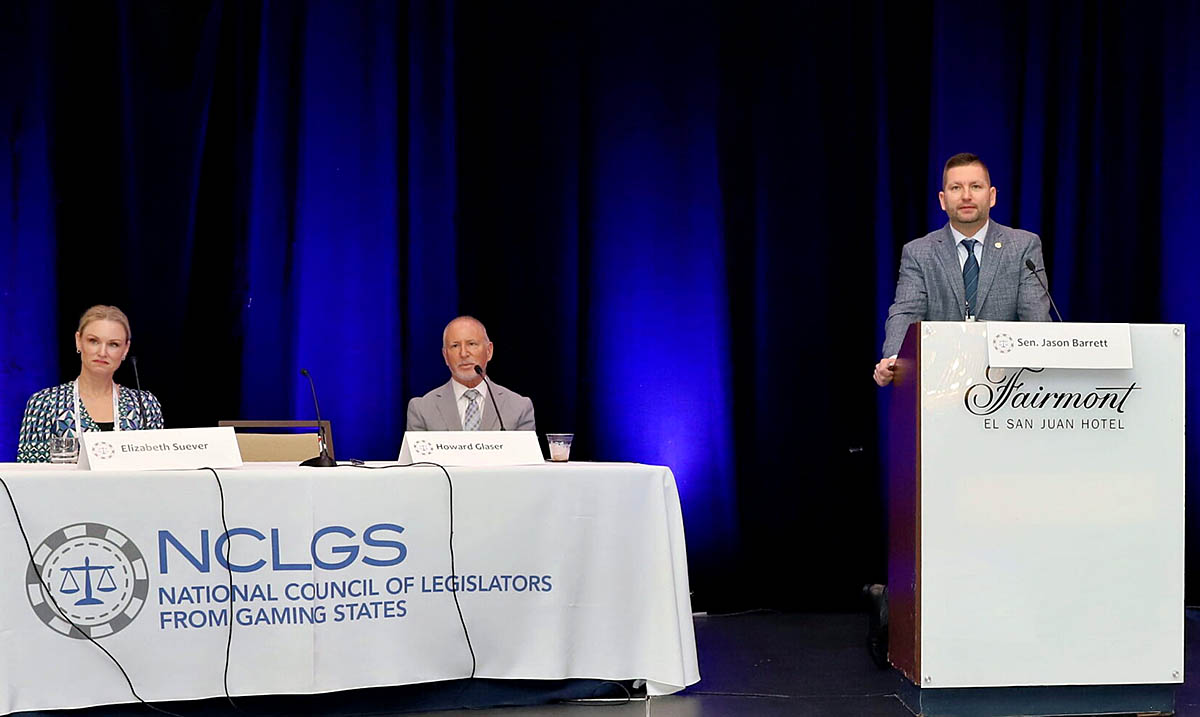
It’s okay to admit you’ve never heard of the National Council of Legislators from Gaming States (NCLGS) before today. We haven’t either. But suffice it to say that if multiple states have similar governmental interests, there’s a council or commission for them.
The National Council of Legislators from Gaming States unanimously approved a sweeping resolution at its summer meeting, taking direct aim at the rapid growth of what it termed unregulated prediction markets. This move signals rising tension over who controls these event contracts and how traders interact with them.
The resolution, titled “A Resolution Opposing the Expansion of Unregulated Prediction Markets and Urging Federal and State Action to Protect Consumers and Regulated Gaming Markets,” passed without dissent from the executive committee. Only a government body could come up with a name like that. But at least it’s rather clear.
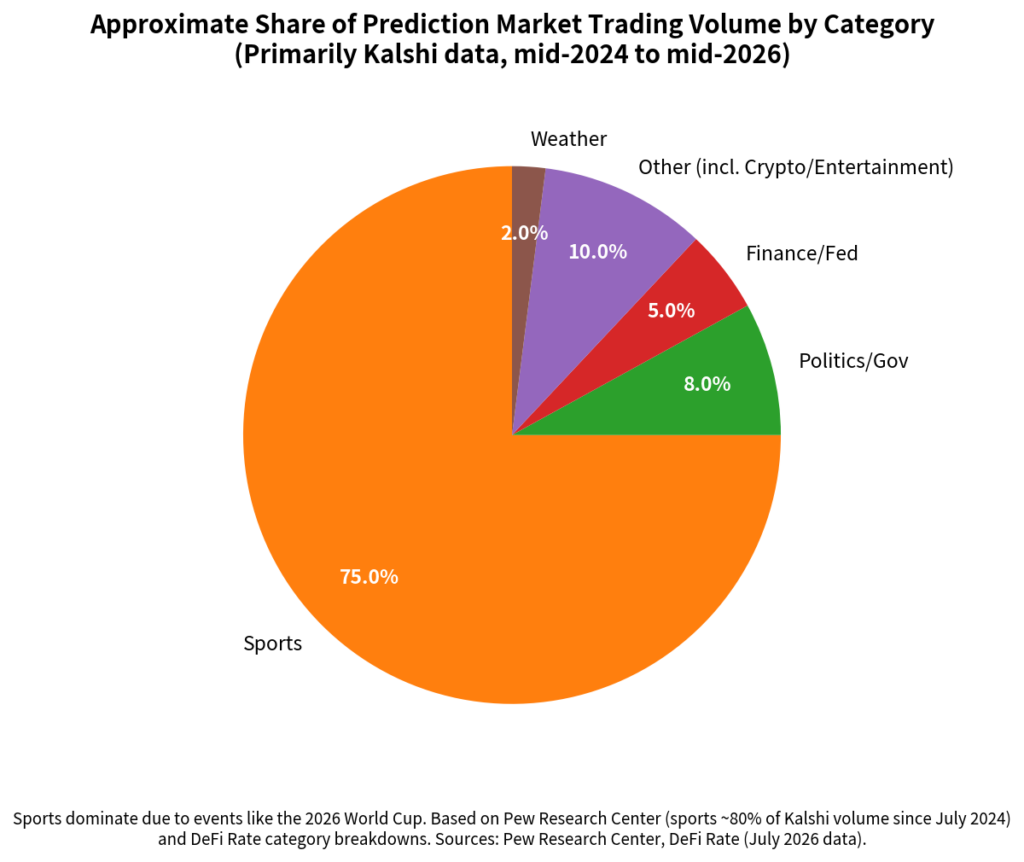
The resolution frames the issue as a threat to established gaming oversight and calls for immediate steps to rein in activity that bypasses traditional gaming rules. As prediction market volumes climb and more traders pile into sports and political contracts, this stance represents a larger political and legal position on how these markets operate in the months ahead.
Spectrum Gaming COO Juliann Barreto captured the moment’s weight, noting that prediction markets rank among the most significant emerging issues facing state policymakers. The group made sure its members heard every side of the debate before locking in this position. Though the position itself was fairly set before any such debate took place. These individuals represent the interests of state gaming commissions; by definition, they are antithetical to federally regulated sports prediction markets.
Key Provisions in the NCLGS Prediction Markets Resolution
The document lays out six concrete action items. It opposes any expansion of prediction markets that lets people place wagers outside the reach of state and tribal governments. This targets platforms operating without local licenses and seeks to close what state lawmakers see as a growing loophole.
The resolution then appeals directly to Congress, asking lawmakers to declare that prediction markets constitute illegal gambling. Once that clarification lands, regulatory and licensing decisions would fall to states and tribal governments. A parallel point urges the Commodity Futures Trading Commission to stop classifying sports and political contracts as legitimate financial instruments that sit outside gaming regulation.
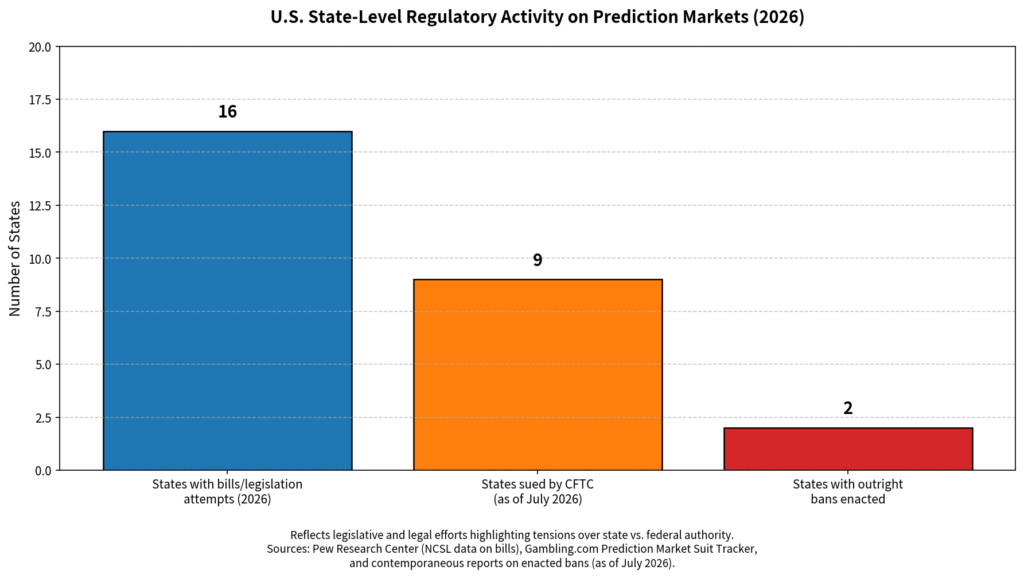
The remaining items push member states to review their own gaming statutes and assert jurisdiction over prediction market activity inside their borders. 41 states’ attorneys general have previously signed a letter arguing the same standard. The resolution also reaffirms the sovereign authority of states and tribes to regulate gaming. Finally, it instructs NCLGS leadership to distribute the full text to Congress, the CFTC, the National Governors Association, and other key bodies.
Congressional Clarification and CFTC Pressure
Congress, which has already been tossing around various bills related to sports prediction markets in particular, now faces an explicit request from a multi-state council to settle the legal status of prediction markets. By labeling them illegal gambling, federal legislators would hand primary authority back to the levels of government that have regulated similar activity for decades. This approach mirrors the model in which states and Native tribes, through compacts, decide whether and how to allow sports wagering.
At the same time, the resolution continues to pressure the CFTC. These state lawmakers argue that treating sports and political event contracts as pure financial products creates an uneven playing field. Traders can currently access these contracts with fewer restrictions than they would face at a licensed sportsbook, and the NCLGS wants that disparity ended. They claim on principle, but obviously there is a great deal of money at stake for these states as well, where portions of sports betting revenue are now part of their budgets.
Beyond the federal asks, the resolution places heavy emphasis on local action. It encourages every member state to examine existing gaming laws and enforce them against prediction market activity occurring within its borders. This invites attorneys general and gaming commissions to test their authority through cease-and-desist letters, rulemaking, or, if necessary, litigation.
Tribal governments receive equal recognition. The document repeatedly affirms tribal sovereign rights to regulate gaming on their lands. In practice, that means tribes could choose to license prediction market activity, ban it, or tax it according to their own priorities.
By directing leadership to circulate the resolution to the National Governors Association and parallel bodies, the group is building a broader coalition. State executives and tribal leaders who share concerns about consumer protection and state revenue leakage now have a ready-made policy statement to support.
Industry Response and the Road Ahead
Not every industry voice has lined up behind the NCLGS. The Sports Betting Alliance, whose membership includes companies that have launched their own prediction products, has stayed neutral so far. Its leadership congratulated Georgia State Representative Al Williams on his election as the next NCLGS president and thanked outgoing leadership for progress on regulated sports betting, yet offered no endorsement of the new resolution itself.
That measured silence underscores the complexity. An increasing number of sports betting operators, such as DraftKings and FanDuel, now see prediction markets as a natural extension of their licensed businesses, while the NCLGS views the current structure as an end run around those same licenses. The resolution does not name individual companies, yet its impact would touch every platform currently offering sports or political contracts without state or tribal approval.
Looking forward, the real test will arrive when Congress and the CFTC respond. The NCLGS has no actual legal authority in the matters of their resolution.
References
- NCLGS Calls On Congress To Ban Sports Prediction Markets – Legal Sports Report
- NCLGS official announcement of the resolution on X
- Full text of the NCLGS Resolution on Prediction Markets (PDF)
- NCLGS press release on the prediction markets stance
- InGame live coverage of NCLGS anti-predictions stance