
Investors in the prediction markets sector maintain that explosive growth could propel these platforms to a point where comprehensive crackdowns become impractical. Panelists at a recent industry conference emphasized this potential during discussions on scaling strategies.
They pointed to historical precedents in which rapid expansion created protective barriers against regulatory intervention. This perspective gains traction as trading volumes continue their upward trajectory in 2026. Observers note the sector’s evolution draws parallels to earlier innovations in related fields.
The concept of exit velocity in prediction markets refers to achieving a scale that integrates platforms into the mainstream financial ecosystem. Quinton Singleton, Chief Operating Officer of nVenue, highlighted during the panel how quick scaling acts as a moat. Davis Catlin, Managing Partner of Discerning Capital, echoed this, citing past examples in which products initially faced scrutiny but gained acceptance through popularity. Kalshi’s efforts exemplify this approach with aggressive growth targets. Platforms like these aim to embed themselves deeply before regulators can fully respond.
Note: Prediction platforms are hardly the first business to grow so fast that it becomes ‘naturalized’ into the general social and economic life before regulators can catch up to debating its basic right to exist. Good examples of this would be gig-economy entities like Uber and social media platforms themselves. Their rate of user adoption far outpaced regulators’ review, which tended to come only in hindsight.
Investors Argue Rapid Growth Renders Full Regulation Unlikely
Catlin drew from his experience in daily fantasy sports to illustrate the point. PrizePicks was once viewed as illegal gambling but scaled to mainstream status. Dream11 in India navigated rules through innovation, achieving similar outcomes. Pachinko in Japan adapted to local regulations, fostering sustained growth. These cases suggest prediction markets could follow suit if they maintain momentum.
Singleton stressed the importance of diversifying beyond sports to solidify positions. Kalshi’s volume skewed heavily toward sports last year, reaching 95% on certain NFL Sundays. Critics like Tom Dunleavy argue that this reliance calls into question long-term viability. Yet investors remain optimistic about broader adoption. They predict fintech giants like Robinhood could accelerate this with their vast user bases.
Shifts in public perception also play a role in this narrative. DraftKings and Flutter have seen stock values halve since late 2025 despite strong performance. This dip reflects broader challenges in the gambling sector. Prediction markets, however, position themselves differently by emphasizing informational value. Investors believe this distinction could help evade stringent controls.
Explosive Trading Volumes Fuel Exit Velocity Predictions
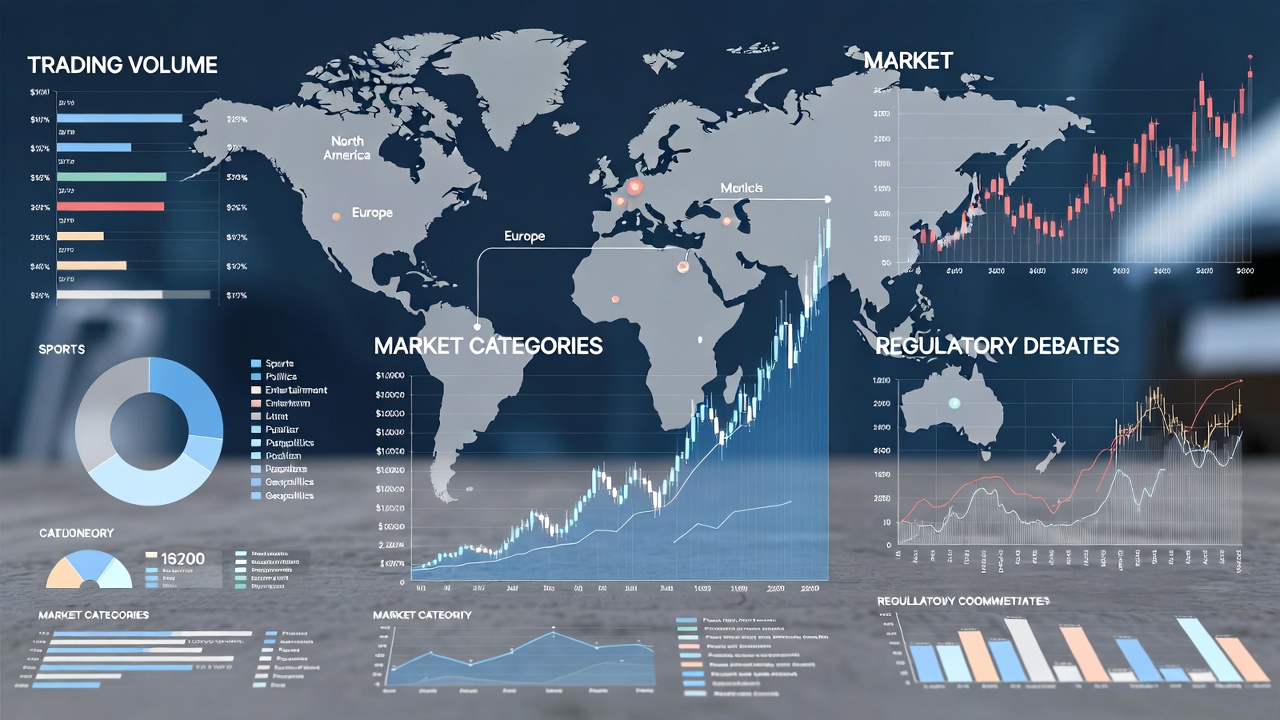
Global prediction market trading volume surged to nearly $64 billion in 2025, marking a 400% increase from the prior year. Monthly figures escalated from under $100 million in early 2024 to over $13 billion by December 2025. January 2026 volumes rose by more than 40% from December, defying expectations of a post-football slowdown. February tracked similarly, with platforms like Polymarket hitting $425 million in a single day. Combined weekly volumes for major players now exceed $6 billion.
Projections indicate even steeper growth ahead. Analysts forecast $325 billion in 2026 based on year-to-date run rates. Some estimate potential reaches $1.3 trillion annually if weekly trading hits $25 billion. Institutional participation drives much of this expansion. Liquidity improvements attract larger traders, creating a flywheel effect.
Kalshi processed over $10 billion in February 2026 alone. March volumes are expected to climb further with events like the NCAA tournament. Polymarket’s February total surpassed $7 billion, a 7.5-fold jump year-over-year. These numbers underscore the sector’s rapid ascent.
Trading Volume Growth in Prediction Markets
| Year | Annual Volume (USD Billion) | Growth Rate |
|---|---|---|
| 2024 | 15.8 | – |
| 2025 | 64 | 400% |
| 2026 (Projected) | 325 | 408% |
| 2030 (Estimated) | 1,100+ | 239% CAGR |
This table highlights accelerating volumes, with sources such as Citizens Financial Group projecting over $10 billion in revenue by 2030. Diversification into non-sports categories contributes to sustained interest. Institutional tools enhance accessibility for larger investments.
Regulatory Pressures Mount as Growth Accelerates
A new coalition, Gambling Is Not Investing, launched to advocate for state-level enforcement against prediction markets. The group argues these platforms bypass state gambling laws, operating illegally in non-sports betting states. Mick Mulvaney, the coalition’s executive director, stated that rebranding wagering as trading misleads consumers. They push for adherence to established protections and funding mechanisms. This stance reflects broader concerns from traditional exchanges like CME and Cboe, whose leaders call for crackdowns on perceived regulatory shortcuts.
Kalshi faces multiple state bans, challenging federal preemption in court. PolyPunter reports detail how CFTC support clashes with state rulings. Polymarket has removed controversial markets amid backlash, including those on nuclear events. These actions aim to maintain integrity while navigating scrutiny. Insider trading cases, including a Mr. Beast editor and a California politician, highlight enforcement challenges.
The Commodity Futures Trading Commission considers new rules for event contracts. Leverage introduction could amplify volumes fivefold in 2026, per FalconX analysis. Yet coalitions urge stricter oversight to protect public interests. This tension underscores the delicate balance between innovation and regulation.
For deeper insights into regulatory dynamics, watch this discussion: Coalition for Prediction Markets CEO on Regulation. The video explores serious issues, such as insider trading.
Historical Parallels Inform Current Strategies
Daily fantasy sports provide a blueprint for prediction markets’ potential path. Initially debated as gambling, DFS gained a separate legal classification through scale. States like California once deemed it illegal, but popularity shifted outcomes. Prediction markets leverage similar arguments by framing themselves as informational tools rather than pure bets.
Other global examples reinforce this. India’s Dream11 innovated around restrictions, building a massive user base. Japan’s pachinko industry adapted to cultural and legal norms, thriving despite ambiguities. These adaptations suggest prediction markets could integrate if they demonstrate value beyond wagering.
Critics counter that heavy sports focus blurs lines with traditional betting. Dunleavy’s analysis pegs Kalshi at 90% sports volume, Polymarket at 40%. Diversification into politics, finance, and entertainment mitigates this. March Madness 2026 projections show prediction markets challenging sportsbooks with $4 billion in wagers. PolyPunter analysis indicates a 5% shift from traditional platforms.
Future Projections: Beyond 2026 Horizons
Experts foresee prediction markets evolving into a trillion-dollar industry by 2030. Liquidity depth improvements will accommodate institutional flows. Platforms like Nasdaq seek approval for binary options on indices, signaling mainstream integration. ETFs proposed by Bitwise and GraniteShares target election outcomes, offering regulated exposure.
Partnerships enhance capabilities. Polymarket’s alliance with Palantir bolsters monitoring against manipulation. Betr’s collaboration expands real-money options. College campus influencer deals drive user growth, though ethical concerns arise. These initiatives position the sector for sustained expansion.
Geopolitical events influence market dynamics. US-Iran strikes resolved numerous contracts, unlocking payouts. Reports detail how such resolutions validate platform accuracy. Oscar 2026 betting surges billions, turning awards into wagering spectacles.
To understand the gambling versus prediction debate, view this analysis: Prediction Markets vs. Gambling: Where’s the Line?. It examines real-world use cases and navigation of regulations.
Institutional legitimacy grows with prime brokers like Clear Street and Marex providing access. This development drives hedging innovations amid demand. As volumes explode, the investors’ exit velocity thesis appears increasingly plausible. The sector’s trajectory suggests integration outweighs outright suppression.
References
- Prediction Markets Could Reach ‘Exit Velocity’ And Get Too Big For Crackdowns, Investors Say
- Prediction Market Volume Quadrupled in Past 2 Years
- Prediction Market Firms Could Be Making $10 Billion in Revenue by 2030
- Prediction Markets Could Top $1T in Annual Volume, Says New Report
- From Opinions to Odds: Emerging Trends in the Prediction Market Landscape
- New Coalition Calls for State Crackdowns on Prediction Markets
- Kalshi Fights Numerous State Bans All-At-Once
- March Madness 2026 Betting Surge: Prediction Markets Challenge Traditional Sportsbooks
- US Strikes on Iran Ignite Prediction Market Resolutions
- Coalition for Prediction Markets CEO on Regulation
- Prediction Markets vs. Gambling: Where’s the Line?