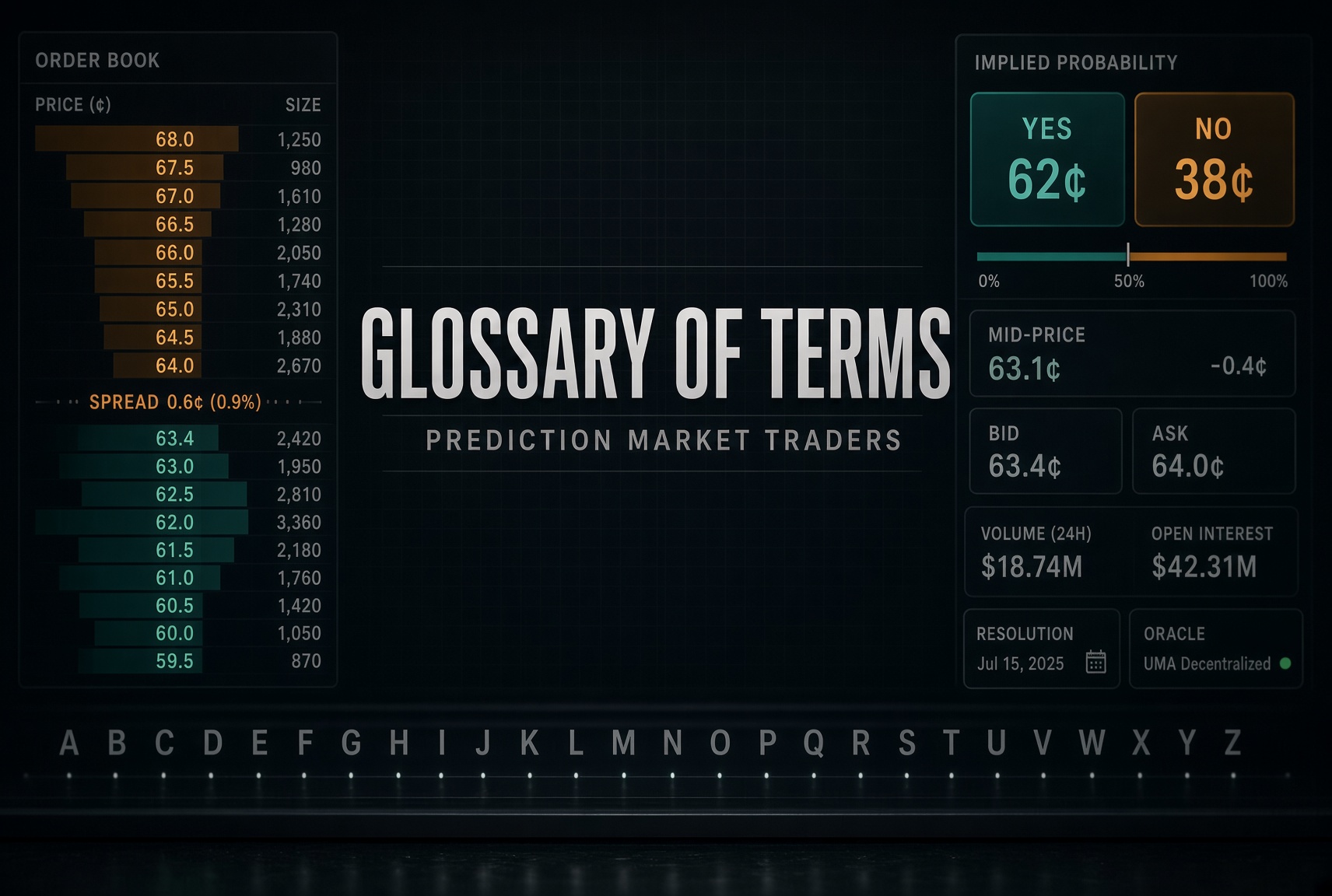

Prediction market strategies for consistent profits continue to attract traders seeking reliable edges on platforms like Polymarket and Kalshi. These event-based contract markets allow participants to buy and sell outcome contracts that resolve to real-world results, turning accurate forecasting of real-world events into measurable returns.
Although many beginners approach them for casual fun or curiosity, those who master structured prediction market strategies can achieve steady positive results over time. This comprehensive guide explores the best prediction market strategies for consistent profits, packed with actionable tactics, real examples, and risk controls designed for long-term success.
Since opportunities emerge daily across sports, crypto, politics, economics, entertainment, and more, learning these methods helps traders build sustainable advantages. Whether you want Polymarket trading strategies or Kalshi-specific approaches, these proven methods emphasize process and probability over speculation.
Why Most Traders Lose Money — And How the Best Prediction Market Strategies Deliver Consistent Profits
Most participants lose money in prediction markets because they treat contracts like pure gambling rather than highly calculated opportunities. However, traders who adopt the best prediction market strategies for consistent profits flip the odds by exploiting structural inefficiencies and behavioral patterns. Prices on prediction markets reflect crowd wisdom yet frequently deviate due to emotion or thin liquidity; prepared participants find repeatable edges.
Successful traders begin by recognizing that contract prices represent implied probabilities that often misalign with accurate, objective odds, especially early or during news-related spikes. Smart traders search for these discrepancies.
Although sentiment drives short-term volatility, long-term profitability stems from methodically identifying and acting on misalignments. Consequently, the prediction market strategies that work best build on this reality by incorporating strict risk rules that preserve capital amid inevitable fluctuations. Building these habits early positions traders for compounding returns that grow portfolios reliably over months and years.
Cross-Platform Arbitrage: The Safest Prediction Market Strategy for Consistent Profits
Cross-platform arbitrage remains one of the best prediction market strategies for consistent profits because it removes directional risk while locking in small guaranteed edges. It does involve highly time-sensitive trading and larger-volume purchases, as the profits per trade are relatively small.
Arbitrage: the simultaneous purchase and sale of an asset in different markets to profit from a temporary difference in price.
Traders monitor the same event across Polymarket, Kalshi, and other platforms, buying the undervalued leg and selling the overvalued one when spreads exceed fees. Since discrepancies often arise during breaking news or liquidity imbalances, rapid execution can capture reliable returns. Moreover, this tactic excels on binary contracts where Yes plus No shares sum to less than $1.00 after costs.
Example: during a recent economic data release, one platform listed a Yes contract at $0.62 while another showed $0.68. Buying low and selling high secured a 6-cent profit per share, no matter the outcome. Success in this strategy requires pre-funded accounts on multiple sites and alert tools to catch gaps quickly. Additionally, limiting each pair to 3-5% of total capital minimizes slippage during fast fills. Consequently, consistent use of cross-platform arbitrage builds steady, low-volatility returns that anchor many profitable trading routines.
Platforms that offer one-cent ticks, like Kalshi, simplify precise entries, while Polymarket’s order book rewards monitoring depth. Although fees can nibble tiny spreads, targeting net gaps of three cents or more keeps the mathematics favorable. Therefore, beginners often master this prediction market strategy first, learning the mechanics without exposure to outcomes.
Cross-Platform Arbitrage Performance Comparison Table
| Platform Pair | Typical Spread | Execution Window | Risk Level | Average Edge per Trade |
|---|---|---|---|---|
| Polymarket vs Kalshi | 3-8 cents | 5-30 minutes | Very Low | 4-9% |
| Kalshi Internal Yes/No | 1-4 cents | Immediate | Lowest | 2-5% |
| Multi-Platform Bundles | 2-6 cents | 10-45 minutes | Low | 3-7% |
Since opportunities close rapidly, many traders use simple scripts or notifications to stay ahead. Consequently, this low-risk prediction market strategy for consistent profits can contribute 5-15% annualized returns when scaled across numerous events, as noted in academic strategy syntheses.
Liquidity Provision and Market Making: Generate Steady Returns in Prediction Markets
Liquidity provision stands out among prediction market strategies for consistent profits by allowing traders to earn spreads and potential rebates instead of betting directionally. Participants place simultaneous bids and asks around fair value, collecting premiums when retail orders fill them.
Liquidity: the ease and speed with which an asset can be bought or sold in the market without causing a significant change in its price. Highly liquid markets feature many participants, high trading volumes, and narrow bid-ask spreads. It represents the ability to convert assets into cash quickly
Since high-volume contracts attract persistent one-sided flow, this approach delivers predictable small wins that compound. Moreover, certain platforms reward makers, enhancing overall yields in active markets.
Passive liquidity provision on sports and economic contracts has produced substantial aggregate positive returns for disciplined participants, per detailed microstructure analysis available in systematic edges research. However, constant order book monitoring prevents unwanted one-sided exposure before catalysts. Additionally, capping daily risk and dynamically adjusting quotes maintains control. Consequently, market making suits traders with available capital who prefer income-style returns over high-volatility bets.
Although thin markets tempt wider spreads, experienced participants stick to contracts with volumes exceeding $1 million for better fill quality. Therefore, combining liquidity provision with other tactics creates diversified revenue streams that perform reliably across market regimes.
Building an Information Edge: Predictive Trading for Long-Term Consistent Profits
Developing a strong information edge powers many of the best prediction market strategies for consistent profits by revealing mispricings ahead of the crowd. Traders who conduct domain-specific research enter positions when their probability estimates differ from market prices by 5-10 points or more.
Since early entries in longer-dated contracts allow gradual convergence toward true odds, high-conviction holding generates attractive upside. Moreover, layering public data with on-chain flow observation strengthens timing.
Academic research consistently shows independent forecasts outperform crowd prices, especially in early market stages. However, combating confirmation bias through rigorous tracking of personal accuracy remains essential. Additionally, focusing on one or two niches deepens pattern recognition that casual traders miss. Consequently, this research-driven prediction market strategy rewards preparation while discouraging impulsive trades.
Although slower markets test patience, eventual convergence rewards those who wait. Therefore, pairing information edges with position limits keeps overall portfolio risk contained even during temporary adverse periods.
Contrarian Fading Emotional Overreactions in Prediction Markets
Contrarian fading capitalizes on the prediction market tendency to overshoot during viral news, forming a valuable prediction market strategy for consistent profits. When prices jump 15 points or more within an hour on shaky information, traders evaluate fundamentals and position opposite if probabilities appear stable.
Contrarian fading: a high-risk, short-term trading strategy that involves betting against the prevailing market trend, selling when prices rise sharply, and buying when they fall. It assumes markets overreact, causing assets to become overbought or oversold. Faders anticipate a reversal or temporary pullback as traders take profits
Since spikes typically correct once facts spread, these reversals often yield fast 10-20% adjustments. Moreover, hard 10-point stop-losses protect capital when momentum lingers.
Examples occur regularly around debunked rumors or hype cycles where contracts revert sharply. Additionally, monitoring spikes in social volume signals detachment from reality. However, limiting fading trades to 1-3% of bankroll prevents outsized impact. Consequently, disciplined contrarians harvest mean-reversion profits that impatient participants overlook.
Bankroll Management and Portfolio Diversification: Essential for Consistent Profits
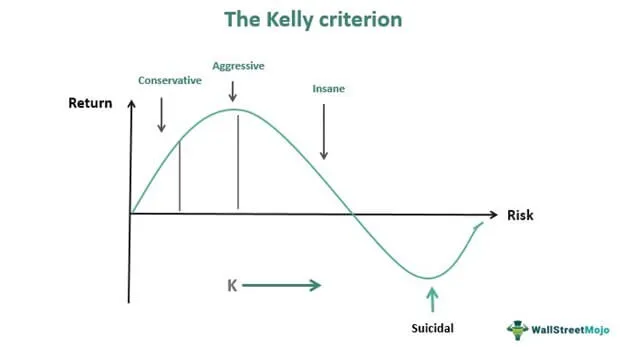
Robust bankroll management underpins every successful set of prediction market strategies, ensuring consistent profits by mitigating variance risk. Traders risk no more than 2-5% per position and maintain 20% cash for fresh opportunities. Since uncorrelated events reduce portfolio swings, spreading exposure across politics, economics, and sports dramatically smooths returns. Additionally, applying a half-Kelly formula adjusted for edge balances growth with safety.
Regular trade journaling uncovers personal biases and sharpens future decisions. However, avoiding revenge trading after losses preserves emotional control. Consequently, strong capital rules allow skill to compound into meaningful long-term profits. Laika Labs comprehensive bankroll management guide stresses separating trading funds from personal savings for psychological clarity.
Core Bankroll Management Rules Table
| Rule | Application | Benefit for Consistent Profits |
|---|---|---|
| Max 5% per position | High-conviction trades | Limits damage from any single outcome |
| Half-Kelly sizing | Directional positions | Optimizes growth while avoiding ruin |
| 20% cash reserve | Overall allocation | Enables arbitrage and new edges |
| 15% monthly drawdown cap | Portfolio oversight | Triggers timely strategy reviews |
Exploiting Favorite-Longshot Bias and Late Informed Flow Signals
Favorite-longshot bias offers persistent edges that enhance prediction market strategies for consistent profits.
Longshots priced $0.05-$0.15 frequently trade too high due to payoff appeal, while favorites $0.75-$0.92 sit undervalued. Since studies across markets confirm this pattern, buying appropriately generates 2-5% average advantages per contract.
Moreover, late-informed flow—sharp volume moves near resolution—provides additional 2-5% signals when aligned with fundamentals, according to an SSRN analysis of winners and losers.
Traders avoid extremes below $0.03 or above $0.97 due to liquidity challenges. However, focusing on the sweet spot delivers reliable results. Consequently, combining bias exploitation with flow monitoring boosts win rates without raising overall risk exposure.
Time Decay Harvesting, Conditional Probabilities, Correlation Trading, and Event Hedging
Time decay harvesting involves buying near-certain contracts at $0.90-$0.95 for 5-10% short-term returns as they converge to $1.00 near resolution. Although modest individually, repeated application across scheduled events compounds steadily. Additionally, conditional probability modeling uncovers impossible joint outcomes across related markets, enabling low-risk corrections. Correlation trading similarly exploits temporary disconnects between logically linked events.
Event hedging completes the toolkit by enabling individuals and businesses to directly offset real exposures through prediction contracts. Since a firm facing regulatory uncertainty can buy payout-matching shares, this functions as precise insurance. However, sizing hedges to actual risk prevents a mismatch.
Therefore, blending decay plays, probability chains, correlations, and hedging creates robust prediction market strategies for consistent profits across varying conditions.
Implementing Your Complete Prediction Market Strategies Plan for Consistent Profits
Building a personal plan integrates the best prediction market strategies for consistent profits into repeatable daily and weekly processes. Select two or three core tactics matching your research strengths and schedule.
Since monthly performance reviews highlight improvements quickly, maintain detailed logs covering rationale, sizing, and outcomes. Additionally, monitor platforms for liquidity shifts or rule updates that affect edges.
Professional traders treat prediction markets as a business, dedicating specific time blocks to research, execution, and analysis.
Although the early months may yield modest results as skills develop, persistence with discipline pays dividends. However, only risk capital you can afford to lose entirely, and scale gradually as confidence increases. Consequently, executing these prediction market strategies systematically turns trading into a reliable source of profit that rewards knowledge and composure.
With prediction markets expanding and new contracts appearing regularly, disciplined participants continue finding fresh opportunities. Since the real edge lies in consistent execution rather than secrets, starting small while staying methodical leads to growing success. Apply these best-in-class prediction market strategies to achieve consistent profits, rigorously track results, and refine your approach over time for optimal outcomes.
Frequently Asked Questions About Prediction Market Strategies
What are the best prediction market strategies for beginners seeking consistent profits? Start with cross-platform arbitrage and bankroll management, then add research-based predictive trading as skills grow.
How much capital do you need for Polymarket trading strategies? Begin with $1,000- $5,000 and strictly limit position sizes to build experience safely.
Do prediction market strategies work better on Polymarket or Kalshi? Arbitrage and liquidity tactics shine across both, while hedging and niche research often favor platform-specific liquidity and rules. Polymarket offers cryptocurrency wagering, while Kalshi utilizes U.S. dollars.
Can you achieve consistent profits in prediction markets over the long term? By the numbers, most traders lose money. But, yes, traders applying disciplined edges, proper sizing, and continuous review report sustained positive returns over time.
External References:
- Token Metrics: 7 Proven Prediction Market Strategies (2026)
- Laika Labs: Top 10 Polymarket Trading Strategies
- Medium: Trading Strategies for Prediction Markets from Academic Studies
- PredictionNews: Core Prediction Market Trading Strategies
- Laika Labs: Bankroll Management Guide for Prediction Markets
- YouTube: Prediction Market Trading Playbook
- YouTube: How to Win Big on Prediction Markets
- CryptoRank: Six Proven Strategies for Consistent Profits
- Binance Square: Advanced Prediction Market Approaches
- Best Prediction Market Strategies for Beginners
- NPR Coverage of Prediction Market Trading
- How to Profit from Prediction Markets
- Quantpedia: Systematic Edges in Prediction Markets
- SSRN Paper: Who Wins in Prediction Markets