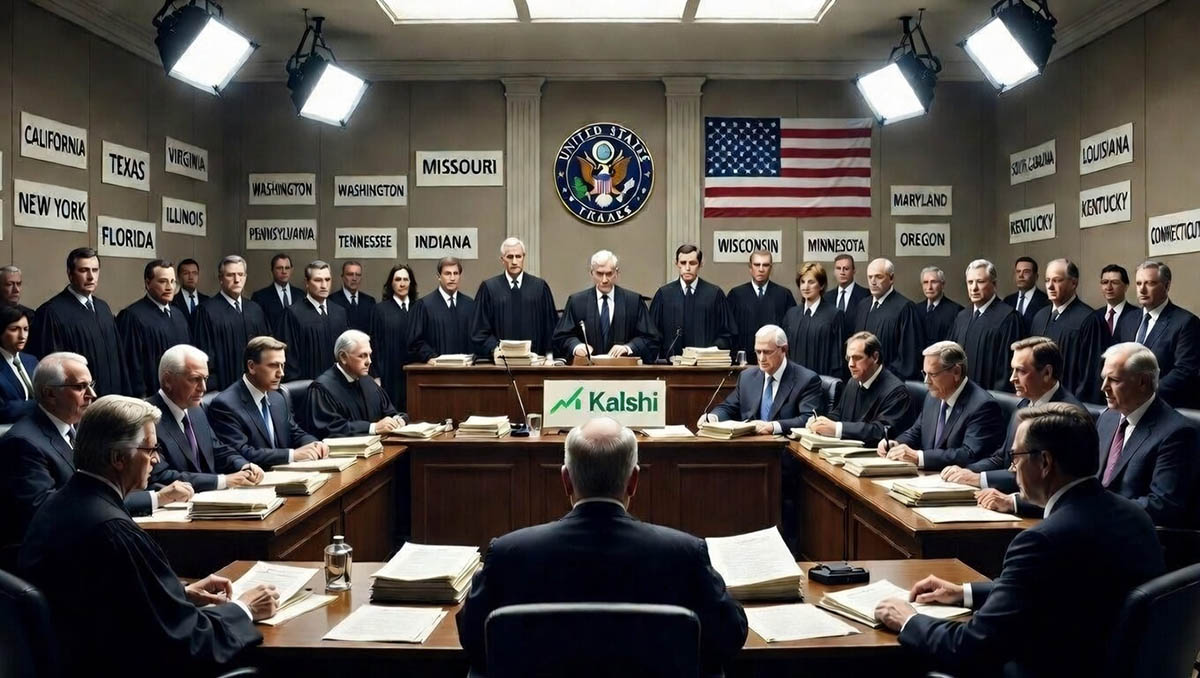
Kalshi faces mounting legal challenges from numerous states regarding its operations in offering contracts on events, including sports outcomes. The company asserts that its platform is subject to federal oversight by the Commodity Futures Trading Commission (CFTC), which grants it authority to operate nationwide. States argue that these activities constitute gambling and are subject to their regulatory frameworks. This conflict has resulted in a series of lawsuits, with Kalshi often taking preemptive action to protect its business model. Court decisions vary, highlighting the uncertainty in this regulatory space.
The disputes center on whether Kalshi’s event contracts qualify as swaps under the Commodity Exchange Act or as state-regulated wagering. Kalshi has secured some victories, such as preliminary injunctions that affirm federal preemption. Other rulings favor states, allowing them to enforce local laws. The involvement of the CFTC and the Trump administration adds layers to the debate, as they support Kalshi’s position on exclusive federal jurisdiction. These battles underscore tensions between innovation in financial derivatives and traditional gambling oversight.
Origins of the Kalshi Legal Conflicts with States
Kalshi initiated lawsuits against several states to prevent the enforcement of gambling laws against its platform. In one instance, the company sued Utah in federal court, anticipating a ban on proposition betting that could impact its operations. The suit claims that such state actions intrude on federal authority over derivatives trading. Utah’s legislation aims to expand its definition of gambling to include bets on individual performances, which Kalshi views as a direct threat. The governor and attorney general face accusations of planning imminent enforcement, prompting Kalshi’s proactive legal step.
Nevada emerged as a key battleground, with regulators filing lawsuits to block Kalshi from offering contracts on sports events. A federal judge initially granted an injunction in Kalshi’s favor but later dissolved it, ruling that certain contracts resemble traditional sportsbook bets. This reversal allowed Nevada to pursue enforcement, marking a setback for Kalshi. The state’s gaming industry, a major economic driver, sees prediction markets as competitors that evade taxes and regulations. Kalshi continues to challenge this, arguing for federal preemption.
Michigan joined the fray when its attorney general filed a civil lawsuit seeking a permanent injunction against Kalshi. The case moved to federal court, where Kalshi contends that state gambling rules do not apply. Similar actions are occurring on other platforms, indicating a broader state pushback. Michigan’s involvement highlights how multiple jurisdictions are testing the boundaries of federal authority in this area. Outcomes in these cases could set precedents for nationwide operations.
Key Court Rulings in Kalshi’s Prediction Market Disputes
A federal court in Tennessee granted Kalshi a preliminary injunction, finding that its sports contracts likely qualify as swaps under federal law. The ruling rejected the state’s argument that sports outcomes do not constitute events under the statute. This decision deepened the divide among courts, as it supported the CFTC’s exclusive jurisdiction. Tennessee’s cease-and-desist letter prompted the suit, with threats of fines and criminal referrals. Kalshi’s success here provides momentum in similar disputes elsewhere.
Massachusetts secured a preliminary injunction against Kalshi, becoming the first state to obtain such an order against a prediction market platform. This ruling allows the state to enforce its gaming laws, viewing Kalshi’s offerings as unlicensed wagering. The decision contrasts with Tennessee’s outcome, illustrating inconsistent judicial interpretations. Kalshi plans to appeal, maintaining that federal law supersedes state regulations. This case could influence pending litigation in other states.
In Ohio, Kalshi lost a court challenge where it attempted to override state sports betting rules by claiming federal commodity status. The judge dismissed the rebranding argument, classifying the activities as gambling. This defeat adds to Kalshi’s challenges, potentially leading to operations in a patchwork of state-by-state compliance. The ruling emphasizes how courts are scrutinizing the distinction between derivatives and bets. Kalshi’s strategy now faces increased scrutiny across jurisdictions.
Timeline of Major Kalshi Legal Actions and Rulings
| Date | Event | State Involved | Outcome |
|---|---|---|---|
| April 2025 | Favorable to the state | Nevada | Favorable to Kalshi (later dissolved) |
| November 2025 | Injunction dissolved | Nevada | Favorable to state |
| February 19, 2026 | Preliminary injunction granted | Tennessee | Favorable to Kalshi |
| February 24, 2026 | Kalshi sues over proposed ban | Utah | Ongoing |
| March 3, 2026 | State files lawsuit | Michigan | Moved to federal court |
| March 11, 2026 | Kalshi sues regulators | Iowa | Ongoing |
The table above outlines critical milestones in Kalshi’s legal engagements. These events span from initial injunctions to recent filings, showing the escalation over time. Each ruling impacts Kalshi’s ability to offer contracts without state interference. Ongoing cases in states like Iowa and New York continue to evolve. Analysts monitor these for potential appeals to higher courts.
Federal Support and Broader Implications for Prediction Markets
The Trump administration has backed Kalshi and similar platforms in their fights against state bans. This support aligns with the CFTC’s stance on exclusive jurisdiction over event contracts. Federal oversight allows operations in all states, even those with strict gambling prohibitions. States like Nevada argue that prediction markets function as unlicensed sports betting and violate local laws. The administration’s involvement could sway pending cases toward federal preemption.
The CFTC has defended its regulatory role, filing friend-of-the-court briefs in support of Kalshi. Chairman Selig emphasized the need to protect jurisdiction amid state litigation. This federal backing strengthens Kalshi’s arguments in court. However, states persist in enforcement, leading to a fractured legal landscape. The debates extend to other platforms, amplifying the stakes for the industry.
Additional complications arise from a class-action lawsuit over a contract on the Iranian supreme leader’s status. Plaintiffs accuse Kalshi of deceptive practices by invoking a “death carveout” to deny payouts. The suit claims the contract was presented as binary, but the rule emerged later. Kalshi refunded losses, yet the litigation highlights risks in geopolitical contracts. This case is drawing scrutiny on Capitol Hill, potentially leading to new regulations.
State-Specific Challenges and Kalshi’s Responses
Utah’s anti-gambling stance has positioned it at the forefront of opposition to Kalshi. The state enacts laws targeting proposition betting, which Kalshi sees as encroaching on its federal rights. Kalshi’s preemptive suit seeks to halt enforcement, backed by CFTC authority. Utah officials cite moral and economic concerns, viewing platforms as targeting young users. The outcome could influence conservative states with similar views.
In New York, lawmakers consider bans on sports-related contracts, prompting Kalshi’s federal lawsuit. The platform argues that state laws do not apply to CFTC-regulated derivatives. Regulators threaten fines for unlicensed wagering. This clash mirrors broader tensions and could lead to Supreme Court involvement. Kalshi maintains that its markets provide economic utility beyond betting.
Michigan’s multiple cases involve Kalshi and others, with lawsuits from both sides. The attorney general’s action seeks to block sports contracts on the grounds that they constitute unlicensed gambling. Kalshi removed the case to federal court, invoking preemption. Similar filings by Polymarket and Robinhood indicate coordinated industry resistance. These disputes test the limits of state authority in a federally regulated space.
States Involved in Litigation with Kalshi
| State | Action Taken | Status |
|---|---|---|
| Nevada | Filed suit to block operations | Favorable to the state |
| Utah | Legislation to ban proposition betting; Kalshi sued preemptively | Ongoing |
| Tennessee | Cease-and-desist; Kalshi granted injunction | Favorable to Kalshi |
| Michigan | State lawsuit; moved to federal court | Ongoing |
| New York | Secured an injunction against Kalshi | Ongoing |
| Massachusetts | Considering the ban, Kalshi sued | The court ruled against Kalshi |
| Iowa | Kalshi sued to stop enforcement | Ongoing |
| Ohio | Favorable to the state | Favorable to state |
The table lists states engaged in disputes with Kalshi, along with actions and current statuses. At least 11 states have taken steps, ranging from cease-and-desist orders to lawsuits. Kalshi’s responses include federal suits claiming preemption. Variations in outcomes reflect differing judicial views on the nature of event contracts. This patchwork approach complicates Kalshi’s nationwide operations.
Industry-Wide Ramifications and Future Outlook
The Kalshi battles extend to other platforms like Polymarket, facing similar state challenges. States view these as skirting sports betting laws, leading to litigation in at least eight jurisdictions. The CFTC’s involvement bolsters the industry’s federal preemption claims. However, state successes could fragment the market, requiring compliance on a per-state basis. This uncertainty affects growth and investor confidence.
Additional issues include trademark disputes, such as the NCAA’s complaint over Kalshi’s use of “March Madness.” This adds another layer of legal scrutiny beyond regulatory conflicts. Kalshi must navigate these while defending its core operations. The disputes highlight risks in branding contracts around protected terms. Resolutions could set boundaries for marketing in the sector.
Nineteen federal lawsuits challenge Kalshi’s legality under state gambling laws. These include actions from states, tribes, and individuals alleging addiction exacerbation. Kalshi counters that it operates legally under CFTC rules. The volume of cases suggests potential for consolidated proceedings or appellate review. Outcomes may clarify the regulatory framework for years to come.
Kalshi’s CEO has publicly defended the platform’s role in pursuing unbiased truth amid misinformation. The company views its markets as essential tools for society. Despite legal hurdles, Kalshi continues operations, emphasizing federal compliance. Future developments depend on higher court rulings and possible congressional action. The industry watches closely as these cases unfold.
Stakeholders anticipate appeals that could reach the Supreme Court, given conflicting decisions. Legislation in states like New York aims to ban specific contracts, intensifying the fight. Kalshi’s litigation strategy seeks to affirm federal dominance. Success could solidify its position; failures might require adjustments to the business model. The debates reflect broader questions on innovation versus regulation.
References
- Kalshi and Polymarket are skirting laws on sports betting, states say
- Kalshi ‘Death Bet’ Lawsuit Sparks Push To Ban Assassination Markets
- Are prediction markets just sports betting by another name? How legal battles are taking shape
- Prediction Markets at a Crossroads: The Continued Jurisdictional Battle Over Event Contracts
- Utah’s Anti-Gambling Tradition Meets Kalshi and Polymarket in a New Legal Fight
- Prediction Markets v. State Gaming Laws: The Kalshi Litigation Gamble
- Michigan’s Fight Over Prediction Markets
- Dispute Raised by NCAA Over Kalshi Using “March Madness” Brand
- Prediction market exchange Kalshi sues Utah over proposed prop betting ban
- Trump administration backs Kalshi, Polymarket as states move to ban prediction markets
- Prediction market app Kalshi faces 19 federal lawsuits
- U.S. Prediction Market Legal Status 2026: State-by-State
- Daniel Wallach on X: Massachusetts gets its preliminary injunction against Kalshi
- Tarek Mansour on X: Kalshi just filed suit in federal court against the states of Nevada and New Jersey
- ito on X: Kalshi lost in the Ohio court