Anticipated Wagering Hits Unprecedented Levels
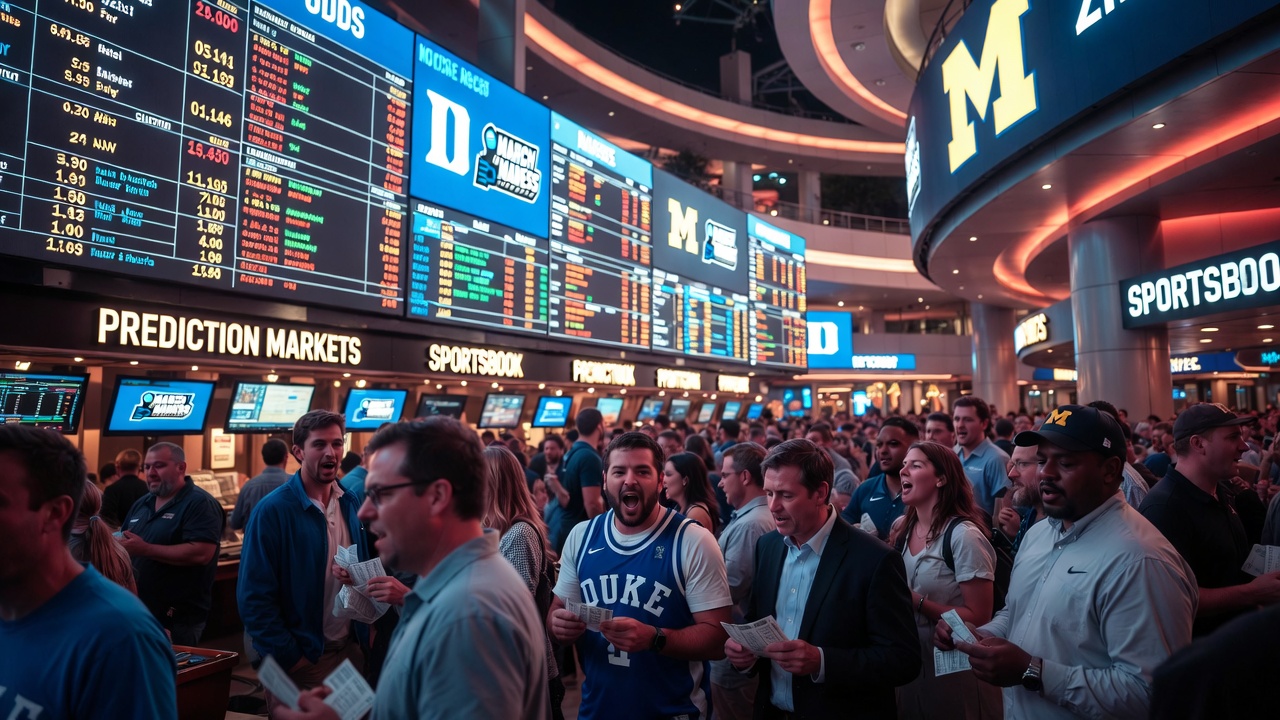
Industry analysts project a monumental increase in wagering for the 2026 NCAA basketball tournaments. Licensed sportsbooks expect to handle approximately $4 billion in bets across the men’s and women’s events. This figure marks a 6.7% rise from the $3.7 billion recorded in 2025. The surge stems from expanded legal betting options and heightened fan engagement. Prediction markets add another layer, potentially pushing total activity toward $4.5 billion.
Experts attribute this growth to the tournament’s structure, featuring numerous games over three weeks. The event begins with early rounds on March 17 and culminates in early April. Casual bettors flock to brackets and individual matchups, amplifying volumes. Traditional sportsbooks like DraftKings and FanDuel prepare for this influx. Their platforms see spikes during major events, but competition intensifies.
Revenue projections for operators reach $279 million in gross gaming revenue. This represents a 23% annual increase. Higher hold rates during the tournament contribute to this boost. States with legalized betting benefit from tax revenues. The economic ripple effects extend to tourism and media.
Analysts from H2 Gambling Capital provide these estimates. Their data highlights March Madness as the top cumulative betting event in the U.S. sports calendar. Super Bowl volumes pale in comparison due to the single-game format. The NCAA tournaments draw widespread participation. This dynamic fuels record expectations for 2026.
Projected Wagering Volumes Comparison
| Category | 2025 Estimate | 2026 Projection | Year-over-Year Growth |
|---|---|---|---|
| Sportsbooks Handle | $3.7 billion | $4 billion | 6.7% |
| Prediction Markets Equivalent | $16 million | $530 million | 3,212.5% |
| Total Combined | ~ $3.716 billion | ~ $4.53 billion | 21.9% |
| Gross Gaming Revenue (Sportsbooks) | ~ $227 million | $279 million | 23% |
The Expanding Role of Prediction Markets in College Basketball
Platforms like Kalshi and Polymarket experience explosive growth in tournament-related contracts. Kalshi reports college basketball as its largest category, with $1.8 billion in volume over recent periods. This dominance persists even before the tournament’s start. Traders focus on outcomes, spreads, and totals. The appeal lies in peer-to-peer trading without house edges.
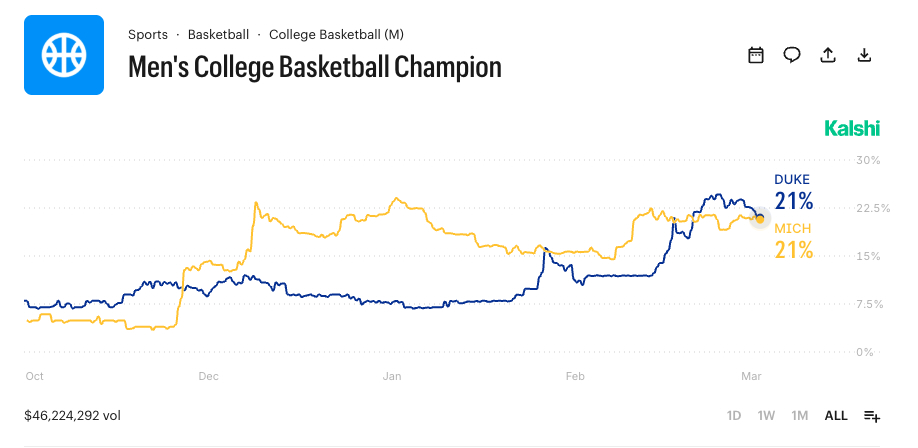
Event contracts allow speculation on game results and championships. Duke leads with a 25% probability in some markets, followed by Michigan at 22%. Volumes exceed $38 million on title winner contracts. This activity rivals traditional betting in scale. Users trade shares that pay out based on yes/no outcomes.
Regulatory frameworks classify these as derivatives rather than gambling. The Commodity Futures Trading Commission oversees operations. This distinction enables nationwide access, bypassing state restrictions. Platforms enforce anti-fraud measures, including insider trading bans. Recent enforcement actions demonstrate vigilance.
College athletics face new challenges from this trend. The NCAA opposes such markets, citing risks to student-athletes. Concerns include integrity and underage participation. Despite opposition, volumes surge. March Madness amplifies this, with billions in trades anticipated.
Industry observers note the shift toward data-driven trading. Advanced analytics influence market movements. Platforms like Polymarket see whale activity shaping odds.
Cannibalization Debates: Effects on Established Betting Operators
Analysts debate the extent of market share erosion from prediction platforms. Estimates suggest 5% of traditional handle shifts to these alternatives. Some reports indicate 1-3% impacts during earnings seasons. The timing coincides with sportsbook slowdowns, raising questions. High-value bets migrate to peer models.
Executives from FanDuel and DraftKings downplay immediate threats. They report no significant evidence of erosion. Instead, opportunities arise in non-legalized states. Prediction markets expand overall wallets rather than shrink them. This view counters bearish sentiments on stocks.
Legal battles shape the narrative. States push for regulation to capture revenues. Tribal gaming interests lobby against unchecked growth. Prediction markets exploit gaps, offering sports wagers under different labels. This blurs the lines between derivatives and gambling.
During March Madness, cannibalization could peak. The event’s scale attracts cross-platform activity. Analysts predict $530 million in prediction equivalent handle. This represents massive growth from prior years. Operators adapt by exploring hybrid models.
Market data shows mid-single-digit effects as overblown. Structural shifts occur, but expansion mitigates losses.
Key Contenders and Betting Trends for the 2026 Tournament
Duke emerges as the betting favorite with +320 odds. Michigan follows closely at +325. Arizona and Florida round out the top tier at +475 and +575. These lines reflect efficiency metrics and roster strength. Bettors favor balanced teams with elite defenses.
Trends reveal vulnerabilities for top seeds. Lower seeds with strong perimeter play often cover spreads. Public favorites perform well against the line in early rounds. Underdogs receiving majority tickets hover around .500 ATS. These patterns guide sharp wagers.
Conference tournaments offer previews. Upsets and sleepers emerge, shifting futures. Bettors monitor senior nights and home advantages.
Analytics drive picks beyond emotion. Adjusted efficiency margins spotlight contenders. Trends favor data over reputation. This approach yields profits amid chaos.
Watch this YouTube video on March Madness 2026 Bracket Reveal and Storylines for expert breakdowns. Another relevant discussion appears in Why Prediction Markets Might Transform Sports.
Top Contenders Odds Table
| Team | Odds to Win Title | Key Strength |
|---|---|---|
| Duke | +320 | Elite Recruiting |
| Michigan | +325 | Balanced Offense/Defense |
| Arizona | +475 | Perimeter Shooting |
| Florida | +575 | Rebounding Dominance |
| Houston | +1000 | Defensive Intensity |
Economic and Social Implications of the Betting Boom
The tournament generates billions in economic activity. Advertising revenues approach $1.4 billion. Tourism boosts host cities. Merchandise and consumer spending add layers. Stocks in betting firms fluctuate with volumes.
Social factors influence participation. Peer pressure during major events spikes bets. Young adults, including students, engage heavily. This raises concerns about norms and risks. Research shows an increased likelihood during hyped weeks.
States eye tax revenues from expanded markets. Prediction platforms prompt regulatory pushes. Potential cannibalization of lotteries looms. Billions in gaming taxes hang in the balance. This evolves the landscape.
Integrity remains paramount. Bans on insider trading protect fairness. Collegiate programs are monitored closely. The blend of finance and sports creates opportunities and challenges. Stakeholders adapt to sustain growth.
Future Outlook for March Madness Wagering
Projections indicate continued escalation. Legal expansions in states like Minnesota fuel this. Prediction markets accelerate adoption. Tidal waves of revenue await. This transforms the industry.
Innovation drives engagement. In-game contracts and analytics tools emerge. Platforms compete for users. March Madness serves as a bellwether. Success here signals broader trends.
Challenges include regulatory clarity. Supreme Court involvement looms. States grapple with oversight. Balanced approaches ensure sustainability. The event’s allure persists amid changes.
Bettors prepare for brackets and picks. Consensus tools and trends guide decisions. The excitement builds as Selection Sunday nears. Records await shattering in 2026.
References
- March Madness 2026: Sports betting, prediction markets, expectations (Yahoo Finance)
- March Madness 2026 Betting Projected to Hit Record $4 Billion (Gaming America)
- March Madness Betting Projected to Hit Record of $4B (Yahoo Sports)
- Why March Madness is a perfect storm for betting (UTA News)
- Can Prediction Markets Persuade States to Legalize More Gambling? (Covers)
- The 11 March Madness Betting First-Round Trends You Need to Know (Sports Betting Dime)
- March Madness 2026: College basketball conference tournament predictions (CBS Sports)
- 2026 Prediction Market Trends: March Madness & 2028 GOP Odds (PlayUSA)
- Exploring March Madness Impact on Prediction Markets (SportsGrid)
- Who Will Win March Madness 2026? (SportsGrid)
- Prediction Markets Odds & Picks March 10, 2026 (OddsShark)
- March Madness favorites: Ranking top 20 teams (USA Today)
- March Madness 2026: Betting Trends, Top Picks & Expert Analysis (ProCappers)
- March Madness betting expected to hit record $4B in 2026 (SiGMA)
- Are prediction markets just sports betting by another name? (The Athletic)
- College Basketball Betting Is the Biggest Sport At Kalshi (Next Event Horizon)
- How a Prediction Market App Disrupts Traditional Gambling (Action Network)
- Prediction Market Impact on Sports Betting Stocks ‘Overblown’ (Yahoo Finance)
- Prediction markets head into basketball season on a high from the Super Bowl (CNBC)
- Prediction Market Surge Happening Amid Sports Betting Slowdown (Covers)
- Prediction markets are dominating college athletics (ACU Optimist)
- How can racing face the threat posed by prediction markets? (Horse Racing Nation)
- Prediction Markets vs. Sportsbooks: A Structural Shift (AInvest)
- States struggle to get a grip on the growth of prediction markets (Bond Buyer)
- Prediction Markets vs. Sports Betting (SI Betting)
- Sports Betting Meets March Madness: Federal CFTC (JD Supra)
- What is March Madness? Economic impact & 2026 outlook (Plus500)
- Chalky March Madness Slams Sportsbooks (Sportico)
- How Prediction Markets Could Disrupt Traditional Investing (Walkner Condon)