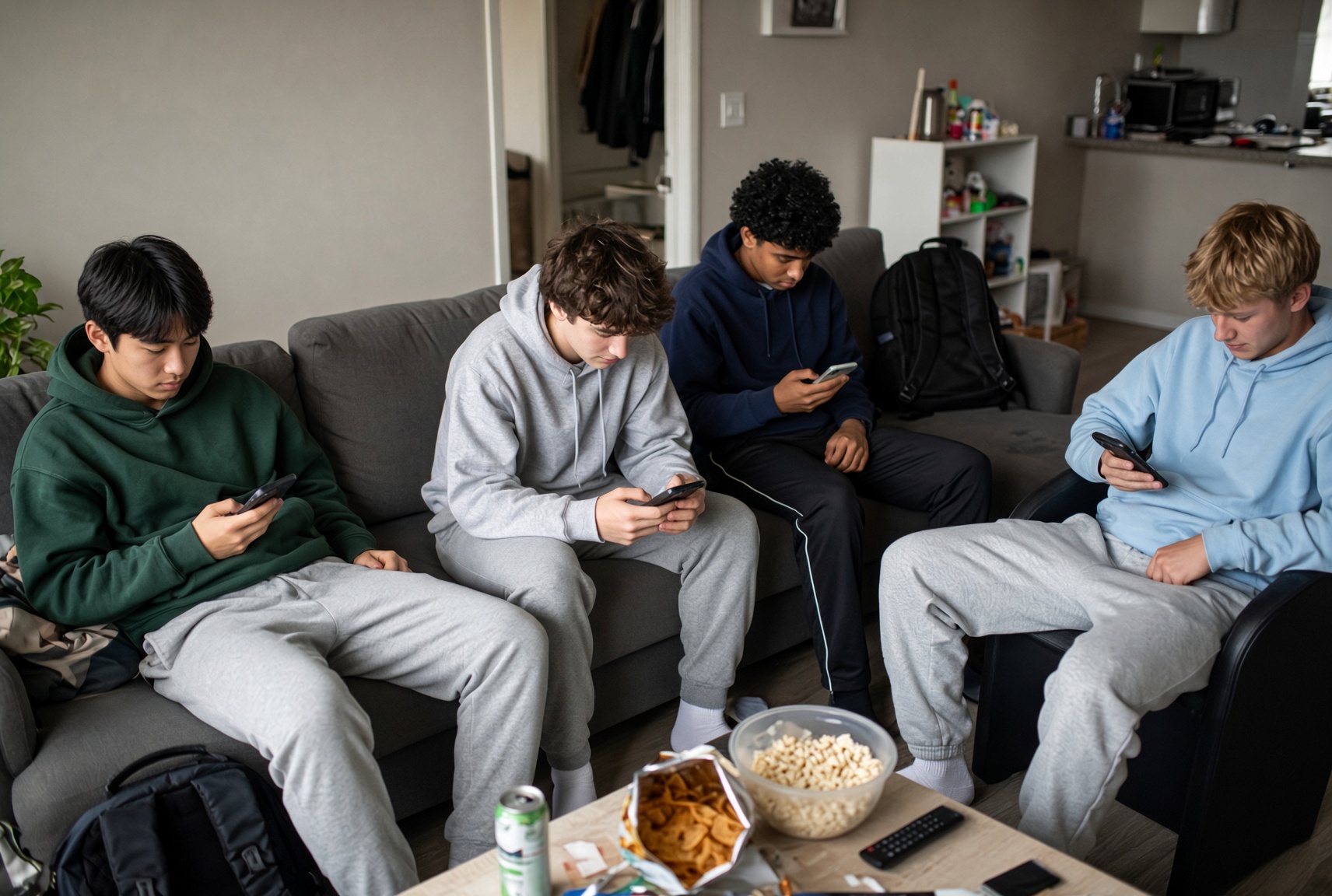
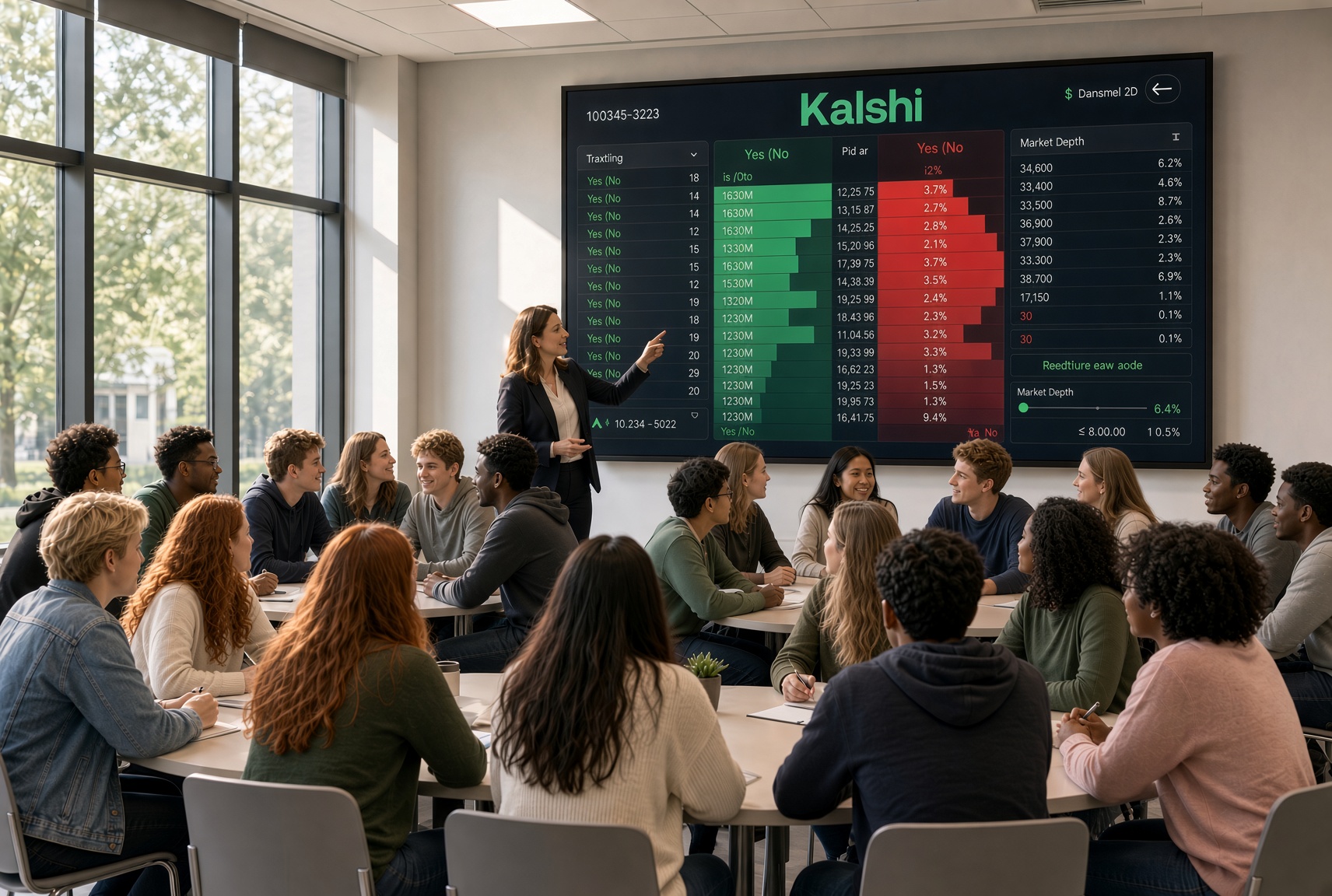
Prediction markets have gone mainstream quickly. Tens of billions of dollars are now trading monthly on elections, sports, and everything in between. Platforms like Kalshi are adding guardrails for 18- to 20-year-olds while courts keep poking at the rules. Done right, with real limits and actual teaching, these markets could give young adults a better feel for probability than most textbooks ever will.
In an era of declining math and statistics teaching and secondary education scores, finding new, compelling ways to reintroduce young adults to numerical thinking is essential. Prediction markets can do this. Controversial idea? Perhaps. Good idea? I sure think so.
Building Statistical Literacy Through Real Events
Statistical intuition isn’t something you absorb from reading a textbook chapter. No offense to textbooks, which also serve a valuable function. Intuition and habit come from experiential learning and repetition. Practical applications of learned concepts, especially in compelling contexts, create an ideal educational experience. In previous generations, many people learned about statistics by reading baseball cards or following sports numbers, well before any high school classroom.
Prediction markets provide that compelling context. Young adults who track a market on an economic number or a public event start separating signal from noise faster than they do with pure hypotheticals or memorizing formulas. Book learning is needed, but practical applications reinforce it intensely.
Some political science courses at colleges have already run classroom markets and reported higher engagement plus stronger interest in civic topics. Students who actually traded ended up with a clearer picture of how elections move. The same idea can work for older teens and young adults if the setup is handled carefully. Sports are an innate area of interest for many students, and they directly address the main category of gaming use.
Even an American Gaming Association study noted that higher financial literacy lines up with more responsible play, suggesting targeted education can improve outcomes rather than increase activity. There is no real downside. You could argue social legitimacy, perhaps, but with gaming marketing so omnipresent and social awareness so high, this feels more rhetorical than real. The suggestion that this young adult impulse can be stopped through warnings and regulations sounds more like abstinence talks than sexual education.
Practical Ways to Integrate Markets into Education
Schools and families can start without any real money. Teachers can run classroom markets with points or extra credit on questions linked to the curriculum: election results, scientific milestones, policy indicators, or even sporting event outcomes. Students can update their positions as information comes in and later compare the final prices with what actually happened. The habit of revising on evidence starts to stick.
Along the way, there are endless teachable elements on probabilities, expected returns, risk-adjusted values, statistical numeracy, and data spreadsheets. Incorporate staking points or tokens as prizes to drive attention and interest in learning methods to improve gains, both mathematical and practical trading mechanics.
When limited real-money exposure makes sense, self-imposed deposit limits and alerts for parents or teachers already give a framework. Families can require that the parental guides get read, set lower personal limits, and schedule regular check-ins on decisions and results. A learning tool. Tracking a handful of markets over weeks encourages longer thinking.
Civic and STEM classes can connect markets to ordinary topics. A government class can put market prices on the elections next to the polls. A statistics class can calculate expected values from contract prices and talk about calibration. Formulas turn into tools for reading real events. Nearly endless classroom units could be based on prediction market processes, mechanics, and price signals. They will serve both a mathematical education and, as the AGA noted, improving responsible gaming for those who do partake.
Addressing Addiction Risks Through Design and Education
Any real-money activity built on uncertainty carries addiction risk, especially while brains are still developing. Fast feedback and the chance of losses can pull people into compulsive patterns. Prediction markets are not exempt. Design choices and how the activity gets framed can still reduce those risks compared with unrestricted gambling products.
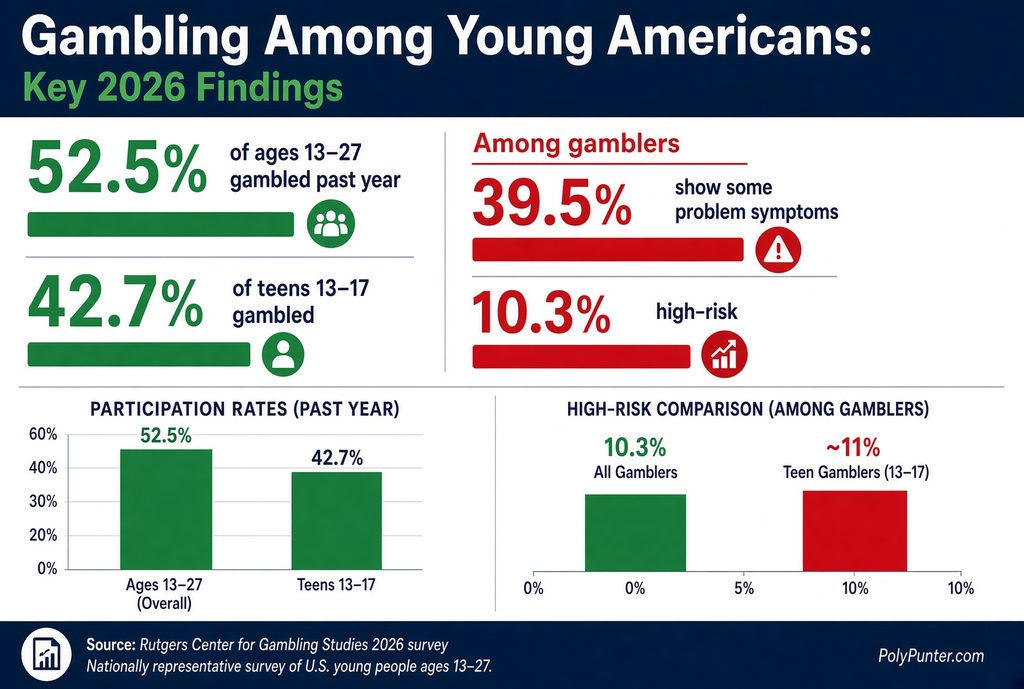
Deposit limits, concentration alerts, required education after the first trade, and partnerships with youth-safety organizations already exist. When young adults have to explain their reasoning and review outcomes afterward, the activity shifts toward deliberate practice. Completely blocking 18- to 20-year-olds from platforms may push activity toward less regulated places. There are numerous offshore wagering options. Structured exposure with safeguards and clear learning goals offers a middle path.
Treating every market as identical to a sportsbook also misses the informational content in the prices. Young adults who learn to read those prices carefully pick up tools for evaluating claims in the news and in everyday decisions. These are skills that stay useful long after any single market settles.
Expanding curriculum materials, clearer education modules on the platforms, and continued research on actual learning outcomes can strengthen the case for responsible exposure. The goal is deliberate practice in probability, evidence evaluation, and calibrated belief updating, not unrestricted trading. With clear limits, strong education, and family involvement, prediction markets can serve as practical educational grounds rather than sources of youthful risk and compulsion.
References
- Prediction market Kalshi expands safeguards for young traders | Reuters
- Kalshi expands protections for 18- to 20-year-old traders
- Parent’s Guide to Kalshi and Prediction Markets – ConnectSafely
- New Study Finds Gamblers Display Higher Rates of Financial Literacy Than Non-Gamblers; Prediction Market Users Overestimate Their Mathematical Ability
- How the 2026 Midterms Played Out on Kalshi and Polymarket | Pew Research Center
- New York judge urged Kalshi to compromise on limiting bets by anyone under 21 | CNN Politics
- How do prediction markets work? | FT #shorts
- Prediction markets: can betting be good for the world?
- Using Prediction Markets as a Tool for Classroom and Civic Engagement
- Protecting Young Adults | Kalshi