Hacksaw Group rolled out a business-to-business prediction markets platform last week, so operators can run peer-to-peer event contracts under their own names. The same day, the Malta Gaming Authority expanded the company’s existing B2B Critical Gaming Supply License to include Type 3 Gaming Services. That change lets Hacksaw supply peer-to-peer markets where operators take a commission and carry no house risk. Consumer platforms sign up traders themselves. Hacksaw stays in the background, supplies the technology, while operators keep their brands and customer lists. A prediction market white label.
The news landed a few days after Hacksaw said third-quarter revenue growth would land around 11% to 12%. The stock had already dropped nearly 30% on that guidance. It bounced more than 3% after the prediction markets announcement. Group CEO Ana Vrabic Verdir called the category a compelling opportunity where technology, entertainment, and market activity meet. Operational CEO Marcus Cordes said the company built something that lets operators enter prediction markets efficiently and at scale by reusing their existing integrations and commercial setup. Basically, we build the car, you pick the color and slap your name on it.
Hacksaw Gaming Builds Operator-Focused Prediction Markets Technology
Operators can add prediction market features without standing up their own matching or settlement systems. Traders take positions against each other instead of against the house, and operators collect commissions on the activity that runs through their sites and apps. The platform sits on Hacksaw’s existing modular stack, development team, and distribution relationships, all inside the current cost base. That cuts the time from decision to live markets while operators still handle their own player experience and compliance work.
The current design pools trading activity across Hacksaw’s operator partners. A new operator can tap broader capacity from the trading pool right away instead of waiting to grow volume on its own. Cordes pointed out that the company already works with operators in multiple jurisdictions, so it can offer a quicker route by reusing existing technology and commercial ties. Everything stays under the newly extended Malta license. Hacksaw has not yet named any launch partners or target markets.
The setup puts Hacksaw in the tools layer rather than competing directly with platforms that recruit traders. Operators keep their customers and the brand presentation. Hacksaw handles matching and settlement behind the scenes. It is the same basic split many gaming suppliers already use when they power slots and instant-win titles without showing up on the front end. For prediction markets, established operators can test the category under their existing licenses and player bases without investing in a technology build.
Malta Approval Opens Peer-To-Peer Event Contract Services
The Malta Gaming Authority added Type 3 Gaming Services to Hacksaw’s B2B Critical Gaming Supply License, which already covered Type 1. Type 3 covers player-versus-player activity where the operator takes no gaming risk and earns a commission. That matches the new platform’s peer-to-peer structure. The extension specifically covers B2B peer-to-peer prediction market services under MGA rules. Hacksaw already supplies digital slots, scratch cards, and crash games to large private and state-owned operators. The license change now covers the additional vertical.
Company materials note that the platform was built with existing resources and the same modern code base used for other products. The firm kept incremental costs low as it moves into an adjacent category. Verdir said the launch fits a strategy of extending Hacksaw’s technology into areas where the company can create long-term value for customers, partners, and shareholders. The timing also follows the recent launch of Hacksaw’s first crash game, Moneyplane, as the firm continues to add product lines beyond its core slots portfolio.
Shares in Hacksaw AB rose more than 3% to SEK57.15 on the Stockholm exchange the day of the announcement, Gaming Intelligence reported. That gain clawed back part of the earlier drop that followed the preliminary third-quarter update on October 12. The update put revenue at €57.5 million to €58.5 million, up from €52 million a year earlier but well short of the 30% annual growth rate investors had been used to. Management blamed softer market conditions and weaker game performance and said long-term targets remain unchanged.
Shared Liquidity Aims To Solve Early Volume Challenges
New prediction market products often struggle to attract enough traders and activity in the first weeks. Price discovery and engagement suffer when the book is thin. It’s like a new dating site with hardly any users. What utility does it provide?
Hacksaw’s design aims to fix that by pooling activity across its existing operator network, so each new deployment can draw on capacity already sitting elsewhere. Operators connect through the same integrations they already use for other Hacksaw content, which cuts their technical work. The company has described it as a way for operators to reach broader trading capacity from day one rather than building it alone.
Because Hacksaw already has relationships across multiple jurisdictions, the platform can run under the Malta authorization while operators handle local requirements for their own customers. The company has given no revenue or cost guidance for the new vertical. The next detailed financial update is expected with the full interim report on November 3, 2026. The lack of named partners suggests commercial deals are still being finalized or some markets still need additional regulatory clearances.
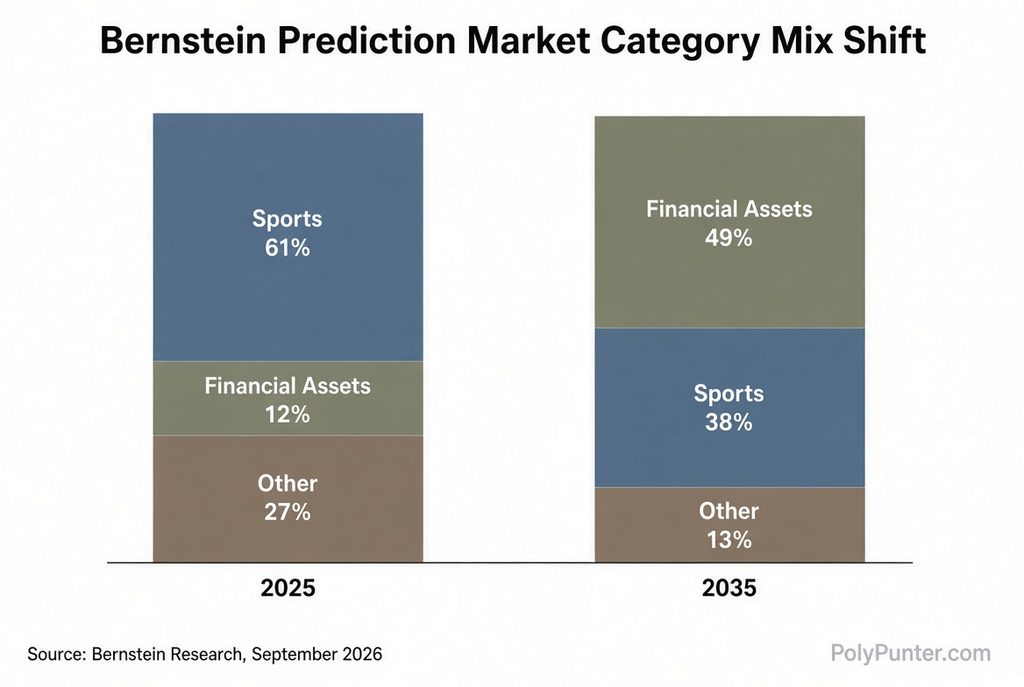
Bernstein estimates annual prediction market trading volumes could reach roughly $1 trillion by 2030 as the category expands into more use cases and geographies. Given how fast volume is growing on market leaders Kalshi and Polymarket, this number seems attainable, possibly even sooner than 2030. Hacksaw cited that figure in its announcement and framed the platform as a way for operators to take a piece of the infrastructure and distribution layer. The estimate, first outlined by the firm’s analysts earlier in the year, assumes continued growth from sports, crypto, macroeconomic, and other event contracts. For a supplier whose main business has been content, the number gives a reason to enter the category without becoming a direct trader-facing platform.
Stay tuned for more updates as the product rolls out.
References
- Hacksaw Group official announcement, October 15, 2026
- Gaming Intelligence on share reaction and quotes
- PlayUSA coverage of platform and context
- Gaming Intelligence on Q3 revenue guidance
- Decrypt reporting Bernstein $1 trillion volume estimate
- iGaming.News report on the launch