Time is ever-ongoing, but we judge it in snapshots of now. And as of now, the NFL is not pro-prediction markets. And in a snapshot of a few years ago, they were not pro-sportbooks. But time keeps moving forward, and change is the only inevitability.
The National Football League is opening the season with three official sportsbook partners and zero prediction market deals. The nation’s most popular sports league renewed commercial ties with DraftKings and FanDuel, added Fanatics, and still withheld logos, broadcast ads, and official-data rights from Kalshi and Polymarket. Traders on these event contract platforms are pricing Week 1 winners, Super Bowl futures, and MVP contracts anyway. In fact, they are doing so in large numbers.
That split is the fight heading into opening night. Other major leagues have been signing prediction market licensing deals left and right. The NFL is sending compliance letters. Chief Compliance Officer Sabrina Perel’s Sept. 3 note to designated contract markets repeated a March demand: pull contracts the NFL calls “objectionable.”
Why the NFL is holding the line
DraftKings, FanDuel, and Fanatics can use NFL marks and run ads during game broadcasts after the renewed sponsorships. Those rights do not cover the prediction products the very same sportsbook companies have been building.
Sabrina Perel’s letter said it is “deeply concerning” that contracts flagged months earlier still appear on the list. The NFL groups them into four buckets: outcomes one person can swing on a single play, topics it calls inherently objectionable, officiating results, and events knowable in advance. A missed field goal, a first incomplete pass, a broadcast mention, a player injury, a replay overturn, a starting-lineup leak, or a live draft pick all sit on that list.
In March, EVP Jeff Miller said the league was mirroring prohibited sportsbook wagers while pressing the Commodity Futures Trading Commission for tighter rules. Miller later stated the NFL was last in with sportsbook partners as well because it wanted to understand the marketplace first, and that the same caution would apply if Kalshi and Polymarket kept growing.
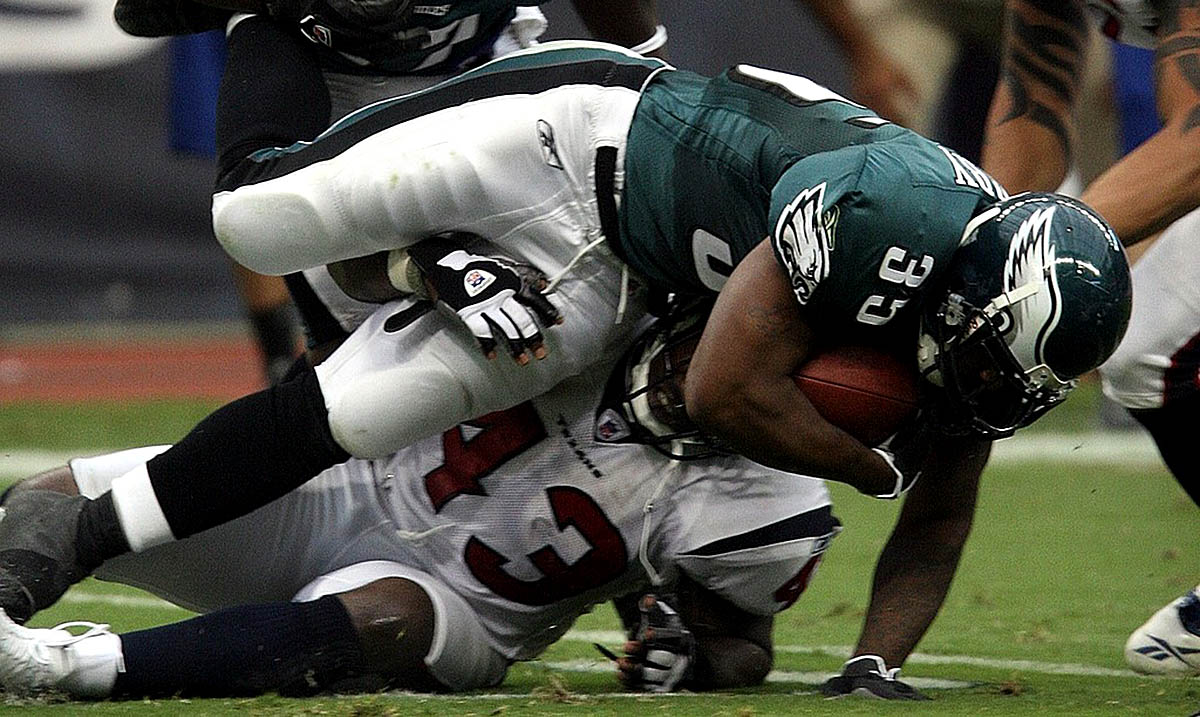
Player policy is just as rigid. An NFLPA spokesperson said the league treats prediction platforms as gambling entities, so players cannot serve as endorsers. Eagles running back Saquon Barkley can hold a Polymarket investment. He cannot sell the product on league terms. (We know that NBA superstars like Giannis Antetokounmpo have equity deals with Kalshi.)
What other leagues signed, and what the NFL is leaving unpaid
MLB, the NHL, and MLS have already cut official prediction market partnerships, while the NFL and NBA have not. MLB named Polymarket an official exchange partner, while several individual teams recently signed promotional deals with Kalshi. The NHL signed both Kalshi and Polymarket. Those deals buy brand use and a seat in integrity talks.
Sports-marketing veteran Stephen Master stated that the logic is blunt: if trading is going to happen anyway, leagues might as well get paid. NFL executives hear that pitch and still decline. As of today’s snapshot in time. They want CFTC rules that more closely resemble state sportsbook codes before they hand over marks and official feeds to any prediction market apps.
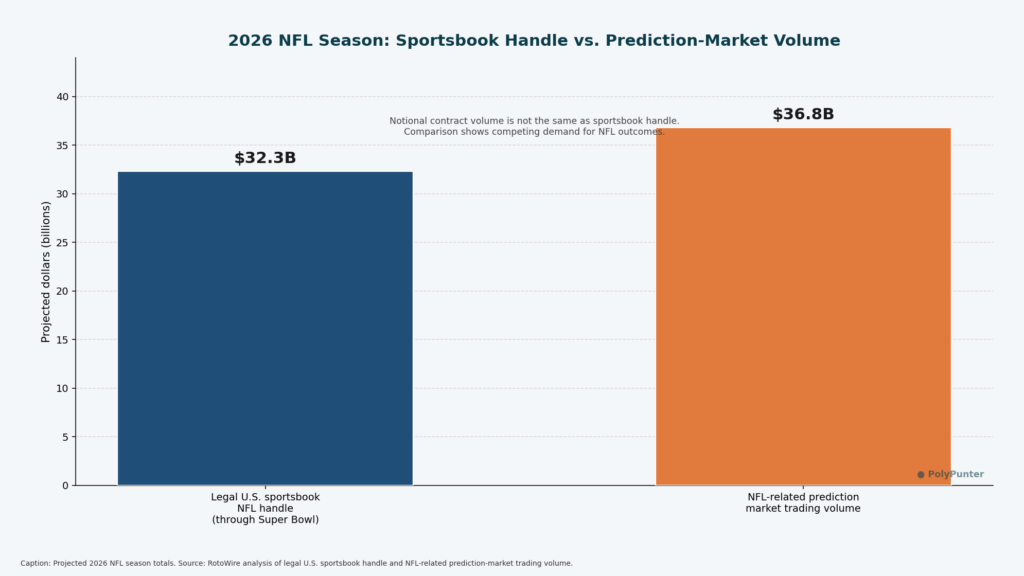
Volume explains why the pitch keeps coming. A RotoWire projection put legal U.S. sportsbook handle for the NFL season through the Super Bowl at $32.3 billion, while forecasting $36.8 billion in NFL-related prediction market trading. Those figures are not identical products. Notional contract volume (the sum of all trade activity in a market) is not the same as sportsbook handle (the total amount of money put at risk by bettors). Estimates for converting notional volume to handle are anywhere from 5% to 20%. The math shows why league offices cannot ignore the tape. Sportsbook handle is still far more actual money.
Yet opening-week boards already show the demand. Nearly $1 million had changed hands on Seahawks-Patriots contracts before Kickoff Weekend, with Seattle priced around 62% to win on Polymarket. Super Bowl LXI futures on Kalshi had the Rams near 17 cents as of Sept. 4.
Congress is watching the same split. Sen. Richard Blumenthal asked six commissioners how they are protecting integrity and athletes as sportsbooks and prediction platforms expand. The NFL pointed reporters back to its letters rather than a new commercial plan.
What the banned list means this week
The September letter did not invent a new rulebook. It restated the March categories and accused exchanges of leaving flagged markets up. Polymarket had already pulled a contract on whether Patrick Mahomes would play in Week 1 after CFTC input on injury-related contracts. But game winners and season futures stayed listed.
The wording in this back-and-forth between the NFL and the CFTC/prediction markets is deliberate. The NFL keeps calling the contracts “bets.” Exchanges keep calling them event contracts. Perel used the league’s word on purpose, tying prediction products to integrity clauses already written into sportsbook sponsorships. The new DraftKings, FanDuel, and Fanatics sportsbook agreements require those partners to help block the same injury, officiating, single-actor, and advance-knowledge categories.
Advertising follows the same wall. Prediction-market commercials have been barred from NFL game broadcasts and were kept off Super Bowl inventory; sportsbook ads remain limited but allowed. Brand exposure is the prize the league is still withholding.
CFTC proposed rulemaking earlier this year sketched a possible middle path: keep standard game winners and championship futures, restrict injury, officiating, discrete single-play, and pre-collegiate contracts. The NFL has been lobbying for that rule shape. Platforms want room to list more than finals and moneylines. Until that fight ends, the NFL’s no-prediction-markets stance likely remains intact. The NFL is a massive moneymaking operation; they are less prone to be swayed by brand dollars, even larger amounts.
References
- Bloomberg — NFL Confronts Prediction-Market Bets Embraced by Other Leagues
- NBC Sports — NFL sportsbook partners, no prediction market deals for 2026
- Gambling Insider — NFL again tells platforms to remove objectionable contracts
- The Athletic — NFL asks platforms to refrain from objectionable bets
- Front Office Sports — NFL signals eventual openness
- Roosevelt Institute — league partnership review
- Gambling Insider — partnership value for leagues
- RotoWire — NFL handle and prediction-market volume projections
- CBS Sports — Seahawks vs. Patriots prediction markets
- ESPN — Sen. Blumenthal letters to leagues
- Crypto Briefing — NFL warning ahead of 2026 season
- Covers — NFL asks operators to remove problematic markets
- Bitcoin.com News — NFL renews sportsbooks, shuns prediction platforms
- Front Office Sports — Super Bowl ad ban for prediction platforms
- YouTube — Bloomberg Business of Sports on leagues and prediction products