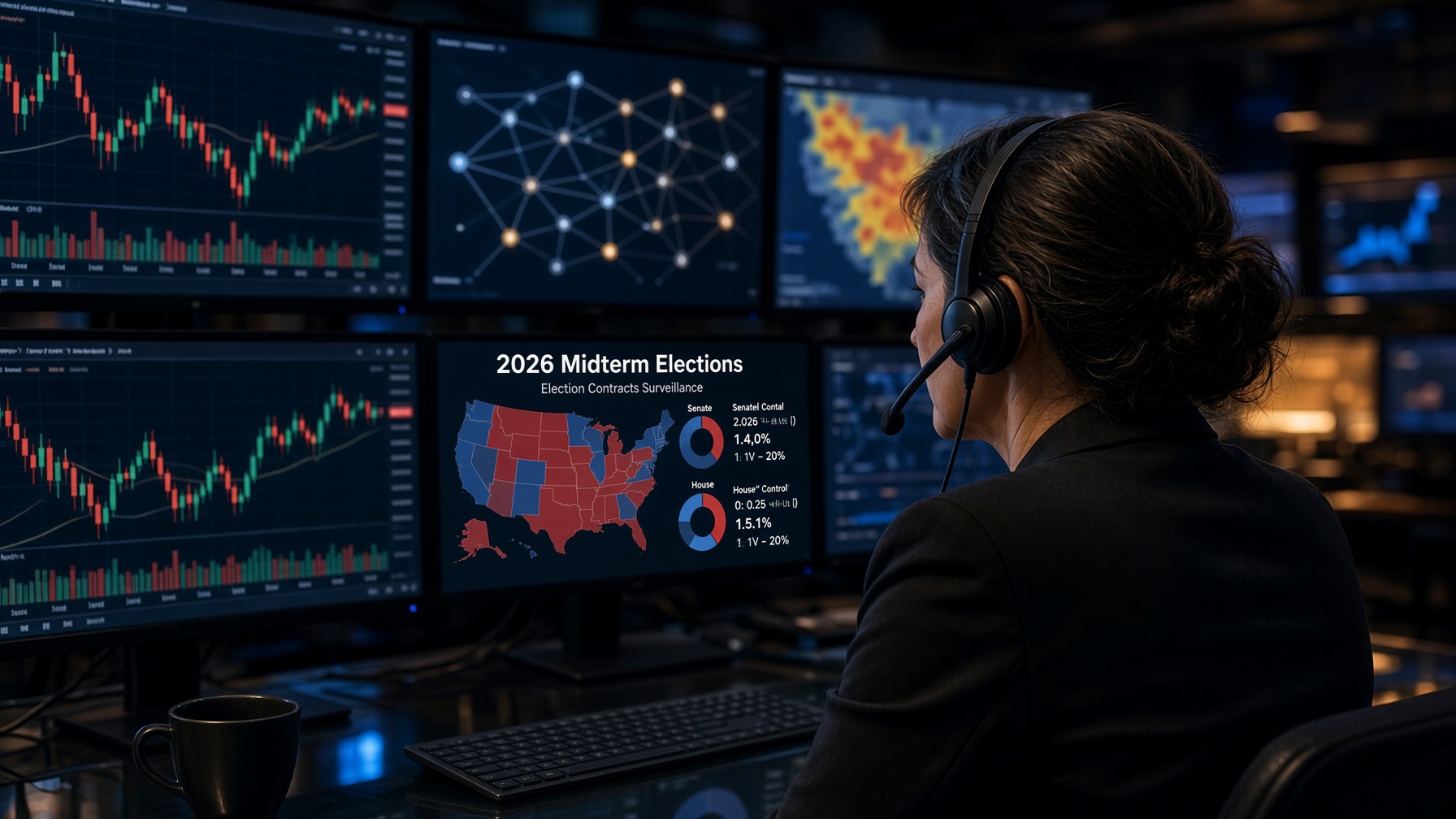
Polymarket’s new global head of investigations and intelligence says the company can already spot unusual activity in election contracts as the 2026 midterms approach. In her first interview since joining in June, Shana Bautista stated that the monitoring tools are now in place, not still on the drawing board. “I can tell you that we have the systems in place to be able to identify anomalous activity when the midterms do come,” she said.
Bautista, a former FBI investigator and Coinbase researcher, is responding to a sharp political charge: that election contracts can provide an easy path for insider trading. Lawmakers have publicly warned that those markets could invite insider trading and weaken trust in election-related prices. Bautista’s message is that detection capacity is live and that the company will soon publish more detail on how the process works.
What Polymarket Says the Monitoring Stack Actually Does
Bautista described a layered review process rather than a single oversight route. AI tools scan trading patterns. Blockchain analytics tracks wallet behavior. Trade surveillance watches order flow and sudden moves. Open-source research supplies public context, and outside vendors cover gaps the internal team cannot handle alone. The aim is to flag accounts that look too early, too accurate, or too coordinated.
The Polymarket market integrity program itself is not new. The shift is disclosure. “The market integrity program itself is not new, but what we’re putting on the record now is considerably more detail about how it operates,” Bautista said. Polymarket plans to create a public page explaining how flags are raised and how cases are routed to investigators.
Access control is part of the same effort. Under a 2022 regulatory settlement, Polymarket must keep domestic traders off its international venue. Bautista treated that restriction as another integrity control, not a side issue. Surveillance will take a major setback if Polymarket can’t keep its U.S.-based traders off its standard platform.
Why Midterm Contracts Are the Immediate Test
Midterm markets are the subject of much hype and some legitimate concern over connected individuals using non-public information to gain market advantages. Campaigns, government decisions, and national security news are certainly places where privileged information can leak. That media notoriety is why Bautista’s public comments landed this week.
Earlier reporting had already placed Bautista’s hire in that context. WIRED noted that Polymarket expanded the team reviewing election activity after bringing her on. She said investigators were “actively reviewing and identifying anomalous activity” and then routing cases through standard flagged-trades handling processes.
Liquidity makes the Midterm test case that much bigger, and potentially more difficult. Balance-of-power contracts and individual race markets continue to draw large volume as November approaches. That level of activity can improve price discovery. It can also bury unusual trades in market noise if monitoring is weak. Bautista is arguing the company can still isolate those troubling trades when political books get crowded.
House investigators have already demanded records from prediction-market companies, citing concerns that government employees could trade on secret information. Against that pressure, Bautista’s first interview is doing two jobs at once: telling traders that the Midterm markets are very much open for business and telling critics that the company is not waiting until after Election Day to defend them.
The Referral Record Polymarket Is Using as Proof
Polymarket states it has sent more than 100 cases to law enforcement. Those files included a wallet prosecutors linked to a soldier accused of using classified information on a high-profile capture market. Other flagged activity involved possible insider trades around military operations.
Polymarket referred dozens of accounts showing signs of possible military insider trading to the Department of Justice, and those referrals predated a public watchdog review of war-related markets. The Anti-Corruption Data Collective later identified 152 accounts that booked about $8 million across war markets and showed patterns consistent with insider or privileged timing.
Referrals show the company is escalating cases. They do not, by themselves, show how many of those cases end in charges, settlements, or explained closures.
What Comes Next for Traders Watching Election Markets
The immediate marker is the webpage Bautista previewed. Traders should look for a clear account of which signals trigger review and how a flagged account moves from internal alert to outside investigators. Process detail made available to the public will matter more than another assurance that systems exist. Highlight the rules; enforce the rules.
The second marker is public outcomes. Account freezes and quiet referrals will not close the argument. Visible enforcement, or a clear explanation when a case is dropped, will. Until then, the 100-case figure remains a measure of activity, not a verdict on effectiveness.
Market handling will matter just as much. A sudden pause can protect integrity and still damage trust if traders cannot see why a contract moved or vanished. Bautista’s team will be judged on speed and on whether the company can explain an action without feeding speculation.
For now, Polymarket is asking the market to take its intelligence chief at her word. She says the tools are running and the midterms will not catch the company unprepared. The next wave of election trading will show whether that holds.
References
- Reuters: Polymarket stands ready to fight misconduct as midterms loom, intel chief says
- Finance Magnates: Polymarket Puts Surveillance Controls on Display before Midterms
- FinanceFeeds: Polymarket Midterm-Ready After 100+ Law Enforcement Cases
- crypto.news: Polymarket says surveillance systems ready for midterm trading
- WIRED: Election Officials Are Preparing for Prediction Markets to Sow Chaos in the Midterms
- CNN: Polymarket referred dozens of possible military insider trading cases to DOJ