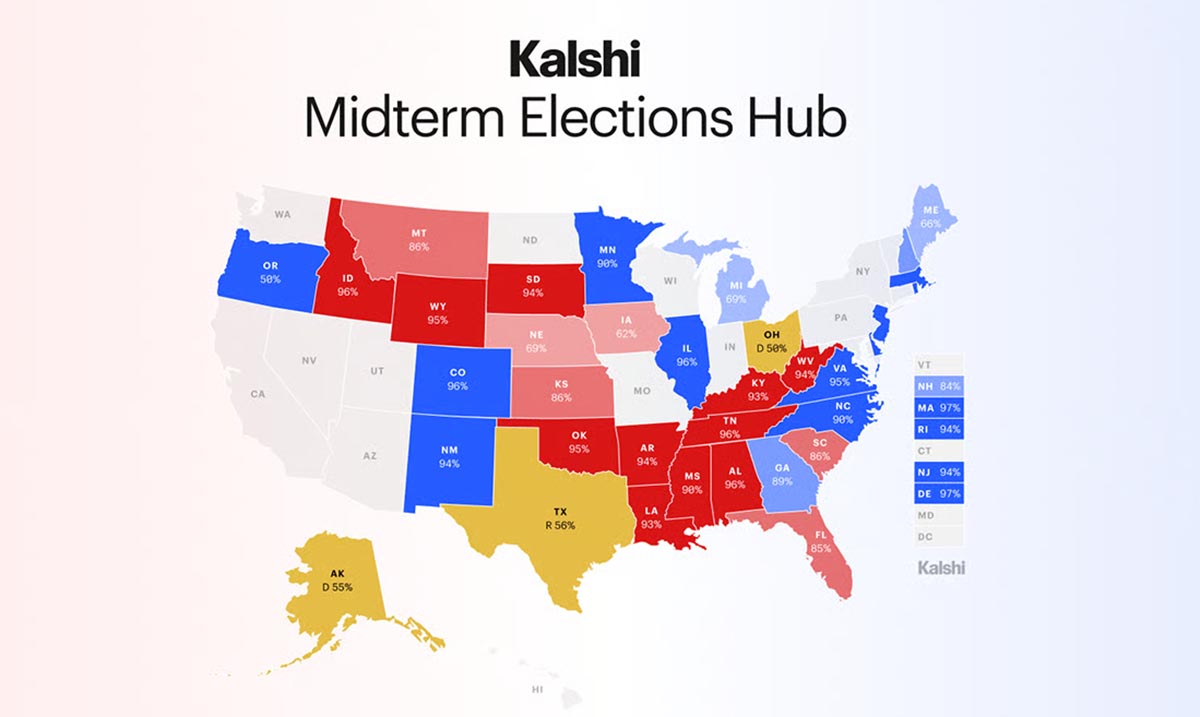

Numerous studies support the accuracy of prediction markets in high-volume election-rate markets compared with traditional political-race polling. This is not an absolute. But when prediction markets on certain political races vary substantially from current polling results, it’s worth a major review.
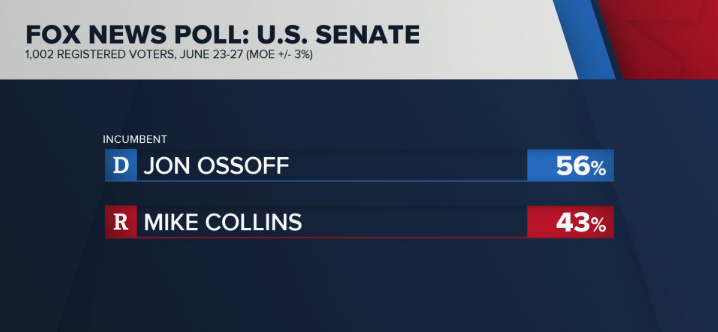
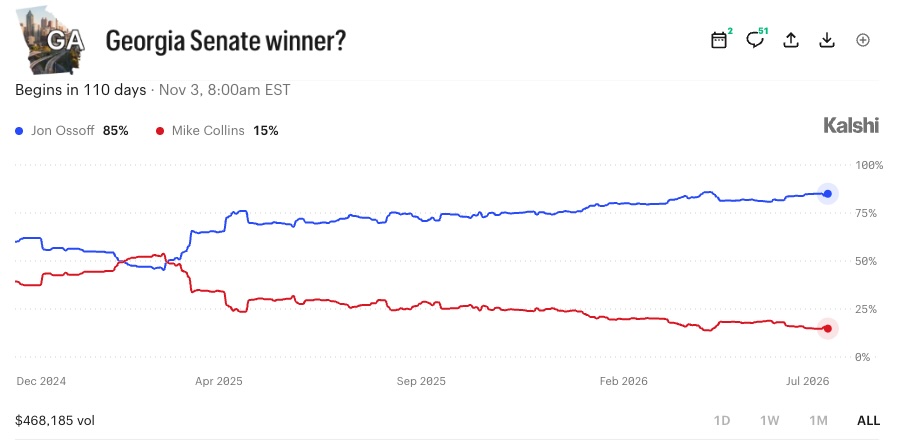
The Georgia U.S. Senate race data show traders pricing in an approximately 86% likelihood of victory for Democrat Jon Ossoff over Republican Mike Collins. A recent Fox News poll, however, registers his support at 56% against 43% for Collins among registered voters. Other polls show the race even closer to 50-50. This polling-prediction market gap stands out among other survey findings that also favor Ossoff, though by narrower margins.
Traders are integrating ongoing developments in near real time, while polls deliver periodic snapshots, often delayed by days and with a built-in margin of error. The contrast continues to generate discussion as the contest advances toward its later stages.
Senate Race Prediction Discrepancy Highlights Differing Signals in Key Contest
The Fox News poll, fielded June 23 through June 27 by Beacon Research and Shaw & Company, drew from registered voters and revealed a double-digit edge for Ossoff among those describing themselves as highly motivated to vote in the Georgia elections in November. That survey placed overall support at 56% for the Democrat Ossoff versus 43% for the Republican candidate Collins.
Separate data from a Wick survey placed Ossoff at 46.7% against Collins at 42.9%. Independents backed the Democrat at 52.1% compared with 30.9% for his opponent. Meanwhile, trading assessments have advanced from earlier levels near 75% to current highs around 86%.
Political prediction markets inherently ask, and require traders to stake a financial interest on, “Who do you think will win?” Very different than political polling, which essentially asks respondents, “Who do you want to win?”
Political market traders are continuously adjusting positions as new information arrives throughout the day. They draw on patterns in independent voter support and motivation levels that appear across multiple data points and from multiple sources. This ongoing process enables real-time responsiveness that is absent with periodic polling.
In addition, the sustained high pricing for Ossoff suggests incorporating cumulative trends rather than relying on any single release. Campaign strategists observe these shifts to gauge potential shifts in momentum in the contest.
Trader Sentiment and Elevated Odds Shape Debate on Race Assessment
The divergence between prediction market trading levels near 86% and poll figures at 56% continues to fuel analysis and debate over differing methodologies. Both sources nevertheless indicate Ossoff holds an advantage heading into the latter few months of the race. The consistent lead among independents and motivated voters supports the stronger market outlook visible in trading circles.
Overall, the pattern reveals how continuous market adjustments capture evolving voter signals more fluidly than discrete survey snapshots. Media coverage amplifies the contrast and prompts further examination of forecasting approaches as the race progresses.
References
- Social media post detailing Polymarket and Fox News poll numbers for the Senate race
- Fox News article on the early look at the Senate race poll results
- WJCL coverage of the Fox News poll showing Ossoff leading Collins
- Newsweek report on Ossoff’s chances including prediction market and Wick poll data