There are two ways to look at trading in mid-2026 on the outcome of an election in late 2028. The first is that clearly these must be wild-eyed speculators. The second is that these are savvy analysts and investors who’ve started building early positions in a market where they believe there is current mispricing. Of course, these two possibilities are not mutually exclusive.
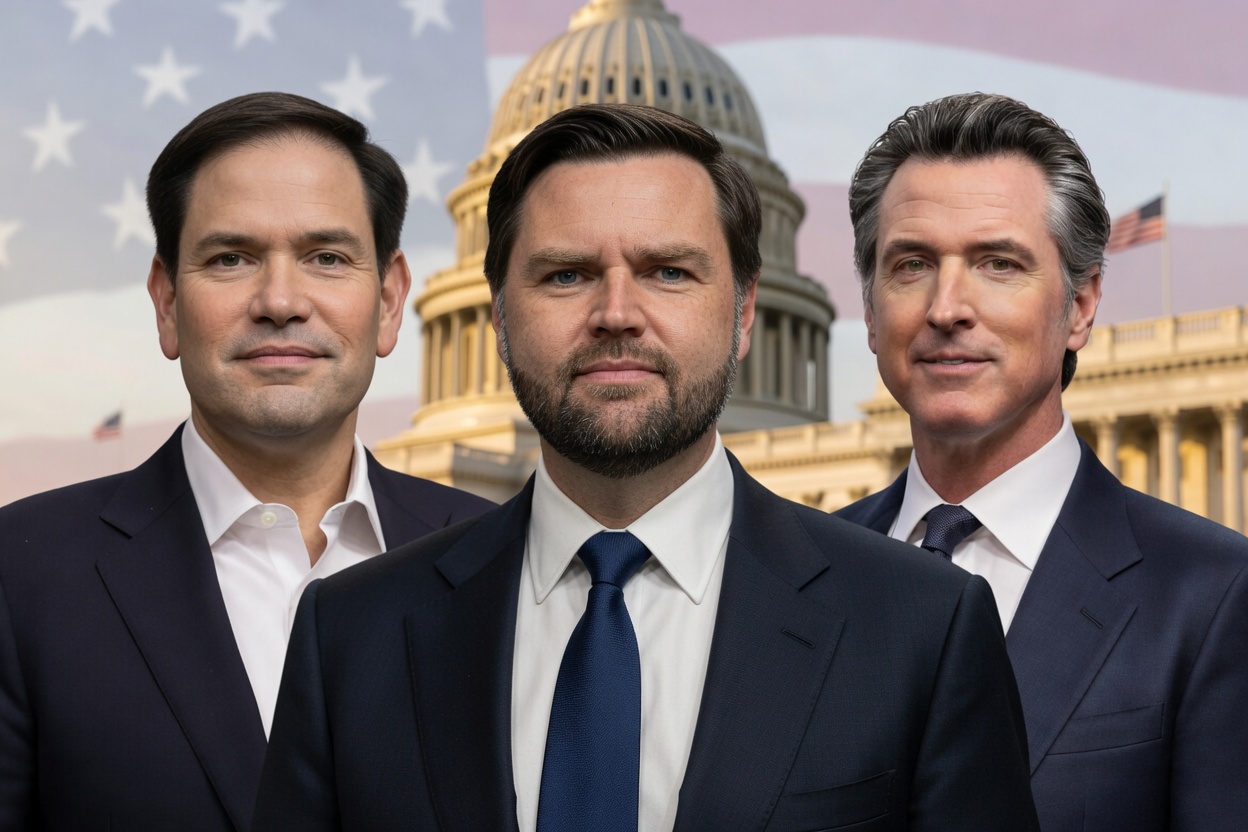
Prediction market traders have committed substantial capital to contracts forecasting the 2028 presidential outcome, painting a dynamic picture of probabilities shifting only slightly more than two years out from that Election Day. Vice President JD Vance holds a leading position while Secretary of State Marco Rubio closes the gap through steady activity. California Governor Gavin Newsom emerges as the strongest figure on the Democratic side amid continuous, though not large, adjustments across major platforms.
Volumes already exceed hundreds of millions of dollars on key contracts, indicating deep engagement as political developments unfold in a nation deeply obsessed with political races.
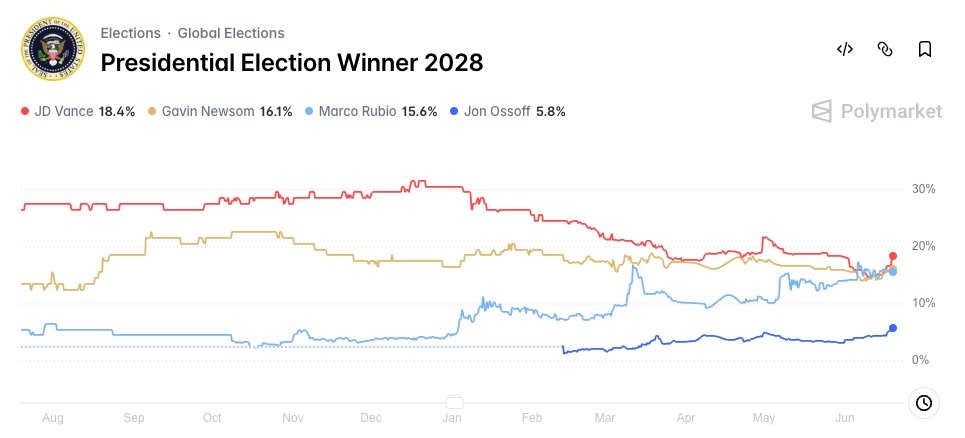
Tight Competition Emerges in Overall Winner Assessments
Current trading indicates a closely contested field with no overwhelming frontrunner this far out, before any candidates have even officially declared. Active traders do respond quickly to media appearances, policy announcements, and party dynamics that move share prices in real time. The real shift at the top is Vance vs. Rubio as the likely GOP nominee, and hence, the inherent front-runner.
Newsom draws consistent support reflecting assessments of Democratic prospects, either his perceived strength or perhaps a comment on the viability of the rest of the Democratic field. Other names trail significantly, concentrating resources around a core group of viable contenders. While these probabilities shift as new information arrives, we’re not seeing much movement at the top of the field, minor to-and-fro’s as long-term views change based on daily news events. As a reminder: it’s very early.
Current Market-Implied Probabilities for 2028 Presidential Winner
| Platform | JD Vance | Marco Rubio | Gavin Newsom | Approximate Market Volume |
|---|---|---|---|---|
| Polymarket | 18% | 16% | 16% | $633 million |
| Kalshi | 16% | 18% | 14% | $45.5 million |
Data reflects the latest trading as of mid-June 2026 and shows minor platform differences while confirming the same leading trio. Kalshi displays comparable concentration around these names.
Primary Dynamics Highlight Established Contenders
Nomination-specific contracts show stronger consolidation. Vance commands roughly 38% implied probability as the Republican nominee, with Rubio near 24%. This spread suggests traders and the market consensus are still assigning Vance advantages from his current position as VP, even as Rubio maintains regular high-profile diplomatic and public roles. No other Republican candidates are being taken seriously by the market at this time.
Newsom leads Democratic interest with probabilities around 14-16% for overall victory. His positioning benefits from strong name recognition as a long-time governor of California and evaluations of party positioning. Potential alternatives, such as Alexandria Ocasio-Cortez, sit in the low single digits, reflecting longer odds at this stage and perhaps just an alternate-position placeholder against the early lead dog.
High Volumes Drive Responsive Market Signals
Hundreds of millions are changing hands across contracts, demonstrating serious involvement already this early in the election cycle process, again, without a single officially declared candidate, and none likely to be so until after the 2026 midterm elections. Polymarket’s main 2028 winner market alone exceeds $630 million in cumulative volume. This liquidity enables larger positions and faster price adjustments as information emerges.