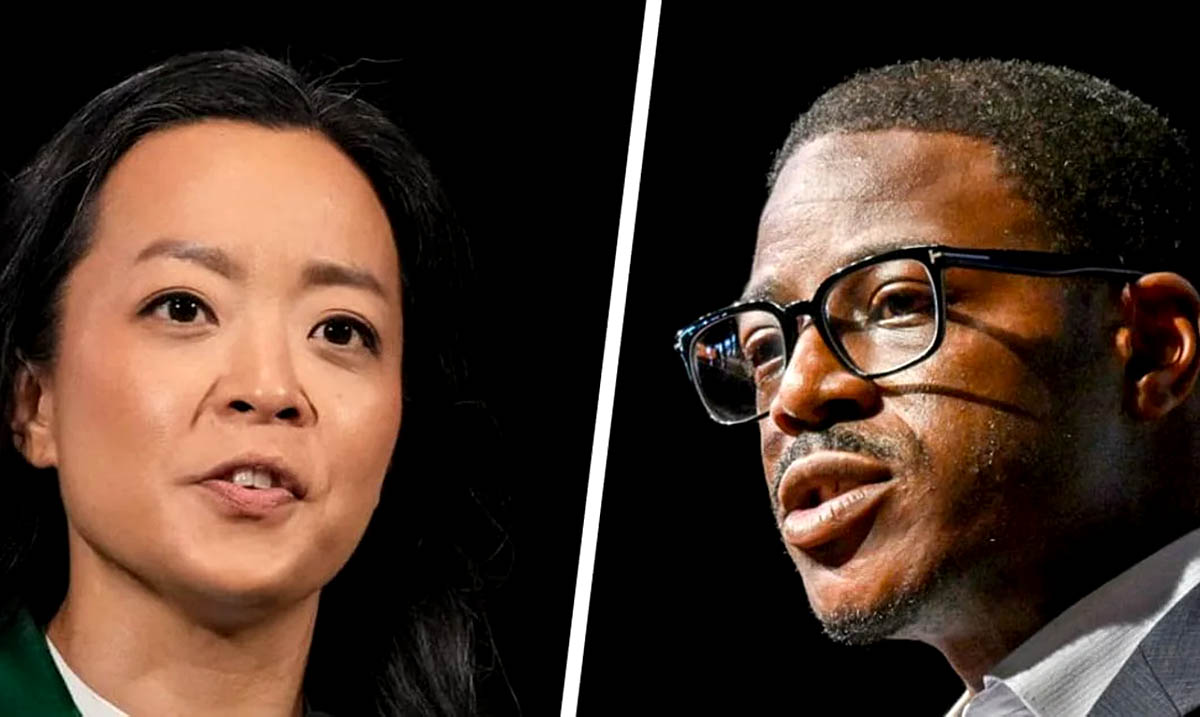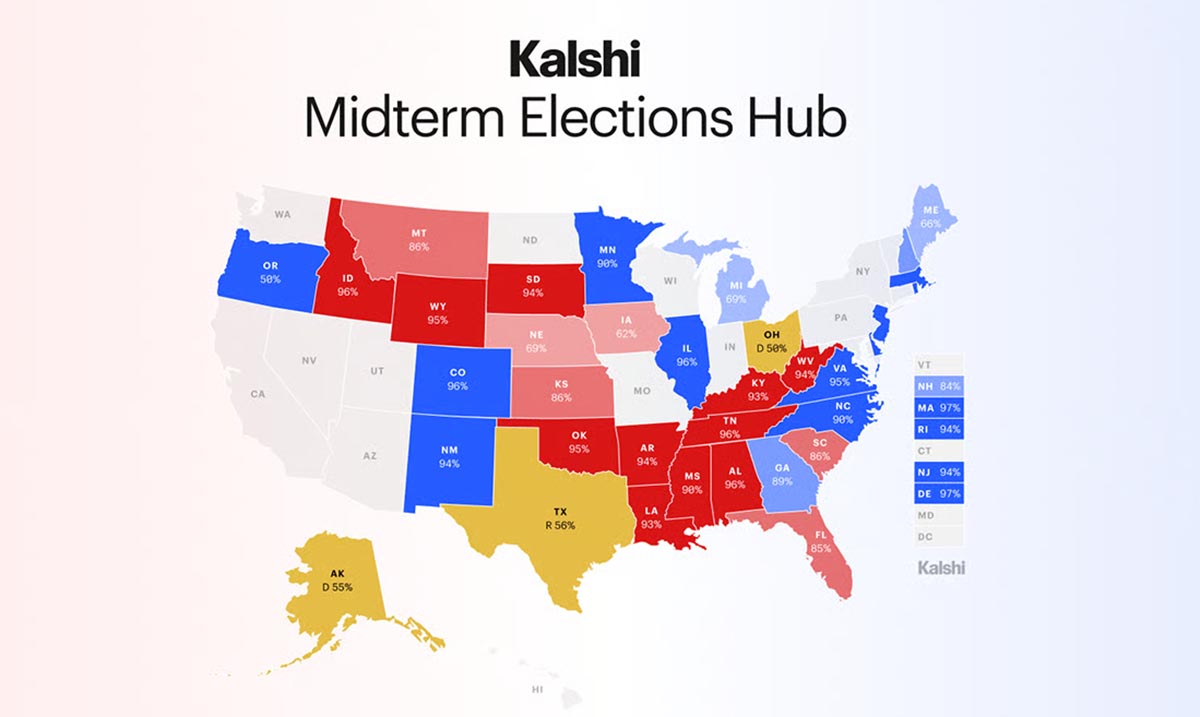

Prediction markets continue to buzz with activity surrounding the 2026 Texas Senate election. Traders on platforms like Kalshi and Polymarket assign significant probabilities to a general election matchup between Republican Attorney General Ken Paxton and Democratic state Representative James Talarico. Republicans maintain a substantial advantage in these forecasts, reflecting the state’s longstanding political leanings. Recent primary results have sharpened focus on this potential contest. The Republican primary advanced to a runoff between incumbent Senator John Cornyn and Paxton, set for May 26. Talarico secured the Democratic nomination after defeating U.S. Representative Jasmine Crockett.
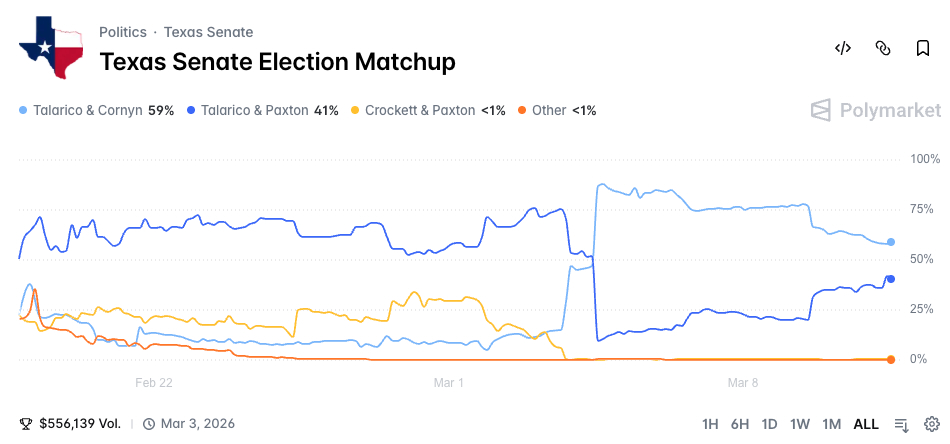
Market data reveals traders’ evolving sentiments. Kalshi shows a 37% chance for a Talarico-Paxton matchup, up slightly from previous weeks. Polymarket odds favor Republicans in the general election by a wide margin, often exceeding 60%. These figures underscore the perceived strength of the Republican nominee in a state that has not elected a Democrat statewide in decades. Analysts point to Paxton’s strong primary performance as a key factor. He garnered 41% of the vote, narrowly trailing Cornyn’s 42%.
Republican Runoff Dynamics Shape Market Expectations
The Republican runoff pits establishment figure Cornyn against insurgent Paxton. Cornyn benefits from substantial financial backing, with allies spending over $69 million to support his campaign. Paxton relies on grassroots enthusiasm and ties to prominent conservative figures. Market traders price Paxton at around 15-20% to win the runoff on some platforms, while Cornyn holds the edge at 80-85%. This disparity influences general election forecasts. A Paxton nomination could tighten the race, according to some models. Talarico’s campaign emphasizes anti-corruption themes, potentially resonating with independents disillusioned by Paxton’s legal challenges.
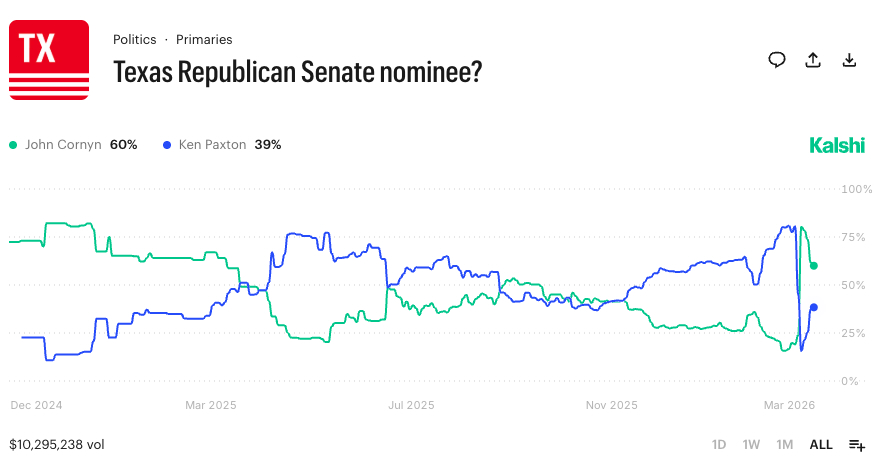
Paxton’s history includes surviving an impeachment and ongoing legal battles. These elements fuel debate among traders about his electability. Cornyn positions himself as a steady hand with legislative experience. The runoff campaign promises to be intense, with both candidates already exchanging pointed criticisms. Paxton vows to remain in the race regardless of external endorsements. Cornyn highlights his record of delivering for constituents.
Market liquidity reaches hundreds of thousands of dollars on these contracts. Traders react swiftly to news, such as polling data or candidate statements. A recent YouTube video interview with Paxton discussing his Senate ambitions garnered significant views, influencing sentiment.
James Talarico Emerges as Democratic Contender
Talarico’s primary victory marks a notable achievement for the 36-year-old legislator. He outpaced Crockett with 53% of the vote, demonstrating strong support among diverse voter groups. His background as a former teacher and seminarian appeals to progressive and moderate Democrats alike. Talarico campaigns on themes of unity and reform, avoiding direct confrontations with national figures. His message focuses on empowering working people against entrenched interests. This approach contrasts with Crockett’s more combative style.
Post-primary polls indicate Talarico’s competitiveness. A Public Policy Polling survey shows him leading Paxton 47-45 and Cornyn 44-43. These narrow margins suggest a closer race than historical trends imply. Talarico’s favorability stands at +6 net, compared to negative ratings for both Republicans. Paxton’s -24 net and Cornyn’s -28 net reflect voter fatigue with incumbents. Democrats express caution about resource allocation, given the state’s Republican tilt. Talarico’s campaign gains traction through social media and grassroots efforts.
The data fuels optimism among Democrats. Talarico’s team strategizes to capitalize on Republican infighting during the runoff. His seminary studies inform a faith-based appeal that transcends partisan lines. Critics question whether this resonates in a polarized environment. Supporters view it as a fresh alternative.
Prediction Markets Reflect Broader Electoral Trends
Prediction markets aggregate collective wisdom from diverse participants. They often outperform traditional polls in forecasting outcomes. In this race, markets discount a Democratic upset but acknowledge tightening dynamics. Traders bet on Republicans winning the seat at 63% on Kalshi. This reflects the state’s partisan index, which favors Republicans by double digits. Yet, volume on Talarico contracts surges, indicating perceived value in underdog positions.
Historical precedents inform current bets. Past Texas Senate races, like the 2018 contest, showed unexpected closeness. Traders factor in the national environment, including presidential coattails. The 2026 midterms occur amid economic uncertainties and foreign policy debates. Paxton’s alignment with conservative populism appeals to base voters. Talarico’s emphasis on education and ethics targets swing demographics. Markets adjust rapidly to events like candidate debates or endorsements.
Talarico’s public appearances draw attention to his rhetorical style. It contrasts with Paxton’s more aggressive approach. Social media amplifies these differences, as seen in an X post from Headquarters sharing poll leads for Talarico. Such content influences trader sentiment. Markets remain fluid until the runoff resolves the Republican nominee.
Implications for National Politics
The Texas Senate race holds significance beyond state borders. Republicans aim to maintain control of the Senate, with Texas considered a safe seat. A competitive contest could divert resources from other battlegrounds. Democrats view it as an opportunity to expand the map. Talarico’s nomination energizes the party’s progressive wing. Paxton’s potential candidacy tests the limits of populist appeal amid controversies. Cornyn’s survival would reinforce establishment influence.
Voter turnout emerges as a critical factor. Primary participation hints at general election enthusiasm. Republicans benefit from unified messaging post-runoff. Democrats leverage Talarico’s youth and charisma. Economic issues, such as inflation and job growth, dominate voters’ concerns. Foreign policy, including ongoing conflicts, adds complexity. Markets incorporate these variables into pricing models.
Experts caution against overreliance on early forecasts. Unforeseen events can shift dynamics dramatically. The runoff provides time for campaigns to refine strategies. Talarico prepares for either opponent, focusing on shared vulnerabilities. Paxton and Cornyn intensify attacks on each other. Traders monitor fundraising reports and ad spends closely.
Stakeholder Perspectives and Future Outlook
Party insiders express varied concerns. Republicans worry about Paxton’s baggage in a general election. Democrats debate investment levels in Texas. Independent voters hold the key, with polls showing Talarico’s appeal among them. Media coverage amplifies the race’s drama.
Prediction markets offer a real-time barometer of probabilities. They predict a Paxton-Talarico clash with increasing likelihood if Paxton advances. Republicans retain favoritism, but margins narrow in some scenarios. Traders bet on resolution dates and vote shares. The race exemplifies how markets distill complex political realities. Observers await the May runoff for clarity.
Final outcomes depend on campaign execution. Talarico’s team builds coalitions across demographics. Paxton’s supporters mobilize the base. Cornyn leverages incumbency advantages. National figures may intervene with endorsements. The contest underscores Texas’s evolving political landscape. Markets will continue to evolve as new information emerges.
References
- Fox News: Prediction markets point to Talarico-Paxton showdown in Texas Senate race
- Kalshi: Texas Senate matchup? Odds & Predictions 2026
- Bloomberg: Prediction Markets Picked Texas Democratic Primary Winner But Missed on GOP Race
- Polymarket: Texas Senate Predictions & Real-Time Odds
- Emerson College Polling: Texas 2026 Primary Poll
- FOX 7 Austin: Talarico holds small lead over Cornyn, Paxton in US Senate race, poll finds
- Nate Silver: Can Talarico win in November?
- DeFi Rate: 2026 US Primary Election Predictions & Odds
- Decision Desk HQ: What happened last night: Talarico vs. who in Texas’s Senate race?
- San Antonio Current: Senate hopeful James Talarico surges in online betting markets
- X Post: Headquarters Poll on Talarico Leads
- X Post: Polling USA on Senate Polling
- X Post: NEWSMAX on Democratic Spending in Texas
- YouTube: Meet the candidates – Ken Paxton
- YouTube: Rep. James Talarico Interview