

The SpaceX Starship Flight Test 13 attempt ended in a last-minute abort on July 16 after an engine anomaly appeared during ignition. This is not an uncommon occurrence with these still fairly experimental crafts and ever-evolving rocket technology. And certainly something where you err heavily on the side of caution, even with unmanned missions. Rockets aren’t cheap. SpaceX charges commercial enterprises $90 million per fully-leased launch.
Traders on Polymarket reacted immediately to the scrubbed launch by adjusting contracts focused on the new launch timing. The market asking if the flight would launch by July 17 saw the yes outcome fall to 1% while the no side rose to 84%. This rapid repricing captured the sudden uncertainty created by the technical setback and a reminder that if you’re positioning yourself on these launch event contracts, do make sure you’re tuned into the actual launch.
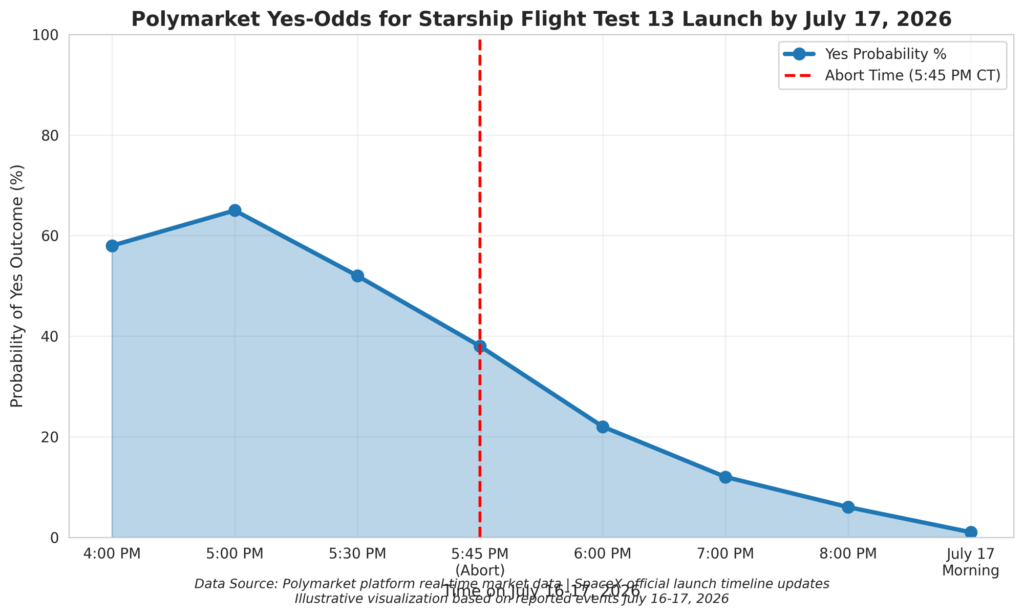
SpaceX had targeted a window opening at 5:45 p.m. CT. Ignition occurred on schedule, yet four engines on the Super Heavy booster failed to perform correctly. Automated systems triggered an abort, leaving the vehicle secured on the pad. Company updates later confirmed the issue as a post-ignition anomaly. This is why you have multiple layers of checks before liftoff.
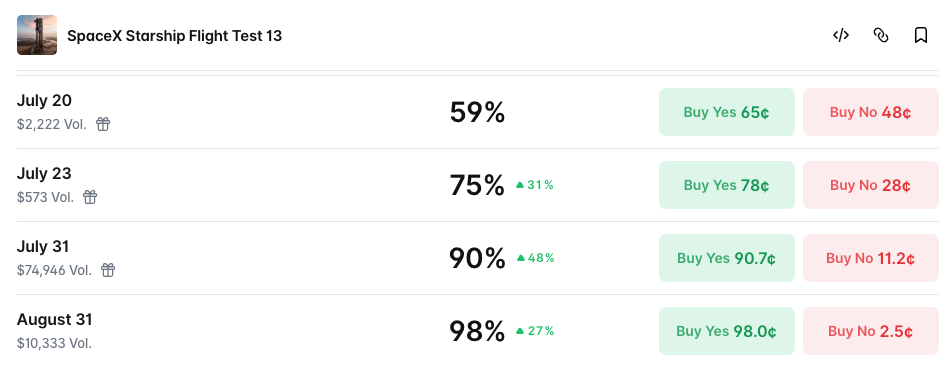
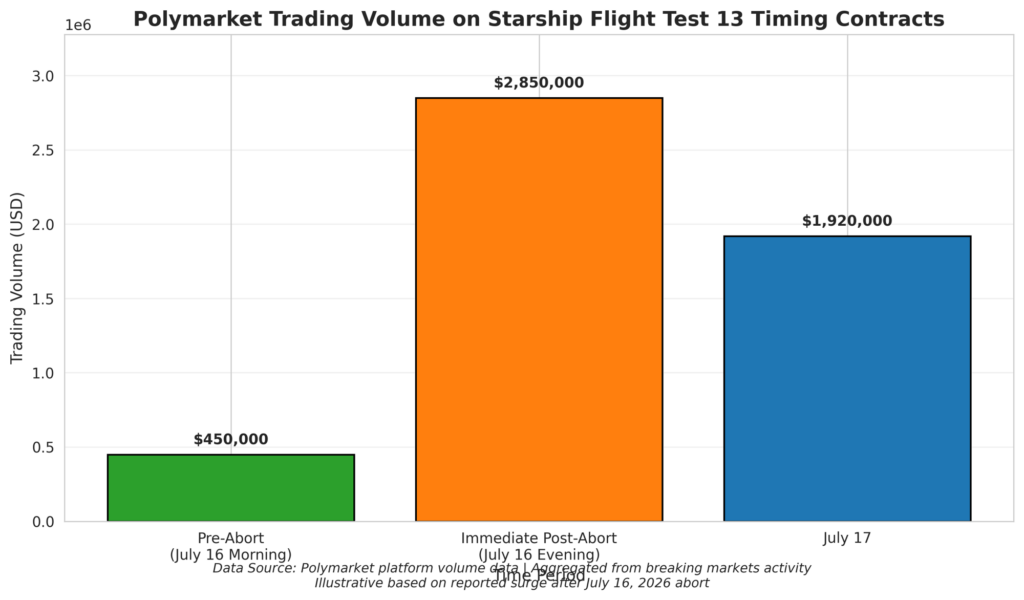
Traders then shifted attention to contracts covering later dates once SpaceX signaled July 20 as a possible return window. Volume rose across timing markets as traders reassessed the revised schedule.
Engine Anomaly Triggers Abort on July 16
The countdown advanced normally until ignition. At that moment, the anomaly struck four booster engines, prompting an immediate halt. The automated abort sequence engaged without further movement from the vehicle. SpaceX confirmed the post-ignition problem through post-attempt analysis and public statements.
Prediction market traders watching the live coverage began executing trades even before full details circulated. The platform recorded a surge in order flow as the news spread. This quick response turned the technical issue into a focal point for market pricing. View the live coverage of the abort sequence here.
Reports from SpaceX indicated the vehicle sustained no major damage, allowing diagnostics to begin promptly. Engineers started reviewing telemetry to pinpoint the cause. Traders incorporated this publicly released information into a recalculation of the timeline for the next launch attempt.
Market Odds Shift Dramatically After the Setback
The contract for a launch by July 17 experienced the sharpest movement. Yes-side pricing dropped to 1% as traders moved away from any near-term expectations. Increased order flow supported the repricing while liquidity remained stable.
Many traders who held positions favoring an earlier launch adjusted or closed them following the abort. Others opened fresh positions on extended timelines. The platform captured notable volume increases in the hours after the aborted launch event. These adjustments highlighted the sensitivity of timing contracts to breaking developments and the need for human involvement in monitoring real-time event-related news.
Related markets also moved as traders layered positions across several possible dates with the firm understanding that aborted launches are common to this process. Activity remained elevated as further updates arrived from the launch site.
Traders Redirect Focus to July 20 Window and Beyond
SpaceX communications pointed to July 20 as the earliest feasible date for another attempt. Traders responded by directing volume toward contracts aligned with that timeframe, with July 20th at 60% probability at the time of this writing. Some explored even later windows in case diagnostics required additional time. The revised outlook replaced the earlier concentration on immediate dates.
Layered betting has become a common strategy in these rocket launch markets. Traders combined positions on the July 20 window with hedges on subsequent periods. Platform data showed steady participation across these market date options.
Attention also touched on how any delay might affect associated milestones such as payload integration. Yet the primary emphasis remained on core launch-timing questions. Ongoing company updates continued to influence pricing throughout the following day.
References
- SpaceX Starship Flight Test 13 official page
- Spaceflight Now coverage of Starship Flight 13 abort
- YouTube live coverage of SpaceX Starship Flight 13 abort sequence
- Polymarket breaking news markets page