The Securities and Exchange Commission is actively evaluating its potential role in overseeing prediction markets. A possible shift to the SEC is emerging as platforms introduce a wider variety of event contracts across new categories.
The July 16, 2026, report emphasizes that contract diversification is prompting agencies to reconsider traditional boundaries. Contracts now cover more complex financial outcomes and multifaceted events, including those covering public company markets. Consequently, discussions about which federal regulatory body holds primary authority have gained fresh momentum.
Proliferation of Diverse Event Contracts Draws SEC Attention
Platforms continue to expand their offerings, with contracts tied to an increasing range of real-world outcomes. This includes more sophisticated structures around financial metrics that were not as prominent before. Regulators at the SEC are assessing whether these formats overlap with areas typically subject to securities oversight.
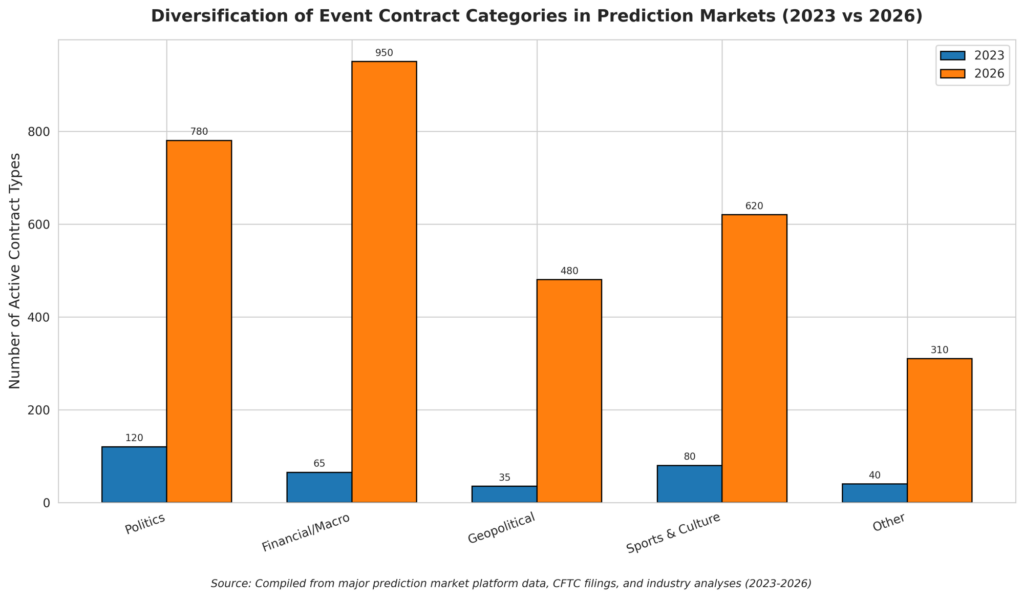
SEC representatives are examining whether the new designs might require direct involvement to maintain consistent standards. The pace of contract innovation on platforms like Polymarket and Kalshi is accelerating these internal reviews. Federal officials across the board are prioritizing enforcement strategies that address emerging varieties without stifling development.
Coordination between agencies is expected to become more frequent as contract types multiply. This effort aims to close potential gaps before they affect operations or escalate into regulatory chaos or inter-agency conflicts. The current Presidential administration is tremendously bullish on prediction markets and will try to avoid such disruptions if at all possible. This could very much include re-drawing regulatory divisions and responsibilities.
Overlapping Regulatory Authority Between SEC and CFTC Creates Uncertainty
The Commodity Futures Trading Commission (CFTC) has managed many aspects of event contract supervision in prior years, based on its interpretations of the Commodity Exchange Act (CEA). With contracts venturing into territory resembling investment products, the SEC is signaling readiness for a larger presence. This development is generating practical questions about which standards will apply to specific contract classes.
Agency officials from both sides are working to define clearer boundaries and prevent conflicting directives. Regulatory uncertainty is always detrimental to efficient markets. Historical guidance from the CFTC has covered related trading practices. However, the arrival of novel contract structures is pushing those divisions to their limits and requiring updated approaches. The CFTC is already thought to be short on investigative resources due to the rising number of cases related to prediction markets.
The SEC review incorporates considerations of how dual oversight might influence market integrity. Yet both agencies share an interest in supporting efficient trading environments throughout the transition. Both operate under the same Executive Branch, one that is outspoken in its support for prediction markets.
Industry Responses and Next Steps in Regulatory Review
Stakeholders in the markets are advocating for aligned approaches between the SEC and existing regulators to minimize ambiguity. This friendly alignment would support smoother contract development and trading operations and avoid the dreaded overlapping of regulations, which cause confusion and uncertainty. Platforms are conducting internal assessments of their portfolios to identify structures most likely to be subject to expanded review.
Traders are seeking clear timelines on any proposed adjustments so they can refine their strategies effectively. Transparent communication from agencies would help maintain confidence throughout the process, though history shows that isn’t always the case with government regulatory bodies. Any formal steps would likely include opportunities for public input before changes take effect.
Regulatory evolution in this space carries implications for how quickly new contracts can reach the market. Officials are emphasizing measured progress that protects participants while allowing innovation to continue.
References
- CNBC article on SEC potential involvement as prediction markets bring new contracts (July 16, 2026)
- YouTube video: Inside The Fight To Regulate Prediction Markets