
Kalshi has self-certified a new set of CFTC-regulated event contracts centered on flight cancellation rates at major airports. These contracts let traders take positions on whether cancellations will exceed specific thresholds during designated time periods. The launch extends prior contracts that combined delays and cancellations into one tradeable event metric. FlightAware data drives settlement for objective outcomes once each period ends. Traders now access more targeted exposure to cancellation trends that affect operations and budgets.
Early availability has sparked interest largely among those already active in related delay contracts. Positions open for trading until the period officially concludes, after which verified results determine payouts. The structure supports both directional plays on elevated cancellation days and protective moves against unexpected spikes. Multiple time windows and airport variations give traders flexibility to align holdings with specific hedging needs.
This development delivers a direct link between live aviation data and tradable financial results.
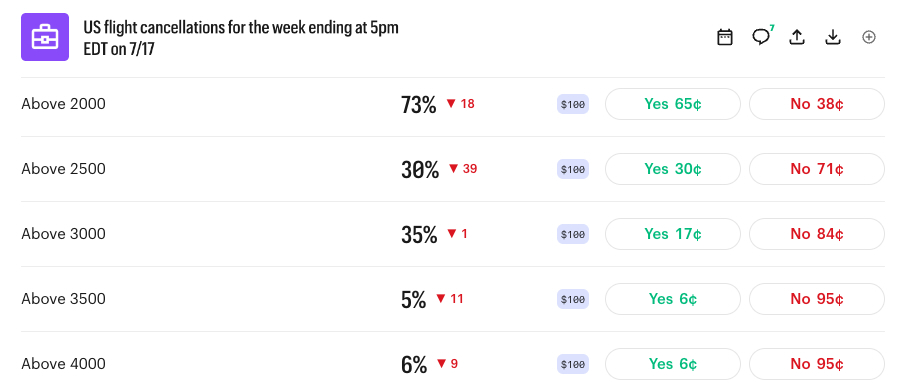
Mechanics of the New Flight Cancellation Threshold Contracts
Each contract defines precise parameters for what counts as a qualifying cancellation during its active window. Traders buy or sell event contracts that settle based on whether actual counts cross the chosen threshold. FlightAware records serve as the sole data source, ensuring consistent and verifiable resolutions. The contracts span a range of periods, from short windows to full days, allowing positions to be matched to known disruption patterns. Self-certification under existing CFTC rules enabled a rapid rollout while upholding compliance standards.
Traders monitor incoming data feeds throughout active periods and adjust holdings as preliminary reports appear. Settlement triggers automatically at close, with payouts flowing to winning positions in real time. This setup provides clean exposure to cancellation signals, separate from the broader delay statistics tracked in earlier contracts. Variations cover both domestic and international segments, expanding options beyond single-metric focus and allowing for mixed portfolios of cancellation contracts.
Traders who dedicatedly follow aviation metrics can layer new cancellation positions onto existing delay holdings for more refined exposure. The process rewards timely analysis of real-time feeds without requiring any new or additional data systems. Liquidity builds as activity increases, mirroring patterns seen when similar delay contracts first appeared. The mechanics emphasize transparency and speed from entry through final resolution. The type of payout traditional business “insurance” can’t come close to matching.
Applications for Managing Aviation Disruption Risks
Companies that coordinate frequent flights use these contracts to offset budget impacts as cancellation counts rise. Corporate travel teams open protective positions that activate upon threshold breaches, thereby stabilizing costs associated with rebooking or lost time. Logistics operators handling air cargo similarly position their holdings to mitigate revenue effects of widespread flight disruptions. The contracts convert operational data into direct financial responses that settle far faster than traditional alternatives.
Specialized traders expand their strategies by pairing cancellation contracts with delay contracts to capture distinct movement patterns and a deep understanding of fleet management during stressed periods. A position in one metric can offset or complement movements in the other during the same event window. This layering allows finer calibration across complex schedules involving multiple legs or connections. Event planners booking group travel also explore the contracts during periods of elevated risk forecasts. Protective holdings deliver automatic coverage once data confirms threshold crossings.
Airline partners and service providers can monitor trading activity in specific contracts for early signals of clusters of expected disruptions. Elevated volume often reflects collective expectations about upcoming scheduling and operational pressures. These signals supplement internal models without replacing them. The contracts therefore function both as hedging tools for affected customers and as visible indicators of market sentiment on aviation performance. Transparency in the underlying data supports informed adjustments across user types.
Addressing Risks of External Influence on Contract Outcomes
Questions have arisen about whether external actions could push cancellation counts higher and affect settlements. Critics of these contracts have noted scenarios involving false reports or scheduling changes that might trigger payouts. Such concerns highlight the need for active monitoring of trading patterns alongside reported data. Kalshi applies oversight systems already tested and proven on delay contracts to these new versions. The self-certification process via the CFTC includes built-in safeguards that place responsibility on the platform to detect and address anomalies promptly. You can’t simply launch these kinds of markets willy-nilly.
Clear definitions around verifiable cancellations under the FlightAware feed help limit edge-case disputes. Reliance on standardized public records rather than industry reports reduces opportunities for hidden adjustments. Traders review settlement inputs after the period closes, adding accountability through transparency. Early trading phases often reveal whether liquidity supports smooth position management during volatile windows. Kalshi refines contract parameters based on observed behavior to maintain challenging yet attainable thresholds within a logical range of probabilities.
Traders in these markets typically test smaller positions first to evaluate real-world performance before increasing scale. The balance between rapid innovation and rigorous checks will shape wider adoption in the weeks ahead.
Positioning Within the Existing Suite of Aviation Contracts
The cancellation-focused contracts complement rather than duplicate prior delay-and-cancellation offerings. Traders gain isolated signals on cancellations that reveal airline operational pressures separate from combined metrics. This separation enables more precise risk calibration across networks or portfolios. Settlement mechanics remain aligned with the established data infrastructure for continuity.
Patterns in existing aviation contracts indicate likely demand for these narrower versions. Periods showing divergence between delays and pure cancellations create opportunities for paired strategies. Traders are experimenting with combinations that profit when one metric shifts independently. Such pairings increase the detail available for hedging intricate travel operations. The platform continues to respond to observed interest by refining the category and its market offerings over time.
References
1. Crypto Briefing: Kalshi self-certifies CFTC-regulated event contract for flight cancellations
2. Inc.: Kalshi Wants You to Make Money Off of Canceled Flights
3. Bloomberg: Kalshi Seeks to Let Traders Hedge on Flight Cancellation Rates
4. X trending topic on Kalshi flight cancellation contracts