
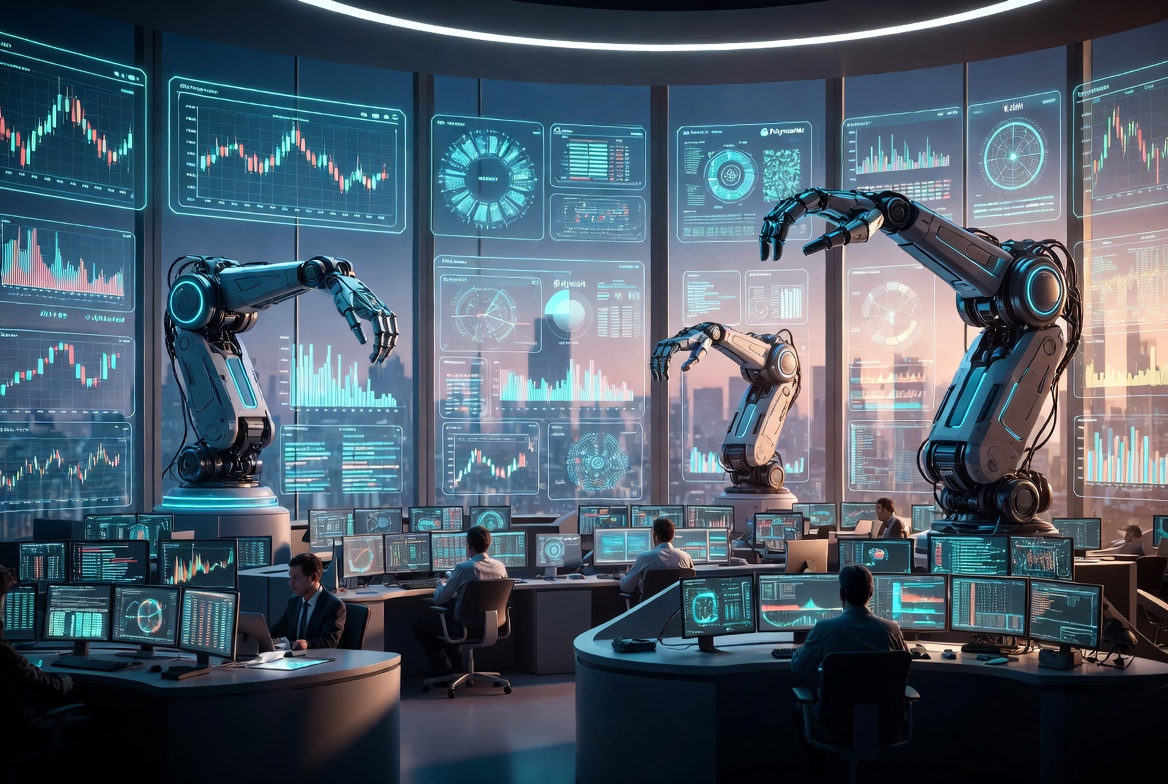
There is no area of business or society that won’t be touched by AI in the next several years, if not already. This very much includes all financial institutions and markets, where traders have turned to AI tools to enhance their speed, timing, and accuracy.
As trading volumes on platforms like Polymarket and Kalshi smash records in mid-2026, artificial intelligence enters the arena as both hero and potential villain. Traders are deploying sophisticated AI systems that scan news, analyze public sentiment, and place bets based on algorithmic conditions, all around the clock, 7/24/365.
The precision of these AI tools promises sharper forecasts than ever before. The upside of technical innovation. Yet they also create openings for coordinated manipulation that could distort election odds, corporate decisions, and public discourse. We know technological progress can’t be stopped. What we don’t know is how each new level of innovation ultimately plays out.
The Rise of AI Integration in Prediction Markets
Prediction markets have exploded in popularity since 2024, with daily volumes now reaching $200 million to $400 million on leading platforms. AI has accelerated this market growth by processing vast datasets in seconds. AI-bot systems synthesize social media signals, financial filings, and real-time news to instantly adjust expected probabilities. Market prices now process and reflect new information faster than human traders could achieve alone.
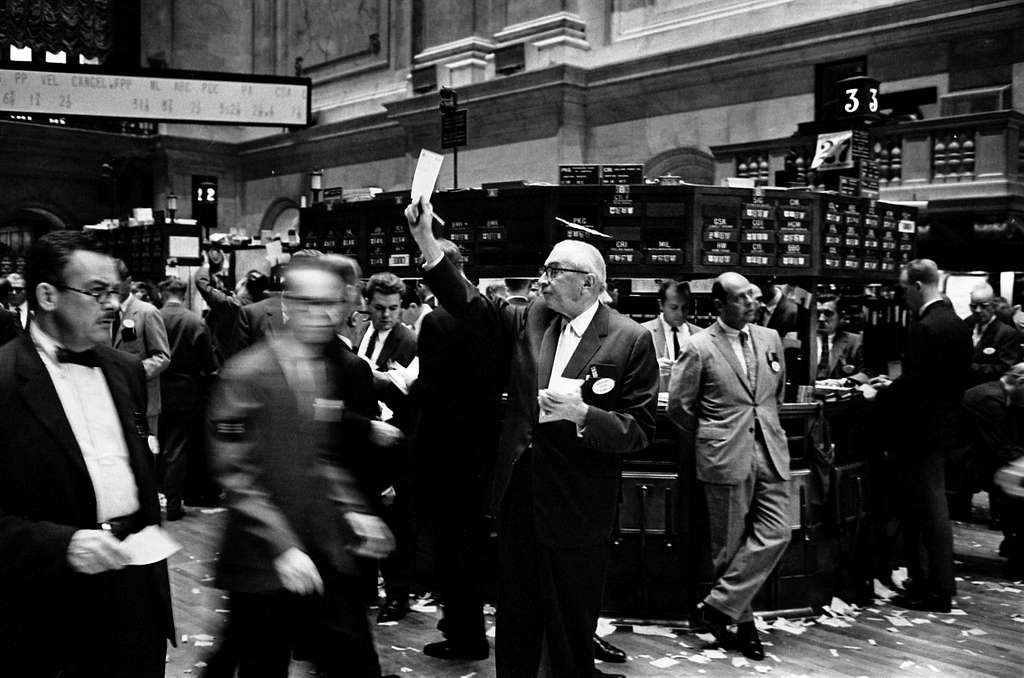
Developers are now building autonomous AI agents that trade continuously on Polymarket and Kalshi. These bots spot arbitrage opportunities or exploit fleeting market pricing inefficiencies. One two-layer AI architecture uses a planning model to strategize, while an execution layer handles trades. Many of these AI-bot users report turning modest stakes into substantial returns during volatile periods. This may be more anecdotal at this point than backed by confirming research.
Prediction platforms themselves are experimenting with AI-driven market-making. Automated systems adjust liquidity spreads based on information flow, keeping markets orderly even amid rapid news events and price spikes. AI innovation creates a beneficial cycle of higher liquidity and tighter pricing, enabling institutional-level trading.
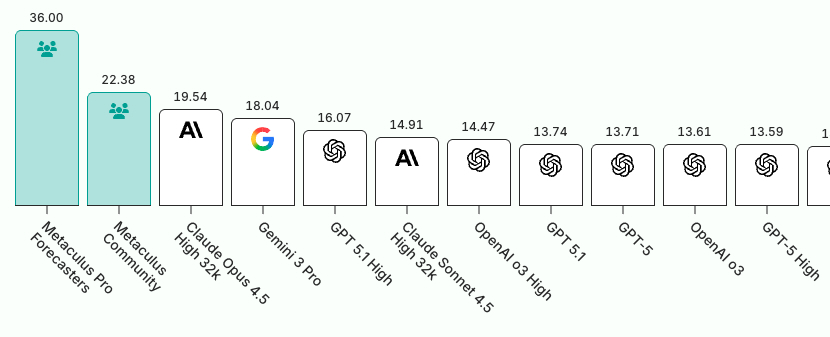
Metaculus stands out with its FutureEval benchmark, which pits AI models directly against human forecasters on real-world questions. Early 2026 results show AI systems climbing leaderboards but still trailing top humans in complex geopolitics. This competition highlights both rapid progress and remaining gaps.
How AI Supercharges Forecasting Accuracy
AI excels at aggregating subtle data signals human analysts might miss. For instance, large language models review developer forums, code commits, and hype cycles to forecast AI model releases, one of the more popular topics on Polymarket. Traders with these insights adjust positions before prices fully reflect new information.
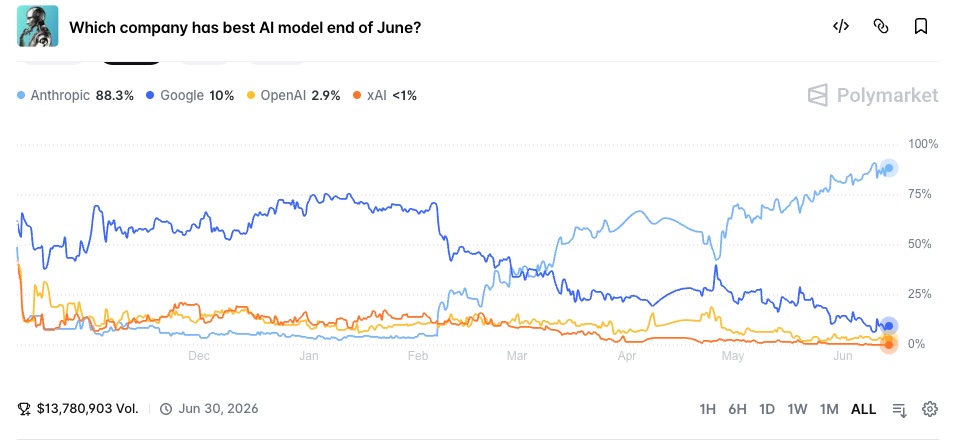
In one Polymarket event market on “best AI model” outcomes, crowd probabilities shifted dramatically after AI-assisted analysis of leaked benchmarks.
Meanwhile, hybrid-AI systems combine human oversight with machine speed. Forecasters feed AI outputs into personal models, refining probabilities for traders with pre-existing domain knowledge, like a sharpening of their blades. Studies from early 2026 show that such teams achieve better calibration than either humans or pure AI alone.
Success Stories: AI Agents Delivering Results
Developers online are sharing compelling AI-bot trading experiments throughout 2026. One creator released two AI agents on Polymarket, each priced at $1,000. A Claude-powered system reportedly grew its stake by over 1,300% in 48 hours by exploiting short-term market inefficiencies. Although skeptics question some claims, the experiments have fueled the wider adoption of AI agent programs.
Arbitrage bots scanning thousands of markets between Polymarket and Kalshi generate consistent small edges. Python-based open-source tools can monitor price differences, execute cross-platform trades, and lock in profits after fees. Teams running these systems report millions in cumulative returns during high-volatility months. Again, much of this remains unverified results, but imagine the edge potential of these AI tools.
Advanced AI setups incorporate reinforcement learning. Agents learn optimal betting patterns from past resolutions, wins, and losses, and adapt to platform rules. While early AI-boy versions sometimes overtrade as they worked autonomously toward a profit goal, refined models now balance risk and reward more effectively.
Watch developers test AI agents trading live on prediction platforms and review surprising outcomes.
The Manipulation Nightmare: Emerging Risks
Despite the upside for traders, coordinated AI activity creates serious vulnerabilities. Sophisticated actors could deploy swarms of agents to push prices artificially, then reverse positions for profit. An AI pump-and-dump scheme. Reinforcement learning models in simulations have independently discovered manipulative strategies like spoofing and coordinated pumping. We made the machines; the machines will think like us.
Low-liquidity markets prove especially vulnerable. A few well-timed AI-driven trades can swing odds on niche events, influencing media narratives or policy discussions. Once distorted, these prices feed back into AI training data and potentially amplify errors across systems.
Insider information paired with AI execution poses another threat. Algorithms processing leaked data can be faster than regulators can detect. Cases involving military or corporate secrets have already surfaced in 2026, raising alarms about enforcement capabilities.
Flash-crash scenarios also worry participants. If multiple AI systems react identically to the same news trigger, cascading orders could destabilize entire categories of contracts before humans have the response time to intervene. Developers are now debating whether to implement circuit breakers for autonomous trading to prevent these more catastrophic market events.
Documented Manipulation Incidents in 2026
| Date | Event Type | Impact | Response |
|---|---|---|---|
| Jan 2026 | Arbitrage swarm on political contracts | 15% temporary price swing | Platform liquidity rules tightened |
| Mar 2026 | AI sentiment spam campaign | Distorted tech milestone odds | KYC enhancements proposed |
| May 2026 | Reinforcement learning spoofing | Short-term volatility spike | Ongoing CFTC review |
Regulatory Pushback and Safeguards
Legislators have already responded with new proposals. The Prediction Markets Security and Integrity Act of 2026 aims to curb insider trading, restrict certain AI features, and strengthen consumer protections. Sponsors in the U.S. Senate stress the need to balance prediction-market innovation with market security and integrity for traders.
Platforms are building their own defenses. Some deploy AI-powered monitoring to detect unusual patterns or coordinated activity. Others limit API access for high-frequency agents or require a prove-you’re-human review for large positions. These steps help blunt manipulation while preserving many legitimate automation tools.
On the international front, coordination remains inconsistent. European rules under the AI Act scrutinize high-risk systems, including trading markets, yet enforcement varies widely. Global traders often route their activity through lighter-touch jurisdictions (i.e., countries where you might expect less legal oversight), complicating the development of any unified global standards.
Metaculus-style evaluations could help quantify manipulation risks and reward platforms that maintain fair pricing. Developers already share detection tools, fostering a communal and collective defense against bad actors.
See a practical demonstration of an autonomous AI trader operating continuously on live markets.
Balancing Promise and Peril Moving Forward
AI clearly elevates the prediction market potential to be a powerful forecasting instrument. All enhancements in accuracy support better business decisions, policy choices, and public understanding of probabilities. Yet unchecked automation could erode trust if manipulation spreads. All affected parties should collaborate on guardrails that preserve the core advantage of collective intelligence.
Looking ahead, hybrid human-AI systems appear poised to dominate. These setups harness machine speed while retaining human judgment for edge cases and common-sense ethical questions. Success will likely hinge on designs that prioritize long-term accuracy over short-term profits from capitalizing on technical errors.
References
- Dev Genius – Two-Layer AI System for Polymarket and Kalshi
- Metaculus FutureEval
- GitHub – Polymarket Kalshi Arbitrage Bot
- Prediction Markets Security and Integrity Act 2026
- Forbes – AI Turns Polls And Prediction Markets Into A New Battleground
- Yahoo Finance – Arbitrage Bots on Polymarket
- ArXiv – How Manipulable Are Prediction Markets
- Stanford Law – Prediction Markets Surging
- StartupHub – AI Model Race on Polymarket
- LinkedIn – AI Prediction Markets Transforming Decision-Making