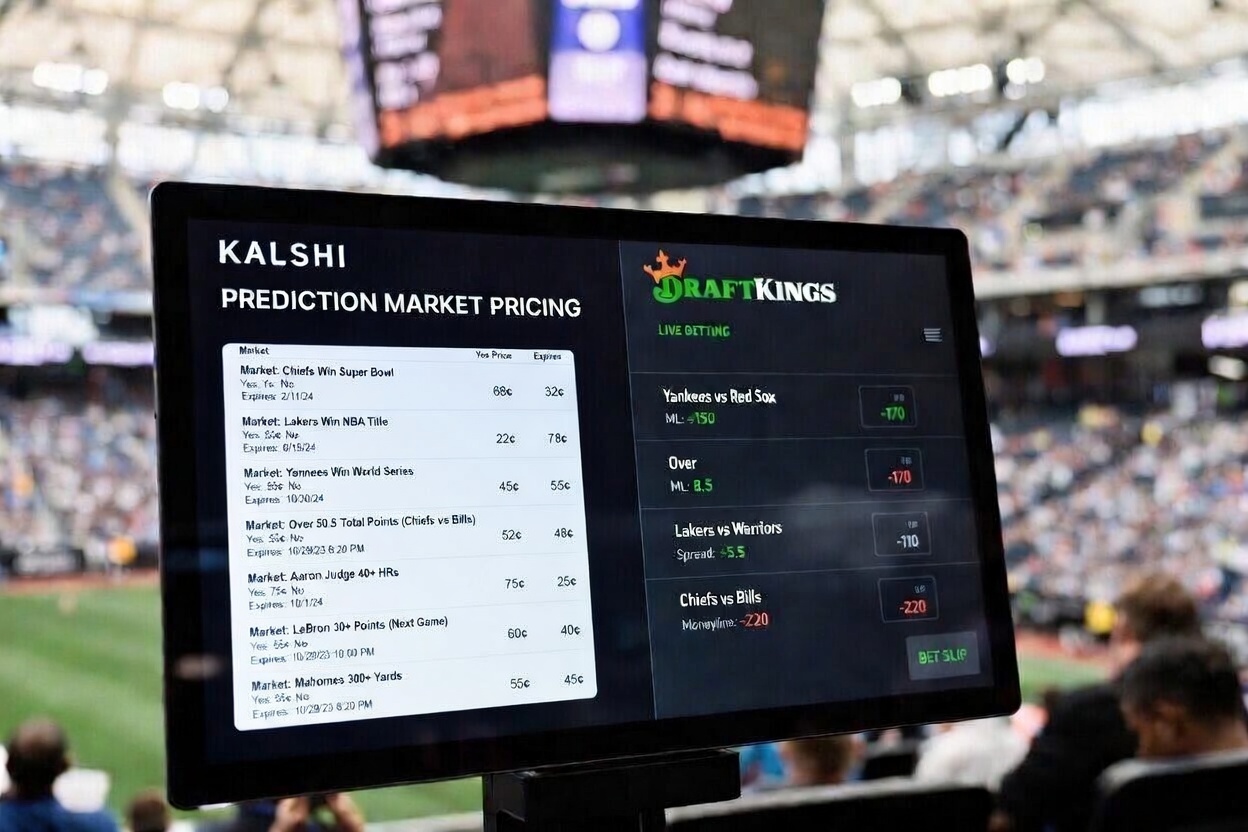

Hobbyist developers flood online communities with simple copy-paste scripts that scan for instant arbitrage opportunities between Kalshi and Polymarket. These tools detect price divergences on identical events and execute trades that lock in small but reliable spreads. The scripts turn what once required manual monitoring into automated, set-it-and-forget-it operations that run on home setups.
I built a bot to automate ‘risk-free’ arbitrage between Kalshi and Polymarket. Here is the source code.
by u/SammieStyles in algotrading
Traders share these beginner-friendly arbitrage strategies, complete with memes that poke fun at building market-neutral bots while still wearing pyjamas. One viral Reddit discussion details a fully open-source bot that buys mismatched YES and NO contracts across platforms to capture synthetic arbitrage. The approach enters positions when implied probabilities diverge and exits when they converge to achieve faster capital turnover.
Copy-Paste Scripts Democratize Cross-Platform Arbitrage Opportunities
Developers release Python and TypeScript toolkits that monitor thousands of markets simultaneously and flag inefficiencies in real time. One popular repository tracks over 10,000 events and highlights instances where YES and NO prices fall below $1 or where identical contracts trade at different levels on Kalshi versus Polymarket. Hobbyists download the code, add their API keys, and launch bots that handle everything from order placement to risk checks.
The community buzzes with excitement about these easy-money scripts for prediction market arbitrage. Another actively maintained project focuses on cross-venue detection and receives frequent contributions from the community. A third toolkit gains traction among coders seeking low-latency execution for opportunities in crypto and sports events.
Traders experiment with variations that incorporate Kelly-criterion sizing or simple threshold alerts sent directly to Telegram. The scripts require minimal setup yet deliver consistent small edges that compound over dozens of daily trades. Hobbyists celebrate each successful run with screenshots of tiny profits that add up faster than manual trading ever could.
Popular Open-Source Arbitrage Bots Trending Right Now
| Bot Name | Language | Key Feature | GitHub Repository |
|---|---|---|---|
| Prediction Market Arbitrage Bot | Python / TypeScript | Synthetic YES/NO convergence trading | View Repo |
| Polymarket + Kalshi Arbitrage Bot | Python | Multi-market scanner for 10,000+ events | View Repo |
| BTC Arbitrage Bot | Python | Real-time 1-hour Bitcoin price gaps | View Repo |
These projects receive constant updates from contributors who refine WebSocket connections and add Kalshi API throttling to avoid rate limits. Hobbyists fork the code and customise it for niche events ranging from esports matches to crypto price brackets. The open-source movement accelerates adoption and sparks friendly competitions to see whose modified script yields the highest monthly return.
Recent Arbitrage Alerts Highlight Live Opportunities
Automated accounts post real-time examples of Kalshi-Polymarket arbitrage opportunities that anyone can verify. One alert flagged a League of Legends match where buying the NO leg on one platform and the YES leg on the other delivered a locked-in return. Traders jump on these notifications because the spreads close quickly once spotted by multiple bots. The community treats each alert as a live case study in how price fragmentation creates repeatable profits.
Another alert captured a Counter-Strike 2 total maps market showing an edge by taking opposing sides on both platforms. Hobbyists share their bot outputs in Discord channels and celebrate when their scripts catch the same inefficiencies, minutes before public alerts. The thrill comes from watching code execute trades autonomously while the trader grabs coffee or steps away from the screen.
Video Guides Help Coders Launch Their First Bots
Creators produce clear walkthroughs that guide beginners through the setup and deployment of arbitrage bots for Kalshi and Polymarket. One highly relevant tutorial breaks down guaranteed daily profit strategies using arbitrage betting between the two platforms and demonstrates live examples of spotting and executing trades.
Watch: How to Make Guaranteed Daily Profit Using Polymarket & Kalshi
Another video dives deeper into top Polymarket and Kalshi bot strategies, including arbitrage detection and market-making techniques that hobbyists replicate at home. Viewers follow along with screen recordings that show API integration and backtesting results, building confidence before live deployment.
Watch: Top Polymarket and Kalshi Bot Strategies
These resources lower the barrier for coders who previously felt intimidated by the technical requirements. Hobbyists report launching their first profitable scripts within hours of watching the guides and tweaking parameters to match their risk tolerance.
Technical Tweaks Turn Simple Scripts Into Reliable Profit Machines
Developers incorporate WebSockets for real-time price feeds and implement token-bucket algorithms to comply with platform rate limits. This detailed Substack post walks through the full technical stack, including async data processing and dynamic position sizing that prevents overexposure on any single event. The author emphasises how retail-dominated order books still leave room for structural mispricings that bots exploit faster than humans.
Many bots connect to Polymarket’s hybrid CLOB on Polygon via EIP-712-signed orders for off-chain matching and on-chain settlement. They poll or subscribe to market channels via WebSocket endpoints to receive live order book depth, price changes, and trade feeds. Kalshi integration relies on REST endpoints with strict rate limits, often enforced via token-bucket throttling that caps requests per second to stay within the basic or premier tiers.
Core logic typically fetches active events and markets first, then compares implied probabilities or YES/NO prices across platforms. When a divergence appears — such as a combined YES plus NO cost falling below 98 cents — the bot places simultaneous opposing orders to lock the spread. Advanced versions add convergence trading, in which positions exit early upon price normalisation to boost capital velocity, rather than holding until resolution.
Sample Python Code Snippet for Synthetic Arbitrage Detection
import requests
import time
from decimal import Decimal

# Simplified example - fetch prices and check for arbitrage
def check_synthetic_arbitrage(poly_yes_price, kalshi_no_price, threshold=0.98):
    combined_cost = Decimal(poly_yes_price) + Decimal(kalshi_no_price)
    if combined_cost < Decimal(threshold):
        spread = (Decimal('1.00') - combined_cost) * 100
        print(f"Arbitrage opportunity detected! Combined cost: {combined_cost}, Spread: {spread}%")
        # Place opposing orders here
        return True
    return False

# Example usage in main loop
while True:
    # Fetch live prices from APIs (Polymarket Gamma API + Kalshi REST)
    poly_yes = get_polymarket_yes_price("event_id")
    kalshi_no = get_kalshi_no_price("matching_event_id")
    check_synthetic_arbitrage(poly_yes, kalshi_no)
    time.sleep(5)  # Poll interval
This basic structure forms the heart of many hobbyist bots. Developers expand it with full API clients, error handling, and async execution using libraries like aiohttp and websockets.
Advanced Convergence Trading Logic Example
# Convergence trading - enter on wide spread, exit on normalization
def should_enter_position(current_spread, entry_threshold=0.04):
    return current_spread > entry_threshold

def should_exit_position(current_spread, exit_threshold=0.005):
    return current_spread < exit_threshold

# In practice, bots use libraries like pmxt for unified Polymarket/Kalshi access
# Example: this.polymarket = new pmxt.polymarket({ privateKey })
Traders running these easy money scripts for prediction market arbitrage report monthly returns that outpace traditional savings accounts with far less effort. They backtest historical data to confirm edge persistence and adjust for changing fees or liquidity conditions. The passion in community threads comes from the shared discovery that code can generate income while sleeping.
One hobbyist described building a latency-arbitrage bot with AI assistance in just 40 minutes and turning a small stake into substantial gains before platform adjustments narrowed the window. Stories like this fuel the current surge in script sharing and encourage more participants to try their hand at automation.
Key Advantages of Hobbyist Arbitrage Bots
| Advantage | Description | Impact on Returns |
|---|---|---|
| Speed | Executes within milliseconds of price divergence using WebSocket updates | Captures spreads before manual traders react |
| Scale | Monitors thousands of simultaneous markets via API batching | Compounds small edges across many positions |
| Automation | Runs 24/7 without constant supervision with async processing | Frees users for strategy refinement instead of monitoring |
| Accessibility | Copy-paste deployment for non-professionals with .env API key setup | Democratizes profits previously limited to institutions |
Research cited in trading discussions estimates millions in annual profits extracted through these cross-platform tactics. The fragmented nature of prediction market liquidity ensures that opportunities persist even as more bots enter the space. Hobbyists focus on niches such as short-duration crypto contracts or esports, where divergences occur more frequently.
Risks Remain Despite the Risk-Free Marketing
Bot creators openly discuss execution risks that arise when spreads fail to converge quickly enough or when settlement timing differs between platforms. The Reddit developer behind a popular arbitrage bot stresses that active trading of convergence introduces market risk even though the theoretical structure appears mathematical. Capital velocity improves returns dramatically but requires careful monitoring of liquidity and fees.
Hobbyists mitigate these issues by diversifying across dozens of events and setting strict stop-loss parameters in their custom scripts. They share failure logs in forums to help others avoid common pitfalls such as API key exposure or insufficient error handling. The collective learning process strengthens the entire ecosystem and keeps the strategies evolving.
Enthusiasm stays high because the combination of low barriers and tangible profits creates a virtuous cycle. New coders join daily, contribute improvements, and celebrate milestones like their first thousand-dollar month from automated trades. The prediction market hobbyist scene transforms from casual betting into a vibrant arena of algorithmic experimentation.
The surge shows no signs of slowing as more developers publish refined versions of arbitrage bots and easy money scripts. Communities continue swapping tips on optimising for the latest platform updates while maintaining the fun, collaborative spirit that defines the space. For hobbyists passionate about code and markets, these tools represent the perfect intersection of technology and opportunity.
References
- Polymarket + Kalshi Arbitrage Bot GitHub
- Prediction Market Arbitrage Bot GitHub Repository
- Polymarket-Kalshi BTC Arbitrage Bot GitHub
- How to Make Guaranteed Daily Profit Using Polymarket & Kalshi – YouTube
- Top Polymarket and Kalshi Bot Strategies – YouTube
- Building a Prediction Market Arbitrage Bot – Navnoor Bawa Substack
- I built a bot to automate ‘risk-free’ arbitrage between Kalshi and Polymarket – Reddit