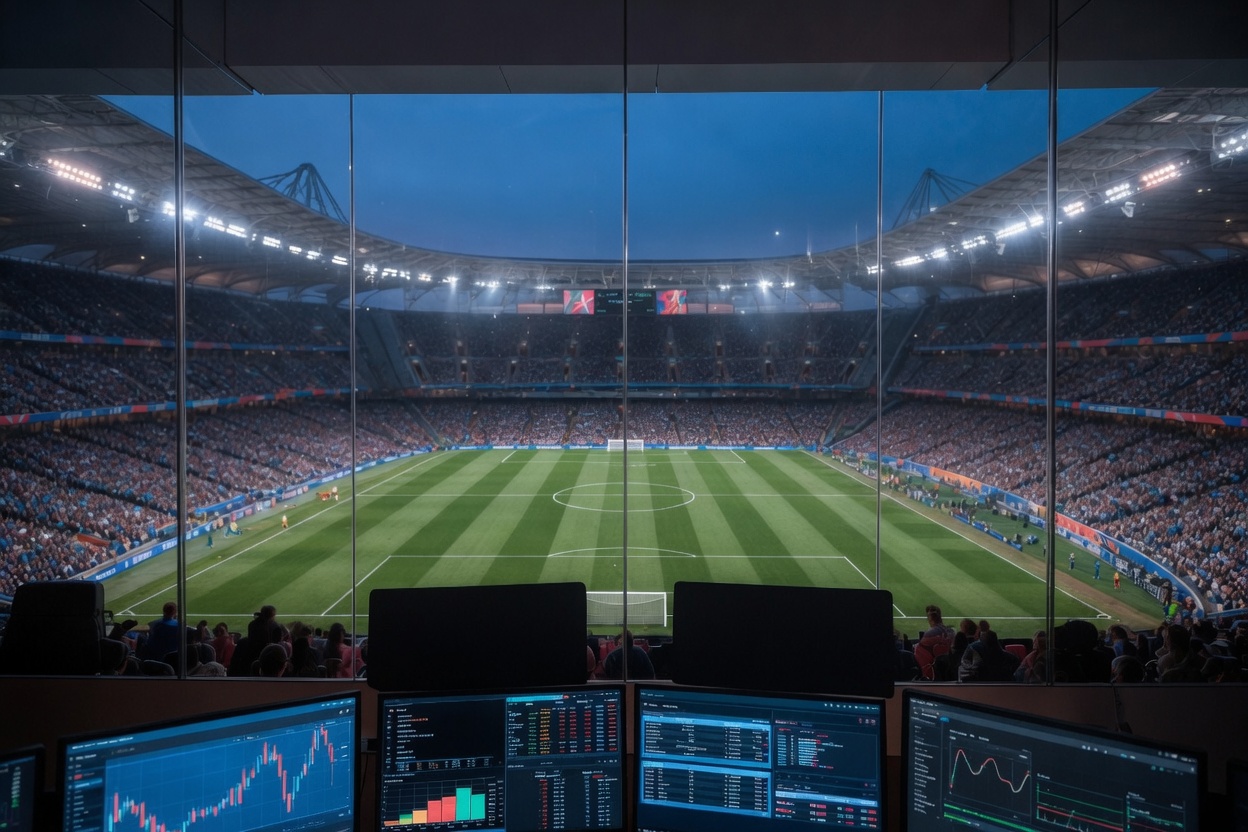

The most American thing in the world: everybody gets a fair shot, with success determined only by their hard work, skills, and personal ambition. The second most American thing is a concern that the playing field is never quite even, stacked for the big spenders and against the upstarts. This duality of optimistic meritocracy and cynical inequality defines our modern nation.
Prediction markets now handle tens of billions in monthly notional volume, yet a troubling question looms large: do a handful of wealthy whales manipulate outcomes that millions unknowingly watch and wager on? As platforms like Polymarket and Kalshi surge in popularity, massive single-trader moves can swing prices dramatically. Defenders of the current model highlight rapid corrections by savvy traders, but the tension still casts doubt on the fairness of these markets.
Traders with deep pockets pour hundreds of thousands—or even millions—into single contracts. Consequently, these moves influence payouts and shape public perception of elections, economic indicators, and more social, political, and cultural phenomena. Anyone trading in these markets needs to at least be fully aware of this dynamic.
Understanding Whales and Their Power
The term “whale” itself originated in casino slang, where “fish” refers to smaller bettors, “sharks” to the more cunning bettors who prey on the fish, and “whales” to the high rollers who come ready to gamble large sums. Naturally, the casinos showed great favoritism and treatment toward the whales who could wager large sums of money at their establishments.
Similarly, in prediction market parlance, whales are high-volume traders who deploy substantial capital into prediction contracts. While trading volume on major platforms can exceed $20 billion in a large month, this volume is spread across a seemingly endless number of smaller markets where a single large position can shift implied probabilities by several points within minutes. Whales often trade via anonymous wallets on Polymarket, making real-time tracking difficult.
Prediction markets rely on supply and demand for Yes/No shares, so concentrated buying or selling creates immediate price pressure. A $500,000 buy order in a thin market, for example, pushes Yes-share prices higher even without any new public information to drive such a probability change. Accordingly, retail traders often follow the whale’s lead, further amplifying the price increase. The market has moved despite no underlying fundamentals changing.
Many whales also serve as sophisticated market makers. They provide liquidity through limit orders and earn consistent small edges rather than chasing one-off market manipulations. Top performers often supply liquidity, though their scale still dominates overall volume. Most platforms reward these market makers with various bonuses and payouts for providing liquidity, while retail traders pay transaction fees.
Notable Examples of Whale Activity and Alleged Manipulation
Anonymous wallets have placed well-timed, significant bets worth hundreds of thousands of dollars ahead of geopolitical developments, which later resolved profitably and triggered insider trading probes. While not every large trade uses nonpublic information, the pattern concerns both platforms and retail traders who see whales begetting large wins for themselves while the fish in the market are largely losing. Even the appearance of rigging is detrimental to platforms.
During election contracts, individual traders have moved millions, temporarily boosting one candidate’s odds before counter-trades restored balance. Short-term swings influenced media coverage and secondary betting. Tools like Prediedge and 0xInsider now monitor these flows in real time.
We’ve covered this modern phenomenon of how leading in prediction markets early in political races provides key campaign advantages to candidates:
In lower-liquidity sports and pop culture markets, coordinated positions have pushed prices to extremes. Whales sometimes unwind after smaller traders follow, mirroring pump-and-dump tactics that undermine market integrity and the market’s basis in objective probabilities.
Key Whale Trade Statistics (2025-2026)
| Platform | Avg Monthly Volume | Top 1% Trader Share of Profits | Notable Large Trade Example |
|---|---|---|---|
| Polymarket | $10B+ | ~76% | $400K+ payout on timely geopolitical bet |
| Kalshi | $8B+ | High concentration | Multiple $100K+ moves in event contracts |
How Manipulation Tactics Actually Work
Manipulation often appears in subtle forms. Spoofing, in which large, fake orders are placed to mislead before cancellation, occurs in thinner contracts. Wash trading, in which a trader buys from and sells to themselves to fake volume, occurs occasionally despite monitoring and strict rules against it.
Outcome manipulation poses another risk when participants with influence try to affect sports markets or corporate news. Platforms respond by banning conflicted traders and referring cases to federal regulators for review and potential prosecution. Kalshi now requires employment verification for high-risk contracts to block insiders likely to have access to non-public information.
Detection at scale on real-time trading remains a challenge. Third-party analytics and security layers help flag anomalies, but proving actual intent requires law enforcement involvement. As volumes grow, prediction platforms are pouring increasing resources into developing stronger manipulation-prevention tools. This is a nonstop battle.
Markets Frequently Self-Correct
It should be noted that whale manipulation will self-correct over time, and prediction markets show strong resilience. When whales distort prices, informed traders (and AI bots) quickly arbitrage the gap and restore balance. Historical data from major events confirms that initial swings rarely last beyond hours or days. The market disruption is real, but never long-lasting.
Large positions aren’t always a sign of deceit; they often reflect genuine research-backed conviction. Professional full-time traders add valuable liquidity, narrow spreads, and improve accuracy for everyone. The whales are not outliers to the markets; they are fundamental to their existence. Hence, a prohibition is not an option.
Regulatory Pushback and Platform Improvements.
The solution lies mainly in rigorous supervision, detection, and consequences for bad actors. The CFTC has clarified that insider trading and manipulation rules apply fully to prediction markets as they do to any other. Consequences for those convicted of these offenses can be substantial and very much include incarceration as well as large financial penalties.
Ultimately, platforms must monitor activity, avoid easily manipulable contracts, and report suspicious behavior. Kalshi leads with risk scoring, job verification, and dozens of referrals to authorities. Polymarket has tightened its rules against stolen information and self-dealing while expanding compliance measures. Offshore operations and anonymous wallets still complicate enforcement efforts, but bipartisan legislation seeks to close gaps, at least on the U.S. side.
This ABC News segment explores government and platform efforts against improper trading.
Impact on Retail Traders and Overall Trust
It takes all kinds of people to make the world go round, and it takes all kinds of traders to make markets run smoothly and efficiently. But retail traders often feel disadvantaged when whale moves dominate both markets and headline news. Sudden swings encourage emotional chasing instead of research-based decision-making, eroding confidence over time in these markets and platforms. It’s a serious business concern.
Whale-tracking tools and educational resources help smaller traders follow smart money more selectively. Platforms continue to work toward greater trader adoption of their markets; as liquidity deepens, single-whale influence naturally shrinks. As a rule, at PolyPunter, we recommend that new traders avoid smaller-volume markets.
Common Manipulation Risks vs. Mitigation Strategies
| Risk Type | Description | Platform Response |
|---|---|---|
| Insider Trading | Using nonpublic info for profit | Employment checks, bans, referrals |
| Price Distortion | Large orders shifting odds temporarily | Liquidity incentives, monitoring |
| Outcome Influence | Attempting to control events | Conflict bans, resolution oversight |
As prediction markets head toward hundreds of billions in annual volume, whale power and influencer will evolve rather than vanish. Institutional entry through regulated channels should bring professional-level hedging that stabilizes prices across markets.
AI-driven surveillance and blockchain transparency offer advanced but imperfect protections. Markets designed for broad participation and strong rules will best minimize risks, while volume-chasing platforms may amplify them. It’s important, especially for less experienced traders, to understand these risks going in.
This video examines the advantages held by professionals and insiders.
References
- AP News on Kalshi employment verification
- ABC News on insider trading race
- Prediedge Whale Tracking
- BBC on Kalshi rules
- YouTube: Prediction Markets Exposed
- Yahoo Finance on whale manipulation claims
- NPR on trader behavior
- BeInCrypto on platform rules
- 0xInsider Tracker
- CFTC Advisory
- Dopamine Markets on solutions
- Arxiv study on whale distortion
- WSJ on Polymarket
- Substack on dealing with risks
- NYT on full-time traders
- YouTube: Crackdown on insider trading
- Fortune on economist views
- Volume statistics
- Bloomberg on dispute whales
- CFTC guidance

The PolyPunter staff works tirelessly to bring you the latest and most insightful news, information, and tips on the fast-growing economic, financial, and social phenomenon that is prediction markets.