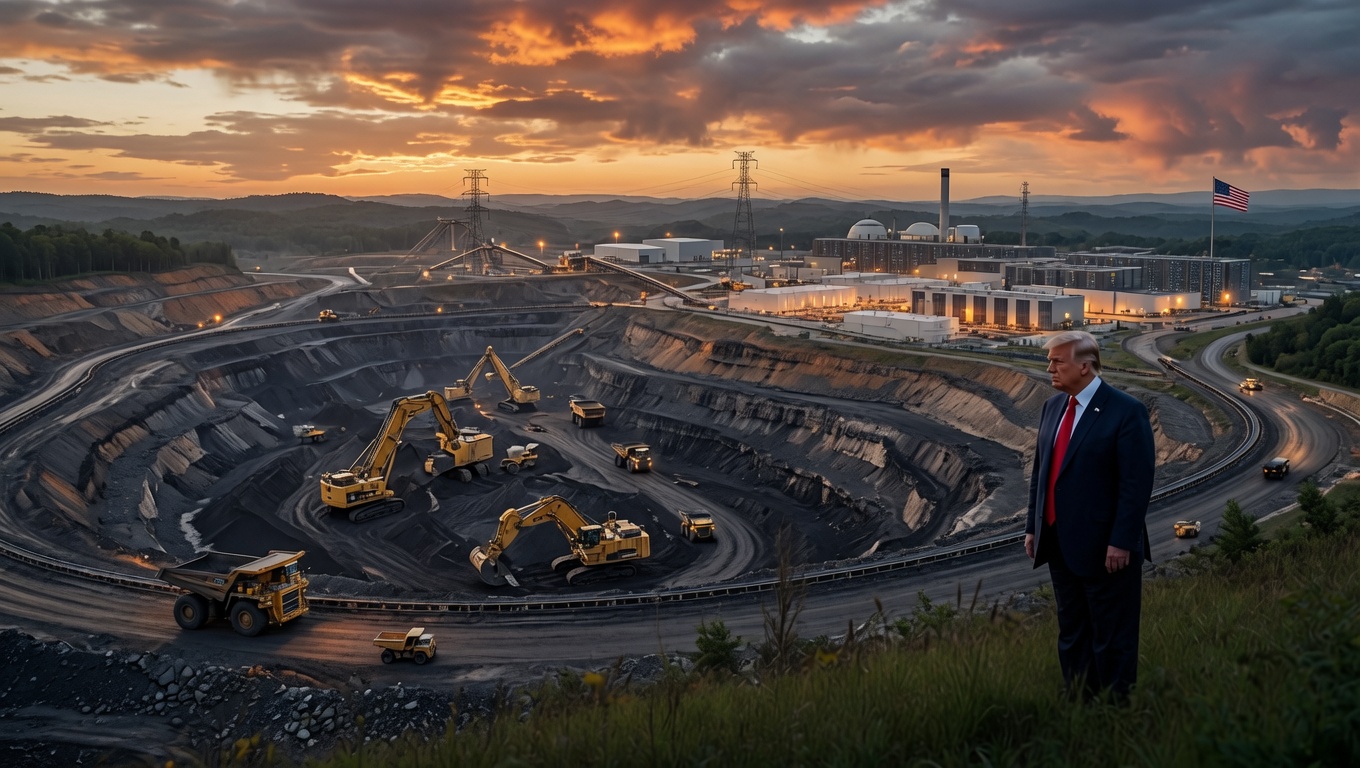
Coal is the future. Not a t-shirt slogan you see often in 2026. For many, coal may be seen as an energy source of the past. But with all the modern needs for power, President Trump has made a point of reviving the domestic coal industry in the United States.
Prediction market traders have rushed into fresh “coal” contracts after reports detailed a $700 million federal push to make a big domestic coal push using Cold War-era authorities. The initiative directly targets the explosive growth in electricity demand from artificial intelligence data centers, prompting rapid repricing in policy and energy markets. Volumes in coal markets climbed immediately as details emerged.
AI Electricity Surge Drives Coal Policy Momentum
If you’ve read the news in the past few years, you’ve seen AI data centers and data center capacity as an increasingly primary issue for business and political leaders alike. And you’ve seen the concern for the power needs of these massive processing centers. They need electricity and water to cool all that power.
U.S. data center power demand is projected to climb from 31 gigawatts in 2025 to 66 gigawatts by 2027, driven largely by AI training and inference that require constant dispatchable energy. Policymakers have turned to coal to bridge immediate electrical grid shortfalls while other sources scale. This emergency $700 million package includes upgrades and new facilities. Traders are adjusting odds on timelines and production impacts.
The funding leverages the Defense Production Act for faster deployment. The DPA was enacted after WWII to give the President broader authority to restructure the domestic industrial base to address national security readiness.
Traders must now evaluate the impact of increased coal production on electricity prices and long-term grid stability, with many forecasting sustained coal utilization through the late 2020s.
Breakdown of the $700 Million Coal Funding Package
Key Allocations in the Coal Revival Initiative
| Category | Funding Amount | Purpose |
|---|---|---|
| Existing Plant Upgrades | $425 million | Modernizing 13 facilities to boost output and reliability |
| New Facility Grants | $185 million | Matching private investment in Alaska and West Virginia |
| Export Terminal Support | $75 million | Expanding international coal shipment infrastructure |
| Total Package | $700 million | Addressing AI-driven demand and manufacturing needs |
Critics of this $700 million package have voiced environmental concerns; supporters stress coal’s necessity for keeping power flowing during the AI boom. The expectation is that the Trump Administration will lean heavily toward the latter.
The Defense Production Act move has unlocked quicker action, bypassing earlier bureaucratic delays surrounding the coal industry.
Prediction Markets Capture Real-Time Sentiment on Energy Shifts
Contracts tied to coal mentions in public addresses and energy policy resolutions have seen strong volume. Traders are showing high conviction around references to reliable baseload sources, including classic phrasing from past events on platforms like Polymarket. Platforms also report elevated activity in electricity price thresholds and data center buildout milestones.
This activity highlights how quickly markets convert policy signals into tradable probabilities, especially as AI power hunger intensifies.
Trader Strategies Reflect Confidence in Policy Execution
Following the announcement, contracts tied to infrastructure completion dates and energy export volumes saw notable liquidity. Savvy traders have combined short-term event bets with longer-horizon positions on the national energy mix. These blended portfolios keep all coal-related market engagement at elevated levels.
The $700 million package has energized discussions about securing reliable power for high-performance computing, underpinning this administration’s determination for the U.S. to lead the world in A.I. Goldman Sachs research underscores a doubling of demand, prompting traders to reassess risk allocations across baseload options.
The initiative signals a pragmatic response to immediate power shortfalls while longer-term solutions take more thought and longer-term planning. China is experimenting with putting AI data centers in the ocean. Elon Musk wants them all in space. But for now, they’re on terra firma and need oodles of electricity and water.