Professional traders increasingly rely on prediction markets to manage uncertainties tied to global events. Platforms facilitate direct bets on outcomes like Federal Reserve appointments and military escalations. Volumes on these markets often now exceed those seen in prominent sports wagering. This shift reflects a broader adoption among institutional investors seeking precise risk mitigation. Data from recent trades underscore the growing sophistication in these strategies.
The Rise of Geopolitical Risk Hedging Through Prediction Markets
Traders utilize prediction markets to price risks that traditional financial instruments overlook. Geopolitical tensions, such as those involving the U.S. and Iran and Venezuela, drive substantial betting activity. Contracts on regime changes or ceasefires allow for targeted adjustments to exposure. Institutional participants view these as superior for isolating event-specific probabilities. Recent examples include bets on U.S. strikes, where probabilities fluctuated in response to real-time developments.
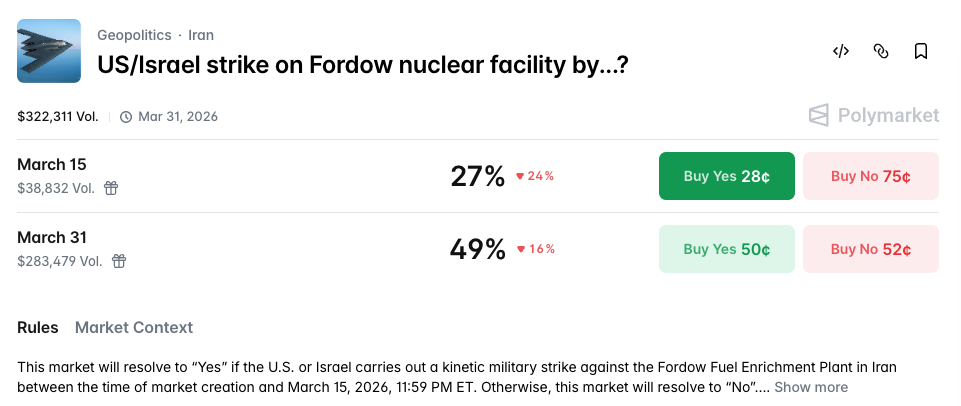
Prediction markets offer liquidity for outcomes like nuclear deal negotiations or leadership transitions. Traders hedge portfolios by buying shares in binary contracts tied to conflict resolutions. Volumes in these categories have surged, reflecting heightened global instability. Analysts note that such tools provide forward-looking data absent in conventional markets. This capability enhances decision-making for commodity traders monitoring the impact of energy prices.
Strategies for Hedging Fed Nominations and Policy Shifts
Federal Reserve nomination processes attract heavy wagering on prediction platforms. Traders bet on candidate confirmations to offset potential interest rate volatility. Contracts price the likelihood of specific appointees, aiding in portfolio rebalancing. Institutional funds incorporate these probabilities into broader economic models. Recent nominations have seen millions in trades, surpassing some equity options volumes.
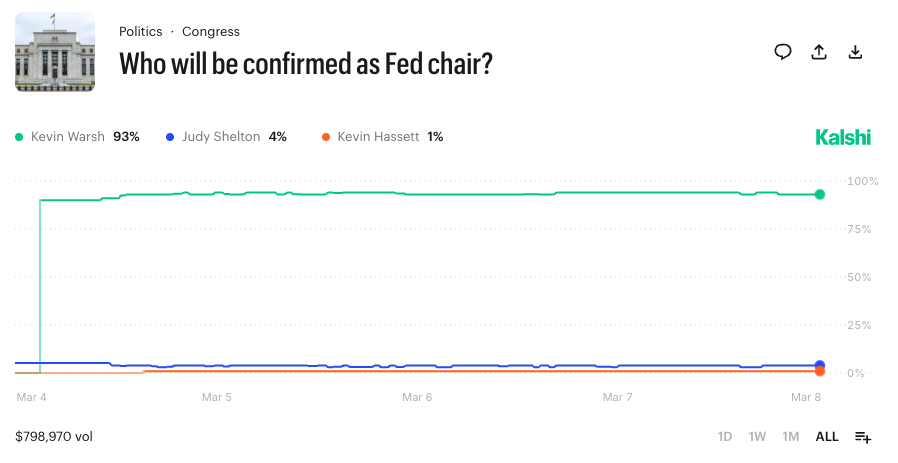
Policy risks, including regulatory approvals, benefit from similar hedging approaches. Sectors like cryptocurrency use markets to gauge the outcomes of legislation. Direct bets on bills passing enable precise risk allocation without broad market exposure. Traders report improved forecasting accuracy through crowd-sourced probabilities. This method isolates variables that traditional derivatives bundle together.
Institutional Adoption and Trading Volume Growth
Institutional investors integrate prediction markets into risk management frameworks. Funds deploy capital to hedge against discrete events like invasions or trade disputes. Volumes have ballooned, often eclipsing betting on major sports events. Data shows billions wagered on geopolitical contingencies alone. This trend signals a maturation beyond recreational use.
Proprietary trading firms leverage these markets for informational edges. Real-time probability updates inform strategies across asset classes. Commodity traders track ceasefire contracts to anticipate price swings. Hedge funds with longer lockup periods excel in timing these risks. Performance metrics reveal superior returns for top geopolitical hedgers.
Trading activity on platforms reflects broader market sentiments. Bets on regime survival or succession provide unique insights. Volumes in 2026 have set records, driven by ongoing conflicts. Institutional participation boosts liquidity, making hedging more efficient. Analysts predict continued expansion as tools evolve.
Case Studies in Geopolitical Hedging
Iran-related markets illustrate effective hedging applications. Traders are betting on the supreme leader’s transition following recent events. Contracts on regime collapse reached 41% probability, guiding energy-sector positions. As highlighted in PolyPunter’s analysis of U.S.-Iran tensions, surging odds influenced global trade strategies. Volumes exceeded $1 billion, demonstrating scale.
Venezuela’s political shifts offered another hedging opportunity. Bets on leadership changes preceded official actions. Traders used markets to mitigate the risks of Latin American exposure. Probabilities shifted rapidly with news, enabling quick adjustments. This case underscores the markets’ role in processing uncertainty faster than traditional channels.
Ukraine ceasefire contracts serve as ongoing hedging instruments. Traders price peace agreements to hedge commodity disruptions. Volumes rival those of major elections. Institutional strategies incorporate these to manage risk diversification. Recent data shows consistent calibration in long-term probabilities.
Comparative Analysis of Hedging Tools
Prediction markets differ from options and futures in event specificity. Traditional instruments often bundle risks, diluting precision. Binary contracts allow pure event exposure. Liquidity in prediction markets supports scalable hedging. Institutional feedback highlights advantages in unpriced scenarios.
Table 1: Comparison of Hedging Instruments
| Aspect | Prediction Markets | Traditional Instruments (Options/Futures) |
|---|---|---|
| Risk Isolation | High – Direct event pricing | Medium – Often bundled with market factors |
| Liquidity for Geopolitical Events | Growing rapidly | Limited or absent |
| Probability Calibration | Crowd-sourced, real-time | Model-based, slower updates |
| Accessibility for Institutions | Increasing with regulatory clarity | Established but rigid |
| Volume Potential | Surpassing sports events | High in liquid markets |
This table illuminates key differences in application. Prediction markets excel at hedging discrete risks. Traditional tools suit broader market exposures. Traders combine both for comprehensive strategies. Data from 2026 show that prediction volumes are leading in niche areas.
Automated Strategies and Insider Dynamics
Automated bots enhance hedging efficiency in prediction markets. Systems like ClaudeBot execute rapid trades in response to geopolitical shifts. As detailed in PolyPunter’s guide to ClaudeBot strategies, these tools capitalize on volatility. Institutions deploy AI for sentiment analysis and arbitrage. This automation amplifies hedging precision.
Insider trading concerns arise in high-stakes geopolitical bets. Suspicious patterns, such as large wagers placed at the last minute, prompt scrutiny. Platforms implement monitoring to maintain integrity. Traders hedge against such risks through diversified positions. Regulatory bodies address these issues to foster trust.
Copy trading emerges as a popular hedging tactic. Mirroring successful wallets yields consistent gains. Geopolitically focused strategies show high win rates. Institutions adapt these for large-scale risk management. Volumes from copy trades contribute to overall market depth. This approach democratizes advanced hedging.
Table 2: Recent Geopolitical Prediction Market Volumes
| Event | Platform | Volume ($M) | Probability (%) |
|---|---|---|---|
| Iran Regime Collapse by June | Polymarket | 500 | 41 |
| Ceasefire in Ongoing Conflict | Kalshi | 300 | 71 |
| Next Supreme Leader Succession | Polymarket | 200 | 14 (Abolished) |
| U.S. Strikes on Iran | Polymarket | 1000+ | 70+ |
| Venezuela Leadership Change | Kalshi | 400 | Varies |
These figures highlight market scale. Volumes surpass traditional sports betting benchmarks. Traders use this data for informed hedging. Probabilities guide allocation decisions. Ongoing conflicts drive sustained activity.
Regulatory Challenges and Market Calibration
Regulatory frameworks evolve to accommodate prediction market hedging. Bodies like the CFTC propose guidelines for geopolitical contracts. Restrictions on sensitive events persist for ethical reasons. Institutions navigate these to implement strategies. Future clarity could accelerate adoption.
Market calibration metrics assess hedging reliability. Brier scores evaluate the accuracy of probability estimates across categories. Geopolitical markets show mixed results, improving as volume rises. Traders favor well-calibrated contracts for risk management. Ongoing backtests refine these tools.
Sector-Specific Applications
Energy sectors hedge via conflict-related contracts. Bets on strikes influence oil price positions. Traders adjust exposures based on market probabilities. This integration enhances sector resilience. Volumes in energy-linked markets grow exponentially.
Technology firms use markets to hedge regulatory risk. Contracts on approvals isolate policy impacts. Crypto entities bet on legislative outcomes. This approach minimizes broad market dependencies. Institutional strategies evolve accordingly.
Future Prospects for Prediction Market Hedging
Experts forecast multibillion-dollar growth in hedging applications. Integration with AI tools accelerates strategy development. Geopolitical uncertainties fuel demand. Institutions allocate increasing portions to these markets. This evolution positions them as core financial instruments.
Challenges like insider risks require robust safeguards. Platforms enhance detection mechanisms. Traders diversify to mitigate manipulations. Regulatory advancements support sustainable growth. Overall, the trajectory points to expanded utility.
Parametric insurance explores prediction market data feeds. Weather and geopolitical categories show promise. Calibration improvements enable broader applications. Institutions test these for complementary hedging. Future innovations could blend markets with traditional insurance.
References
- The Multibillion-dollar shift turning prediction markets into a professional hedging tool
- Betting on geopolitics? Economist explains risks of prediction markets
- How Prediction Markets Evolved Into Sophisticated Risk Management Instruments
- The Multibillion-dollar Shift Turning Prediction Markets Into a Professional Hedging Tool
- Are Prediction Markets the Next Frontier for Investors, or a Regulatory Minefield
- How Prediction Markets Are Turning Geopolitics Into High-Stakes Trades?
- Wall Street Likes the Odds for Prediction Markets as a Useful Tool for Institutional Investors
- The Rise of Geopolitical Prediction Markets
- Where Prediction Markets Fit in Portfolios
- Opinion | The Dangerous Power of Prediction Markets
- By providing a real-time flow of probabilities, these markets …
- The Multibillion-dollar shift turning prediction markets into a …
- Geopolitical risk hedging or timing: Evidence from …
- Geopolitical Betting on U.S.-Iran Tensions
- ClaudeBot and Fast-Loop Strategy
- Prediction markets are pricing geopolitical tail risk
- Geopolitical hedging through prediction markets
- Imagine not hedging your geopolitical risk
- Pattern still hot on geopolitical events
- Confirmed insider patterns on geopolitical markets
- Prediction markets are a great way for hedging
- Using prediction markets for parametric insurance and hedging