Polymarket switched on its first Protocol V2 markets yesterday. The opening batch covers five-minute and 15-minute Up/Down contracts for Solana, XRP, Dogecoin, BNB, Hyperliquid, and Zcash, plus temperature markets for New York City, Warsaw, and Munich. A short Bitcoin trial ran today between 1:00 and 1:15 p.m. ET only. Anything already open on the older contracts stays there; nothing converts automatically.
The team is rolling this out in stages so the new contracts can run next to the existing ones. That means developers and market makers still have to keep both sides working while they wait for Phase 2 details. Polymarket spelled out the first markets and the narrow Bitcoin window in its own post.
Short-Term Crypto Up/Down Markets On The New Contracts
Those five- and 15-minute Up/Down markets for SOL, XRP, DOGE, BNB, HYPE, and ZEC opened at 8:30 a.m. ET on November 23. Each one locks a starting price when the window begins and settles once the clock runs out. Traders buy Up or Down shares that pay $1 if they are right and zero if they are wrong. A dead heat goes to Up under the current rules.
Prices can jump around fast because the windows are so short. Bitcoin’s five-minute markets have already pulled heavy volume on busy days, so the altcoin versions could see similar interest once the books fill up. Market makers supporting the new listings also have to handle different position IDs and approval steps.
Anyone building tools has to check the market version before sending an order. V2 positions sit in their own ledger and use a different signing domain, so code written only for the older contracts will simply miss these markets. The migration guide lists the exact calls needed for balances, splits, merges, and redemptions.
Weather Markets For New York, Warsaw, And Munich
Temperature markets for New York City (highest), Warsaw (highest), and Munich (lowest) landed on Protocol V2 the same day. Traders can take a view on whether the temperature hits a stated level. The modular oracle layer handles the final number and can pull from different data sources.
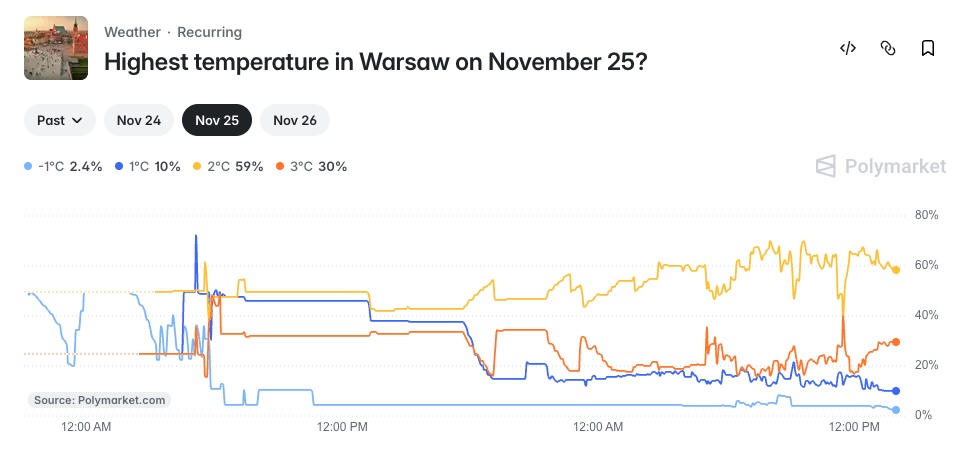
These weather contracts started life on the new system, so they skip the dual-path issues that still apply to older markets. The three cities sit in different time zones, which gives developers a useful live test of multi-market support right away.
Bitcoin Trial And Remaining Phases
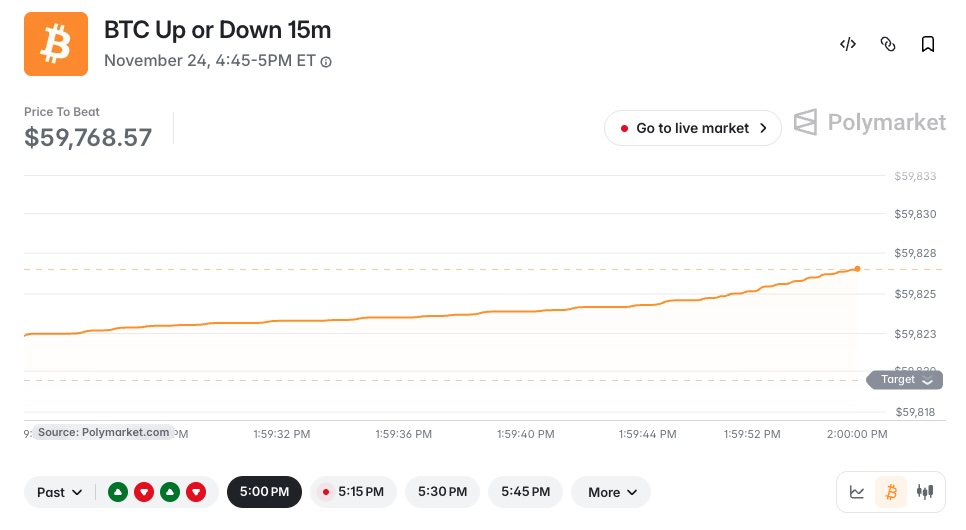
Bitcoin’s five-minute Up/Down markets used Protocol V2 for just one 15-minute stretch today, from 1:00 to 1:15 p.m. ET. Outside that window, they stayed on the old contracts. The brief test let the team watch trading and settlement on the busiest asset before opening the door wider.
Phases 2 and 3 are still unannounced. Updates will appear on the migration page and from Polymarket Developers on X. Later stages move forward only if the current phase shows clean trading, correct settlement, proper reward scoring, and enough liquidity. Some markets, including Thanksgiving-week sports, remain on the prior contracts for now.
What Changes Under Protocol V2
Protocol V2 puts every position in one ERC-1155 contract and uses pUSD as the only collateral. A shared exchange and router handle the trades, and an OracleAggregator can tap sources like UMA or Chainlink. Position IDs now carry the market type and outcome details, reducing extra lookups.
Approval and balance checks work differently, so existing tools need updates before they can touch V2 markets. Several firms audited the contracts, and a bug bounty is still open for critical issues. For traders, the screen looks the same.
The design includes room to move positions, collateral, and resolutions across chains later, but that piece is not switched on yet. Until it is, both the old and new contracts keep running on Polygon.
What Comes Next For Traders And Developers
Traders can already hit the short-term altcoin Up/Down windows and the three city temperature markets. The frequent resets suit anyone who likes quick decisions, and the weather contracts add a different kind of outcome under the same new setup. How these early listings price and settle will show how the updated contracts actually behave with real money.
Developers still need to finish dual-support work and test against the live Phase 1 markets. The migration guide has the contract addresses, signing domains, and call signatures. When Phase 2 details drop, more categories will follow the same side-by-side pattern.
Liquidity on the new contracts will determine how quickly spreads tighten. Watching the first wave also shows how quickly traders move activity over to Protocol V2. The staged launch keeps the existing markets running without interruption while the rebuilt contracts pick up the new listings.
References
- Polymarket official announcement of first V2 markets
- Polymarket Protocol V2 migration overview and rollout timeline
- The Defiant report on phased Protocol V2 market rollout
- The Block coverage of Protocol V2 design and pUSD collateral
- Polymarket Developers reminder on Phase 1 start