Prediction Market Platforms Capture Instant Volatility as Oil Plunges Below $100 on Ceasefire News
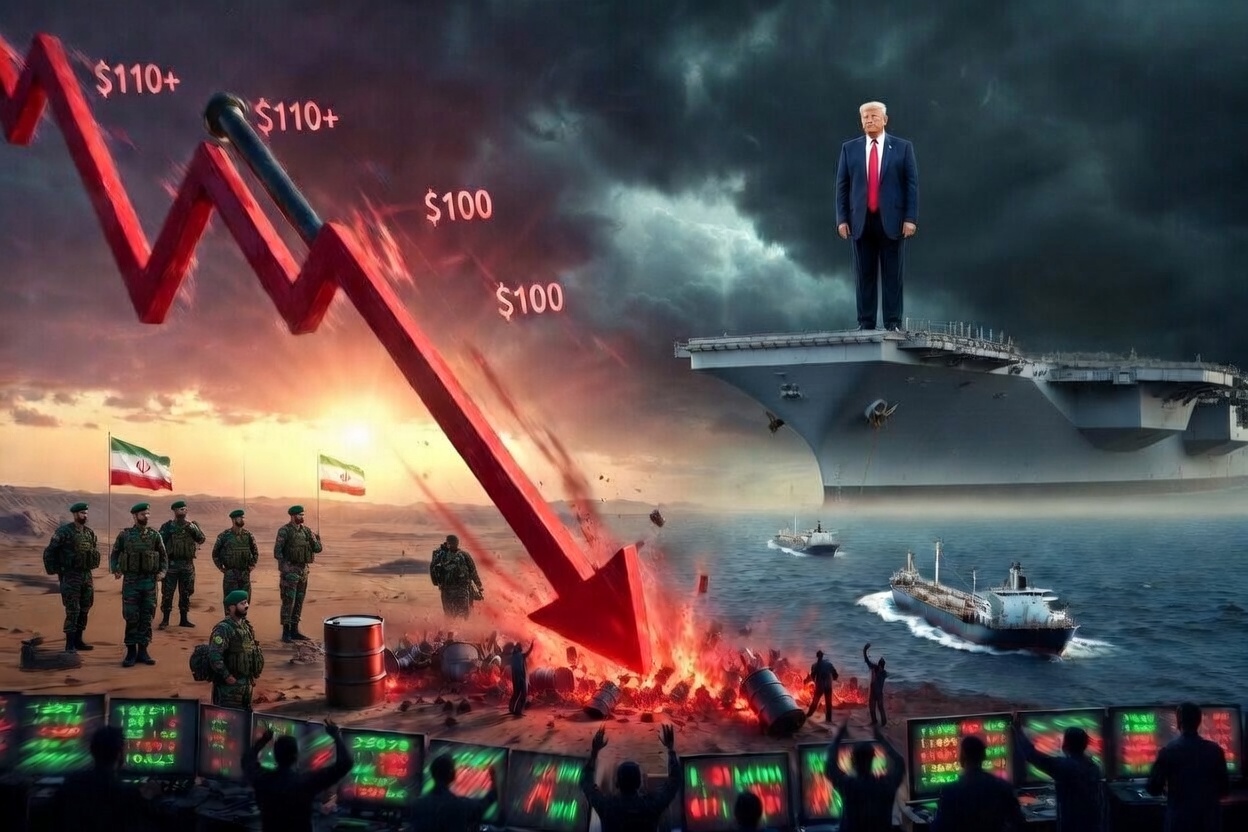
Polymarket and Kalshi traders scrambled to adjust positions the instant President Trump announced a two-week ceasefire with Iran. Oil prices plunged below $100 per barrel in minutes, creating wild swings that mirrored the chaotic back-and-forth of ongoing Middle East tensions. The rapid price drop sent shockwaves through global energy markets while prediction platforms lit up with frantic trading activity.
This latest ceasefire development follows weeks of escalating threats over the Strait of Hormuz and soaring crude prices that had climbed above $110. Trump revealed productive conversations that led to a temporary halt in direct military engagement, easing immediate fears of prolonged supply disruptions. Traders on both Polymarket and Kalshi responded by flooding ceasefire and oil-linked markets with fresh capital, driving probabilities to shift dramatically within hours.
The event underscores how quickly prediction markets process breaking geopolitical news.
Polymarket Oil Price Markets Flip as Trump Ceasefire News Triggers Sharp Declines
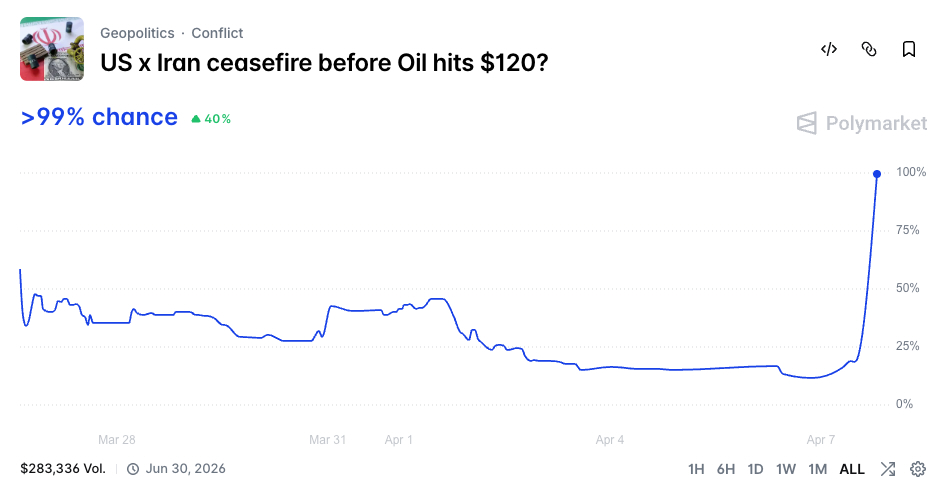
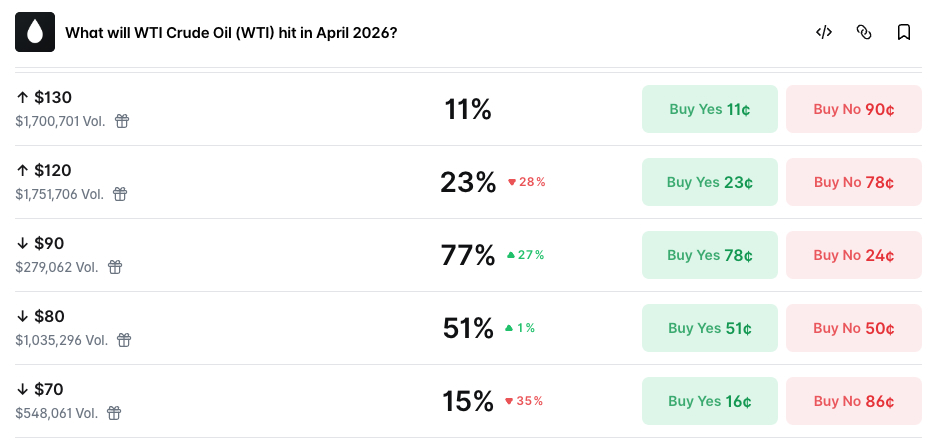
Polymarket traders adjusted the “US x Iran ceasefire before oil hits $120” market to near-certainty almost immediately after the announcement. The platform recorded massive volume spikes as participants rushed to lock in gains from earlier pessimistic bets. Oil futures mirrored the shift, with Brent crude dropping from recent highs near $112 to around $99, and WTI falling sharply to the mid-$80s.
Kalshi participants mirrored the frenzy in related energy contracts, pushing probabilities for normalized shipping through key routes higher in anticipation of the two-week pause. The platforms handled the surge without interruption, showcasing their ability to absorb intense trading pressure during major news events. This coordination between announcement timing and market adjustments created a feedback loop that amplified the price pendulum effect.
Traders who positioned early on ceasefire outcomes captured substantial returns as the news validated their bets. The event also drew scrutiny to unusually timed positions placed just before the public reveal, raising questions about information flow in these fast-moving environments. Polymarket’s broader US-Iran ceasefire timeline market continues to host over $143 million in open interest.
Key Oil Price Movements Tied to Recent Ceasefire Headlines
| Date | Event | Oil Price Reaction (WTI/Brent) | Market Impact |
|---|---|---|---|
| March 25, 2026 | Trump posts on productive Iran talks | WTI drops to $86; Brent falls to $99 | Over $21 million wagered on ceasefire outcomes |
| April 6, 2026 | Reports of 45-day ceasefire negotiations | Prices fluctuate 3-5% intraday | Spike in Hormuz-related markets |
| April 7, 2026 | Two-week ceasefire announcement confirmed | Prices plunge below $100 threshold | $946,000+ in related deadline markets |
| April 7, 2026 | Hormuz deadline extension speculation | Volatile swings continue | High activity in ceasefire-by timelines |
This table illustrates the tight correlation between ceasefire developments and oil price swings. Each row shows how specific announcements trigger immediate reactions across both physical markets and prediction platforms. Participants use these patterns to inform rapid repositioning during unfolding events.
Trump Ceasefire Announcement Reshapes Oil Risk Calculations on Prediction Platforms
President Trump’s revelation of the two-week ceasefire agreement follows intense diplomatic efforts involving regional mediators. The temporary de-escalation eases pressure on global oil supply chains that had faced disruption risks from Hormuz tensions. Prediction market participants now debate whether the pause leads to a permanent resolution or simply buys time amid ongoing negotiations.
Polymarket lists leading outcomes for full ceasefire resolution, carrying high probabilities, while shorter windows reflect ongoing uncertainty. Kalshi shows a gradual increase in shipping recovery odds over the coming months. Both platforms reflect the uncertainty that keeps energy traders engaged and active during this fluid period.
The announcement also influences related markets in response to military actions and diplomatic milestones. Traders incorporate the latest developments into broader portfolios that span geopolitics and commodities. This interconnected trading activity sustains high volume even as the immediate price pendulum begins to stabilize.
Participants on Polymarket and Kalshi are maintaining vigilance as the two-week window opens new possibilities for extended talks. The platforms deliver continuous updates, allowing traders to refine positions in response to evolving diplomatic signals. This real-time capability distinguishes them during periods of heightened geopolitical sensitivity.
Community Engagement Surges Amid Oil Price Swings and Ceasefire Market Activity
Trading communities buzz with discussions about the latest price movements and their implications for energy markets. Users share screenshots of shifting probabilities and debate the ceasefire’s sustainability. The viral clip continues circulating, reinforcing the platforms’ reputation for capturing news faster than legacy financial systems.
Polymarket traders who anticipated the announcement now monitor follow-up developments that could extend or end the temporary truce. Kalshi participants focus on secondary effects such as shipping lane recovery and longer-term oil supply forecasts. Both groups contribute to robust liquidity that supports accurate crowd-sourced pricing.
The event draws fresh attention to how prediction platforms process complex international stories. Traders celebrate the speed and transparency that allow them to act on unfolding events with confidence. This combination of speed and accessibility fuels ongoing interest in oil-linked and ceasefire markets.
Polymarket retains relevance through high-volume contracts tied directly to Trump’s announcements and oil benchmarks. Kalshi complements the ecosystem by offering accessible entry points for participants tracking energy volatility. Together, they create an ecosystem where news translates instantly into tradable opportunities.
Oil prices continue exhibiting pendulum-like behavior as markets digest the two-week ceasefire framework. Prediction platforms remain at the center of this action, delivering live insights that keep participants engaged and informed. The latest chapter in this saga demonstrates the enduring appeal of rapid-response trading during major geopolitical shifts.
References
- US-Iran Ceasefire Before Oil Hits $120? – Polymarket
- US x Iran Ceasefire by…? – Polymarket
- Large Polymarket, Wall Street Bets on Trump’s War News Under Scrutiny – Al Jazeera
- Trump Goes From ‘Obliterate’ Iran To ‘Productive Conversations’ – Yahoo Finance