In a stunning display of foresight—or perhaps something more sinister—anonymous traders on Polymarket placed hundreds of large bets that accurately foresaw US military strikes on Iran mere hours before the events unfolded. President Trump has been threatening such actions for several weeks, and lining up a military force in the Middle East that heavily indicated an attack would be coming. The odds leaned noticeably toward a military strike at some future date. We’re now discussing the specific timing.
These wagers, totaling substantial profits, have ignited widespread alarms about potential insider trading and the leakage of classified information. As the dust settles from the geopolitical upheaval, questions swirl around how such precise predictions could occur, drawing sharp scrutiny from lawmakers and analysts alike.
The intrigue centers on bets that netted over $1.2 million in profits for a select few accounts, with one trader alone pocketing more than $550,000. This episode not only highlights the high-stakes nature of wagering on global conflicts but also raises profound ethical and security concerns. Could these profits stem from privileged access to sensitive data? The implications extend far beyond financial gains, touching on national security and the integrity of information flows in times of crisis.
Polymarket Iran Strike Predictions: The Bets That Paid Off Big
The bets in question focused on contracts tied to the timing of US military actions against Iran. Traders wagered on whether strikes would occur by specific dates, with volumes reaching an astonishing $529 million across related contracts. Hours before the strikes commenced, a flurry of activity saw large sums poured into “yes” positions, betting affirmatively on imminent action.
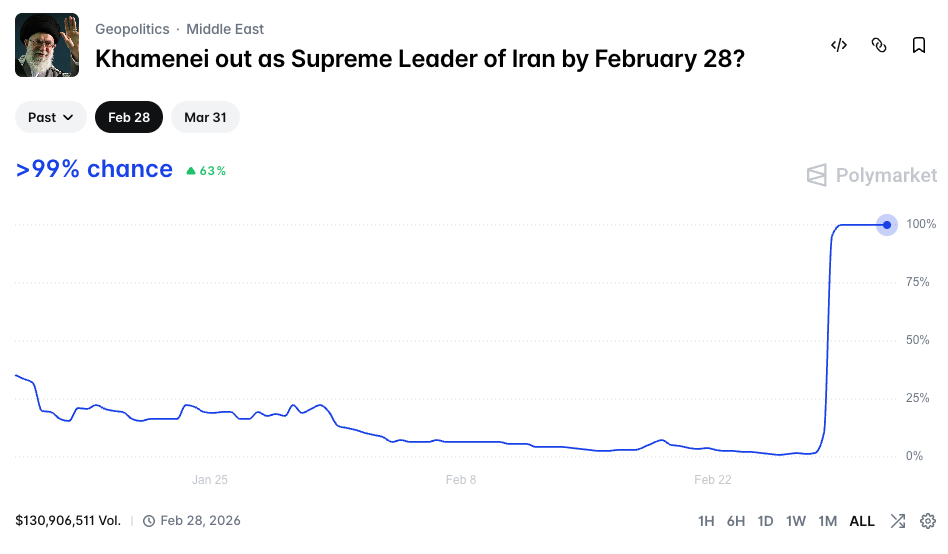
One standout account, operating under the pseudonym “Magamyman,” placed bets that yielded approximately $553,000 in profits. According to reports, this trader bet heavily on the ouster of Iran’s Supreme Leader, Ayatollah Ali Khamenei, just before an Israeli strike resulted in his death. The timing was impeccable, with bets executed when the odds suggested only a slim chance of success, yet they cashed in handsomely as events aligned perfectly.
Beyond individual triumphs, analytics firm Bubblemaps identified six anonymous accounts that collectively reaped around $1.2 million. These accounts, freshly created in the weeks leading up to the strikes, funded their positions shortly before the military operations began. Such patterns have fueled speculation that these traders possessed advanced knowledge, potentially from sources within government or military circles.
| Account Type | Bet Amount | Profit Realized | Timing Before Strikes | Source of Suspicion |
|---|---|---|---|---|
| Magamyman | $87,000 initial large bet | $553,000 | 71 minutes | Low odds at placement (17% chance), rapid value surge |
| Six Anonymous Accounts (Collective) | Over $100,000 combined | $1.2 million | Hours to days | Newly created wallets, exclusive focus on strike timing |
| Other Large Bettors | Hundreds of $1,000+ bets | Up to $855,000 total estimated | Preceding days | Volume surge indicating coordinated or informed action |
Insider Trading Allegations in Prediction Markets: Unpacking the Evidence
The allegations of insider trading stem from the uncanny accuracy and timing of these bets. Blockchain analytics provided by firms like Bubblemaps reveal that the profitable accounts were often funded just in time to capitalize on the unfolding events. For instance, one account turned a $26,000 wager into over $200,000 in profits, betting on the exact date of February 28 for the strikes.
Experts point to the anonymity afforded by cryptocurrency-based platforms as a double-edged sword. While it enables broad participation, it also obscures the identities of those who might exploit non-public information. Reports indicate that these trades occurred amid a broader $150 million wager on Khamenei’s removal, amplifying the stakes and the scrutiny.
In a detailed analysis, Reuters reviewed Polymarket data showing a surge in activity right before the strikes, with profits materializing almost immediately after. Similarly, Bloomberg highlighted how new wallets drew notice for their exclusive focus on these contracts, suggesting a targeted strategy rather than speculative gambling.
The evidence, while circumstantial, paints a picture of potential leaks. If classified details were indeed used, it could compromise operational security, turning prediction platforms into unwitting conduits for sensitive intelligence.
Note: these are the kind of sudden rises in specific bets raise fraud alarms on sports betting platforms. When a certain kind of player-in-game performance bet (prop bet) averages X-dollars per game in volume, then seemingly randomly before a game that same type of bet spikes to 4X, the passive alarm bells ring for suspicious activity. Platforms such as DraftKings and FanDuel will investigate this betting pattern themselves as well as reporting this activity to authorities. This is how recent arrests in relation to multiple NBA players occurred. Prediction markets do the same with AI analzying for unexpected spikes and dips from potentially coordinated or tipped-off traders.
War Prediction Profits: Ethical Dilemmas and Security Risks
The profits from these bets have sparked a broader debate on the ethics of wagering on military outcomes. Critics argue that such activities incentivize the misuse of confidential information, potentially endangering lives and national interests. The allure of substantial gains—evidenced by the $1.2 million haul—could tempt insiders to prioritize personal profit over duty.
Security experts warn that patterns in betting volumes might even signal impending actions to adversaries, inadvertently tipping off targets. In this case, the $529 million traded on strike timing contracts represented a massive aggregation of predictions, which, if monitored, could provide real-time insights into expected developments.
One compelling aspect is the psychological draw: the thrill of outsmarting the odds with insider knowledge. Yet, this comes at a cost, eroding trust in institutions and highlighting vulnerabilities in information handling. As one analyst noted in an NPR report, these platforms “invite people with access to classified information to profit on lethal military operations.”
Lawmakers Respond to War Profiteering Claims in Betting Platforms
The fallout has prompted swift reactions from policymakers. Democratic lawmakers, in particular, have voiced outrage, calling for bans on wagers related to military actions. Senator Chris Murphy described the situation as “insane” and pledged to introduce legislation to outlaw such activities, emphasizing how individuals close to power might be profiting from war and death.
Representative Mike Levin echoed these sentiments, pointing to the Magamyman account’s $515,000 daily profit as evidence of foul play. These calls align with broader pushes for regulatory oversight, as seen in ongoing discussions at the Commodity Futures Trading Commission (CFTC).
In a bipartisan twist, concerns transcend party lines, with analysts from various outlets like CBS News noting the need for safeguards against insider exploitation. The response underscores a growing consensus that unchecked betting on conflicts poses unacceptable risks.
Classified Leaks Betting Platforms: Echoes from Past Incidents
This is not an isolated occurrence. Similar suspicions arose in January when an anonymous trader netted over $400,000 betting on the arrest of Venezuelan leader Nicolás Maduro, timed suspiciously close to the event. In another case, Israeli authorities charged individuals for using classified information to bet on attacks during a prior conflict with Iran.
These precedents, detailed in reports from Yahoo Finance, illustrate a recurring pattern where prediction platforms become arenas for profiting from privileged knowledge.
This comparative table reveals a troubling trend, where profits from geopolitical bets consistently raise red flags, prompting varied but intensifying responses.
Regulatory Scrutiny Prediction Trades: The Path Forward
As scrutiny mounts, regulatory bodies like the CFTC are advancing proposals to govern these platforms more stringently. The focus includes jurisdiction over event contracts and measures to detect insider trading. Platforms themselves face pressure to implement better monitoring, though anonymity remains a core feature.
Analysts from The Wall Street Journal suggest that without robust rules, such incidents will persist, potentially undermining public confidence. The future may see a balance between innovation and oversight, ensuring that prediction tools serve informative purposes without becoming vehicles for exploitation.
Ethical Concerns War Wagers: A Call for Reflection
At the heart of this saga lies a fundamental question: Should wagers on war be permitted at all? The enticing prospect of profits from conflict predictions clashes with moral imperatives, especially when lives are at stake. This episode serves as a stark reminder of the intersections between finance, technology, and geopolitics.
As investigations unfold, the narrative continues to evolve, captivating observers with its blend of mystery and high drama. Whether these bets were the result of luck, skill, or something more clandestine remains to be seen, but the conversation they have sparked is unlikely to fade soon.