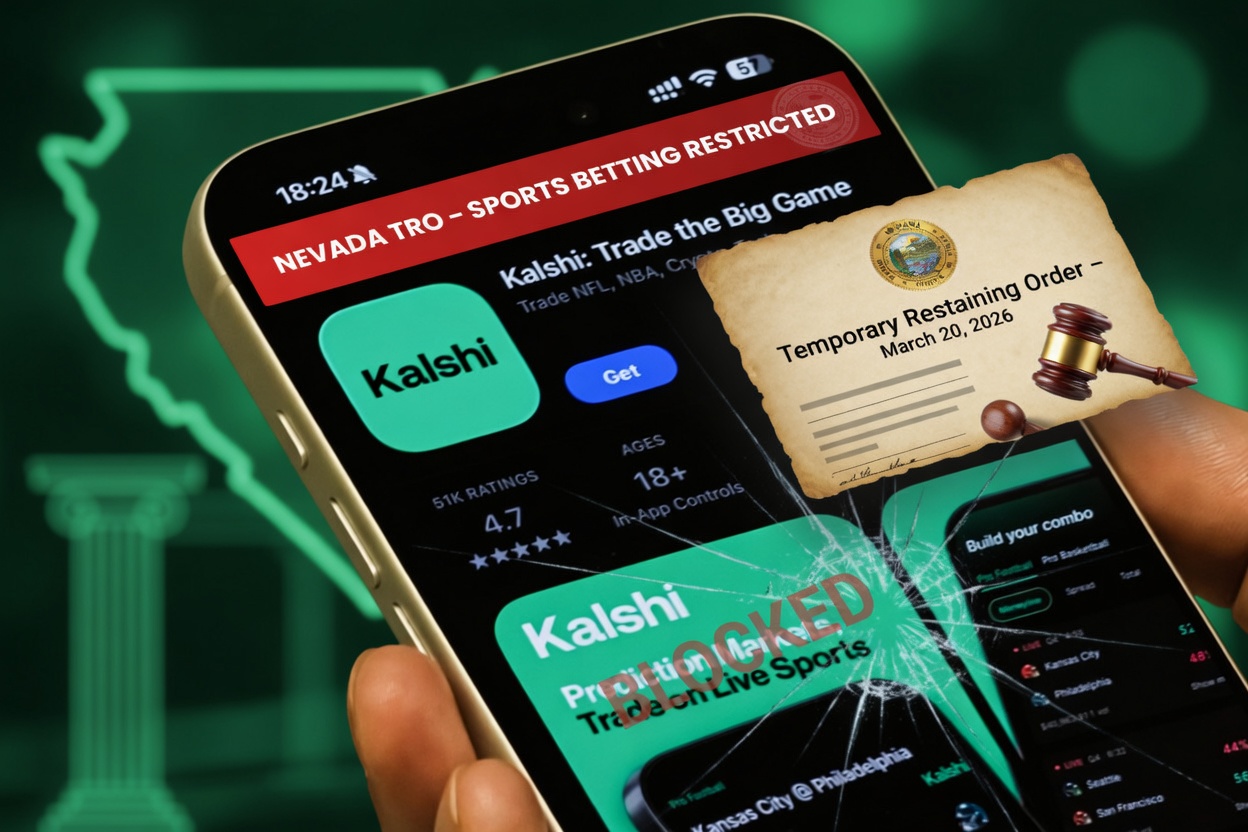
Traders continue to place wagers on sports-event contracts through the Kalshi app despite a court order restricting those markets in the affected jurisdiction. Users can work around the Temporary Restraining Order (TRO) by simply updating their account profile address to an out-of-state address. This workaround relies entirely on self-reported registration data rather than real-time geolocation verification.
The temporary restraining order issued on March 20 requires Kalshi to halt the offering of sports, entertainment, and election-related contracts to users physically present in the jurisdiction. Platform operators must prevent wagers from individuals located in their jurisdictions. Early testing shows that changing the profile address restores full access to the restricted sports markets within minutes, often with no additional identity checks.
Legal experts question whether this registration-based method satisfies the court’s geographic requirements. Gaming lawyer Daniel Wallach highlighted the potential gap directly. He pointed out that the order focuses on physical presence rather than the address listed on file.
Kalshi Traders Bypass Restrictions Through Simple Profile Update
One user physically located in the jurisdiction confirmed successfully betting on an MLB game on March 26 after switching the profile address to an out-of-state location. The update required no extra verification steps. Access to the previously blocked sports markets returned immediately.
Global Gaming Business editor Roger Gros reported the opposite experience while traveling. His account remained locked because the registered address was in a restricted jurisdiction. Gros shared his experience, noting that Kalshi enforces limits solely through static profile information.
Analysts describe the method as practical yet potentially incomplete for full compliance. Kalshi has maintained that implementing full real-time geolocation systems imposes high costs and technical burdens. The company implemented the restriction after the court ruling by displaying a notice citing the order and affirming its commitment to legal adherence while preserving operations elsewhere.
Traders report the workaround spreads quickly through online communities. Many test it successfully and share results. This rapid adoption keeps sports event contract trading active despite the explicit court directive.
Registration Data vs. Real-Time Geolocation: A Side-by-Side Comparison
| Method | How It Works | Platform Advantages | Compliance Challenges | User Impact |
|---|---|---|---|---|
| Account Registration Data | Users can easily change their address; it does not verify the current physical location | Low cost, easy to implement, minimal disruption to nationwide access | Seamless for compliant users; harder to circumvent, but may limit legitimate travel-based trading | Quick bypass possible; out-of-state visitors may face unintended blocks |
| Real-Time Geolocation | Uses IP address, device GPS, or advanced tracking tools to confirm location instantly | Accurately blocks access based on physical presence; stronger legal alignment | Higher expense, technical complexity, potential privacy concerns | Seamless for compliant users; harder to circumvent but may limit legitimate travel-based trading |
Legal Experts Question Whether Current Approach Meets Court Order Demands
Wallach posted on X that reliance on easily changeable addresses could amount to a violation of the temporary restraining order. He emphasized that the order prohibits offering contracts to persons physically present in the jurisdiction, regardless of their account details. A contempt motion remains possible if the court agrees.
Kalshi notified affected users via email and app alerts shortly after the March 20 ruling. The message stated the company disagreed with the restrictions, yet would comply as a law-abiding operator. It emphasized confidence in its broader legal position and the right to offer the same products in other jurisdictions.
Regulators maintain that event contracts on sports outcomes constitute unlicensed wagering activity. The state gaming control board secured the order to protect licensed operators and enforce standards. Platform executives counter that federal oversight under the Commodity Futures Trading Commission authorizes their model.
Analysts watch closely as this case tests the boundaries between federal derivatives rules and state gaming authority. The outcome could shape enforcement strategies across multiple jurisdictions. Traders remain active, demonstrating the platform’s appeal even with partial limits in place.
Kalshi’s Official Stance and Implementation Timeline
Critical Milestones in the Kalshi Restriction Case
| Date | Event |
|---|---|
| March 20, 2026 | Court issues 14-day temporary restraining order blocking sports, entertainment, and election contracts (Read the TRO) |
| March 22, 2026 | Kalshi blocks markets and sends user notifications citing the order |
| March 23-24, 2026 | Reports emerge of users bypassing blocks via address changes; industry tests confirm pattern |
| March 26, 2026 | Users in the jurisdiction successfully place sports bets after profile updates (Gambling Insider report) |
| April 3, 2026 | Scheduled hearing on request for permanent injunction |
The timeline reveals a swift initial response, followed by persistent gaps in access. Kalshi continues allowing sales of existing positions while preventing new purchases in restricted categories for compliant accounts. This selective enforcement preserves some trading volume.
Investigative reports found that certain politics-related markets labeled under different categories remained available in some cases. Such edge cases add complexity to the compliance picture and fuel ongoing discussions about market categorization.
Implications for Broader Event Contract Trading Industry
This episode underscores the tension platforms face when scaling innovative trading tools amid varying state rules. Users value the simplicity of profile-based access, which supports rapid participation without cumbersome location checks. Regulators, however, demand precision that matches the physical reality of wagering activity.
Traders discover these workarounds in real time and share them across forums. The ease of the bypass highlights both the platform’s user-friendly design and the enforcement challenges it creates. Advocates for open markets argue that overly strict measures could stifle growth and innovation in event-based trading.
Legal teams prepare arguments for the April 3 hearing that could extend or lift the restrictions. A permanent injunction would mark a significant development and encourage similar actions elsewhere. Federal lawmakers have introduced bills targeting sports-event contracts on these platforms, adding national pressure to the debate.
Industry insiders emphasize that clear rules benefit everyone. Platforms gain certainty for investment and expansion while regulators protect licensed operators and consumers. The current reliance on registration data buys time but may not withstand closer judicial scrutiny.
For a detailed breakdown of the initial court order and its impact, watch this analysis from SportsGrid.
Users who tested the profile change report seamless experiences and quick resolution times. Platform volume in unrestricted categories holds steady as attention shifts to the upcoming hearing. Analysts predict heightened scrutiny on all restriction methods as more jurisdictions examine similar models.
The workaround keeps sports betting lively on Kalshi for now. It also spotlights the need for refined tools that satisfy both innovation and oversight. Traders embrace the flexibility while regulators prepare to close perceived gaps. The April hearing will likely clarify expectations and set a precedent with far-reaching impact.
References
- Nevada Users Still Betting Sports on Kalshi – Gambling Insider (March 27, 2026)
- Kalshi Restricts Nevada Contract Markets After State Court Order – iGaming Business (March 24, 2026)
- Daniel Wallach on X Regarding Kalshi Access Workaround
- Roger Gros on LinkedIn: About Kalshi Account Restrictions
- Temporary Restraining Order (March 20, 2026)
- Kalshi Has Been Temporarily Banned in Nevada – WIRED
- Kalshi Gets Temporary Nevada Ban – CoinDesk
- Nevada Wins Temporary Ban on Sports Betting on Kalshi – The Wall Street Journal
- Online Prediction Market Kalshi Temporarily Banned in Nevada – The Nevada Independent
- Kalshi Temporarily Banned From Nevada Sports Betting – YouTube