David Wallace-Wells drops a bombshell in his New York Times opinion piece, exposing the dark underbelly of prediction markets. The op-ed titled “The Casino That’s Eating the World” rips apart how these platforms warp society into a nonstop gambling frenzy.
Wallace-Wells builds a powerful case that prediction markets train people to treat the future like a casino floor instead of a shared civic space. This potentially dangerous mindset replaces thoughtful debate with cold profit calculations. The analysis hits hard and sparks immediate debate for reform across the nation.
Prediction Markets Geopolitical Betting Fuels Profits That Ignite Global Outrage
One trader operating under the username Magamyman pockets a staggering $553,000 by correctly calling the ouster of Ayatollah Ali Khamenei mere hours before U.S.-Israeli strikes end his life, as detailed in Wallace-Wells’ piece and reported by NPR. Massive trading volumes surge past $150 million on contracts tied to the deadly operation, with Reuters reporting $529 million in related strike-timing bets. Wallace-Wells spotlights these wins as chilling examples of how prediction markets societal impact turns tragedy into personal jackpots.
Volumes are exploding further as participants wager hundreds of millions on every twist in the Iran conflict. Critics on platforms flag the suspicious timing, fueling accusations of insider advantages. This op-ed condemns this transformation of human suffering into tradable commodities that enriches a fortunate few.
Prediction markets reshape global crises into instant moneymaking schemes before leaders even address the fallout. Individuals cash in huge sums while the government processes lag behind the frenzy. Society now confronts the ethical nightmare that Wallace-Wells exposes with unflinching clarity.
Watch this PBS NewsHour segment that dives deep into why prediction markets keep thriving amid rising scrutiny and ethical alarms.
Explosive Profits from Betting on International Crises Highlight the Dangers of Prediction Markets
| Event | Reported Profit | Trading Volume |
|---|---|---|
| Ayatollah Khamenei Ouster | $553,000 by Magamyman | Over $150 million |
| Iran Military Strikes | $2.14 million combined | $529 million (per Reuters) |
| Timing of Key Operations | Multiple six-figure payouts | Hundreds of millions surging |
This table reveals some examples of winnings and activities that Wallace-Wells condemns in his piece. Such numbers drive home the prediction markets’ societal impact that demands immediate public attention. Traders chase fortunes while the real world processes loss and chaos.
Prediction Markets Entertainment Betting Turns Hollywood into Another High-Stakes Casino Floor
Wallace-Wells shines a harsh light on contracts that let traders bet on Ryan Gosling’s “Project Hail Mary” hitting 93 percent or higher on Rotten Tomatoes via platforms like Kalshi. Shares trade at 92 cents with frenzy building around critical scores for the sci-fi blockbuster. This setup converts artistic judgment into pure financial speculation, distorting cultural conversations.
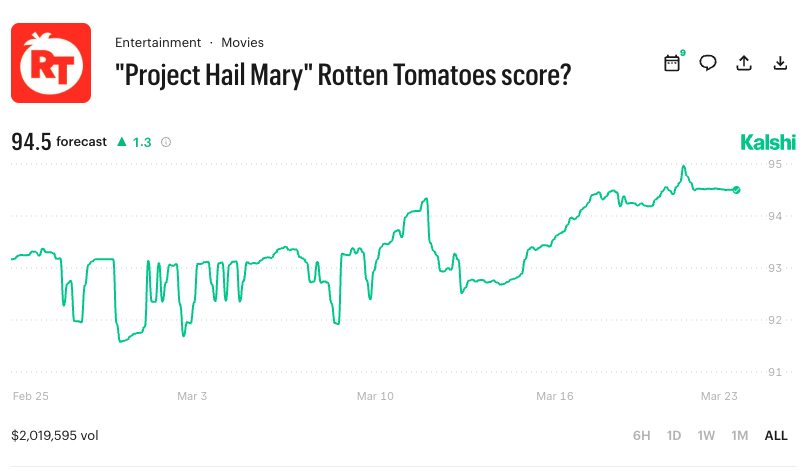
Filmmakers and fans alike navigate a landscape where review aggregates carry massive betting implications. Participants pour money into these markets with the same passion once reserved for box office predictions. The op-ed exposes how prediction markets societal impact cheapens creativity and turns art into just another gamble.
The dangers of prediction markets creep into every corner of entertainment, according to sharp analysis. Audiences now view cultural milestones through the lens of forecasting profit potential. Wallace-Wells challenges everyone to reject this shift that prioritizes odds over genuine human connection. The data paints a troubling picture of culture reduced to contracts. Readers feel the urgency to push back against this trend.
Prediction Markets Geopolitical Betting Effects Erode Democracy and Public Trust at Alarming Speed
Markets spit out perceived truths at lightning pace and lock in narratives long before facts fully emerge. Wallace-Wells demonstrates how traders betting on events grant false legitimacy that sways policy and opinion. Citizens watch helplessly as financial stakes override thoughtful governance.
The op-ed links these forces to the steady breakdown of institutional credibility. Speed becomes everything when betting activity cements stories ahead of real deliberation. The societal impact of prediction markets here creates a shortcut that bypasses essential democratic safeguards.
Analysts highlight the troubling pattern where profits from crises shape collective memory. Wallace-Wells crafts an irresistible argument for reining in unchecked growth. The world stands at a tipping point where gambling logic threatens foundational values.
Ethical Firestorm Grows as Traders Cash In on Tragedy Through Prediction Markets
Insider edges and perfectly timed bets spark widespread fury among lawmakers and citizens. Wallace-Wells amplifies demands for tough rules that stop the exploitation of sensitive details. The piece passionately insists that some events must remain off-limits to wagering.
Every day, people quit potentially stable jobs to chase fortunes on global headlines and cultural metrics. These traders achieve wealth through contracts tied to death and destruction. The op-ed forces readers to question whether such incentives truly serve humanity or simply line pockets.
Prediction markets’ societal impact breeds addiction and emotional numbness, according to the powerful critique. Wallace-Wells connects the dots to larger societal decay fueled by speculation. The warnings resonate deeply and inspire action.
Prediction Markets Societal Impact Spreads Like Wildfire and Demands Immediate National Response
Cable networks flash live betting odds alongside serious news reports, normalizing the gambler’s worldview. Wallace-Wells warns that this fusion muddies the line between facts and speculation in toxic ways. Viewers absorb headlines filtered through market probabilities instead of context.
The op-ed invites everyone to picture life without constant wagers on every headline. Citizens reclaim power when they choose deliberation over quick financial calls. The dangers of prediction markets infiltrate every sector, as Wallace-Wells proves through gripping cases.
Society faces the hard truth that these platforms speed up damaging patterns in how people process information. The author’s passionate delivery motivates deep reflection on future consequences. Real change stays within reach for those who heed the alert.
Wallace-Wells Issues Passionate Call to Reject the Gambling Mindset Devouring Public Life
Prediction markets condition users to see uncertainty purely as a path to personal riches. Wallace-Wells counters with a compelling vision centered on citizenship and collective duty. The op-ed serves as a rallying cry against the casino culture swallowing meaningful engagement.
Tragic events lose gravity when reduced to payout calculations and settled contracts. Cultural touchstones suffer the same diminishment under constant speculative pressure. The piece ties every thread into a unified warning that strikes a chord with rising unease.
Wallace-Wells frames the societal impact of prediction markets as a fight worth winning. Bold steps today can protect vital parts of human experience from total commodification.
The author contributes a landmark text to debates on technology versus human values. He argues the dangers of prediction markets require ongoing vigilance as adoption accelerates. Wallace-Wells offers essential reading for anyone seeking clarity on these fast-moving issues.
References
- The Casino That’s Eating the World – The New York Times (March 23, 2026)
- Someone made $553K on a Polymarket bet on Khamenei’s death – NPR
- Prediction market bets on Iran strikes stoke insider trading concerns – Reuters
- ‘Magamyman’ Polymarket trader makes over $500K on Iran bets – USA Today
- Why prediction markets are thriving – and facing scrutiny – PBS NewsHour
- Are prediction markets like Kalshi and Polymarket out of control? – Top Comment Podcast