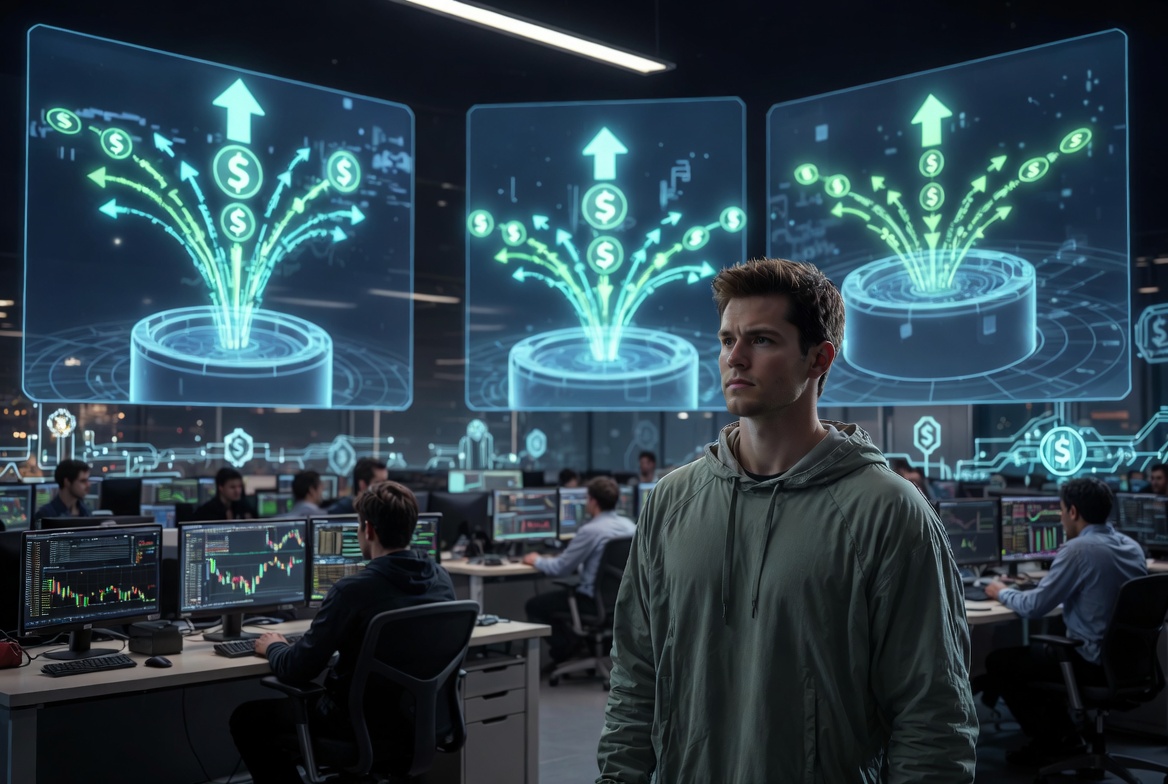

A former Stanford University student has captured widespread attention in financial technology circles. The individual faced expulsion for incorporating artificial intelligence in a thesis focused on adversarial prediction markets. This academic controversy led to the development of an autonomous trading bot. The bot generated $2.65 million in profits over 30 days.
The story began during the student’s final year at the institution. University officials discovered the use of advanced AI tools in composing the thesis document. The work examined how adversarial elements influence market dynamics in prediction environments. Administrators deemed this approach a violation of academic standards. The decision sparked debates about the evolving roles of AI in scholarly pursuits.
Adversarial elements in prediction environments, often characterized by intentional manipulations or simulated opposing forces (such as in Generative Adversarial Networks or adversarial training), influence market dynamics by forcing models to learn more robust features, increasing volatility, and necessitating advanced risk management techniques. These elements, while potentially enabling “Black Tuesday” type attacks, are primarily used to enhance predictive accuracy, simulate extreme market conditions, and improve the resilience of financial models against noise and data imbalances.
Expulsion followed a formal review process. The student maintained that AI assistance enhanced rather than replaced the original analysis. Critics within the academic community argued for stricter guidelines on the use of technology. Supporters viewed the incident as a sign of outdated policies failing to adapt to modern tools. The event drew comparisons to broader discussions in education about AI integration.
The Thesis on Adversarial Prediction Markets That Changed Everything
The thesis delved into complex interactions within adversarial prediction markets. Researchers define these as systems in which participants employ strategies to manipulate outcomes for personal gain. The work proposed models for detecting and countering such behaviors using machine learning. Key sections analyzed how psychological factors affect trader decisions in volatile settings. The document included simulations demonstrating potential exploits in market structures.
One chapter focused on liquidity flows as critical indicators of market health. The analysis showed how sudden shifts in liquidity reveal underlying adversarial intents. Mathematical models illustrated ways to predict these flows with high accuracy. The thesis incorporated data from historical market events to validate claims. Reviewers praised the depth of insight despite the controversy surrounding its creation.
Implementation details outlined algorithms capable of real-time adaptation. These included neural networks trained on vast datasets of trading patterns. The work emphasized ethical considerations in deploying such systems. The potential risks of amplification amid market instability were examined in depth. The thesis concluded with recommendations for regulatory frameworks to govern AI in trading.
Post-expulsion, the student refined these concepts outside academic constraints. Initial experiments tested simplified versions of the proposed models. Results showed promise in identifying profitable opportunities. Collaboration with independent developers accelerated progress. The final bot incorporated elements directly from the thesis framework.
Developing the Autonomous Trading Bot: From Concept to Execution
The bot’s core architecture relies on machine learning algorithms for decision-making. Developers integrated natural language processing to analyze news sentiment impacting markets. Real-time data feeds provide inputs for predictive modeling. The system processes thousands of variables per second to identify patterns. Security measures protect against common vulnerabilities in automated trading.
Testing phases occurred in simulated environments before live deployment. Initial runs focused on low-stakes markets to minimize risks. Performance metrics improved with each iteration through reinforcement learning. The bot autonomously learned from both successes and failures. Developers monitored early operations to refine parameters.
Key features include adaptive risk management protocols. These adjust position sizes based on market volatility assessments. The system employs ensemble methods combining multiple predictive models. This approach enhances accuracy in uncertain conditions. Integration with blockchain technology ensures transparent recording of transactions.
Deployment required careful selection of compatible platforms. The bot interfaces with APIs for seamless order execution. Scalability considerations allowed handling increased volumes over time. Maintenance protocols include regular updates to counter evolving market conditions. The development process spanned several months of intensive work.
How the Bot Exploits Market Psychology and Liquidity Flows
Market psychology plays a central role in the bot’s strategy. The system analyzes trader sentiment through aggregated data points. Patterns of irrational behavior during high-stress periods offer entry points. Algorithms quantify fear and greed indices for predictive purposes. This psychological modeling draws from behavioral finance principles.
Liquidity flows serve as primary signals for action. The bot monitors order book depths across multiple markets. Sudden imbalances trigger automated responses to capitalize on inefficiencies. Predictive analytics forecast flow directions based on historical correlations. This method allows preemptive positioning before major shifts occur.
Adversarial elements receive special attention in the algorithm. The system detects potential manipulation attempts through anomaly detection. Counter-strategies are deployed to neutralize or profit from such activities. Multi-agent simulations inform these defensive mechanisms. The approach maintains market integrity while seeking gains.
Integration of these elements creates a robust trading framework. The bot operates continuously without human intervention. Performance logs reveal a consistent edge over random trading. Risk controls prevent catastrophic losses in extreme scenarios. Ongoing refinements incorporate new findings from psychological research.
Breakdown of the $2.65 Million Earnings in 30 Days
The 30-day period saw remarkable performance across various metrics. Daily profits varied based on market conditions and opportunities. Cumulative gains built steadily through compounded returns. Analysis shows diversification across market types contributed to stability. The bot executed thousands of trades with high precision.
Initial capital deployment started modestly to test live conditions. Returns accelerated as the system adapted to real-world data. Peak days coincided with major events, creating volatility. Average win rates exceeded industry standards for automated systems. Loss mitigation strategies limited drawdowns effectively.
| Metric | Value | Description |
|---|---|---|
| Total Profit | $2,650,000 | Net gains after all fees and losses |
| Number of Trades | 8,894 | Total executions during the period |
| Win Rate | 68.4% | Percentage of profitable trades |
| Average Daily Return | 12.5% | Mean percentage gain per day |
| Maximum Drawdown | 4.2% | Largest peak-to-trough decline |
The table illustrates key aspects of the bot’s success. High win rates combined with controlled risks drove overall profitability. Trade volume reflects the system’s ability to identify frequent opportunities. Return figures demonstrate efficiency in capital utilization. These metrics provide insights into the bot’s operational effectiveness.
Implications for AI in Trading and Market Dynamics
This case raises questions about AI’s role in financial markets. Experts note that increased automation could alter traditional trading paradigms. Studies from institutions such as Wharton reveal the potential for AI agents to form unintended collaborations. Such behaviors might impact market stability if widespread. Regulators monitor these developments closely.
Market participants adapt to the presence of sophisticated bots. Human traders incorporate AI tools to remain competitive. Platforms enhance infrastructure to handle increased automated activity. Liquidity providers adjust strategies in response to flow-based exploitation. The ecosystem evolves rapidly under technological pressure.
Ethical considerations emerge in discussions about adversarial techniques. Advocates argue for transparency in AI trading systems. Critics warn of potential exacerbation in market inequalities. Reports highlight how AI exploits glitches to gain an edge. Balanced approaches seek to harness benefits while mitigating risks.
Innovation in this space draws investment from venture firms. Startups develop similar technologies for broader applications. Academic programs update curricula to include AI ethics in finance. Industry conferences regularly feature panels on these topics. The incident accelerates ongoing transformations in trading practices.
Expert Opinions on the Rise of AI Trading Bots
Financial analysts provide varied perspectives on this phenomenon. Some view it as a natural evolution of market technology. Others express concerns about accessibility for retail participants. Resources detail how bots transform prediction interactions. Consensus forms around the need for updated oversight.
Technology experts emphasize the scalability of such systems. They note potential for widespread adoption among institutions. Challenges in model training are discussed. Case studies show bots profiting in niche areas, such as weather markets. These examples illustrate diverse applications of AI trading.
Regulatory specialists advocate for proactive measures. Proposals include mandatory disclosure of AI use in trading. Monitoring tools are developed to detect anomalous bot behaviors. International coordination addresses cross-border implications. Experts agree on the importance of maintaining fair markets.
Economic theorists analyze broader impacts on efficiency. AI could, in theory, reduce information asymmetries. Practical implementations reveal complexities in execution. Analyses show bots dominating certain market segments. These insights inform future policy directions.
Challenges and Risks in Deploying AI Trading Systems
Technical hurdles persist in creating reliable AI traders. Data quality affects model accuracy significantly. Overfitting risks lead to poor real-world performance. System failures during critical periods pose threats. Developers implement redundancies to address these issues.
Market risks include sudden shifts in dynamics. Bots may amplify volatility in certain scenarios. Counterparty defaults represent additional concerns. Diversification strategies mitigate concentrated exposures. Continuous monitoring ensures adaptive responses to changes.
Legal frameworks evolve to encompass AI trading. Liability questions arise in cases of malfunction. Intellectual property protections cover algorithmic innovations. Compliance with existing regulations requires careful navigation. Legal experts recommend thorough documentation practices.
Security threats target automated systems specifically. Cyber attacks aim to exploit vulnerabilities to gain. Encryption and authentication measures provide defenses. Regular audits identify potential weaknesses. Industry standards emerge for secure AI deployment in finance.
The Future of Automated Trading in Adversarial Markets
Advancements in AI promise further sophistication in trading bots. Integration with quantum computing could enhance processing capabilities. Collaborative networks among bots may develop organically. Articles on PolyPunter.com explore how AI bots revolutionize prediction markets. These trends suggest accelerated innovation ahead.
Education initiatives prepare the next generation of traders. Courses focus on AI literacy in financial contexts. Simulation platforms allow hands-on experience with bot development. Mentorship programs connect novices with experienced practitioners. These efforts democratize access to advanced tools.
Investment in research drives progress in adversarial modeling. Grants support studies on the integration of market psychology. Partnerships between academia and industry foster practical applications. PolyPunter.com resources detail how to exploitliquidity flows with AI trading. Collaborative projects yield breakthroughs in efficiency.
Societal impacts receive consideration in forward-looking analyses. Potential job displacement in trading roles is a concern. Benefits in market democratization offer counterpoints. Policy makers balance innovation with social equity. The future landscape depends on thoughtful stewardship.
Conclusion: A Landmark Case in AI-Driven Financial Innovation
This story exemplifies rapid evolution in financial technology. The student’s journey from expulsion to multimillion-dollar success captivates observers. Key lessons emerge about adaptability in the face of setbacks. The bot’s performance demonstrates the practical value of academic concepts. Future developments will likely build on this foundation.
Stakeholders across sectors closely monitor similar cases. Implications extend beyond individual achievement to systemic changes. Balanced perspectives guide responses to these advancements. Ongoing dialogue ensures responsible integration of AI in markets. The case serves as a catalyst for broader discussions.
References
- ‘Artificial stupidity’ made AI trading bots spontaneously form cartels when left unsupervised, Wharton study reveals – Yahoo Finance
- How AI is helping retail traders exploit prediction market ‘glitches’ to make easy money – CoinDesk
- Best Polymarket Trading Bots for Automated Prediction Market Strategies in 2026 – Medium
- Found The Weather Trading Bots Quietly Making $24,000 On Polymarket And Built One Myself For Free – Dev Genius
- Arbitrage Bots Dominate Polymarket With Millions in Profits As AI Takes Over – Yahoo Finance
- AI Bots Revolutionizing Prediction Markets – PolyPunter.com
- Exploiting Liquidity Flows with AI Trading – PolyPunter.com