That was fast.
In a development that has sent shockwaves through the financial and geopolitical betting arenas, Kalshi faces a high-stakes class action lawsuit stemming from its handling of a prediction market tied to the ouster of Iran’s Supreme Leader, Ayatollah Ali Khamenei. This case highlights the intricate balance among market rules, trader expectations, and unforeseen global events, explaining why Kalshi refused to pay out on Khamenei ouster market bets in full. The lawsuit, filed in the U.S. District Court for the Central District of California, accuses the platform of misleading practices and failure to honor anticipated payouts, potentially reshaping how such markets operate amid volatile international affairs.
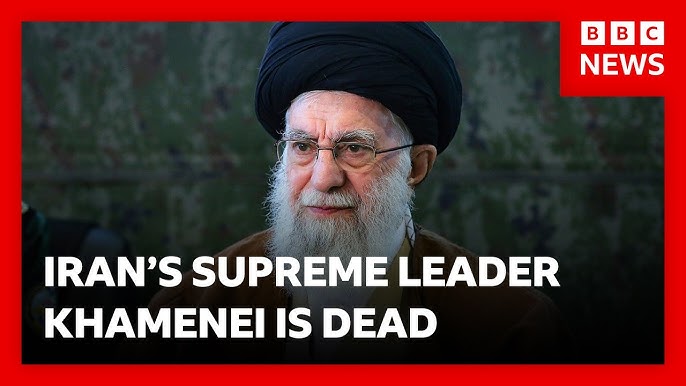
The controversy erupted following U.S. and Israeli airstrikes that resulted in Khamenei’s death, an event that traders believed would trigger full payouts on “yes” positions in the market, questioning whether he would leave office before March 1, 2026. Instead, Kalshi invoked a “death carveout” clause, resolving the market based on pre-death trading prices, leaving many participants feeling shortchanged. This decision has ignited debates on the clarity of market rules and the ethical boundaries of betting on leadership changes influenced by military actions.
Timeline of Events: From Market Launch to Legal Battle
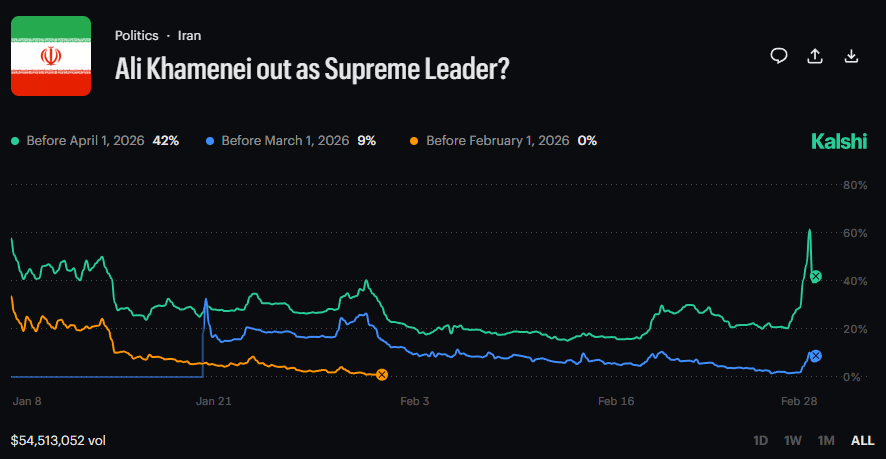
To understand the depth of this prediction market controversy, it’s essential to trace the sequence of events that led to the lawsuit. The market in question, often referred to as the “Khamenei Market,” attracted over $54 million in trades, reflecting heightened interest amid escalating tensions in the Middle East. Traders flocked to the platform, drawn by the potential for significant returns based on geopolitical shifts.
| Date | Event | Impact |
|---|---|---|
| January 2026 | Market launched amid protests in Tehran | Initial trading volume surges as odds fluctuate with news reports |
| February 27-28, 2026 | Odds spike from 27% to 61% on ouster | Traders increase positions, anticipating major developments |
| February 28, 2026 | Airstrikes reported; Khamenei’s death confirmed | Market paused; death carveout invoked |
| March 1, 2026 | Market resolved at pre-death prices | Backlash ensues; reimbursements offered for fees |
| March 5, 2026 | Class action lawsuit filed | Allegations of inadequate disclosure and predatory practices |
This timeline illustrates the rapid escalation from routine trading to a full-blown legal confrontation, underscoring the risks involved in prediction markets tied to real-world crises. As odds surged in the hours leading up to the strikes, many traders positioned themselves for what they perceived as an inevitable outcome, only to encounter the platform’s fine-print provisions.
Details of the Class Action Lawsuit Against Kalshi: Allegations and Claims
The plaintiffs, including traders Adam Risch and Yonatan Gliksman, argue that Kalshi operated a “predatory scheme” by failing to clearly disclose the death carveout until news of Khamenei’s demise began circulating. According to the complaint, the platform’s plain-language rules led participants to expect full payouts upon the leader’s departure, regardless of the circumstances. They contend that Kalshi continued to promote the market and accept trades even as reports of military action emerged, effectively luring more users into positions that would not yield the anticipated returns.
Central to the case is the assertion that the death carveout—a rule designed to prevent markets from effectively becoming bets on assassination—was not adequately highlighted on the market’s webpage initially. This lack of transparency, the lawsuit claims, violated trader trust and potentially breached contractual obligations. The proposed class action seeks damages for all affected users, emphasizing the need for clearer communication in high-volume markets.
When a market is tied to a person “leaving office” or similar event, a death carveout ensures that if the person dies, the market does not automatically resolve as a “yes” (which would pay out maximum value to those betting on the exit). Instead, the market is settled based on the last traded price before the death was confirmed, preventing bettors from profiting directly from the violence.
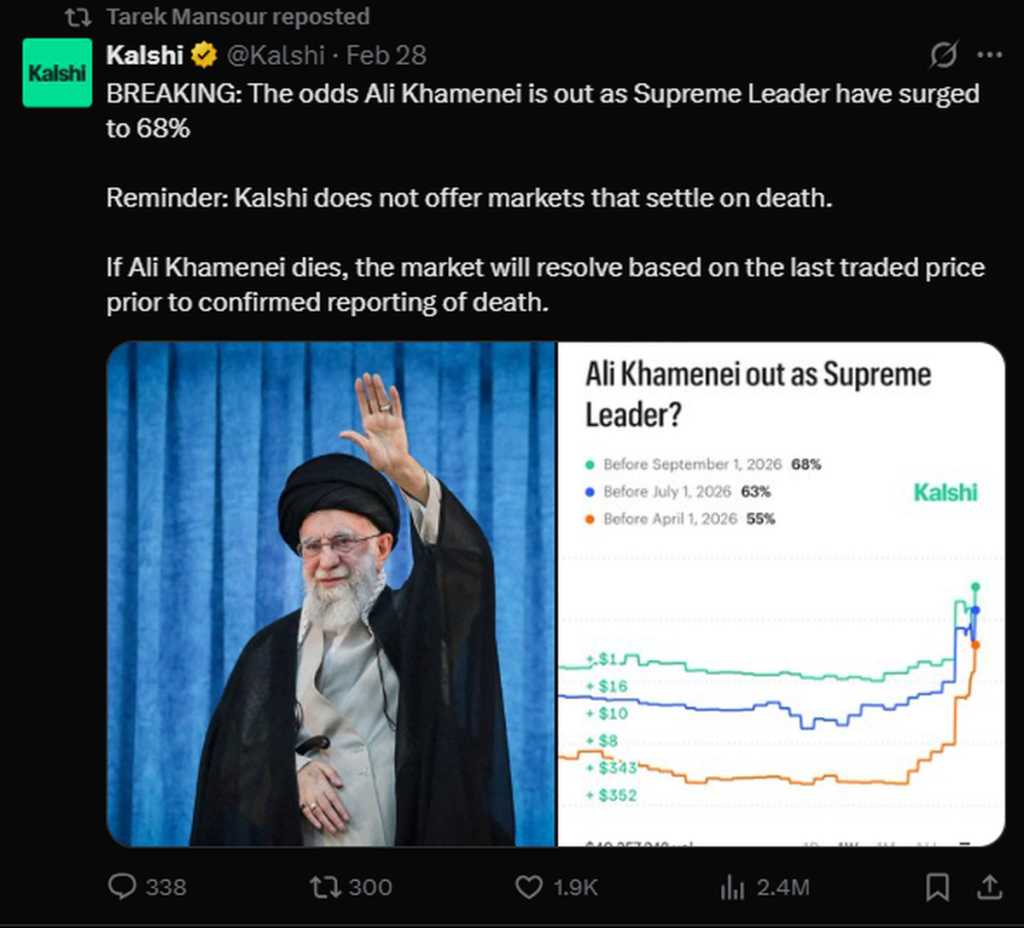
Legal experts suggest this lawsuit could set precedents for how prediction platforms handle similar clauses in the future, particularly in markets involving geopolitical figures. The complaint also highlights Kalshi’s promotional activities, including social media posts that boosted trading without explicit warnings about the carveout’s implications. For instance, a tweet from Kalshi noting surging odds to 68% included a disclaimer, but plaintiffs argue it came too late for many.
Kalshi’s Response: Defending the Death Carveout and Market Integrity
In response to the uproar, Kalshi has maintained that its rules have always included provisions against settling markets on death, aligning with U.S. regulatory standards that prohibit contracts on assassination. CEO Tarek Mansour has publicly stated that the platform does not offer markets directly tied to death, clarifying that “out” referred to voluntary or peaceful transitions, not fatal events. To mitigate backlash, Kalshi reimbursed all trading fees and covered losses for positions entered after initial clarifications, demonstrating a commitment to customer service amid the dispute.
Furthermore, the company filed a notice to standardize terms for markets dependent on survival, effective March 17, 2026, aiming to prevent future ambiguities. This move signals Kalshi’s proactive approach to refining its rulebook, even as it faces scrutiny. Mansour’s explanations on social media platforms have sought to rebuild trust, emphasizing that resolutions were based on pre-event trading to uphold market fairness.
Broader Implications for Prediction Markets: Regulatory Scrutiny and Industry Shifts
The Kalshi lawsuit arrives at a pivotal moment for the prediction markets sector, which is already under intensified regulatory examination. With platforms like Kalshi and competitors facing calls for tighter oversight, this case could amplify demands for standardized disclosures and ethical guidelines. Concerns over insider trading in related markets, such as those on U.S. strikes, have fueled bipartisan efforts to impose guardrails, as evidenced by recent advocacy groups pushing for reforms.
READ: Mr. Beast video editor busted for insider trading on Polymarket.
Traders and analysts alike are watching closely, as the outcome may influence how platforms design contracts involving sensitive geopolitical events. The controversy has also sparked discussions on the moral dimensions of such markets, though Kalshi insists its policies prevent profiting directly from violence. For the industry, this could mean longer rulebooks and more explicit warnings, potentially deterring casual participants but enhancing overall credibility.
Potential Outcomes and Future Predictions
As the legal proceedings unfold, several scenarios could emerge. A favorable ruling for plaintiffs might compel Kalshi to pay full amounts, setting a benchmark for transparency in market operations. Conversely, if the court upholds Kalshi’s position, it could validate the use of carveouts, encouraging other platforms to adopt similar safeguards.
Industry observers note that this dispute underscores the inherent risks in blending finance with global politics, where unpredictable events can upend expectations. For traders pondering why Kalshi invoked a death carveout in the Khamenei market, the answer lies in regulatory compliance, but the lawsuit challenges whether such rules were applied fairly.
Voices from the Trading Community: Reactions and Insights
The backlash has been swift and vocal, with traders expressing frustration on social media and forums. One anonymous trader lamented the “rugged” feeling of a correct prediction being voided by fine print, while others threatened to file further complaints with the Commodity Futures Trading Commission. These reactions highlight a broader sentiment that platforms must prioritize user clarity to maintain participation.
In contrast, some defend Kalshi’s stance, arguing that explicit rules protect against legal liabilities and ensure market sustainability. This divide illustrates the complex dynamics at play, where innovation meets the harsh realities of international conflict.
Linking to Expert Analysis: Resources for Deeper Understanding
For those seeking more in-depth coverage, resources like PolyPunter’s article on Iran war bets and insider trading fears provide valuable insights into related controversies. Similarly, PolyPunter’s report on Nevada’s action against Kalshi sheds light on ongoing regulatory pressures. These analyses offer a comprehensive view of the evolving landscape.
As this story develops, the Kalshi lawsuit serves as a compelling reminder of the high stakes involved in prediction markets. Whether it leads to sweeping changes or reinforces existing practices, the case captivates with its blend of finance, law, and global intrigue, inviting observers to ponder the future of betting on world events.