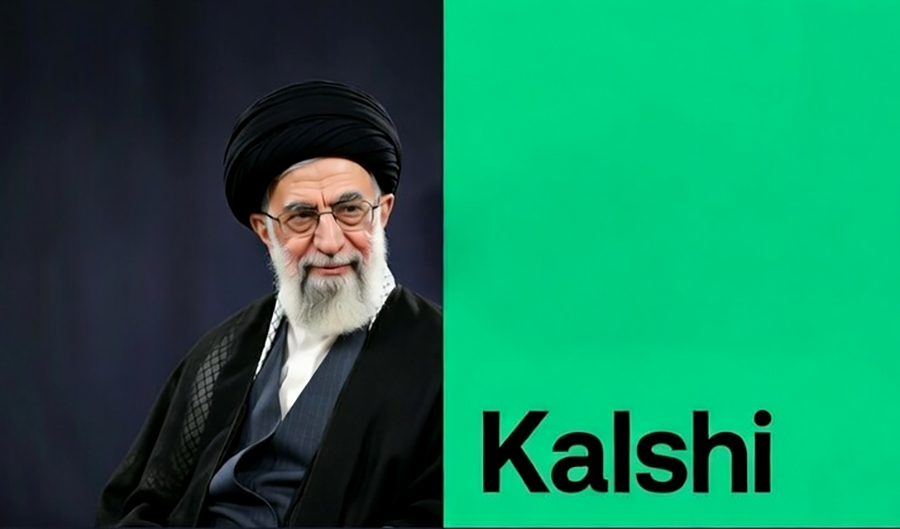
In a development that has sent shockwaves through trading communities, Kalshi has come under fire for its handling of a high-stakes market tied to the ouster of Iran’s Supreme Leader, Ayatollah Ali Khamenei. With over $54 million in trades at stake, the platform’s decision not to fully pay out winnings following Khamenei’s reported death has ignited widespread outrage among users. This incident highlights the complexities and potential pitfalls in resolving sensitive markets, drawing attention to the fine print that governs such trades.
The market in question, focused on whether Khamenei would be “out as Supreme Leader” by a specific date, saw frantic activity leading up to the U.S.-Israeli airstrikes on Iran. Traders positioned themselves based on escalating geopolitical tensions, with many betting on a “yes” outcome. When news of Khamenei’s death emerged, expectations soared for substantial payouts. However, Kalshi invoked a policy carveout, refusing to settle the market in a way that would allow profits directly linked to the death event.
Kalshi Khamenei Ouster Market Details and Initial Trading Frenzy
The market attracted significant volume, reaching approximately $54 million in trades, as participants speculated on the leadership change amid international conflicts. Traders entered positions with the understanding that a removal from power would trigger a resolution. The last traded price before the death confirmation hovered around 39.5 cents on the dollar, reflecting the market’s assessment of probabilities at that juncture.
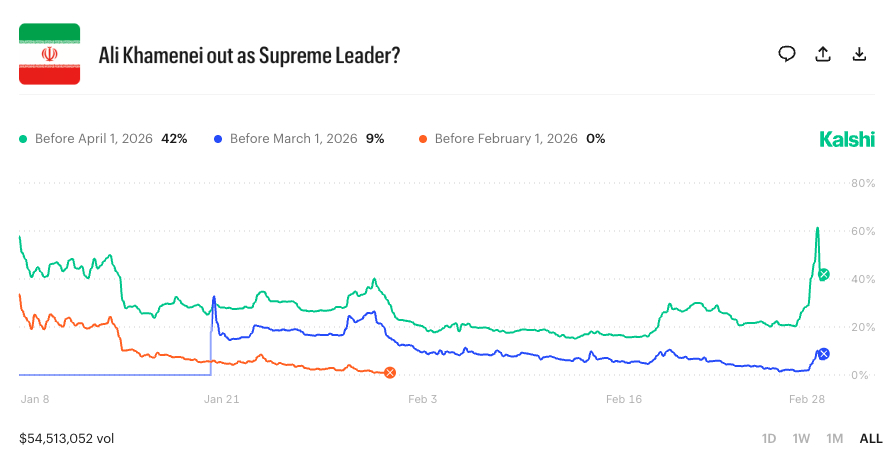
As reports confirmed Khamenei’s demise in the airstrikes, the platform paused trading for review. This move was in line with Kalshi’s established rules, which explicitly prohibit markets from settling based on death outcomes. Instead of resolving to “yes” and paying out at full value, Kalshi opted to settle at the pre-death traded price, a decision that left many “yes” bettors with far less than anticipated returns.
User Backlash Over Prediction Market Payout Refusals in Khamenei Case
The fallout was swift and vocal. Users took to social media platforms to express their frustration, accusing the platform of unclear rules and unfair practices. One trader lamented, “Literally go f–k yourselves. This is RIDICULOUS,” after realizing their potential $936 win from a $72.90 bet was reduced to a mere $18.72 reimbursement. Such sentiments echoed across forums, with accusations that the market’s title and ongoing activity post-death reports misled participants into believing death would qualify as an ouster.
Critics argued that for an 86-year-old leader in a theocratic regime, removal from power was inherently tied to mortality risks, making the carveout seem arbitrary. “How is an 86-year-old theocratic leader supposed to lose his power other than through death?” questioned Amanda Fischer, a former SEC chief of staff, in a statement that captured the essence of the discontent. This backlash has not only damaged user trust but also prompted threats of migration to rival platforms.
Discussions on sites like Reddit amplified the anger, with threads comparing the situation to a “gentrified mob bookie refusing to pay out.” Users shared screenshots of their positions, highlighting the disparity between expected and actual outcomes, further fueling the narrative of perceived injustice in the Khamenei death bet controversy.
Kalshi’s Response to Khamenei Market Backlash and Reimbursement Strategy
In response to the uproar, Kalshi’s CEO, Tarek Mansour, addressed the issue publicly, emphasizing the platform’s commitment to its rules. “We don’t list markets directly tied to death,” Mansour stated, clarifying that the design prevents profiting from such events. He acknowledged user frustration and outlined compensatory measures to mitigate losses.
Kalshi announced it would reimburse all trading fees associated with the market, ensuring no net financial hit from commissions. Additionally, for positions opened after the death reports surfaced, full entry costs were refunded. Pre-death positions were settled at the last-traded price, yielding a return without endorsing death as a profit trigger. Mansour apologized for any lack of clarity in the presentation and promised enhancements to make such policies more prominent in future markets.
This approach, while not satisfying all critics, demonstrates an effort to balance adherence to rules with user goodwill. The platform maintains that these rules were clear from the outset and that the settlement aligns with the goal of preventing ethical dilemmas in sensitive scenarios.
Table: Breakdown of Kalshi’s Reimbursement and Settlement in Khamenei Market
| Category | Description | Impact on Users |
|---|---|---|
| Trading Fees | Fully reimbursed for all participants | Any calculated losses from the settlement |
| Pre-Death Positions | Settled at last traded price (approx. 39.5 cents) | Partial payout; no full “yes” resolution |
| Post-Death Entries | Positions opened after death confirmation | Full refund of entry costs |
| Net Losses | Any calculated losses from settlement | Reimbursed out-of-pocket by Kalshi |
| Total Market Volume | Over $54 million in trades | Affected users receive adjusted compensations |
Broader Implications of Kalshi Death Carveout in High-Stakes Markets
The Khamenei incident has sparked debates on the transparency and ethics of market resolutions in volatile geopolitical contexts. Analysts point out that while the carveout protects against morbid speculation, its application in this case raised questions about foreseeability. If ouster inevitably involves risks of death for certain figures, how should platforms delineate boundaries?
Regulatory scrutiny has intensified, with figures such as senators highlighting potential insider-trading concerns in related markets. Although not directly accusing Kalshi, the episode underscores the need for clearer guidelines to maintain market integrity. Users and experts alike call for standardized rulebooks that anticipate such edge cases, potentially lengthening already complex terms.
Kalshi’s proposed rule updates, set to take effect soon, aim to standardize terms for markets implicitly dependent on survival. This proactive step could prevent similar controversies, but it also highlights the evolving nature of these platforms amid growing popularity.
User Reactions and Future Outlook in Khamenei Payout Refusal
Beyond immediate backlash, the event has led to an exodus threat, with traders exploring alternatives perceived as more user-friendly. Social media posts reveal a mix of resignation and determination, with some vowing to avoid markets with ambiguous resolutions. “This sets a dangerous precedent,” one user noted, echoing fears that unresolved frustrations could erode participation.
Yet, Kalshi’s reimbursements—totaling millions out-of-pocket—may soften the blow for many. By covering fees and losses, the platform positions itself as accountable, potentially retaining loyalty among pragmatic traders. Mansour’s engagement on social channels further humanizes the response, fostering dialogue amid criticism.
Looking ahead, this controversy could catalyze industry-wide improvements. As markets grapple with real-world events, ensuring rule clarity becomes paramount. For participants, it serves as a reminder to scrutinize fine print, especially in high-profile scenarios like the Khamenei ouster.
References:
- Kalshi refuses to pay winnings on $54M trade related to Khamenei’s death, drawing user fury – NY Post
- Kalshi customers who bet on the death of Iran’s Ayatollah won’t get any of the $54 million wagered, company says – Yahoo News
- Iranian Ayatollah Khamenei’s Death Sparks Revolt Among Kalshi Customers – Wired
- Kalshi faces backlash over handling of $54M market on Khamenei’s ouster – The Hill
- Kalshi’s $2.2 million Iran mess exposes prediction markets’ fine-print problem – Business Insider
- Kalshi Owes Bettors $54 Million On Ayatollah Khamenei’s Death, But Claims It Doesn’t Have To Pay – Outkick
- Kalshi backlash for Ali Khamenei’s death settlement, explained – USA Today
- Ali Khamenei Kalshi Bet Stokes Controversy — CEO Says… – Yahoo Finance