
In a rapidly unfolding legal development, Polymarket has submitted an emergency motion to the Nevada federal court, requesting a brief administrative stay of the court’s recently issued remand order. This order would return the Nevada Gaming Control Board’s civil enforcement action to the state court. The motion comes as Polymarket prepares its forthcoming request for a stay pending appeal, highlighting the intensifying conflict over regulatory jurisdiction in this high-stakes case.
The filing underscores the ongoing tension between federal oversight and state gaming laws, with Polymarket arguing for the need to maintain the status quo while higher courts review the matter. This action follows a series of judicial decisions that have kept stakeholders on edge, as the implications could ripple through similar disputes nationwide.
The Emergency Motion: Details and Rationale
Polymarket’s emergency motion, filed shortly after the federal court’s remand decision, seeks to temporarily halt the transfer of the case back to the Nevada state court. The platform contends that without this stay, it could face immediate enforcement actions that might disrupt operations irreversibly. According to court documents, the motion emphasizes the potential for “substantial irreparable harms” if the remand proceeds without pause.
The remand order itself stemmed from the federal court’s determination that the Nevada Gaming Control Board’s claims primarily arise under state law. The judge ruled that the Commodity Exchange Act does not completely preempt these claims, thus lacking federal subject matter jurisdiction. This decision, detailed in filings available on Decrypt, sent the dispute back to the state level where the enforcement action originated.
In its motion, Polymarket highlights the urgency, noting that the Nevada Gaming Control Board has already demonstrated intent to pursue swift injunctions. The platform’s legal team argues that a brief stay would allow time to file and resolve a motion for stay pending appeal, potentially to the Ninth Circuit Court of Appeals. This strategic move aims to preserve the federal forum while appellate review is underway.
Background of the Nevada Gaming Control Board’s Enforcement Action
The Nevada Gaming Control Board initiated its civil enforcement action against Polymarket in January 2026, filing a complaint in the District Court for Carson City. The board sought a declaration that Polymarket’s operations violate specific Nevada statutes, including those prohibiting unlicensed wagering. The complaint, accessible via the Nevada Gaming Control Board’s website, accuses the platform of offering event-based contracts without proper licensing.
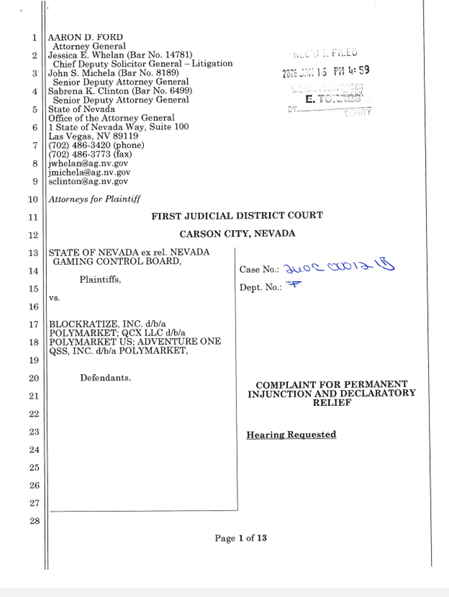
Polymarket promptly removed the case to federal court, asserting that federal law preempts the state’s claims. However, the federal judge disagreed, leading to the remand order. This sequence mirrors a parallel case involving Kalshi, where similar removal and remand proceedings have occurred, as reported in various legal analyses.
The board’s action is part of a broader effort to enforce state gaming regulations, with previous successes noted in related disputes. For instance, a temporary restraining order was granted against Polymarket in late January 2026, enjoining operations pending further hearings. Details of this order can be found in the official court filing.
Key Legal Arguments from Both Sides
The core of the dispute revolves around whether Polymarket’s activities fall exclusively under federal commodities regulation or are subject to state gaming laws. Polymarket maintains that its contracts are derivatives regulated by the Commodity Futures Trading Commission (CFTC), preempting state intervention. This position is supported by arguments in removal notices and motions, emphasizing the Commodity Exchange Act’s broad scope.
Conversely, the Nevada Gaming Control Board asserts that the contracts constitute wagers under state definitions, necessitating licensing and compliance with local regulations. The board’s emergency motion to remand, filed in February 2026, stressed the sovereign interest in enforcing gaming laws within state courts. A declaration supporting this motion, available here, outlines the perceived harms from unlicensed operations.
This agnostic examination reveals balanced arguments: Polymarket’s push for federal uniformity versus the state’s emphasis on local regulatory authority. The outcome could influence how similar platforms navigate jurisdictional boundaries.
Timeline of Key Events in the Polymarket-Nevada Dispute
| Date | Event | Description |
|---|---|---|
| January 16, 2026 | NGCB Files Complaint | The Nevada Gaming Control Board files a civil enforcement action in Carson City District Court, seeking injunctions against Polymarket for alleged violations of gaming laws. |
| January 29, 2026 | Temporary Restraining Order Granted | State court issues a TRO enjoining Polymarket from offering event-based contracts in Nevada without a license, as detailed in court orders. |
| February 5, 2026 | Case Removed to Federal Court | Polymarket removes the action to the U.S. District Court for Nevada, citing federal preemption. |
| February 18, 2026 | NGCB Files Emergency Motion to Remand | The board seeks immediate remand, arguing lack of federal jurisdiction. |
| February 24, 2026 | Remand Hearing and Order | The board seeks immediate remand, arguing a lack of federal jurisdiction. |
| March 2, 2026 | Polymarket Files Emergency Motion for Stay | Federal court holds a hearing and issues a remand order, sending the case back to the state court. |
This timeline illustrates the swift progression of the case, with each step building on prior judicial determinations. Sources for these dates include official court dockets and press releases from the Nevada Gaming Control Board.
Implications for Ongoing Operations and Industry Precedents
If the stay is granted, Polymarket could continue operations in Nevada during the appeal process, potentially mitigating immediate disruptions. However, a denial would expose the platform to state court injunctions, possibly leading to a halt in local activities. This scenario raises questions about operational continuity and compliance strategies for platforms in similar positions.
Beyond Polymarket, the case sets potential precedents for other entities facing state-level challenges. Parallel proceedings against Kalshi, as covered in resources like our article on NGCB’s action against Kalshi, show a pattern of state regulators asserting authority. This coverage highlights Nevada’s role in pioneering such enforcements, with mentions of prior actions against platforms including Polymarket.
Industry observers note that resolutions in these cases could clarify the interplay between federal commodities law and state gaming statutes. For instance, if appeals uphold remand decisions, states might gain a stronger footing in regulating certain contracts, affecting market dynamics.
Comparative Analysis with Similar Cases
The Polymarket dispute echoes the Kalshi case, where the Ninth Circuit denied an emergency stay, paving the way for state enforcement. In that instance, Kalshi also removed the action to federal court, only to face remand. A stipulation modifying briefing schedules, as seen in Justia Dockets, reflects procedural parallels.
Additionally, earlier actions against Coinbase and other platforms demonstrate Nevada’s consistent approach. PolyPunter’s comparative guide on Kalshi vs. Polymarket discusses regulatory risks, noting Polymarket’s exposure to such uncertainties despite its CFTC ties.
| Case | Platform | Key Issue | Current Status |
|---|---|---|---|
| NGCB v. Polymarket | Polymarket | Unlicensed event contracts as gaming | Emergency motion for stay pending |
| NGCB v. Kalshi | Kalshi | Similar unlicensed wagering claims | Remanded to state court; appeal considerations |
| NGCB v. Coinbase | Coinbase | Gaming law violations | Successful enforcement noted |
Potential Outcomes and Next Steps
As the federal court considers Polymarket’s emergency motion, possible outcomes include granting the stay, allowing time for appeal preparations, or denying it, accelerating state proceedings. If it stayed, the Ninth Circuit might review the remand’s merits, potentially affirming or reversing.
Next steps involve Polymarket’s motion for stay pending appeal, likely addressing irreparable harm, likelihood of success, and public interest. The Nevada Gaming Control Board may oppose, reiterating state sovereignty arguments.
Stakeholders await these developments, as they could shape regulatory landscapes. For comprehensive coverage, refer to ongoing updates from sources like Action Network’s lawsuit tracker, which monitors these evolving disputes.
Objective Perspectives on the Broader Debate
This case exemplifies the complex balance between innovation and regulation. Proponents of federal preemption argue for national consistency, while state advocates emphasize localized protections. Neither side’s position is inherently superior; rather, the judiciary’s role is to interpret applicable laws objectively.
Legal experts suggest that ultimate resolutions might require legislative clarifications, but for now, court rulings guide the path. This neutral stance ensures that all perspectives are considered without bias toward any party.
Polymarket’s emergency motion represents a critical juncture in this dispute, with far-reaching implications. As proceedings unfold, the interplay of federal and state authorities remains a focal point for observation and analysis.