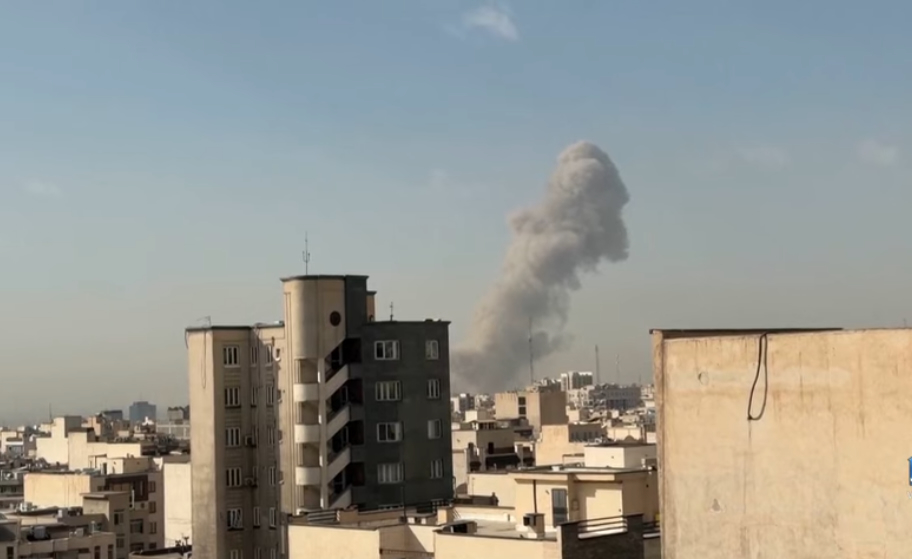
In the wake of today’s US military strikes on Iran, prediction markets have witnessed a remarkable influx of activity centered around global war bets and regime change predictions. This development highlights the dynamic ways in which geopolitical events influence wagering volumes on platforms such as Kalshi and Polymarket. Traders have poured millions into various contracts, reflecting real-time assessments of potential outcomes following the joint US-Israel operation aimed at destabilizing the Iranian regime.
The Immediate Impact of US Military Strikes on Iran on Betting Volumes
The US strikes on Iran, occurring on February 28, 2026, as part of a coordinated effort with Israel, triggered an immediate spike in trading on prediction markets. Speculation had been building throughout the week, with odds for strikes and potential invasions fluctuating significantly. However, the most notable surge happened in the hours following the strikes, as traders rushed to position themselves on questions related to regime shifts and broader conflict escalations. This pattern underscores how rapid geopolitical shifts can drive substantial financial flows into war-related wagers.
On Kalshi, one of the leading platforms for such contracts, betting volume around an Iran regime shift question reached an impressive $36 million. This figure illustrates the intense interest in forecasting whether the current Iranian leadership will undergo significant changes in the near term. Similarly, Polymarket saw over $22 million in trade volume on whether Supreme Leader Ali Khamenei would vacate his position by March 31. These volumes not only reflect trader confidence or skepticism but also demonstrate the platforms’ capacity to handle high-stakes geopolitical event wagering.
Polymarket Khamenei Market.
Other trending contracts on Polymarket included those pondering if the Iranian regime would collapse entirely, the timing of a potential US-Iran ceasefire announcement, and even projections on a possible US invasion of Iran. Each of these markets attracted millions in stakes, creating a vibrant ecosystem where global conflict wagers intersect with real-world developments. The activity surged particularly after the strikes, mirroring how such events can act as catalysts for increased participation in military action forecasts.
Comparing Platform Responses: Kalshi vs. Polymarket in Geopolitical Betting
Kalshi and Polymarket, two prominent platforms in this space, exhibited distinct yet complementary responses to the US strikes on Iran. Kalshi, known for its regulated environment, saw traders focusing heavily on regime shift scenarios, with the aforementioned $36 million volume serving as a benchmark for interest in Iranian leadership changes. This platform’s structure allows for binary outcomes that appeal to those interested in clear-cut regime change predictions.
Polymarket, operating with a more crypto-native approach, expanded its offerings to include a variety of related questions, such as the probability of the US’s next strikes on Iran across multiple dates, with markets like “US next strikes Iran on…?” featuring 21 possible outcomes. Here, the leading outcome often hovered around no strike by certain dates, but volumes remained high, indicating diverse trader perspectives on ongoing tensions. The platform also hosted bets on whether the US or Israel would strike Iran on specific days, like March 1, with probabilities shifting in real-time.
| Platform | Market Question | Volume ($) | Key Probability (%) |
|---|---|---|---|
| Kalshi | Iran Regime Shift | 36,000,000 | N/A |
| Polymarket | Khamenei Out by March 31 | 22,000,000 | 28 |
| Polymarket | Iranian Regime Fall by June 30 | 3,000,000 | 54 |
| Polymarket | US x Iran Military Engagement by June 30 | 275,596 | 79 |
| Polymarket | US to invade Iran by March 31 | 174,637 | 14 |
This table illuminates the scale of engagement across platforms, showing how US-Iran strikes betting has become a focal point for traders seeking to capitalize on geopolitical uncertainties. The varying probabilities offer insights into collective expectations, with higher volumes often correlating to more debated outcomes.
Historical Patterns: From Venezuela to Iran in War Prediction Markets
The reaction to US strikes on Iran echoes patterns observed in earlier events, such as the US operation in Venezuela. In January 2026, a trader on Polymarket invested $30,000 just hours before the capture of Venezuelan President Nicolás Maduro, yielding a profit of over $400,000—a 1,200 percent return. This incident spurred the creation of numerous Venezuela-related contracts, including bets on further invasions or strikes on neighboring countries. Such examples reveal how military actions can rapidly expand the scope of global war bets on prediction markets.
In the context of Iran, similar expansions occurred post-strikes, with new markets emerging on potential US actions against other nations like Somalia or Cuba. Traders also adjusted odds on Khamenei’s removal, jumping from below 20 percent to 36 percent following the Venezuela precedent. This interconnectedness demonstrates how one geopolitical event can influence wagering on others, creating a web of regime change predictions and military action forecasts.
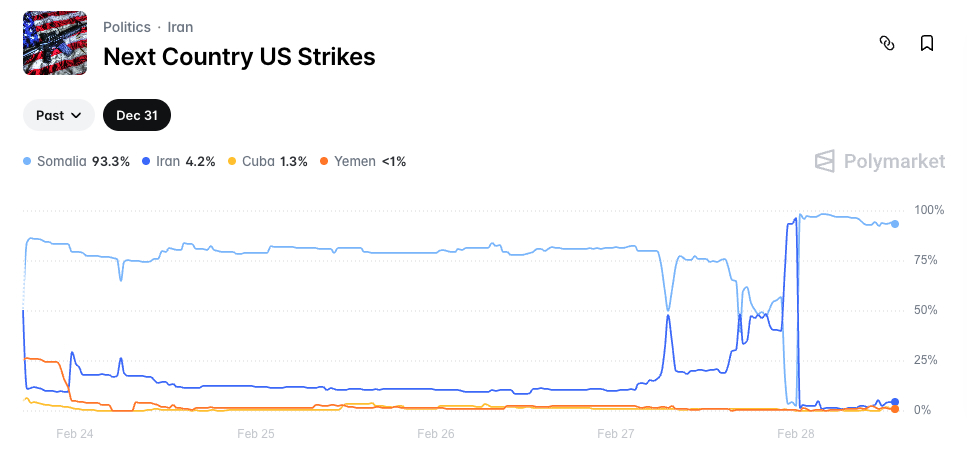
Further afield, markets on the Ukraine conflict have incorporated synced frontline maps for territorial outcome bets, allowing traders to wager on specific advancements or retreats. These innovations highlight the evolving nature of war prediction markets, where real-time data integration enhances the precision of global conflict wagers.
Real-Time Odds Fluctuations in US-Iran Strikes Betting
One intriguing aspect of these markets is the real-time fluctuation of odds in response to unfolding events. For instance, on Polymarket’s “Will the Iranian regime fall by June 30?” market, the probability stood at 54 percent with $3 million in volume, reflecting trader assessments of the strikes’ long-term impact. Similarly, the “US x Iran Military Engagement by…” contract showed 79 percent for June 30, indicating expectations of prolonged tensions.
In contrast, Kalshi’s markets gave varying chances for regime change timelines: 20 percent for ousting Khamenei by Sunday, rising to 63 percent by April 1 and 68 percent by July 1, with $41 million wagered overall. These shifts provide a fascinating window into how news of US military strikes on Iran alters collective predictions, with traders reacting swiftly to announcements or leaks.
Another market, “US next strikes Iran on…?”, featured no strike by January 31 at 100 percent, but earlier dates saw minimal probabilities, showcasing how past events inform future wagers. This dynamic pricing mechanism makes geopolitical event wagering an engaging field for those tracking international developments.
Broader Trends in Geopolitical Event Wagering
The surge following US strikes on Iran is part of a larger trend where prediction markets increasingly encompass geopolitical risks beyond traditional domains like elections or sports. Platforms like Polymarket have seen bets on whether Israel would strike Iran on specific dates or if world leaders would exit office before certain years. This expansion includes esoteric wagers, such as the return of Jesus Christ before 2027, but the core growth is in military and regime-related contracts.
In the Middle East, bets on Gaza or broader conflicts have become popular, with Polymarket’s top trending market being the likelihood of US strikes on Iran, amassing $313 million in wagers. Traders have also placed substantial sums on potential interventions, with volumes ballooning as negotiations or threats emerge, as seen when odds for a US strike dropped from 65 percent to 33 percent amid hints of talks.
Expert insights, such as those from Ryan Kirkley of Global Settlement Network, note that with tens to hundreds of millions at stake, these markets can influence real-world behaviors, though the exact mechanisms remain a topic of observation.
| Market | Pre-Strike Probability (%) | Post-Strike Probability (%) | Volume Increase ($) |
|---|---|---|---|
| Khamenei Removed by June | <20 | 36 | N/A |
| US Strike on Iran | 65 | 33 | 155,000,000 |
| Iranian Regime Fall in 2025 | N/A | 0 (Yes) | 4,992,689 |
This table highlights how probabilities are adjusted in the aftermath, offering educational value in understanding market sentiment shifts in response to US-Iran strikes betting scenarios.
Insights from Trader Behaviors and Market Manipulations
Trader behaviors in these markets often reveal patterns of anticipation, as seen in cases where positions are taken just before announcements. In the Venezuela operation, a new account’s timely bet raised questions about information sources, similar to incidents in Ukraine where map edits influenced payouts. For Iran, while no specific insider cases were highlighted immediately post-strikes, the high volumes suggest keen monitoring of intelligence indicators.
Platforms have faced scrutiny, with Kalshi suspending users for alleged insider trading in unrelated markets, and Polymarket dealing with suspicions around accurate bets on Israel’s attacks on Iran. These instances add a layer of intrigue to geopolitical event wagering, where the line between informed trading and potential manipulation can blur.
In Israel, authorities arrested individuals suspected of using military secrets for Polymarket bets on strike timings, emphasizing the global reach of these platforms. Such developments make the study of war prediction markets not just about financial gains but also about the interplay with national security dynamics.
Future Trajectories for Military Action Forecasts
Looking ahead, the activity spurred by US strikes on Iran may set precedents for how prediction markets handle future geopolitical crises. With platforms expanding to include more nuanced contracts, such as territorial outcomes or diplomatic failures, the scope for global war bets continues to grow. Traders’ ability to profit from regime change predictions could influence how events are perceived and even shaped, though this remains an area of ongoing observation.
Markets like “Will the US invade Iran by March 31?” with 14 percent probability and $174,637 volume, or broader ones on world leaders’ exits, indicate a diversification in wagering options. This evolution keeps the field interesting for those engaged in tracking and participating in such forecasts.
As volumes reach hundreds of millions across related contracts, prediction markets serve as barometers for collective wisdom on complex international issues, providing informative data points for analysts and enthusiasts alike. The intersection of technology, finance, and geopolitics in this manner offers endless avenues for exploration.