If you’re new to prediction markets and wondering, “What is the difference between Kalshi and Polymarket?” you’ve come to the right place. Prediction markets are platforms where people trade contracts based on the outcomes of real-world events, like elections, sports games, or even pop culture moments. They’re like a mix between stock trading and betting, but with a focus on probabilities. In this comprehensive guide, we’ll break down Kalshi and Polymarket at a 10th-grade reading level, explaining key terms along the way. We’ll cover their similarities, differences, pros and cons, and help you decide which one might suit your style as a beginner. By the end, you’ll have a clear picture of these two popular platforms.
Prediction markets have exploded in popularity recently, with billions of dollars traded on events ranging from presidential elections to Super Bowl halftime shows. Kalshi, a regulated U.S. exchange, and Polymarket, a crypto-powered global platform, are at the forefront. As of early 2026, both are CFTC-regulated in the U.S., but they operate differently. Let’s dive in and compare them step by step.
What Are Prediction Markets?
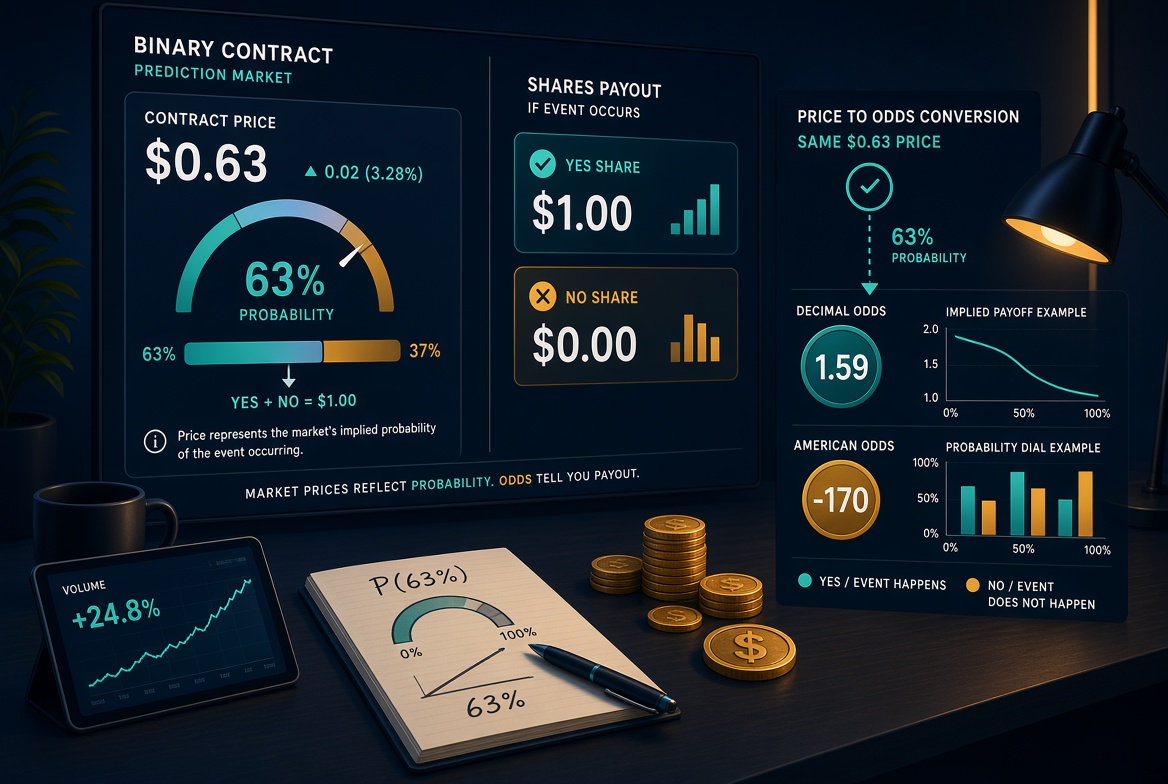
Before we compare Kalshi and Polymarket, let’s explain what prediction markets are. A prediction market is a platform where users buy and sell contracts tied to the outcome of future events. These contracts are often binary—meaning “yes” or “no” questions, like “Will the Seattle Seahawks win the 2027 Pro Football Championship?” If you buy a “yes” contract and the event happens, you get paid $1 per contract; if not, it’s worth $0.
The price of these contracts reflects the market’s collective probability. For example, if a “yes” contract costs 60 cents, that implies a 60% chance of the event occurring. This is different from traditional betting, where a bookmaker sets odds and takes a cut (called the “vig“). In prediction markets, users trade directly with each other, and the platform acts more like a stock exchange.
Key terms to know:
- Event Contract: The agreement you trade, based on a specific outcome.
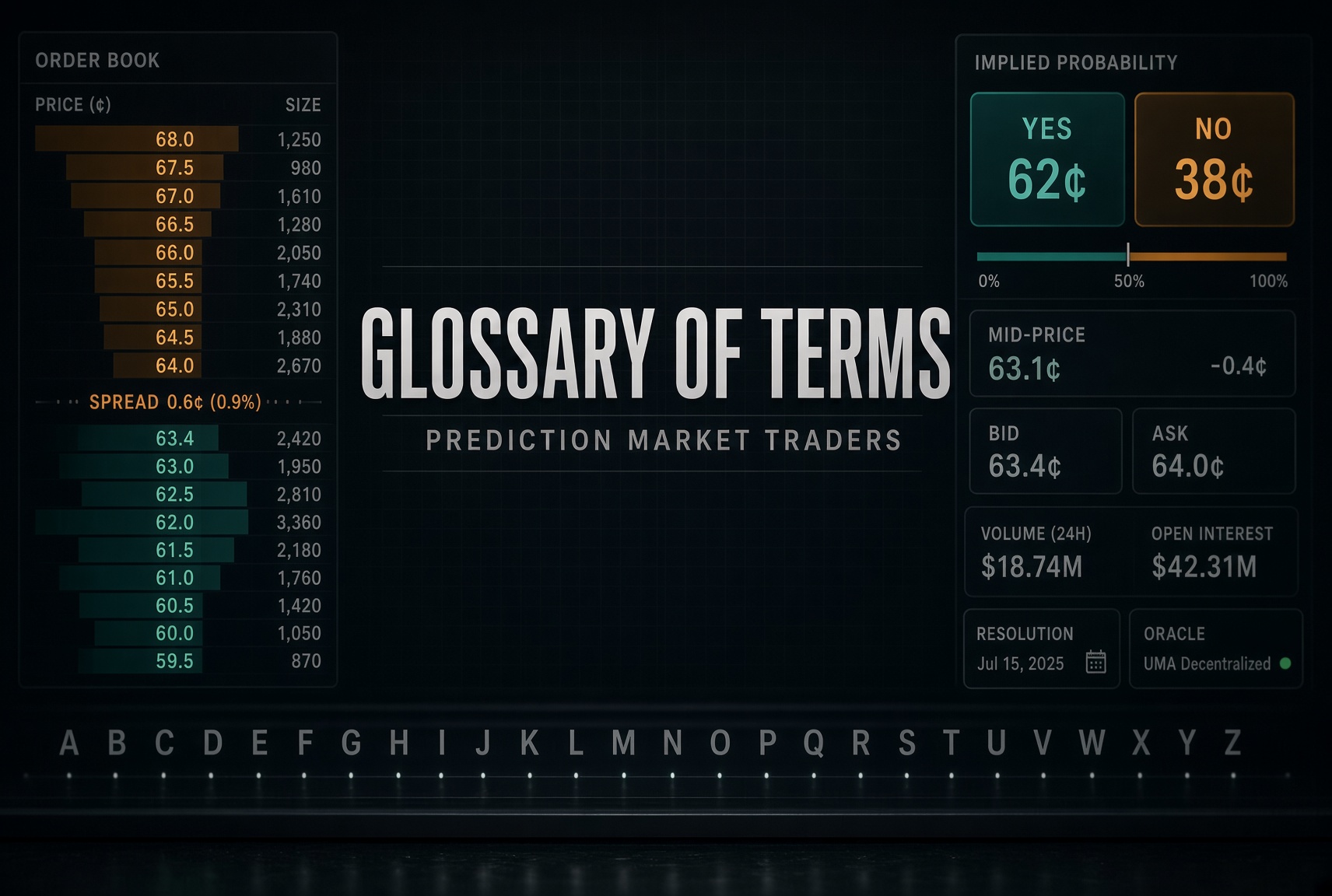
- Liquidity: How easily you can buy or sell contracts without affecting the price much. High liquidity means deeper markets.
- CFTC: Commodity Futures Trading Commission, the U.S. regulator overseeing these markets.
- USDC: A stablecoin cryptocurrency pegged to the U.S. dollar, used on crypto platforms.
Now, let’s look at each platform individually.
Overview of Kalshi
Kalshi is a U.S.-based prediction market launched in 2021 and fully regulated by the CFTC. It’s designed for American users, allowing trades in U.S. dollars (USD) on a wide range of events. Think of it as a federally approved exchange where you can speculate on everything from politics to weather.
Key Features of Kalshi
Kalshi offers binary (yes/no) and multi-outcome contracts across categories like:
- Politics: Presidential nominees, Fed Chair confirmations, election winners.
- Sports: NFL champions, game spreads, and college basketball.
- Pop Culture: Celebrity marriages, auction prices, TIME’s Person of the Year.
- Finance: Earnings calls, IPOs, company acquisitions.
- Crypto: Bitcoin price milestones.
- AI: Top models, benchmarks like Chatbot Arena scores.
- Other: Weather events, music charts, global elections.
Markets can have high volumes—over $500 million on football championships or $147 million on Fed decisions. Users must verify their identity with a government ID to prevent manipulation. Trading hours are specified, and there’s an API for advanced users.
As a newcomer, you’ll appreciate Kalshi’s straightforward interface, though it might feel like a stock trading app at first. You can trade in and out of positions anytime, similar to buying and selling stocks.
Overview of Polymarket
Polymarket is a decentralized prediction market built on blockchain technology, launched in 2020. It uses USDC for trades and is known for its global reach. In 2026, Polymarket operates through a CFTC-regulated U.S. entity (QCX LLC) while maintaining an international platform. It’s crypto-native, meaning it integrates with digital wallets.
Key Features of Polymarket
Like Kalshi, Polymarket focuses on binary and multi-outcome markets in categories such as:
- Politics: U.S. elections, international nominees, geopolitical events like U.S.-Iran strikes.
- Sports: NFL games, esports, NBA MVP, UEFA winners.
- Crypto: Real-time Bitcoin and Ethereum prices, 15-minute up/down predictions.
- Finance: Fed rate changes, stock openings, company ads.
- Culture: Halftime shows, AI models, tweet counts (e.g., Elon Musk).
- Other: Olympics, government shutdowns, niche events like “Jesus Christ’s return.”
Volumes are massive—$704 million on Super Bowl champions or $627 million on 2028 Democratic nominees. It’s non-custodial, so you control your funds via a wallet. Polymarket emphasizes transparency with on-chain settlements.
For beginners, Polymarket might require learning about crypto wallets, but it offers low-friction trading once set up.
Similarities Between Kalshi and Polymarket
Both platforms are prediction markets at their core, allowing users to trade on event outcomes. Here’s how they’re alike:
- Market Types: Both use yes/no contracts where correct predictions pay $1, and wrong ones pay $0. Prices represent probabilities.
- Diverse Categories: They cover politics, sports, finance, crypto, culture, and more. High-profile events like elections or Super Bowls attract billions in volume on both.
- Regulation: As of 2026, both are CFTC-regulated in the U.S., providing legitimacy and oversight.
- Peer-to-Peer Trading: Users trade with each other, not against the house, reducing the “vig” compared to traditional sportsbooks.
- Risk and Payouts: Trading involves risk of loss, with no guarantees. Both emphasize responsible trading.
- Real-Time Insights: Prices act as crowd-sourced probabilities, often more accurate than polls.
These similarities make them interchangeable for many users, but differences set them apart.
Differences Between Kalshi and Polymarket
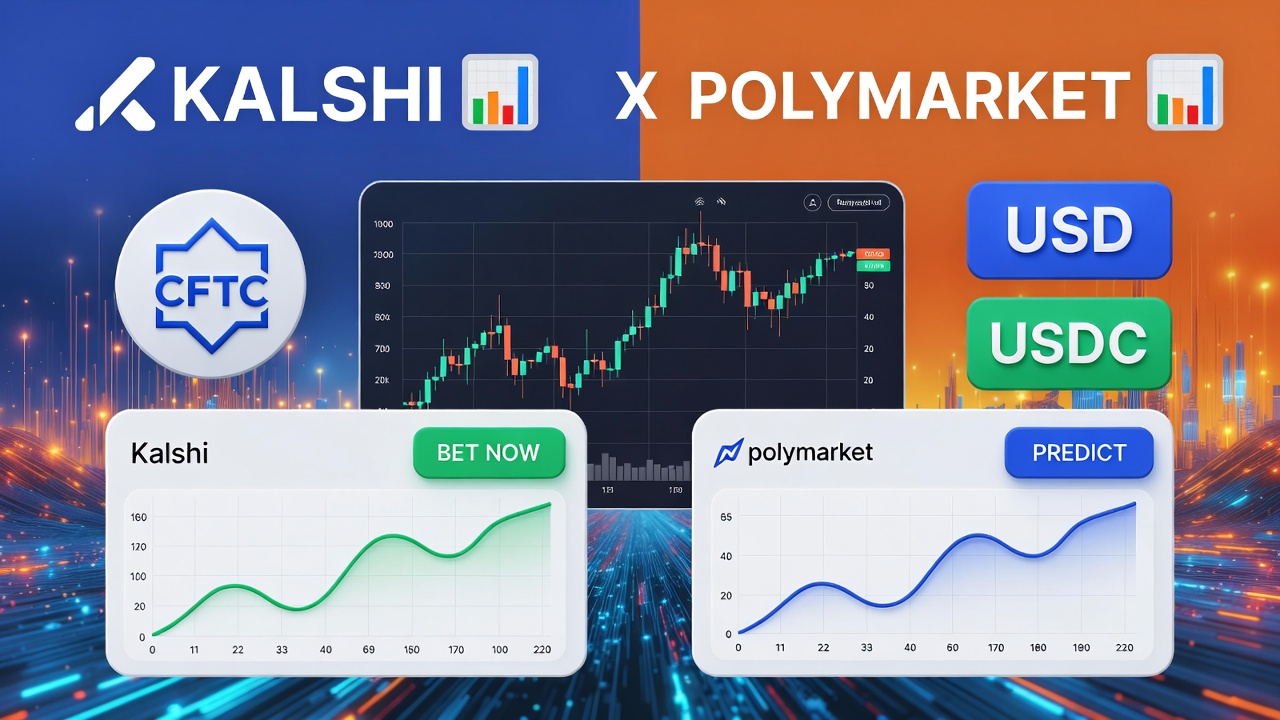
What is the difference between Kalshi and Polymarket? The key distinctions lie in regulation, currency, accessibility, fees, and user experience. Kalshi is more traditional and fiat-based, while Polymarket is crypto-oriented and decentralized.
| Brokerage-style is familiar to stock traders but potentially intimidating for beginners. | Kalshi | Polymarket |
|---|---|---|
| Regulation | Fully CFTC-regulated U.S. exchange since launch. | CFTC-regulated U.S. entity (QCX LLC); international platform separate and less regulated. |
| Currency | USD (fiat money). | USDC (stablecoin cryptocurrency). |
| Accessibility | U.S.-focused, available in all 50 states; requires ID verification. | Global, with U.S. access improving; requires crypto wallet. |
| Fees | Transaction fees on expected earnings (e.g., $1.20 on $100 position); some maker fees. | Low taker fees (0.01%); no maker fees on limit orders. |
| Liquidity and Speed | High on vetted markets; formal approval process. | Deep crypto liquidity; faster market creation. |
| User Interface | Brokerage-style, familiar to stock traders but potentially intimidating for beginners. | Decentralized, wallet-based; learning curve for crypto newbies. |
| Market Variety | Broad, with emphasis on U.S. events and sports. | Even broader, including real-time crypto and niche global events. |
These differences mean Kalshi feels more like a regulated financial app, while Polymarket appeals to tech-savvy users comfortable with blockchain.
Pros and Cons of Kalshi
Kalshi’s strengths lie in its regulation and ease for U.S. users, but it has drawbacks for global or cost-conscious traders.
Pros of Kalshi
- Full U.S. Legality: CFTC oversight ensures transparency and safety, making it accessible in all states without crypto hassles.
- USD Funding: Easy deposits via bank accounts; no crypto volatility.
- Diverse Markets: Beyond politics and sports, it includes unique pop culture and AI bets.
- High Trading Limits: Up to $500 per account on some markets, with the ability to create custom ones.
- Liquidity Incentives: Market makers are compensated, leading to deeper books.
- Interest on Balances: Earn 3.75% on cash and positions, a nice perk over sportsbooks.
- Real-Time Trading: Buy/sell anytime, like stocks, with lower fees than traditional betting vig.
Cons of Kalshi
- Interface for Newbies: Can feel overwhelming if you’re not used to exchange trading; odds shown in cents/percentages, not American odds.
- Limited Promotions: Fewer signup bonuses compared to sportsbooks.
- Higher Fees: Transaction costs can add up for active traders (e.g., 100x higher than Polymarket on some positions).
- U.S.-Centric: Less appealing for international users due to ID requirements.
- Slower Market Creation: Formal vetting means fewer rapid, niche markets.
| Pros | Cons |
|---|---|
| Regulated and safe for U.S. users | Potentially intimidating interface |
| USD ease | Higher fees |
| Interest on balances | Limited global access |
Pros and Cons of Polymarket
Polymarket shines in decentralization and low costs, but crypto elements can be a barrier.
Pros of Polymarket
- Low Fees: Only 0.01% taker fees; maker orders are free, making it cheaper for frequent trades.
- Global Accessibility: Available worldwide (U.S. improving); no strict ID for international users.
- Blockchain Transparency: On-chain settlements ensure fair, automated payouts.
- Broad Market Variety: Faster listings for niche events, like real-time crypto prices or global trends.
- High Liquidity: Crypto integration draws deep pools, with billions in volume.
- Non-Custodial: You control your wallet, reducing platform risk.
- Real-Time Probability Signals: Often outperforms polls for insights.
Cons of Polymarket
- Crypto Learning Curve: Requires a digital wallet and USDC; beginners might struggle.
- Volatility Exposure: Even with USDC, broader crypto market swings can affect sentiment.
- Regulatory Uncertainty: While U.S.-regulated now, the international side has less oversight; past bans linger.
- Limited U.S. Access Historically: Though improving, some restrictions remain.
- No Fiat Ease: No direct USD; must convert to USDC.
| Pros | Cons |
|---|---|
| Ultra-low fees | Crypto setup required |
| Global reach | Potential volatility |
| Transparent blockchain | Regulatory risks |
What Type of User Might Be Drawn to Each?
Choosing between Kalshi and Polymarket depends on your background and preferences.
Who Should Use Kalshi?
Kalshi is ideal for:
- U.S.-Based Beginners: If you want a regulated, fiat-friendly platform without crypto complexity.
- Traditional Traders: Those familiar with stocks or sports betting who prefer USD and high limits.
- Risk-Averse Users: CFTC oversight and ID verification provide peace of mind.
- Sports and Politics Fans: Strong in U.S.-centric events with vetted markets.
Example: A college student in California betting on NFL games or the 2028 elections would find Kalshi straightforward.
Who Should Use Polymarket?
Polymarket attracts:
- Crypto Enthusiasts: If you’re already in blockchain, the low fees and decentralization are bonuses.
- International Users: Global access without heavy KYC (know your customer) requirements.
- Active Traders: Those seeking niche, fast-moving markets like crypto prices or geopolitics.
- Cost-Conscious Speculators: Minimal fees make it better for high-volume trading.
Example: A tech worker in Europe trading on AI benchmarks or Bitcoin would prefer Polymarket’s speed.
Many advanced users keep accounts on both to arbitrage differences—buying low on one and selling high on the other for the same event.
Conclusion: Kalshi vs Polymarket – Making the Choice
In summary, Kalshi and Polymarket are both excellent prediction markets for newcomers, offering ways to trade on real-world events with crowd-sourced accuracy. They share core mechanics like binary contracts and diverse categories, but differ in currency (USD vs. USDC), regulation focus, fees, and accessibility. Kalshi’s pros include strong U.S. compliance and ease for fiat users, while its cons are higher fees and a steeper interface curve. Polymarket excels in low costs and global reach, but requires crypto knowledge and carries some volatility risks.
For beginners asking “What is the difference between Kalshi and Polymarket?”, it boils down to: Kalshi is the regulated, traditional choice; Polymarket is the innovative, crypto-driven one. Start with Kalshi if you’re in the U.S. and new to this; try Polymarket if you’re tech-savvy and want broader options. Always trade responsibly—prediction markets involve real money and risk. Check their official sites for the latest updates, and happy trading!