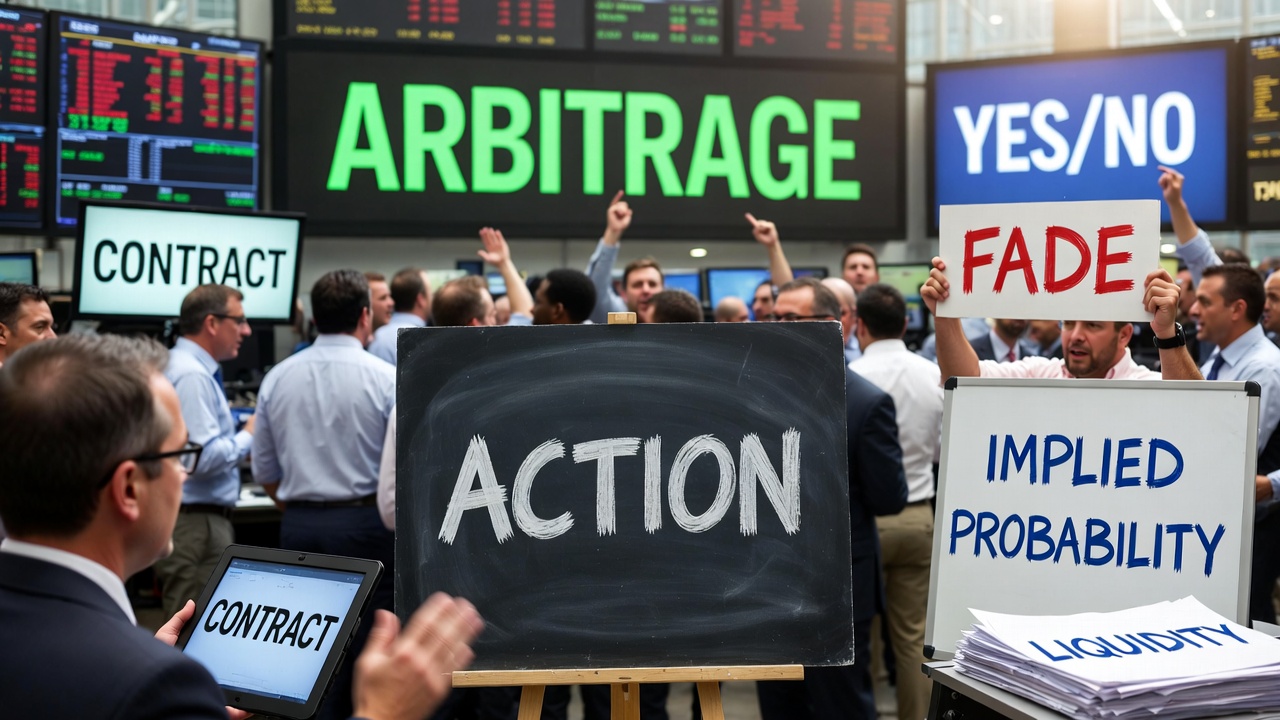
Prediction markets have exploded in popularity by 2026, letting people bet on everything from election results to sports outcomes and even weather events. If you’re new to this world or just want to brush up on the lingo, this article is your go-to guide. We’ll start with the basics of what prediction markets are, why knowing the terms matters, and then dive into a full alphabetical list of slang and industry terms. Each term comes with a simple, one-sentence definition to keep things easy to understand. Written at a 10th-grade reading level, this glossary covers the entire set of key phrases you’ll hear on platforms like Polymarket, Kalshi, and others. Whether you’re trading crypto-based contracts or fiat-backed events, mastering these words will help you navigate the markets like a pro.
What Are Prediction Markets?
Prediction markets are online platforms where people buy and sell contracts based on the outcome of future events, turning crowd wisdom into real probabilities and payouts. Think of them like stock markets but for predictions— instead of company shares, you’re trading “yes” or “no” bets on questions like “Will Bitcoin hit $100,000 by the end of 2026?” or “Who will win the next presidential election?” These markets started as academic tools in the early 2000s but went mainstream with blockchain tech and legal changes, especially after U.S. regulations allowed real-money betting on events in 2024. Platforms use implied probabilities from contract prices to forecast outcomes better than polls sometimes, and they’ve been used for everything from corporate decisions to global geopolitics. In 2026, with high-stakes events like midterm elections and crypto booms, trading volume has hit record highs, making it essential to know the jargon to avoid costly mistakes.
Why Learn Prediction Markets Terminology?
Knowing the slang and industry terms in prediction markets helps you make smarter trades, spot opportunities, and avoid getting “mogged” by experienced traders. Without understanding words like “liquidity” or “implied probability,” you might misread market signals and lose money on simple bets. For beginners, these terms demystify how platforms work, from placing limit orders to hedging risks. Pros use them to discuss strategies on forums like Reddit or Discord, where slang like “fudded” signals panic selling. Plus, in a fast-moving space like 2026’s volatile markets—driven by AI predictions and real-time news—being fluent in the lingo lets you react quickly. This glossary isn’t just a list; it’s a tool to boost your confidence, whether you’re betting on sports, politics, or tech trends. By the end, you’ll be ready to dive into any prediction market conversation or trade.
How Prediction Markets Work: Key Concepts Before the Glossary
Before jumping into the list, let’s cover a few basics. In prediction markets, contracts are priced between $0 and $1, where the price shows the market’s belief in the chance of an event happening—for example, a $0.75 price means a 75% probability. You can buy “yes” shares if you think it’ll happen or “no” if not, and winners get $1 per share at resolution. Liquidity providers and market makers keep things flowing, while arbitrage opportunities let savvy traders profit from price differences across platforms. Risks include volatility from news leaks or insider info, but rewards can be high with hedging and early exits. In 2026, with tools like automated market makers (AMMs) on blockchain sites, trading is more accessible than ever. Now, onto the full A-Z list of terms, compiled from top sources like Polymarket docs, Kalshi guides, and trader communities.
The Complete A-Z List of Prediction Markets Slang and Industry Terms
This section lists every major term related to prediction markets in alphabetical order. Each one is bolded, followed by a single-sentence definition in plain language. We’ve included both formal industry terms and casual slang used by traders in 2026. The list draws from platforms, betting glossaries, and community lingo to be as complete as possible.
A
Action: Having a bet placed on a game or event in a prediction market.
Against the Spread (ATS): Betting on a team to perform better or worse than the predicted margin of victory.
Alternative Line: Extra betting options with adjusted spreads or totals that offer different odds.
Arbitrage (Arbing): Taking advantage of price differences between markets or platforms to make a risk-free profit.
Ask Price: The lowest price at which someone is willing to sell a contract in the market.
B
Back: Betting on a specific outcome to happen, like buying a “yes” contract.
Backdoor Cover: When a team scores late to unexpectedly cover the spread.
Bad Beat: Losing a bet that seemed sure to win due to a last-minute twist.
Banker: A strong favorite expected to win, often used in combined bets.
Beard: A person who places bets for someone else to hide their identity.
Bet Builder: A tool to combine multiple bets from the same event into one wager.
Betting Exchange: A platform where users bet against each other instead of the house.
Betting Slip: A record of your selected bets, stakes, and odds before confirming.
Bondsharp: A respected trader who often takes the opposite side of popular bets.
Book (Sportsbook): The platform or company that accepts and pays out bets.
Broker: An intermediary that helps users buy and sell contracts on prediction platforms.
BTTS (Both Teams to Score): A bet on whether both sides in a game will score at least once.
C
Cash Out / Cashout: Taking an early payout on a bet before the event ends.
Chalk: The heavy favorite in a market with the shortest odds.
Chance (%Chance): The percentage probability of an event happening based on contract prices.
Closing Line: The final odds available right before an event starts.
Combination Bet: A wager covering multiple selections where not all need to win for a payout.
Contract: A tradable agreement that pays out based on whether an event happens or not.
Contract Volume: The total number of contracts traded for a specific event.
Correct Score: Betting on the exact final score of a game or event.
Cover: Winning a spread bet by beating the point margin.
Crypto: Using cryptocurrencies like USDC for funding and trading on blockchain platforms.
Culture (Markets): Bets on entertainment events like awards shows or celebrity news.
D
Dead Heat: When two or more outcomes tie, splitting the payout.
Decimal Odds: A format showing total payout including stake, common in Europe.
Dime: Slang for a $1,000 bet in U.S. markets.
Dog: Short for underdog, the unlikely winner.
Double: A bet combining two selections where both must win.
Drift: When odds lengthen or shorten dramatically due to betting action.
E
Each Way: A bet that pays for winning or placing in the top positions.
Early Exit: Selling a contract before the event ends to lock in profits or cut losses.
Earnings (Markets): Bets on company financial results like revenue beats.
Edge: An advantage a trader believes they have over the market.
Even Money / Evens: A 50-50 bet where you double your stake if you win.
Event Contract: A binary bet on a yes/no outcome of a real-world event.
Event Resolution: The official confirmation of an event’s outcome for payouts.
Expiry: The deadline when trading stops, and resolution begins.
F
Fade: Betting against a popular pick or the public opinion.
Favorite: The expected winner with the best odds to succeed.
Field: All possible outcomes or competitors in a market.
Fixed Odds: Odds that don’t change after you place the bet.
Forecast: The market’s crowd-sourced prediction of an event’s likelihood.
Fractional Odds: A UK format showing profit relative to stake, like 4/1.
Fudded: When traders sell due to fear, uncertainty, and doubt in the market.
Full Time: The end of regulation play, excluding overtime.
Futures / Futures Bet: A long-term bet on outcomes like season winners.
G
Geopolitics (Markets): Bets on international events like elections or conflicts.
Grade: Certifying a bet as a win or loss after the event.
H
Halftime Bet: A wager placed during the break in a game.
Handicap: Giving one side an advantage to even the odds.
Handicap Betting: Betting with an artificial points adjustment.
Handicap Race: A competition where participants have adjusted conditions for fairness.
Handicapper: Someone who predicts winners based on analysis.
Handle: The total amount of money wagered on an event.
Hedging: Placing an opposite bet to reduce risk from an existing position.
High Roller: A trader who bets large amounts regularly.
Hit Rate: The percentage of successful bets or prop exceedances.
Holders: People who own contracts until resolution or sale.
Hold, Vig, Juice: The platform’s commission on bets.
Hook: A half-point in a spread, like 7.5.
I
Implied Probability: The chance of an event based on current contract prices.
In-Game Wagering / In-Play Betting / Live Betting: Betting while the event is happening.
Index Betting: Another name for spread betting.
Insider: A trader with non-public info giving an unfair edge.
J
Juice: See Hold, Vig, Juice.
L
Lay Betting / Lay: Betting against an outcome happening.
Laying Points: Betting on a favorite to win by a certain margin.
Leak: Early release of info that moves market prices.
Limit / Limit Order: An order to buy or sell at a specific price or better.
Line / Money Line: Odds without a spread, just on who wins.
Line Movement: Changes in odds before an event starts.
Liquidity: How easily contracts can be traded without big price shifts.
Live Odds: Real-time odds during an event.
Lock: A bet considered a sure winner by the trader.
M
Maker/Taker Fee: Charges for adding or removing liquidity from the market.
Market: The platform or category for trading event outcomes.
Market Maker: A system or person providing buy and sell prices continuously.
Market Order: An immediate trade at the current price.
Market Price: The current cost to buy or sell a contract.
Martingale System: Doubling bets after losses to recover.
Max Payout: The highest amount a contract can pay, usually $1.
Mogged: Being outsmarted or beaten by another trader.
Moneyline: See Line / Money Line.
Mover: A market with big price changes due to news.
Multiple Bet: A wager with several selections that all must win.
Mush: A bettor believed to bring bad luck.
N
No: A contract that pays if the event does not happen.
O
Odds: The price reflecting an event’s likelihood.
Odds Boost: Improved payouts offered as a promotion.
Oddsmaker: The person setting the initial odds.
Odds-On Favorite: A strong favorite with better-than-even chances.
Off the Board: When betting is paused due to uncertainty.
Open Contract: A held contract not yet sold or expired.
Order Book: A list of all buy and sell orders at different prices.
Outcome: The final result determining contract payouts.
Outright: Betting on the overall winner of a tournament.
Over/Under: Betting if total points will be above or below a line.
P
Parlay: A multi-bet where all parts must win for a payout.
Payout: The money received from a winning contract.
Pick ‘Em: A market with no favorite and even odds.
Platform: The site or app for trading prediction contracts.
PMT: Short for prediction market trader.
Point Spread / Spread: The predicted margin of victory.
Politics (Markets): Bets on elections or government actions.
Position: Your total holdings in a specific market.
Premium: Extra cost above a contract’s fair value.
Price Per Contract: The cost to buy one individual contract.
Projected: The market’s estimated outcome or probability.
Prop Bet: A wager on specific in-event occurrences.
Puck Line: Hockey’s version of a point spread, usually 1.5.
Push: A tie where bets are refunded.
R
Real-Time Payout: The current value of your position if resolved now.
Redeem: Claiming winnings from resolved contracts.
Resolution / Event Resolution: The official settling of a market’s outcome.
Resolution Source: The data provider verifying the event result.
Reverse Forecast: Betting on first and second place in any order.
Roll Over: Requirements to bet bonus money before withdrawing.
Rulescuck: Someone who exploits market rules technically to win.
Run Line: Baseball’s point spread, typically 1.5.
S
Same-Game Parlay: Combining bets from one event into a parlay.
Settlement: The process of paying the winners after the resolution.
Sharp: A skilled, professional trader.
Slippage: The difference between the expected and actual trade price.
Speculation: Trading for profit based on price moves, not risk reduction.
Sports (Markets): Bets on game outcomes or player stats.
Spread: See Point Spread.
Spread Betting: Wagering on how much an outcome beats expectations.
Stake: The amount of money you bet.
Steam: Rapid odds changes from heavy betting.
Straight Up: Betting on a winner without a spread.
Strike: A specific threshold that determines if a contract wins.
T
Teaser: Adjusting spreads in your favor for a lower payout.
Tech (Markets): Bets on industry events like product launches.
Tipster: Someone providing betting advice or picks.
Total / Totals: See Over/Under.
Trend: A consistent direction in market prices over time.
Tricast: Betting on first, second, and third place.
U
Underdog: The less likely winner with longer odds.
Unders: Betting the total will be below the line.
Unit: A standard bet amount, like $10 per unit.
Unfancied: British slang for an underdog.
V
Vigorish (Vig): See Hold, Vig, Juice.
Void Bet: A canceled wager with stake returned.
Volatility: How much prices fluctuate in a market.
Volume: The total trades or dollars in a market period.
W
Wager: Another word for a bet.
Weather (Markets): Bets on conditions like temperature or storms.
Win Total: Betting on a team’s total wins in a season.
Winning Probability: The market’s percent chance of success.
Y
Yes: A contract that pays if the event happens.
Yes/No: The basic binary options for event outcomes.
Z
Zero Sum Market: Where one trader’s gain equals another’s loss.
Wrapping Up: Using These Terms in 2026 Prediction Markets
With this full glossary, you’re equipped to tackle any prediction market in 2026. Remember, terms like “implied probability” help you read the crowd’s mind, while slang like “mogged” adds fun to trader chats. Practice on small stakes, watch for volatility from news, and always hedge if unsure. Prediction markets aren’t just gambling—they’re tools for forecasting real-world events.

The PolyPunter staff works tirelessly to bring you the latest and most insightful news, information, and tips on the fast-growing economic, financial, and social phenomenon that is prediction markets.


