

Published: November 18, 2026
Prediction markets are in a tough spot when it comes to mitigating the perception that they’re “just gambling by another name.” If they start layering in regulated sports-gaming-type controls and consumer protections, detractors point to that as evidence they admit they are just gambling. If they ignore these requests for more controls, they get labeled as being callous and risky.
One of these issues surrounds age gating. Sports betting is 21+ in all states besides Montana, New Hampshire, Rhode Island, Tennessee, Washington, D.C., and Wyoming. Most prediction markets operate at 18+ because they are CFTC-regulated exchanges. Novig and Fanatics prediction markets are exceptions, with their 21+ minimum age.
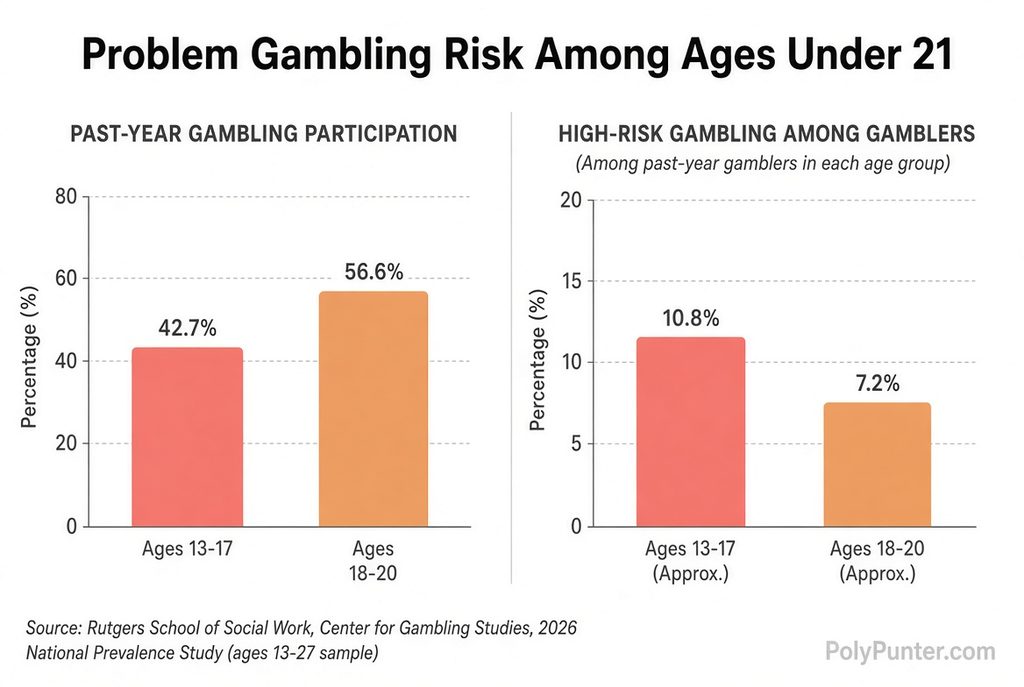
The 21-age-gate is seen as a core protection by state-regulated sportsbooks for young adult consumers, seen as more vulnerable to addiction and poor decision-making. It’s routinely cited in lawsuits by states against prediction market operators as one of the risks of prediction markets operating within their borders without state gaming authority oversight.
Prediction markets have shown their promise at turning future uncertainty into a market price. Prediction markets provide real public utility across a vast array of markets. The potential is tremendous, but negative perceptions of operators, leading to intense legal and political conflict, pose a real hurdle to reaching that potential. A higher minimum age, backed by real ID verification, would give platforms a straightforward way to show they take consumer protection seriously and make it harder for detractors to treat the entire industry as a loophole.
What the Proposed Rules Actually Require
A currently proposed Texas state bill would stop anyone under 21 who is physically located in the state from buying, selling, or trading event contracts. Platforms would have to confirm age with a commercial system that checks government-issued ID or other solid data. Prediction markets already do this verification process as required by KYC rules. If an operator later learns a younger person has traded on a verified account, it would need to shut off account access immediately.
Advertising rules would tighten as well. Ads would need to state the 21+ limit clearly, could not target or show people under 21, and would be physically banned on or near school grounds. Physicians and psychological professionals have raised concerns that rapid yes-or-no trading on phones can pull in younger adults who are still developing judgment around risk. These limits try to address that directly. Currently, most prediction markets target college-aged and college-attending young adults more directly, including on-campus marketing programs.
Certain contracts would also be restricted. Markets tied to criminal investigations, executions, civil lawsuits, individual deaths, assassination attempts, terrorism, war, disease, or immigration events would be off-limits. This is fairly consistent with the category restrictions the CFTC is considering, in part or in full. Ordinary sports and political markets could continue. Operators that break the rules would face civil penalties; the 2027 effective date leaves time to update systems.
Texas is not a legal sports betting state, so this bill is limited in scope around prediction market access and does not affect users 21 and over. It would still be a legal access point for traders to take positions on sports event outcomes.
Why Platforms Can Treat This as an Opening
Highly popular sports prediction markets are the most overt public signature of this new industry. They are also the most legally challenged and publicly denigrated aspect of these forecasting markets. That larger issue needs to be addressed by the industry; or the courts may force its ultimate fate.
In the meantime, a 21+ floor lets operators demonstrate they are serious about limits without abandoning their core function and purported brand recognition as useful information markets. Fanatics Markets and Novig, while not the biggest players, already maintain a 21+ restriction. If more platforms follow, the industry looks more consistent and less like it is chasing the youngest possible audience.
The legal picture is still messy. States have brought enforcement actions, and courts have not spoken with one voice on federal preemption. A voluntary move to this age-gate signals that platforms can adjust and handle rational self-policing. Those systems already exist for other compliance work. Using them more broadly reduces the chance that underage access becomes a central issue in fights over whether event contracts are federally regulated products or state gambling.
Matching Existing Practice and Cutting Federal Risk
State sportsbooks have lived with 21+ rules for years. While they’d likely enjoy greater business success with an 18+ age, this age gate has never particularly stymied their commercial success. Nor have they ever proposed lowering the age. It’s difficult to get accurate demographic information from private companies like Kalshi, but various analysts estimate that 18- 20-year-old users currently account for 3-4% of total platform trading volume. That number may be higher if you consider only the sports event category. Although sports events currently account for 75-80% of Kalshi’s total volume, it’s likely not substantially higher.
Prediction markets that list sports contracts are constantly compared to sportsbooks. Raising the floor removes one of the simplest criticisms. The same standard also lines up with the extra caution many financial products apply to younger adults. Consider it both a practical barrier for younger users and a sign of good faith from operators heeding a sensible request.
Age-Gate Implementation Would Be Simple
Commercial age-verification tools are already common and fit into existing identity check processes. Platforms that turn them on can point to working systems when regulators or courts ask how seriously they take compliance.
There is a real cost. Platforms would lose trading activity from people aged 18 to 20. Some currently manage that group with only modest deposit limits. The longer-term tradeoff is better public, legal, and political standing. Additionally, a cleaner customer base makes it easier to form partnerships with traditional financial firms and to grow the business under ongoing scrutiny.
Congress has already looked at prediction-market issues, including questions about insider activity involving government personnel. If platforms look unwilling to set a higher age floor, lawmakers have more room to push wider limits on market types, heavier licensing, or rules that reclassify more contracts as gambling. A focused 21+ standard addresses one clear concern and shrinks the space for those broader moves.
Conclusion
Prediction markets do something useful: they pull information together and put a price on outcomes. That function is easier to defend when platforms adopt age standards that match long-standing sportsbook practice and respond to concerns physicians have raised about younger adults. A 21+ minimum, reliable verification, and limits on sensitive contracts are practical reforms.
Accepting these measures, or putting similar ones in place on their own, reduces political risk and strengthens the argument for continued federal oversight of event contracts. Waiting for Congress raises the odds of more disruptive rules. Higher age limits give platforms a concrete path to better standing while they keep doing the work that makes the markets valuable. The ones that act now will be in a stronger position as the sector keeps growing under scrutiny.
References
- Texas Bill Would Raise the Prediction Market Age to 21
- Texas Rep. Bhojani Wants to Raise Prediction Market Age to 21
- Texas Bill Imposes Age Minimum, Introduces Restrictions for Event Contract Trading
- Texas Proposes New Bill to Restrict Prediction Markets to Over-21s
- Texas bill bans some prediction contracts but leaves sports open
- HB 598 – Texas (90Rth)
- Texas HB 598: Prediction Market Age to 21
- Texas Bill Would Raise Prediction Market Age to 21 | Wisevoter
- Texas Medical Association proposes age limit on prediction markets
- Texas Rep. Bhojani Pre-Files Bill to Raise Prediction Market Minimum Age to 21
- Inside the Multibillion-Dollar Business of Betting on Everything | WSJ
- Polymarket vs Kalshi: Prediction Markets Explained for Beginners