
Prediction markets aren’t new in concept or even usage. Futures contracts have been traded in the United States since the Chicago Board of Trade began trading corn futures in 1864, when traders began forecasting future crop yields in a regulated market. And the Iowa Electronics Market (IEM) began in 1988 as a research project at the University of Iowa, testing out forecasting theories on economic indicators and political outcomes. The IEM is generally recognized as the first prediction market in the U.S., and it is still going today.
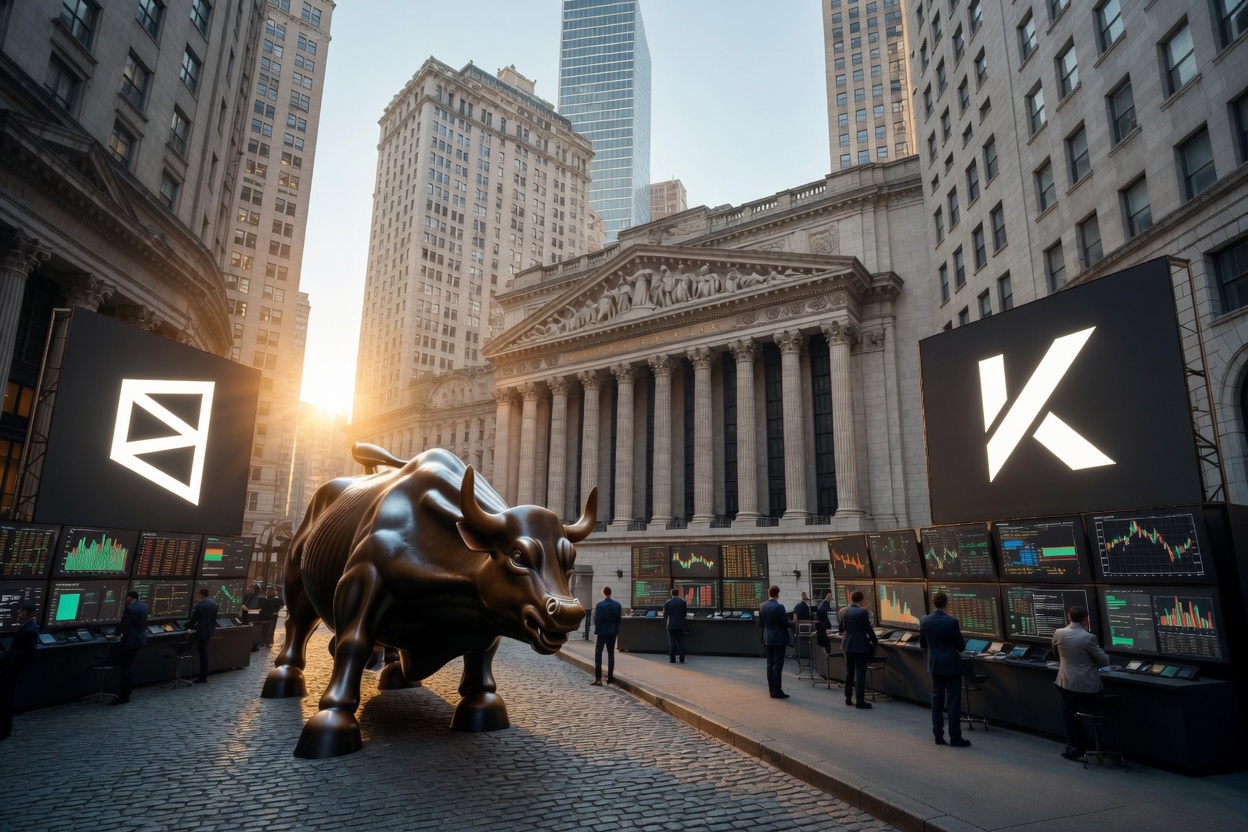
But 2026 marks the decisive entry of prediction markets into high-finance culture and into Wall Street-accepted status. Platforms like Kalshi and Polymarket now draw hedge funds, asset managers, and brokerages hunting for precise tools to hedge risk and manage uncertainty. Financial managers no longer see prediction markets as experimental but rather as a mainstream tool for portfolio management.
Event contracts deliver binary or multi-outcome exposure tied to verifiable real-world results. Institutions now integrate them alongside futures and options to precisely isolate specific investment risks. As activity accelerates, Wall Street is exploring how these instruments can boost hedging efficiency and provide real-time market signals, in addition to, or even in place of, traditional methods.
Key Growth Metrics Highlighting Prediction Market Momentum
| Metric | Kalshi (2026) | Polymarket Context |
|---|---|---|
| Recent Monthly Volume | $17.9 billion | Strong competitive volumes |
| Valuation Post-Funding | $22 billion | Strategic ICE stake |
| Institutional Growth (6 months) | 800% | Rising hedge fund interest |
| Annualized Volume | $178 billion | Competing at scale |
The Rapid Expansion of Prediction Markets Attracts Serious Institutional Capital
Volumes have exploded across prediction markets, led largely by Kalshi and Polymarket. Kalshi recorded $17.9 billion in trading volume in one recent month while securing $1 billion in funding at a $22 billion company valuation, double its prior valuation of 2025. Annualized volume tripled to $178 billion, with institutional trading surging 800 percent in six months.
Asset managers and hedge funds now routinely place multi-million-dollar positions with integrated tool sets that Kalshi has designed with partners specifically for institutional traders.
Partnerships with Clear Street, Jump Trading, and Marex ease access for big accounts. Quantitative leaders such as Susquehanna and AQR now dedicate traders to these markets.
The trajectory on this is fairly obvious. As Wall Street firms find these prediction markets valuable, transparent, and precise tools for asset management, the volumes, activity, and integrations will only increase. Similarly, as these prediction markets risk losing sports and entertainment markets to federal oversight, they will seek to expand into areas more likely to remain under the CFTC’s aegis, such as financial trading and risk-hedging markets.
The prediction market structure, where traders buy or sell shares priced between $0.01 and $0.99 and settlement is based on actual outcomes, isolates narrow risks without the correlated noise of broader derivatives. Hedge funds especially value executing offsetting positions on the same venue, reducing overall portfolio volatility more efficiently.
Devin Ryan at Citizens JMP highlights the edge. Institutions can target a single risk factor in real time with minimal interference. Contracts on economic releases, policy shifts, or weather events give quantitative desks cleaner protection than index futures alone.
Kalshi and Polymarket Build Customized Pathways for Institutional Demand
Kalshi completed its first customized block trade and hired specialists to develop institutional infrastructure. CEO Tarek Mansour describes a new financial ecosystem emerging around these innovative, integrated financial trading tools. Andy Ross, head of institutional business, calls current activity the early foothills of a steep upward climb.
The platform, which accounts for over 90 percent of U.S. based-activity, has expanded block trading and broker integrations for hedge funds, asset managers, and insurers.
Meanwhile, Polymarket gained a major investment from Intercontinental Exchange, the parent of the New York Stock Exchange. This alliance signals acceptance of traditional finance and opens data distribution channels to institutions worldwide.
Edward Ridgely of Stand notes genuine institutional interest but points out that top markets still hover around $30 million in liquidity—enough for retail but insufficient for routine large trades. Both platforms are now focused on deepening order books through market makers and partnerships.
Distinct Advantages Position Prediction Markets as Strong Hedging Complements
Beyond precision, these contracts reduce slippage by unifying execution and provide transparent pricing that refines internal algorithm models. Quantitative desks integrate prediction markets into multi-asset strategies, treating them as extensions of probabilistic frameworks. With access to these prediction markets now literally on the same terminals that financial traders already use to model and trade, the workflow is incredibly seamless.
Early data shows volumes scale quickly once access and integration improve. Prime brokerages smooth entry, and customized offerings lower barriers for portfolios of every size.
As for hurdles, shallow order books still cause sharp price moves on large trades. Asaf Meir of Solidus Labs notes that most hedge funds want at least $10 million daily notional before committing any meaningful flow. Platforms counter by recruiting and incentivizing market makers with rewards and expanding third-party partnerships. The business development wings of these prediction market platforms seem to be running 24/7, with new deals announced weekly, if not often daily.
Media and data partnerships continue to boost visibility. Repeated valuation increases and strategic alliances point toward trillion-dollar potential. Competition among prediction markets spurs new contract types, better interfaces, and advanced analytics, blending retail UX appeal with institutional-level discipline.
Future Outlook Points to Deeper Wall Street Integration
As infrastructure matures and trading volumes grow, prediction markets look set for expanded influence. Hedge funds increasingly view event contracts as portfolio enhancers rather than experiments. Early movers stand to capture efficiencies unavailable through conventional instruments alone.
Challenges around depth and oversight are addressable. Continued investment and regulatory progress should only accelerate adoption in the coming quarters. Meanwhile, institutional involvement validates prediction markets while pushing platforms toward more demanding, higher standards. This convergence could reshape how professionals price and manage uncertainty. This chapter in risk management innovation is only beginning.
References
- Reuters: Prediction markets look to institutional investors for next phase of growth
- New York Times: Prediction Markets’ Next Major Bet: Wall St. Traders
- Greenwich Associates: Wall Street Likes the Odds for Prediction Markets
- ICE: Strategic Investment in Polymarket
- Kalshi Official Site